Major spoilers for Batman #15 follow.
Batman #15, written by Matt Fraction with art by Jorge Jiménez, has a straightforward immediate threat: six assassins are in Gotham looking for Bruce Wayne. Yet the issue’s more unsettling pressure point is Jim Gordon. The former commissioner is no longer positioned above Gotham’s chaos, trying to impose order from an office. He is a beat cop being pulled directly into Batman’s covert, legally indefensible work—and he may be crossing a line he cannot simply uncross.
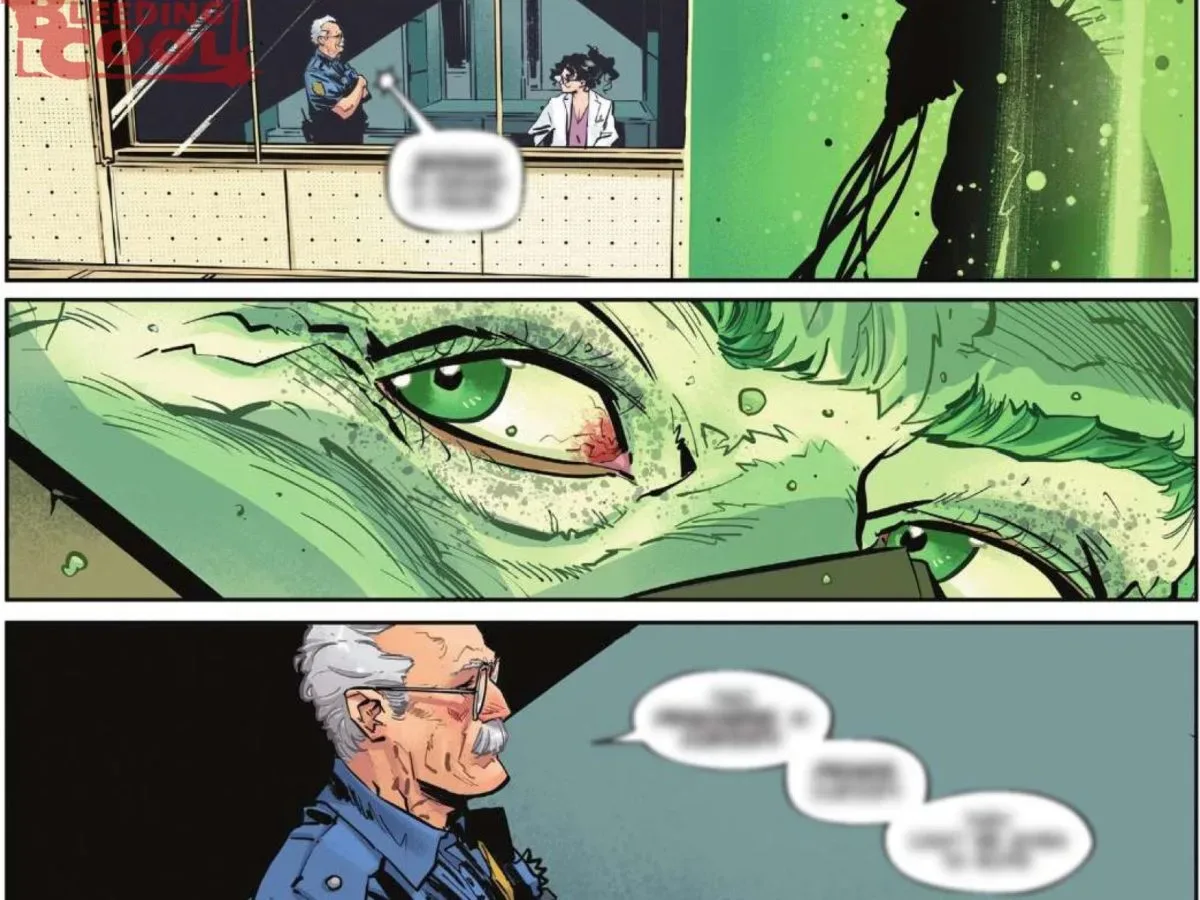
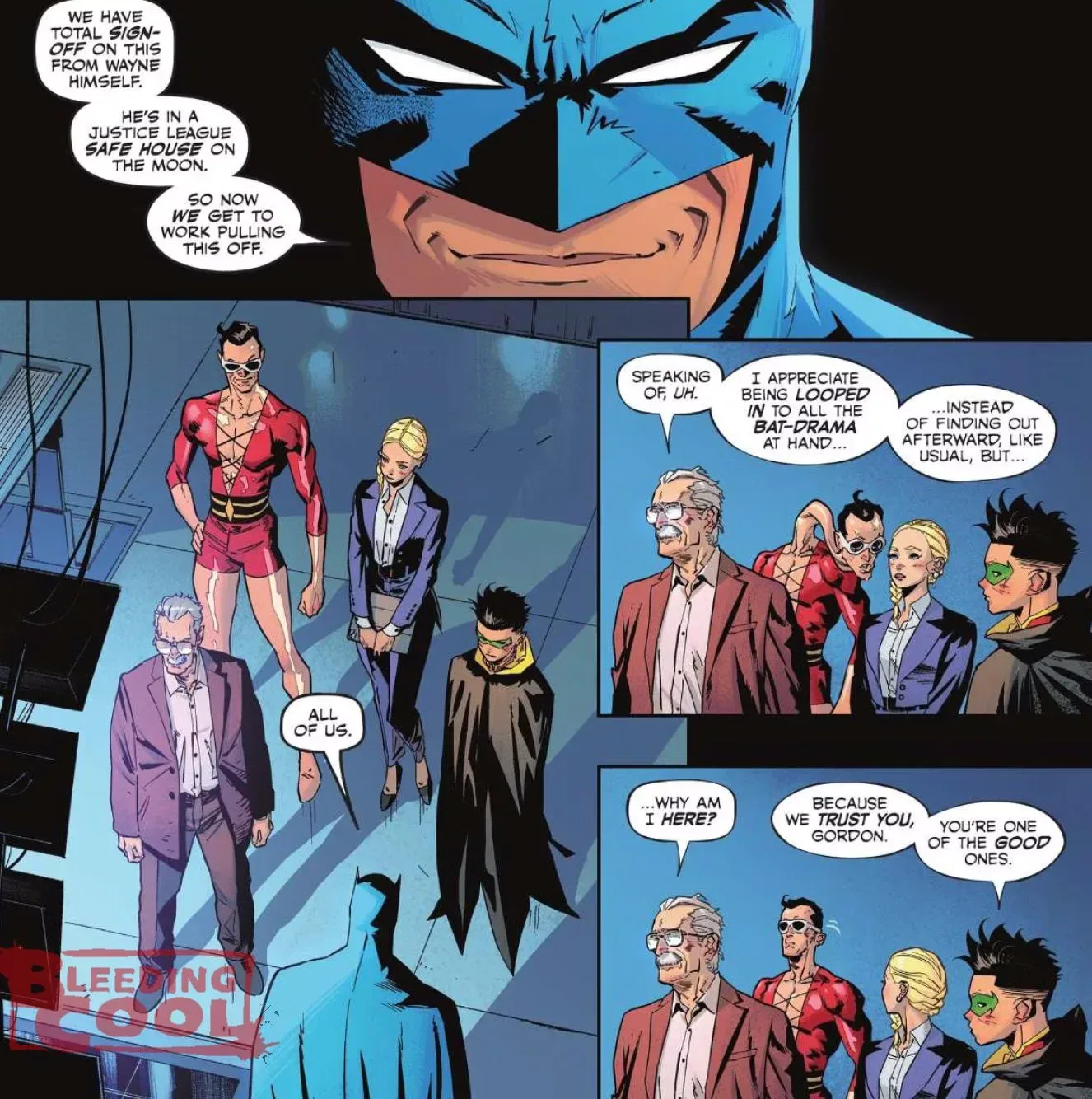
The pivotal problem is brutally practical. Two assassins who were targeting Bruce have been left comatose. Rather than place them through normal channels, Batman wants Gordon to help keep them hidden and keep their cases off the books. The requested favor is not a fleeting shortcut during a rooftop chase. It is an ongoing concealment involving incapacitated people and an institution that is already loaded with dangerous secrets: Arkham Towers.
That makes Gordon’s role much more than a useful connection for Batman. It makes him the custodian of evidence, people and decisions that the public system is not meant to lose track of.
Gordon’s compromised position is the real crisis
Gordon has already been through a punishing period in Gotham. Vandal Savage had become police commissioner, Gordon was demoted to patrol duty, and Barbara Gordon was arrested for her work alongside Batman and placed in Supermax prison. Despite all that, Gordon remained on the force. With Savage now dead, there is at least the possibility that his position could stabilize if he keeps his record clean.
Batman #15 weaponizes that hope. Batman does not ask Gordon for public advocacy, ordinary police work or moral support. He draws him into a clandestine arrangement that directly risks the clean standing Gordon needs. Gordon’s situation therefore carries a particular irony: after enduring a police hierarchy shaped by a hostile commissioner, he could endanger himself through loyalty to the person he has long regarded as Gotham’s necessary illegal operator.
Vigilantism is central to the tension here. In Gotham, a vigilante is someone who pursues justice without the authority of the law. Batman’s work is frequently portrayed as essential because institutions fail, but it remains outside the rules that constrain police, courts and prisons. Gordon has historically been the character who can recognize Batman’s value without fully becoming Batman’s accomplice. Hiding two comatose suspects pushes him much closer to that boundary.
It is also important that the targets are assassins. Their intentions toward Bruce Wayne make it easy to regard them as immediate threats rather than people entitled to procedure. But the issue’s setup asks whether that danger is enough to justify indefinite secret detention. The moral test is not whether Gotham is safer when villains are watched. It is who gets to decide where they go, who can access them and what happens when no official record acknowledges that they are there.
Arkham Towers turns secrecy into leverage
The story’s use of Arkham Towers is ominous precisely because it sounds administratively convenient. Dr. Zeller already has numerous patients under care, so adding two more seemingly offers a place where they could disappear into plain sight. But an institution packed with vulnerable people, medical authority and Gotham’s recurring criminal history is hardly neutral territory.
Batman’s plan depends on everyone involved keeping the arrangement quiet. Gordon must cooperate. Zeller must allow it. The assassins must remain comatose. And, critically, no observant resident can piece together what has happened.
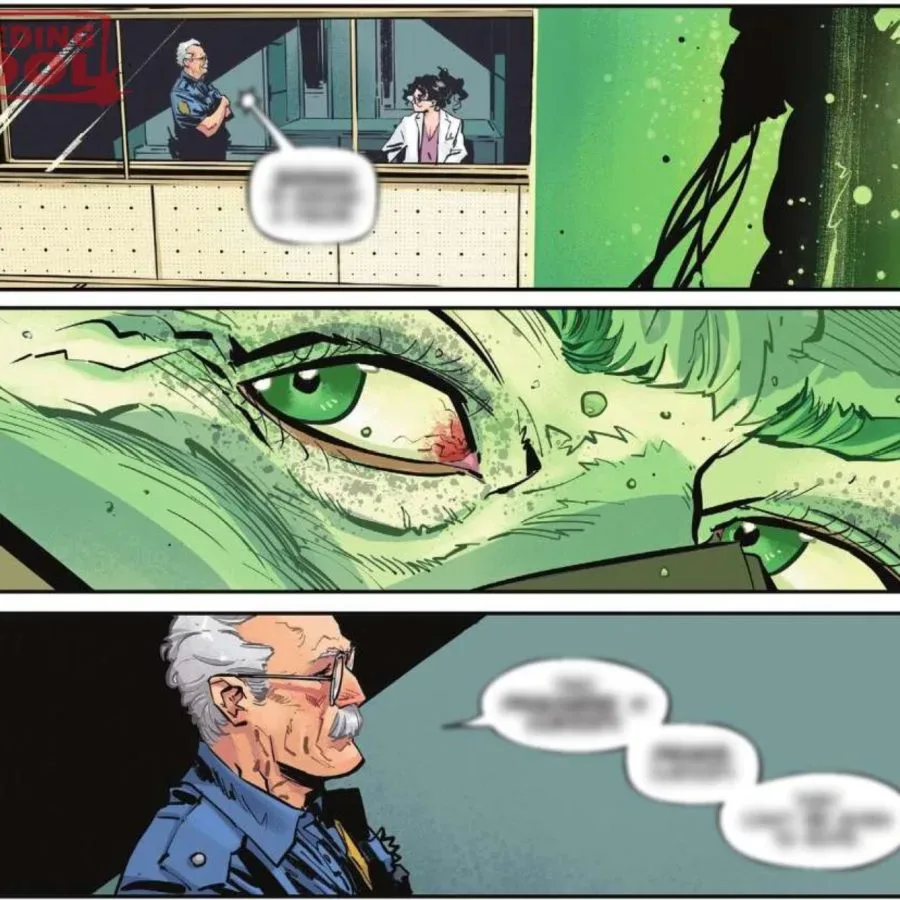
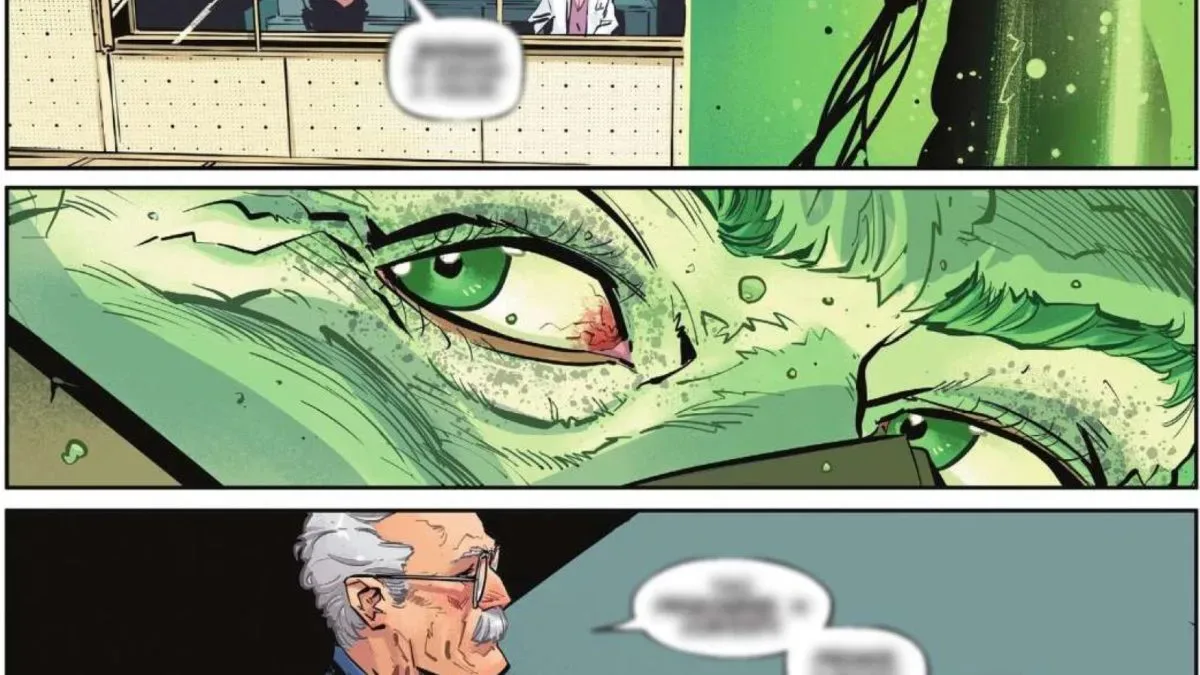
That final condition fails quickly. The Joker notices something. He is depicted using lip-reading, a capability that lets him obtain information even when others believe a conversation is protected by distance or silence. Whether that observation gives him the whole scheme or merely enough to start probing, it changes the stakes. The Joker does not need official authority to exploit a secret; he only needs a pressure point.
His connection to Gordon makes that particularly threatening. Their history includes the trauma of The Killing Joke, including the Joker’s attempt to break Gordon by attacking Barbara. That background means the Joker’s interest cannot be treated as random curiosity. Gordon’s professional integrity, his family and his capacity to withstand manipulation have all been part of the Joker’s long-running fixation.
What “kakistocracy” means in this Gotham story
The issue also uses the word kakistocracy, a political term for rule by the worst, least qualified or most unscrupulous people. In this setting, the term reflects Gotham’s damaged civic landscape while the city awaits a new “Kakistonian.” The word is not merely decorative vocabulary. It gives a name to the atmosphere in which ordinary safeguards have become unreliable and compromised choices begin to look routine.
That context matters for Gordon. A broken government does not automatically make secret vigilantism right. Instead, it explains why characters may find it increasingly hard to distinguish a necessary emergency measure from the very conduct that deepens institutional decay. Gordon is left to keep multiple fragile arrangements functioning: the police force, the fallout from Savage’s rule, Batman’s off-the-books mission and the safety of people close to him.
In that light, the issue’s concern is not simply whether Gordon is “corrupt” in the cartoonishly venal sense. There is no indication that he is motivated by personal enrichment. The more interesting question is whether good intentions, exhaustion and a desire to protect people can produce corruption anyway. Off-book custody, hidden medical care and unaccountable decision-making may all start as exceptions. Once they are normalized, however, they create the kind of system in which trust is impossible to verify.
Bruce Wayne’s danger and Gordon’s danger are not the same
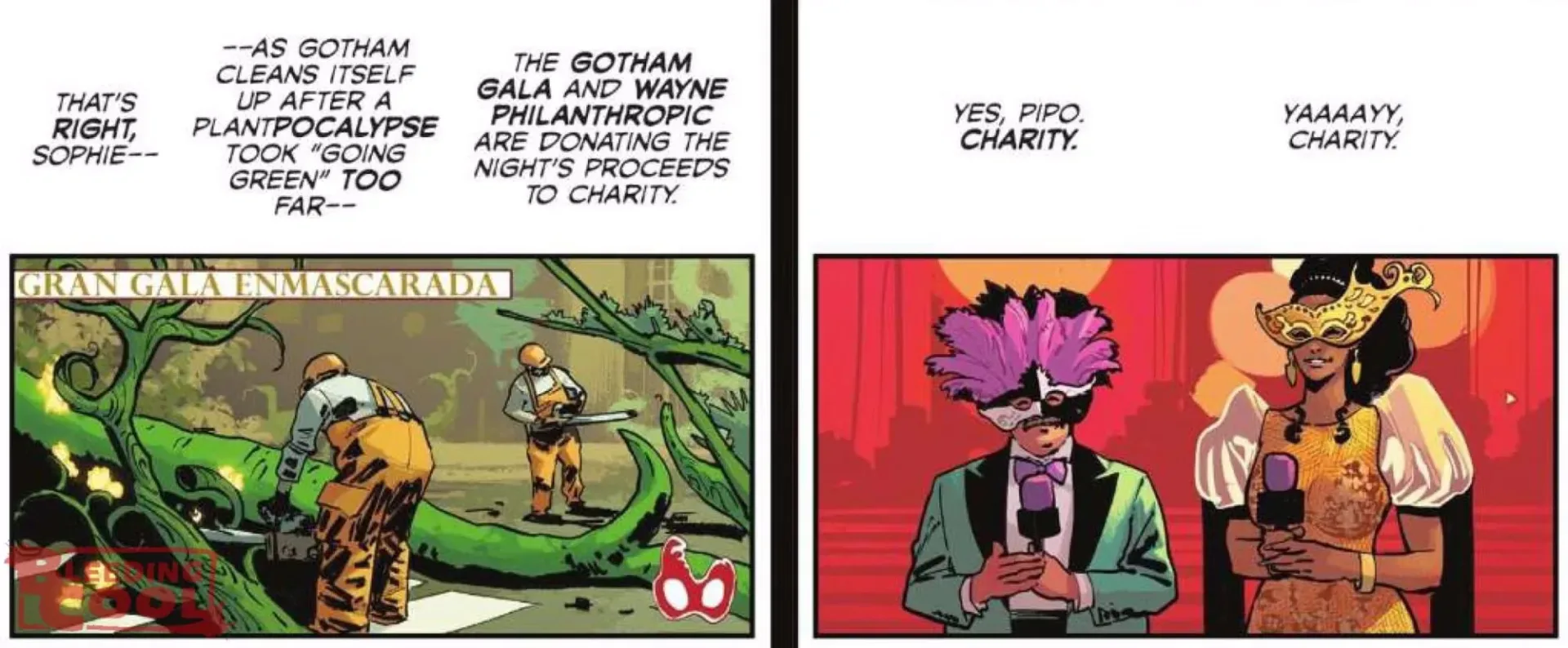
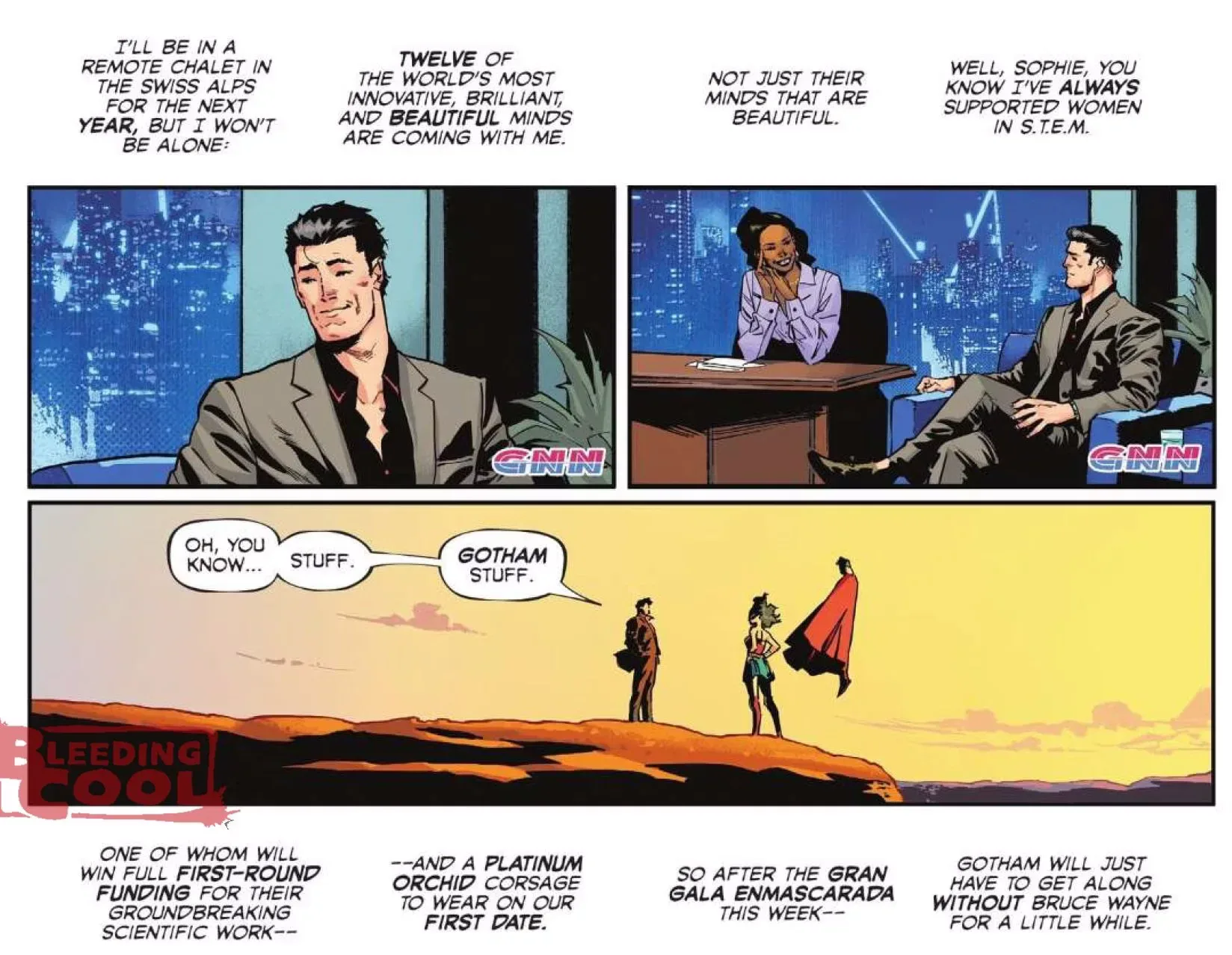
The six assassins give the issue a large-scale plot engine, with Bruce Wayne as their single target. The threat moves toward El Granda Gala Enmascarado, a setting suited to the tension between Bruce’s public identity and Batman’s private war. Bruce is in danger of being killed; that is the urgent external problem.
Gordon’s danger is slower and potentially more durable. If the assassins are handled outside the system, he becomes vulnerable to exposure, coercion and betrayal. If he refuses, he risks fracturing his relationship with Batman at a moment when Gotham is under attack. If he agrees, he gives the Joker a secret that may be more useful than a weapon.
That difference is what gives the issue its sharpest hook. Assassins can be fought, tracked or incapacitated. A compromised moral position cannot be punched into submission. Gordon has survived pressure from Vandal Savage and the Joker before, but this time the source of the pressure may be Batman’s request itself.
How Gangs of Gotham #1 fits the widening fallout
The same post-Bad Seeds period also expands into Gangs of Gotham #1 by Christopher Cantwell and Mike Henderson. That new series follows Anarky, also known as Lonnie Machin, after the Torus orders him to unite 100 lower-level street gangs that are not under its control. Failure means death; success earns him a place at the table. His first move takes him to Gotham’s East End, described as an especially unstable battleground.
The connection is thematic as much as logistical. Batman #15 focuses on the vulnerability of Gotham’s institutions and the compromises made by people who want to preserve order. Gangs of Gotham begins from the opposite end of the city’s power structure, where criminal organizations are explicitly trying to consolidate control. Both books present a Gotham in which authority is contested, fragmented and liable to be claimed by whoever can exploit disorder fastest.
For readers following comic properties beyond Gotham, the instability surrounding power, institutions and franchise storytelling also resonates with the larger entertainment landscape; for a separate industry-side example, see this report on Marvel’s Blade and jobs at risk during a prolonged hiring freeze.
What to watch next
- The Joker’s knowledge: His lip-reading suggests he has seen enough to recognize Gordon’s involvement. The unanswered question is whether he will expose the secret, distort it or save it for a more personal attack.
- Dr. Zeller’s role: Arkham Towers cannot be merely a backdrop if it is being used to conceal people outside standard custody.
- Gordon’s accountability: The story has placed him in a position where silence may be interpreted as loyalty by Batman and as guilt by everyone else.
- The assassins’ status: Their continued comas make them a dangerous loose end, especially because their connection to the attempt on Bruce Wayne is being deliberately hidden.
- Gotham’s next leadership: The discussion of a new Kakistonian signals that political power remains a live part of the city’s conflict, not background scenery.
Batman #15 is on sale for $4.99, while Gangs of Gotham #1 is on sale for $3.99. The immediate draw may be the assault on Bruce Wayne, but the issue’s lasting complication is Gordon’s: a good man with a damaged career, a dangerous secret and a Joker who appears ready to make every private compromise public.