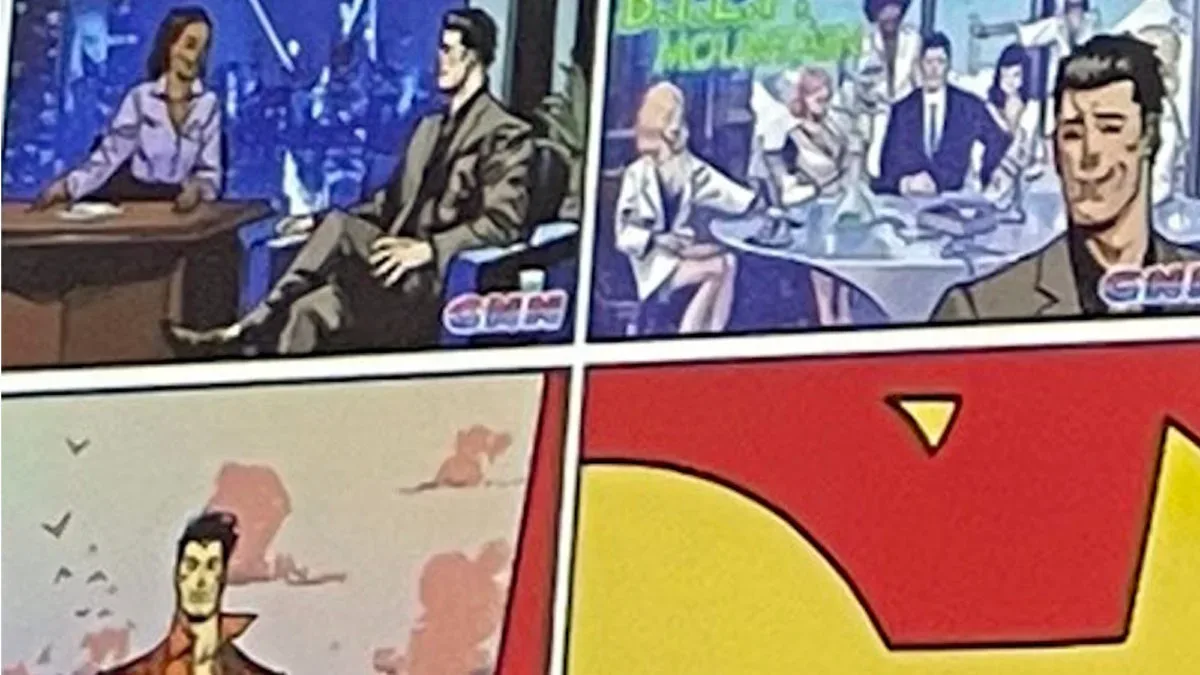
Batman #15, credited to writer Matt Fraction and artist Jorge Jiménez, is set to put Wayne Enterprises and the St. Cloud modelling agency in the same very public business arena. That detail does not confirm that Silver St. Cloud herself will appear, but it is a pointed enough connection to make the question worth asking: is one of Bruce Wayne’s most important former partners about to re-enter his life?
The issue goes on sale November 4, 2026, is listed at 40 pages and $4.99, and follows the events of Bad Seeds. Its stated central threat is immediate: six assassins are headed for Gotham with Bruce Wayne as their target, and the confrontation is expected to unfold at El Granda Gala Enmascarado. Batman has faced plenty of attempts on his life, of course, but an attack on billionaire public figure Bruce — rather than a hidden assault on Batman — is a useful complication. It forces the character’s civilian world, corporate identity and costumed life into the same dangerous space.
Why the St. Cloud name matters
The St. Cloud modelling agency is shown alongside Wayne Enterprises on BILF Mountain, an in-universe investment program framed in the mold of shows such as Shark Tank and Dragons’ Den. The title is explained as “Billionaires I’m Looking To For Financing.” On its own, that is a corporate cameo. In Batman comics, though, “St. Cloud” carries unusually specific emotional and historical associations for Bruce.
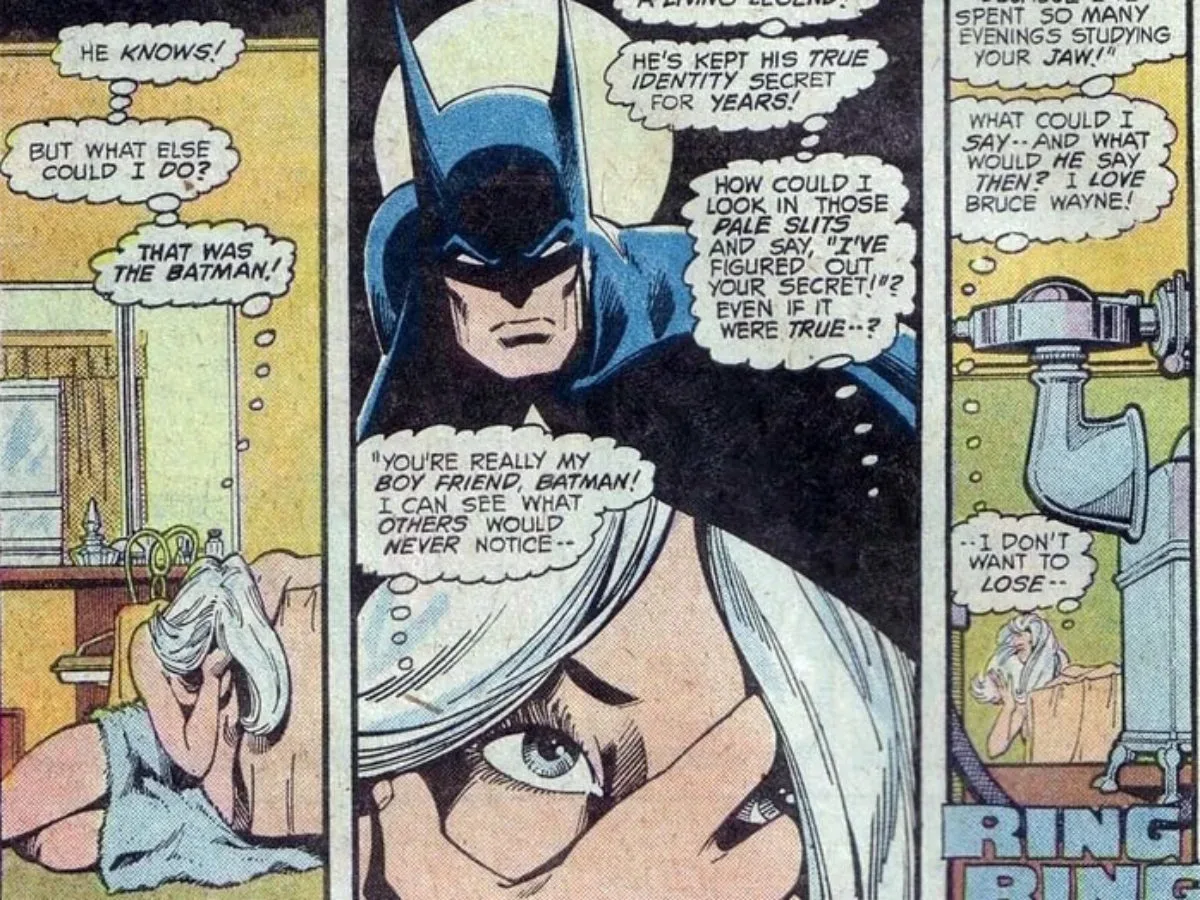
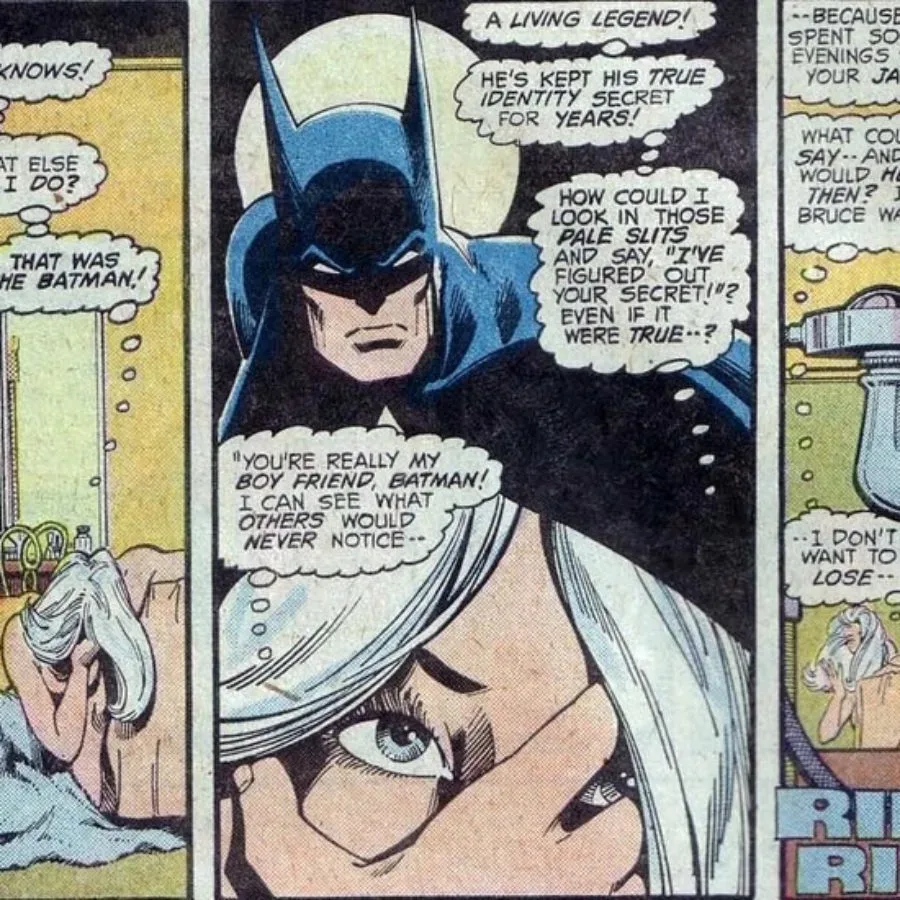
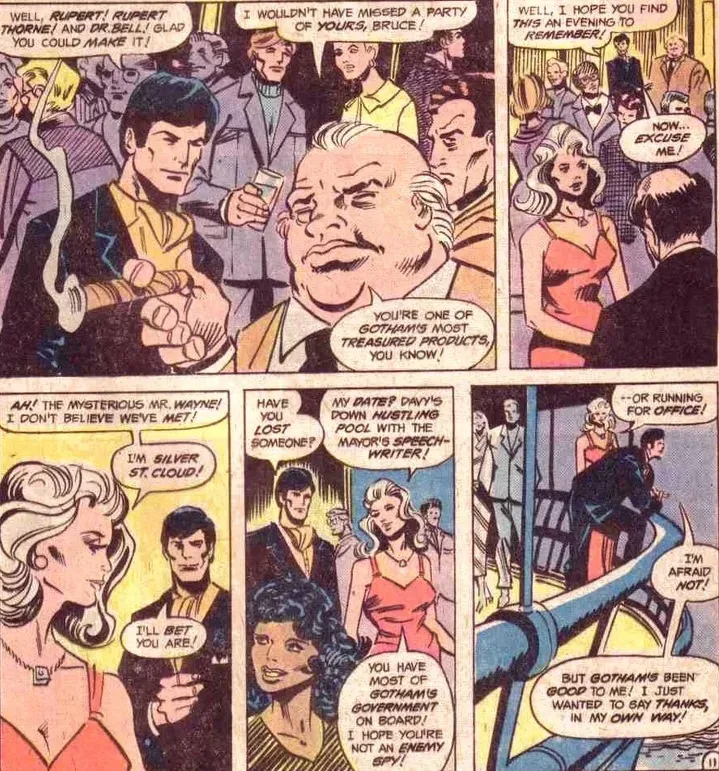
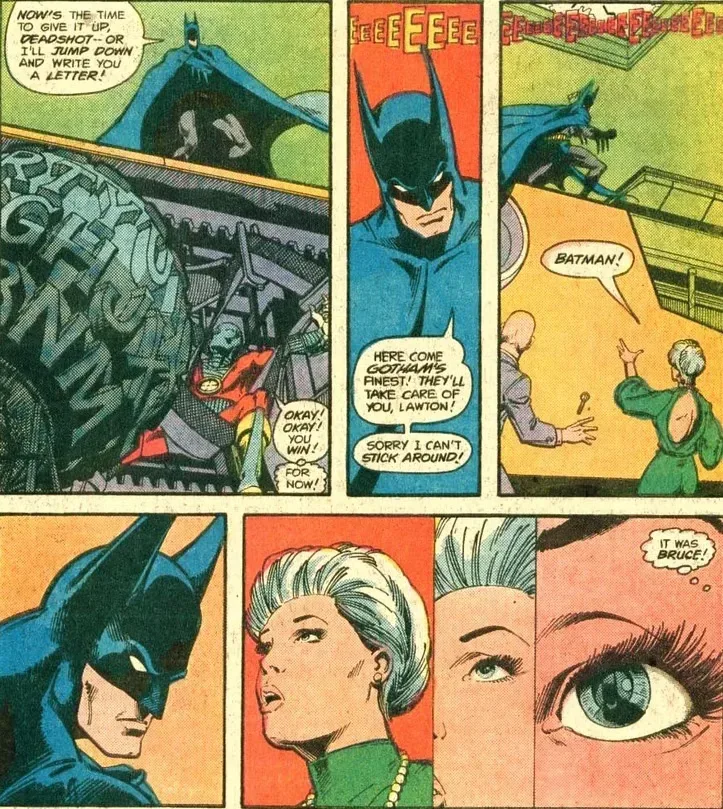
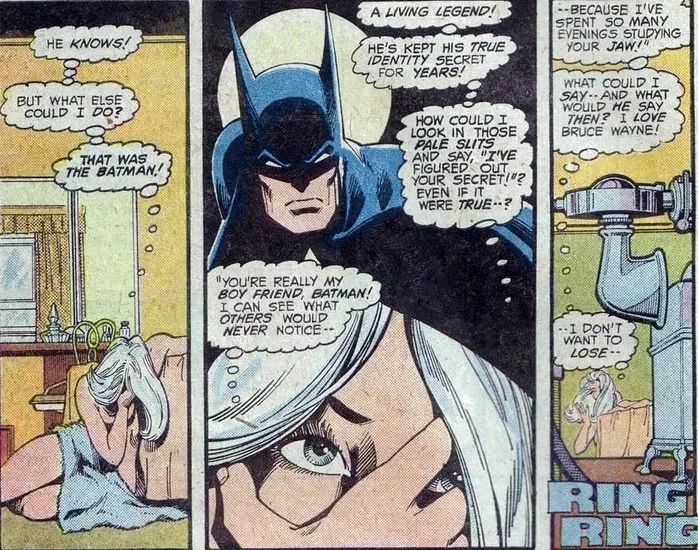
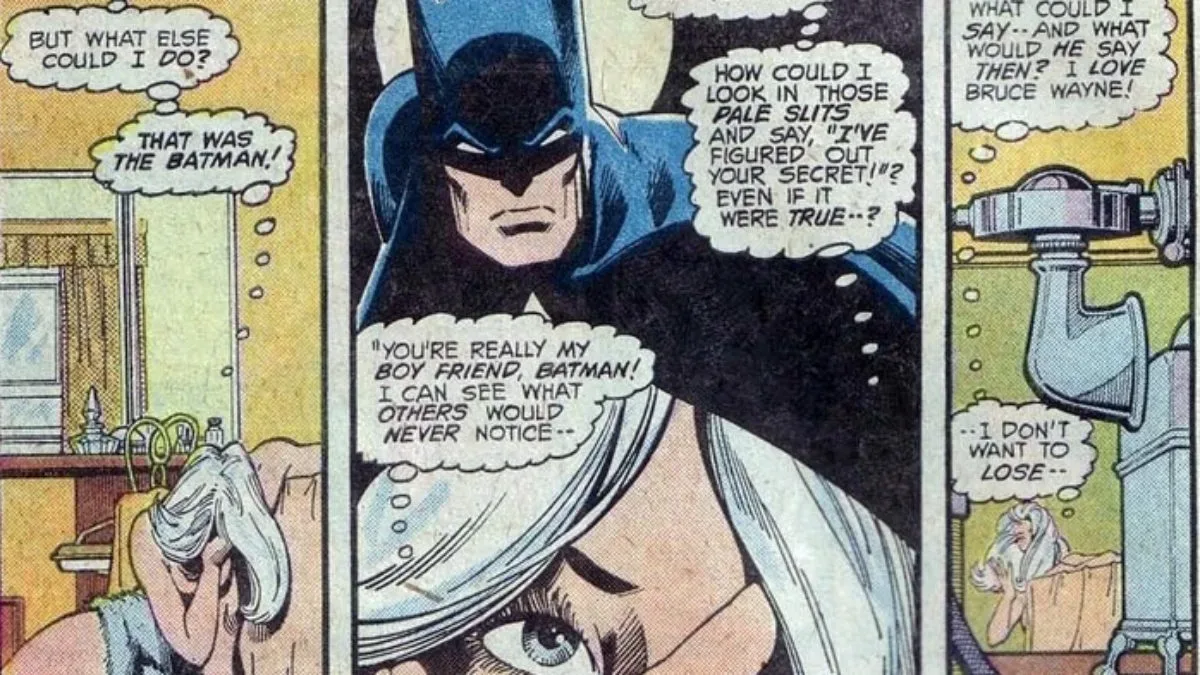
Silver St. Cloud is not merely a former love interest who knew Batman’s secret after an elaborate years-long mystery. Her defining early story is that she noticed the practical evidence around Bruce: unexplained absences, an interest in crime reports, and the distinctive shape of his chin. After witnessing Batman fight Deadshot at close range in Detective Comics #474, she put the pieces together. The confirmation came amid the Joker story commonly known as “The Laughing Fish.”
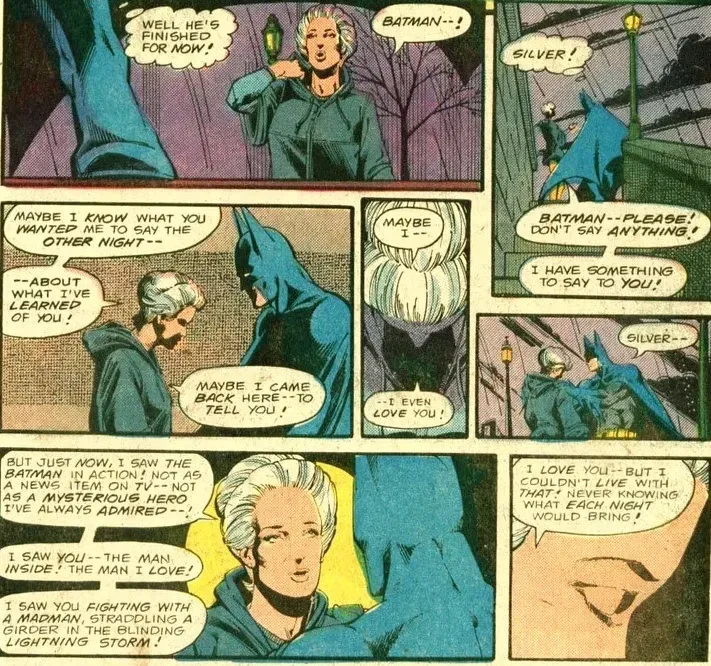
That makes Silver distinct within the sprawling group of people who have learned Batman’s identity. She is remembered not for forcing a grand confession, blackmailing Bruce, or treating the revelation as a puzzle to exploit. She observes, concludes, and understands the cost of what Bruce does.
Her response was equally important. Silver did not insist that Bruce retire as Batman. Instead, she recognized that she could not accept the prospect of waiting for the night he might not return. She ended the relationship, asked Bruce not to follow her, and left Gotham. First published in 1977, the resolution gave both characters agency without pretending that love could smooth over the reality of Batman’s mission.
A relationship defined by Batman’s impossible balance
Bruce Wayne’s romances often become another version of a familiar question: can someone live alongside Batman without being consumed by the danger surrounding him? Silver’s original answer was not that Batman was wrong or that Bruce was unworthy of love. It was that the arrangement was untenable for her. That distinction has helped the character endure.
It also gives the business-show setting in Batman #15 some potential dramatic value beyond a reference for longtime readers. A public partnership between the St. Cloud agency and Wayne Enterprises would place Bruce’s past close to his present, in a context where he has to perform his playboy-billionaire persona in front of cameras, financiers and Gotham society. With assassins targeting Bruce during a masked gala, the issue’s business plot and danger plot may be more intertwined than they first appear.
That remains analysis rather than confirmation. The available setup identifies the agency, not Silver herself, and it does not promise a reunion, a romance or even a direct appearance by her. Readers should treat the St. Cloud mention as a deliberate possibility, not a solicited guarantee.
Silver St. Cloud’s complicated continuity trail
Silver’s publishing history is also a reminder that “return” can mean several different things in superhero comics. A character can come back in a sequel, an alternate-universe story, a television adaptation, a continuity joke, or a reference that leaves their status deliberately open. Silver has occupied nearly all of those spaces.
In 2005’s Batman: Dark Detective, by Steve Englehart and Marshall Rogers, she was engaged to U.S. Senator Evan Gregory, who was campaigning for governor against the Joker. The story revisited the feelings between Silver and Bruce; Bruce proposed, but the Joker maimed Gregory. Bruce then asked Silver to remain with her fiancé until the campaign was over.
An additional chapter intended to resolve that trilogy was written but not published. That lack of a published resolution matters because it leaves the story’s relationship and political threads without the closure readers might reasonably expect.
Silver reappeared in 2009’s Batman: The Widening Gyre, by Kevin Smith and Walt Flanagan. There, she and Bruce rekindled their relationship and he proposed once more. Bruce even contemplated leaving the cowl behind after a new vigilante, Baphomet, seemed capable of taking up the work. The apparent replacement was actually the villain Onomatopoeia, who slit Silver’s throat in the closing cliffhanger.
The continuation of that story was never published. As a result, the apparent death has remained unresolved and is often treated as non-canon or at least outside a settled continuity. The term fridging is frequently applied to this kind of plot turn: a character, often a woman connected to a hero, is injured or killed chiefly to produce anguish and motivation for that hero. The unfinished nature of The Widening Gyre makes its use of Silver particularly frustrating for readers, because the promised second half never arrived to address the cliffhanger.
That uncertainty is why an ordinary corporate reference can spark speculation. Silver is a character with significant personal history for Bruce, yet her modern status has been muddled by unfinished storytelling and alternate takes rather than cleanly settled through a single, definitive narrative.
Alternate versions keep the character in circulation
Silver has also appeared away from the main Batman continuity. In 2017’s Elmer Fudd/Batman, by Tom King and Lee Weeks, Elmer Fudd confronts Bugs “The Bunny” over the murder of Silver St. Cloud and declares that he intends to kill him. The premise is deliberately outside the usual Gotham framework, but it demonstrates how readily Silver’s name can communicate personal loss and consequence.
In 2019’s Harley Quinn #61 and #62, by Sam Humphries and Otto Schmidt, she appeared in a fantasy revision of the DC Universe as a bow-and-arrow-using elf among Gotham Knights loyal to Queen Selina. After that version was freed, DC Jonni, the Continuity Cop, rewrote matters to establish Silver as alive again. It is a knowingly strange use of continuity, but it further illustrates the key point: Silver has not vanished from DC’s imaginative toolbox, even when she is not an active lead in a Batman title.
Adaptations have likewise kept reinterpreting her. Natalie Alyn Lind played a younger, more manipulative version of Silver in season two of Gotham as Theo Galavan’s niece. In animation, Melanie Minichino voiced her in My Adventures with Superman, Erica Luttrell voiced her in Batman: Soul of the Dragon, and Grey Griffin voiced her in DC Super Hero Girls. None of those versions determines what Fraction and Jiménez are doing in Batman, but together they show that she remains a flexible character rather than a one-era footnote.
What Batman #15 actually establishes
The firm facts are narrower than the theory. Batman #15 has Wayne Enterprises and the St. Cloud modelling agency meeting on BILF Mountain. Bruce Wayne is under threat from six assassins. The story brings that threat to El Granda Gala Enmascarado and says Bruce will die before the eyes of the world by the night’s end — an unmistakably high-stakes promise, though superhero solicit copy is designed to tease catastrophe rather than explain its outcome.
What is not established is equally important. There is no confirmation that the St. Cloud agency belongs to Silver, that she will be physically present, or that any business relationship will turn into a personal reunion. There is also no stated explanation of where the issue sits relative to every prior Silver St. Cloud story. Those gaps are not evidence of a particular twist; they are simply reasons to wait for the comic.
Still, the reference has weight because Silver’s best stories have always challenged Bruce without reducing her to a distraction from Batman. She knew who he was, understood the danger, and made a choice for herself. If the St. Cloud connection develops into more than a corporate name-drop, the strongest version of a return would preserve that independence rather than treat it as a shortcut to familiar romantic anguish.
For readers following the broader superhero-comics landscape, the way major publishers revive, reinterpret and reposition legacy characters remains an ongoing part of the medium’s appeal. Miracleman’s move into a new Avengers lineup is another recent example of how a character’s past can become central to a new team or story direction.
For now, Batman #15 offers a tantalizingly precise clue rather than an answer. Gotham’s most endangered billionaire may be heading into a room full of assassins, cameras and masked guests. If the St. Cloud name leads back to Silver, that history gives the encounter consequences that neither Bruce Wayne nor Batman can easily compartmentalize.