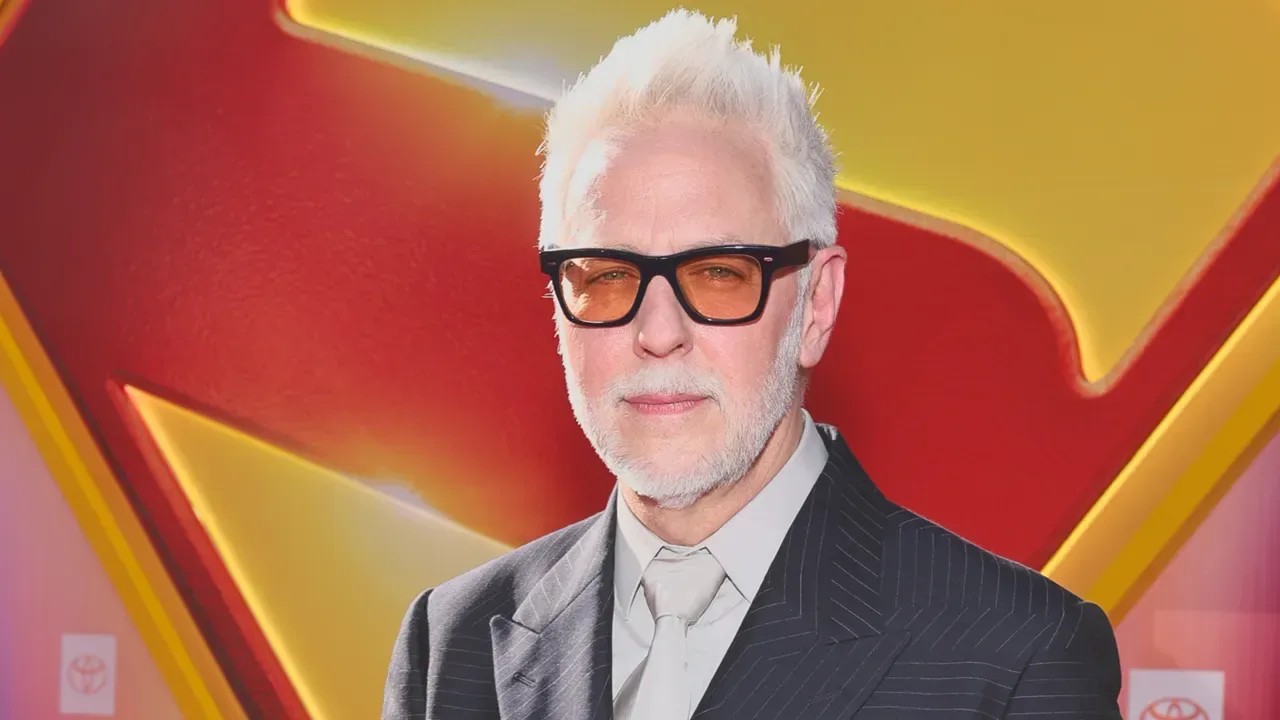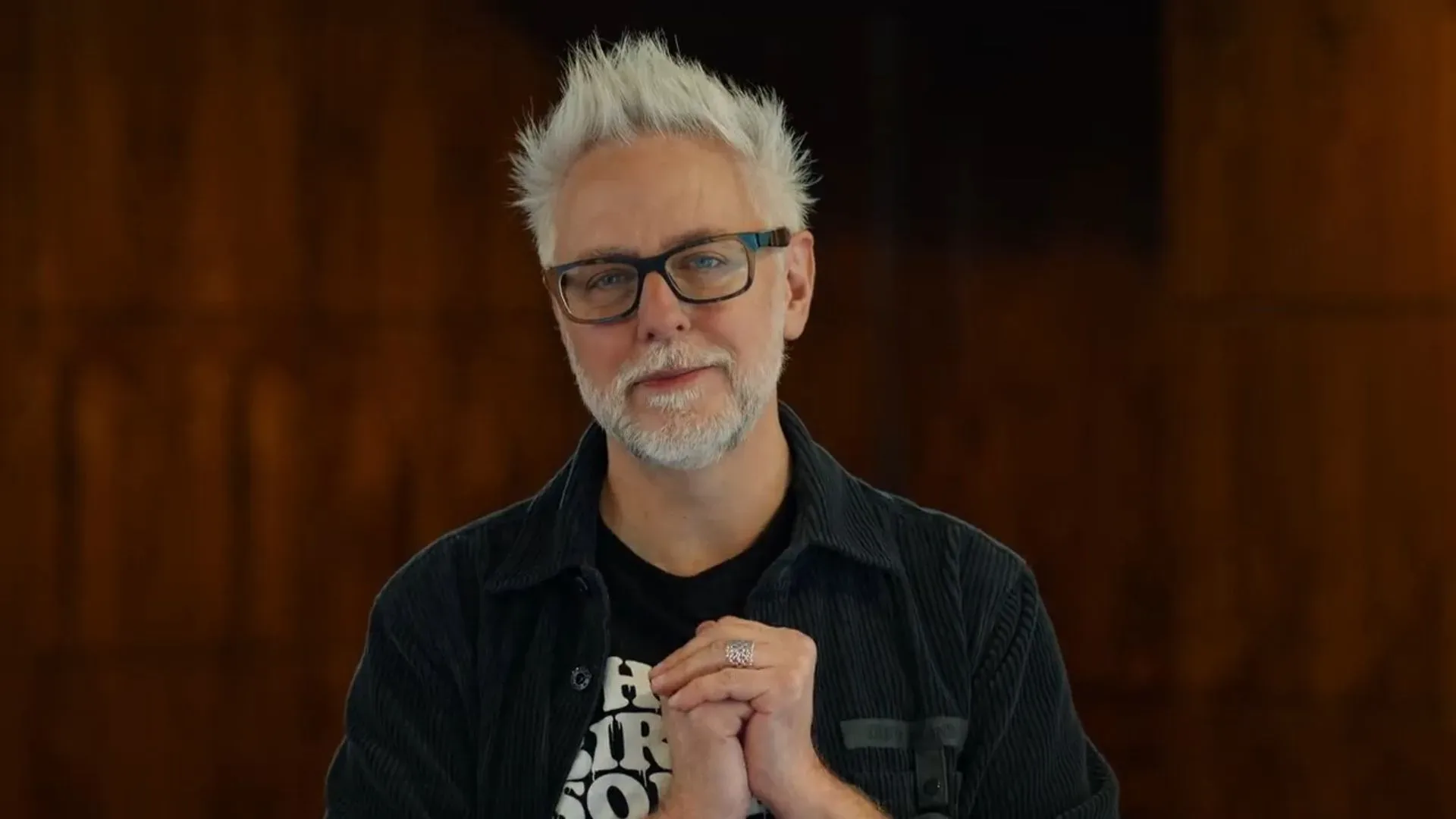

DC Studios is reportedly entering a major leadership transition: James Gunn and Peter Safran are stepping down as co-presidents, with Marvel veteran Jeremy Latcham set to take over the role. The change has prompted an immediate and unusually specific fan debate—not simply about credits or franchise management, but about an interview in which Latcham discussed his Christian upbringing, his experience on early Marvel films, and an instinct to consider whether material would be comfortable for his grandparents.
That interview has become a flashpoint because it landed against the particular creative identity the current DCU has developed under Gunn and Safran. Their work has made room for broad superhero spectacle, but also for abrasive jokes, intentionally strange premises, darker material, and bursts of extreme violence. Fans who enjoy that range are now trying to determine whether Latcham’s comments point to a more cautious DC future—or whether they are being read far beyond what they actually establish.
There is a substantial difference between a producer describing a personal concern on an individual film and a studio head announcing a franchise-wide content policy. At present, the available comments support the former, not the latter. Still, the reaction illustrates why leadership changes at a shared-universe studio are never treated as routine staffing news. The person at the top may influence the kinds of projects that are prioritized, the creative latitude given to filmmakers, and the balance between an all-ages audience and projects designed for adults.
What Latcham actually discussed
Latcham has producing credits on major Marvel Cinematic Universe films including The Avengers, Guardians of the Galaxy, and Spider-Man: Homecoming. In the resurfaced interview, he spoke about deciding at a young age that he wanted to make movies and described how a Christian upbringing informed some of his filmmaking instincts.
His example centered on the first Iron Man, released in 2008. Latcham recalled sometimes wondering whether his grandparents would approve of particular dialogue or jokes. He also said Jon Favreau teased him over that concern. Rather than presenting the anecdote as a campaign to insert religious messaging into superhero movies, Latcham framed it as part of his own sensitivity to what might feel objectionable or alienating to certain viewers.
He also connected the success of Iron Man to its ability to reach viewers on a broad, universal level. That is an important distinction in the current conversation. “Universal” can mean accessible to people with different ages, beliefs, and levels of familiarity with a character. It does not automatically mean sanitized, religiously prescriptive, or opposed to mature storytelling. Those outcomes are separate creative choices, and nothing in the interview itself lays out a DC Studios slate, rating strategy, or set of hard restrictions.
Even so, fans are reading the phrasing through the context of his reported new job. A studio co-president is not merely a producer assigned to one film. The position can involve helping choose projects, working with creators, shaping longer-term franchise planning, and determining how a studio presents itself to audiences. That broader responsibility is why an old comment about a producer’s personal barometer has suddenly acquired much more weight.
Why the interview’s platform became part of the story
The discussion has also focused on the outlet that hosted Latcham’s interview, described as a conservative Christian broadcaster founded by Pat Robertson. For some viewers, a filmmaker openly discussing Christian faith on that platform is encouraging. Comments posted when the video first appeared included viewers who appreciated seeing Christians represented in the superhero-film business.
For others, the platform and Latcham’s grandparents test have combined into a concern that religious or culturally conservative preferences could become a filter for DC material. That concern is understandable as a question, but it should not be confused with confirmation of a future policy. Appearing for an interview and explaining how faith shaped one’s personal outlook is not, by itself, evidence that a studio intends to remake every property around a single worldview.
The strongest grounded reading is more limited: Latcham has publicly described an individual, values-informed approach to making some earlier films accessible to a wide audience. How that perspective would affect a large and varied DC slate remains unknown. Fans are presently filling that uncertainty with their hopes and fears.
The DCU concern is really about range
Much of the anxious reaction is not about whether superhero movies should be made for families. It is about whether DC will retain the freedom to make different kinds of superhero stories for different audiences. One commenter feared that series such as Peacemaker and Creature Commandos, along with darker corners associated with Justice League Dark, may no longer fit the studio’s direction.
That reaction makes sense within Gunn and Safran’s creative record at DC. Their era has been associated with outlandish humor and occasional hyperviolence, a term for violence presented at an intentionally extreme or stylized level. These choices can be divisive, but they also signal that the studio has not treated the DCU as a single, uniform tone.
A shared universe does not have to make every title feel the same. In fact, a universe containing Superman, Peacemaker, supernatural characters, monsters, and street-level heroes arguably benefits when each corner has room for its own tone. A bright, hopeful superhero adventure and an adult-oriented, grotesque animated series can coexist, provided the studio understands the intended audience for each.
That is the practical question behind the social-media argument: not whether “safe” entertainment is inherently bad, but whether one standard of comfort would be applied to every DC project. A consistent content ceiling could make it harder for creators to build projects around darker characters or deliberately unruly comedy. Conversely, a broader accessibility goal could simply mean the studio aims to offer entry points for casual viewers while maintaining distinct labels and tones across its lineup.
Neither outcome has been established. The current reaction is a debate over possibility rather than a confirmed creative mandate.
What “safe” means—and why the term gets slippery
Online discussion has frequently used “safe” as shorthand, but it can mean several very different things. It may refer to less sexual or profane dialogue, reduced gore, fewer politically charged themes, more familiar plotting, a lower age rating, or an effort to avoid offending a broad cross-section of viewers. Those are not interchangeable ideas.
Latcham’s Iron Man anecdote appears to concern content that he personally worried might make his grandparents uncomfortable. That gives some indication of his instincts as a producer, but it does not reveal how he would approach supernatural horror, bleak drama, adult comedy, or a character whose source material is inherently bizarre. Nor does it tell audiences whether those instincts would translate into vetoes, notes, or different project choices at DC Studios.
One more charitable fan reading has been that Latcham was describing restraint rather than evangelism: he may have sought to cut material he regarded as objectionable, not add explicitly Christian themes. That interpretation is still an interpretation, but it better fits the details available than assuming the interview announced a program of religious storytelling.
It is also worth remembering that “broad appeal” is not synonymous with “bland.” In production terms, accessibility can involve clear character motivations, emotional stakes that do not require deep continuity knowledge, and stories that welcome newcomers. Those are storytelling goals, not necessarily limitations on tone. The difficult part for any franchise is preserving that accessibility without flattening every project into the same emotional register.
Continuity offers one measure of stability
Amid the uncertainty, Gunn remains attached to the forthcoming Superman sequel, Man of Tomorrow, which is due next year. He is also writing another upcoming DCU film. Those continuing commitments matter because they indicate that his creative connection to the franchise will not disappear immediately with the leadership change.
They do not, however, answer every question raised by the reported transition. A franchise can retain a writer or filmmaker on individual projects while changing how it evaluates future pitches, develops television series, or defines its overall slate. The result will depend on decisions that have not been detailed publicly.
For audiences invested in the more eccentric and adult-facing parts of DC, the sensible approach is to separate confirmed information from projection. Confirmed details include Latcham’s Marvel background, his comments about his upbringing and accessibility, and Gunn’s ongoing work on Man of Tomorrow and another DCU film. What remains unconfirmed is whether any existing series will be canceled, whether mature projects will be curtailed, or whether Latcham’s personal preferences will become a studio-wide rule.
Fan communities are often at their most animated when a franchise’s identity feels undecided. That same energy has turned other TV events into communal occasions, as seen when fans made a season-one theatrical return a shared celebration. In DC’s case, the immediate response is more apprehensive than celebratory, but it comes from the same investment: viewers care deeply about whether the stories and tones that brought them in will still have a home.
What to watch next
The clearest signals will come from concrete decisions, not assumptions drawn from one earlier interview. Fans should watch for the kinds of projects DC Studios moves forward, the creative teams hired to make them, and whether the studio continues to support materially different tones under the same DC banner.
- Project decisions: New greenlights and cancellations will say more than broad corporate language about what forms of DC storytelling are wanted.
- Creator choices: Writers, directors, and showrunners are often the strongest clue to a project’s intended sensibility.
- Audience segmentation: The important test is whether family-friendly fare expands alongside mature projects, or replaces them.
- Gunn’s continuing work: His involvement with Man of Tomorrow and another film provides a near-term point of continuity during the transition.
Latcham’s record gives DC an executive with experience on enormous interconnected superhero films. His interview provides insight into a personal creative instinct, but not a complete blueprint for the DCU. Until the new leadership’s actual choices are visible, claims that DC is definitely becoming either more restrictive or more inclusive remain speculation.