Generative AI is no longer a speculative sidebar in comics publishing. It is being discussed openly at New York Comic Con, where programming has addressed legal exposure and AI integration, while a Singapore-based platform, Novvel.co, is presenting a practical business case for producing graphic novels more quickly and at lower cost.
That combination makes the debate more concrete. The question is not simply whether a machine can output a comic-book-looking image. It is who contributes the copyrightable work, what rights a publisher can actually control, whether the underlying systems and outputs create infringement risk, and what happens to an illustrator’s role when a human-made design can be applied repeatedly across a lengthy book.
Novvel’s stated approach is not to eliminate people from the process. It describes an AI-powered workflow that takes a manuscript, studies story elements such as setting, protagonist and emotional beats, and generates a storyboard said to reach roughly 60% to 70% of a finished result. An editor, author and illustrator then refine it. That is an important distinction, but it does not make the resulting questions disappear. It instead moves the discussion toward where human authorship begins, how it is documented, and whether the financial terms match the value of the human work being used at scale.
Why comics are a particularly sensitive AI test case
Comics are built from interconnected creative decisions. A page is more than an illustration beside text: it involves character design, acting, environments, composition, panel-to-panel pacing, dialogue placement and the relationship between what a reader sees and what they infer between panels. A graphic novel adds the further challenge of carrying those choices consistently across dozens or hundreds of pages.
That makes a claim of faster production appealing to publishers and authors facing a costly, slow format. Novvel puts a conventional graphic novel at an average production cost of $20,000 to $50,000 and a timeline of 12 to 18 months. It says its process can reduce both time and cost by about 50% to 70%, with final pricing dependent on length, visual complexity, creative requirements and the amount of human involvement.
Those are ambitious efficiency claims, not a universal statement about every book or every publisher. Still, they identify the commercial pressure behind the technology. A small publisher may have limited capital to put behind an unproven graphic-novel adaptation. A larger publisher may be able to fund more projects, but still has to choose carefully. A workflow that promises to turn an existing manuscript into an early visual plan could lower the barrier to attempting an adaptation.
The creative objection is equally direct. Artists and readers have raised concerns about systems trained on existing art without consent, credit or compensation. Separately, publishing businesses must weigh whether material generated by AI can be owned in the same way as commissioned human artwork. The tension is especially sharp in a field where recognizable visual identities can be central to a character, a series and a publisher’s broader franchise plans.
What the convention discussions are actually about
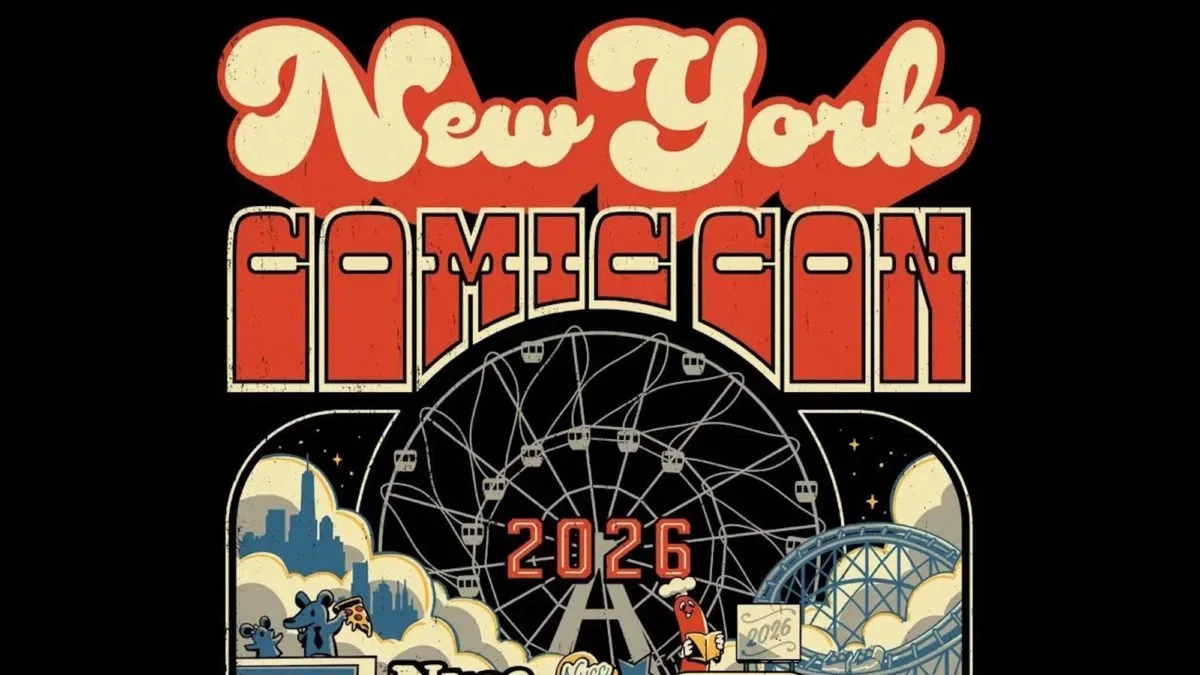
New York Comic Con’s AI-related programming has framed the subject in legal and operational terms rather than as a simple yes-or-no technology question. One session, Defining the Author: Mitigating Legal Risk in AI-Generated Works, covers authorship, ownership, copyright protection, infringement risks, documentation of AI use, agreements and rights management. Another, From Script to Shelf: New Developments in Comic Book Publishing Law, includes AI integration among its topics.
That framing matters because “AI-assisted” is not a single production method. A project might use an AI system to generate early storyboard material, to expand an established visual approach, or to create imagery with much less human intervention. Those arrangements may involve different creative contributions, contracts and risk profiles. Lumping them together can conceal the decisions that publishers, creators and readers may most want clarified.
Authorship concerns the human creative contribution that can be recognized as the work’s expression. Ownership concerns who holds the relevant rights or permissions. Infringement risk concerns whether a work may unlawfully use protected material. These concepts overlap, but they are not interchangeable. A publisher could have a contract with a contributor while still needing to assess what, if anything, is protected in the AI-generated portions and whether the process creates additional disputes.
The source material’s stated legal premise is that a purely AI-generated image cannot currently be copyrighted, while human creative input in storytelling can be. The cited examples of potentially protectable human-led expression include sequencing panels, pairing dialogue with imagery and structuring the narrative. This does not mean every comic involving AI lacks protection. It means the human contribution becomes crucial to identifying what is being claimed and why.
Novvel’s proposed division of labor
Novvel presents its system as a tool for adaptation and production support. Its stated aim is to take a 300-page novel and do it justice as a visual story. The platform describes the system as generating a storyboard after analyzing narrative ingredients, then leaving room for authors, editors and illustrators to shape the work further because fully AI-generated material can feel generic and lack soul.
That description gives the human participants meaningful jobs, but it also makes their agreements exceptionally important. If a human illustrator develops the initial character look or visual language, the question is not just whether they are credited. A publisher and creator will also need to understand what the illustrator is being paid for: a one-time design service, reusable assets, a style guide, a defined number of finished pages, or an arrangement covering broader application of that design across a project.
Novvel says it will not replicate the style of works such as Peanuts or the Moomins. Instead, it says a client works with an illustrator to describe a desired result, the illustrator develops an original style, and that style is then applied at scale. This is a meaningful stated boundary: declining a direct request to reproduce a named existing style is different from saying a system can freely mimic it.
But “applied at scale” is where the labor question becomes unavoidable. In a traditional arrangement, an artist’s labor may be compensated page by page or through a separately negotiated package. If an illustrator creates the key design work and automation multiplies it throughout a 200-page graphic novel, the payment model needs to reflect the actual use of that work. A contract that treats foundational visual development as though it were merely one isolated page would leave an obvious mismatch between contribution and downstream value.
This is an analytical concern raised by the model itself, not an allegation about any specific Novvel agreement. The available details do not state Novvel’s artist compensation terms, ownership contracts or revenue arrangements. They do establish why those terms should be among the first questions asked by any creator considering an AI-assisted production deal.
“AI-assisted” is a description, not a complete answer
“AI-assisted” may become useful shorthand, but the label alone cannot tell readers, creators or retailers what was done. Assistance could refer to an early board derived from prose, the generation of visual elements, the scaling of a human-originated character likeness, or multiple steps in the process. It also does not identify who made the final visual, editorial and storytelling decisions.
For publishers, a credible disclosure should be paired with a clear internal record. The convention programming’s focus on documenting AI use points toward a practical need: companies should be able to identify what tool was used, at what stage, what human work was supplied, who approved the material and what rights were transferred. That is useful if a rights question surfaces later, but it is also basic project management for a medium whose work passes through writers, artists, colorists, letterers, editors and licensors.
For creators, the useful questions are more specific than “Does this project use AI?” They include:
- What material will the system generate, and what material must be made or substantially revised by people?
- Will an illustrator’s designs, likenesses or visual rules be reused across the full project, sequels or other media?
- What credit accompanies the work, and how is AI use described to partners and readers?
- What payment covers initial design, revisions, reuse and broader scaling?
- Who is responsible for rights review and for addressing an infringement claim?
- Which portions of the finished book are understood to rest on human authorship?
For readers, transparent credits may prove more informative than a marketing slogan. Graphic novels are collaborative by nature; readers already understand that writing, drawing, coloring, lettering and editing are distinct crafts. Clear credits can preserve that understanding rather than presenting a smooth, automated surface that obscures the people whose decisions made the book work.
Adaptation offers an early use case
The examples linked to Novvel’s work are adaptations and public-domain material. Its projects include a graphic anthology of O. Henry stories, with The Gift of the Magi relocated to Asia in versions for China, Kashmir, Bihar and Singapore. It also has a library made from public-domain stories, including Arthur Conan Doyle’s The Red-Headed League.
Adaptation is a natural arena for this pitch because a prose manuscript already provides plot, characters and dialogue. Yet turning prose into comics is not mechanical transcription. Someone must decide which moments deserve panels, when a silent reaction does more than narration, how page turns shape surprise, and how much information a reader needs from a setting. The platform’s own emphasis on storyboards and subsequent editorial, authorial and illustrative refinement implicitly recognizes that those decisions are the heart of the visual adaptation.
Public-domain source material may simplify rights around the original text, but it does not answer questions about new art, new designs or AI-generated elements. Likewise, relocating a story for different regional versions involves new creative choices in setting and presentation. The public-domain status of an underlying tale should not be mistaken for a blanket answer to every right attached to a finished graphic novel.
The franchise issue goes beyond a single book
Character consistency is one of the strongest selling points in the model Novvel describes. It says that where a client wants a consistent, exclusive likeness for a franchise, a human artist can establish the design first and AI can then be used to scale and multiply it rather than originate it.
That makes business sense as a proposition: franchise owners value characters that remain recognizable across many appearances. It also explains why copyright and contractual certainty matter so much. A company may not merely be publishing a one-off graphic novel; it may be seeking assets that can support sequels, translations, merchandise or other entertainment uses. In gaming, the same broad strategy of expanding established worlds beyond their original format is visible in efforts such as Xbox’s XP division for extending major game properties into wider entertainment. The media differ, but the practical lesson is similar: a scalable character is commercially valuable only if the rights and contributor relationships are clearly understood.
For comics, the visual creator’s role is particularly consequential. A writer may originate a character in words, while an artist gives it a face, silhouette, expression and visual vocabulary that readers remember. When that design is used to create a large volume of additional imagery, publishers must be careful not to describe a foundational artistic contribution as a disposable preliminary step.
What happens next is likely to be procedural, not just technological
The most useful outcome of this debate would not be a vague promise that AI is either inevitable or forbidden. It would be more precise working standards: explicit contracts, meaningful creator credit, transparent disclosure, documentation of human contributions and careful review of rights risks before a project reaches shelves.
Novvel’s pitch highlights a real economic challenge for graphic novels: they can take substantial money and more than a year to produce. Its proposed workflow also highlights why the industry’s response cannot stop at speed. The closer AI tools move from a rough concept stage toward repeatable finished pages, the more important it becomes to establish who made the original visual choices, what they are paid for, and what a publisher can fairly claim to own.
The conversations at New York Comic Con show that these are already publishing-law questions, not merely online arguments. The technology may assist a graphic novel’s production, but it cannot assist away responsibility for the creative labor, agreements and rights that make that book possible.