Warning: major spoilers for Absolute Green Lantern #19 follow.
Absolute Green Lantern #19, by Al Ewing and Jahnoy Lindsay, takes a bold route to explaining the Absolute Universe: it treats nearly a century of obscure DC characters, secret agencies, altered identities and cosmic weirdness as pieces of one deliberately constructed history. The issue’s central device is Cameron Chase’s “Manhunter File,” but this is not simply a dossier full of Easter eggs. It is a framework that connects the line’s disparate threats, institutions and damaged heroes.
That makes #19 an unusually consequential installment. Jo and the Green Lantern Corps remain part of its immediate present, yet the focus turns toward the historical machinery surrounding them: O.S.S. Section ARGENT, the later Agency, the DEO, Task Force X, Belle Reve, and a recurring Manhunter legacy that repeatedly changes names and purposes. The result is a story that asks readers to look at the Absolute setting not as a set of isolated reinventions, but as a world shaped by systems that have studied, directed and curtailed superhuman potential for decades.
The Manhunter File is a history lesson with a sinister job
In conventional DC continuity, “Manhunter” is not one simple identity. It has belonged to several heroes, villains and organizations over many decades. Absolute Green Lantern #19 uses that built-in instability as an advantage. Rather than merely selecting one familiar Manhunter, it makes the title a trail of aliases, inherited functions and institutional manipulation.
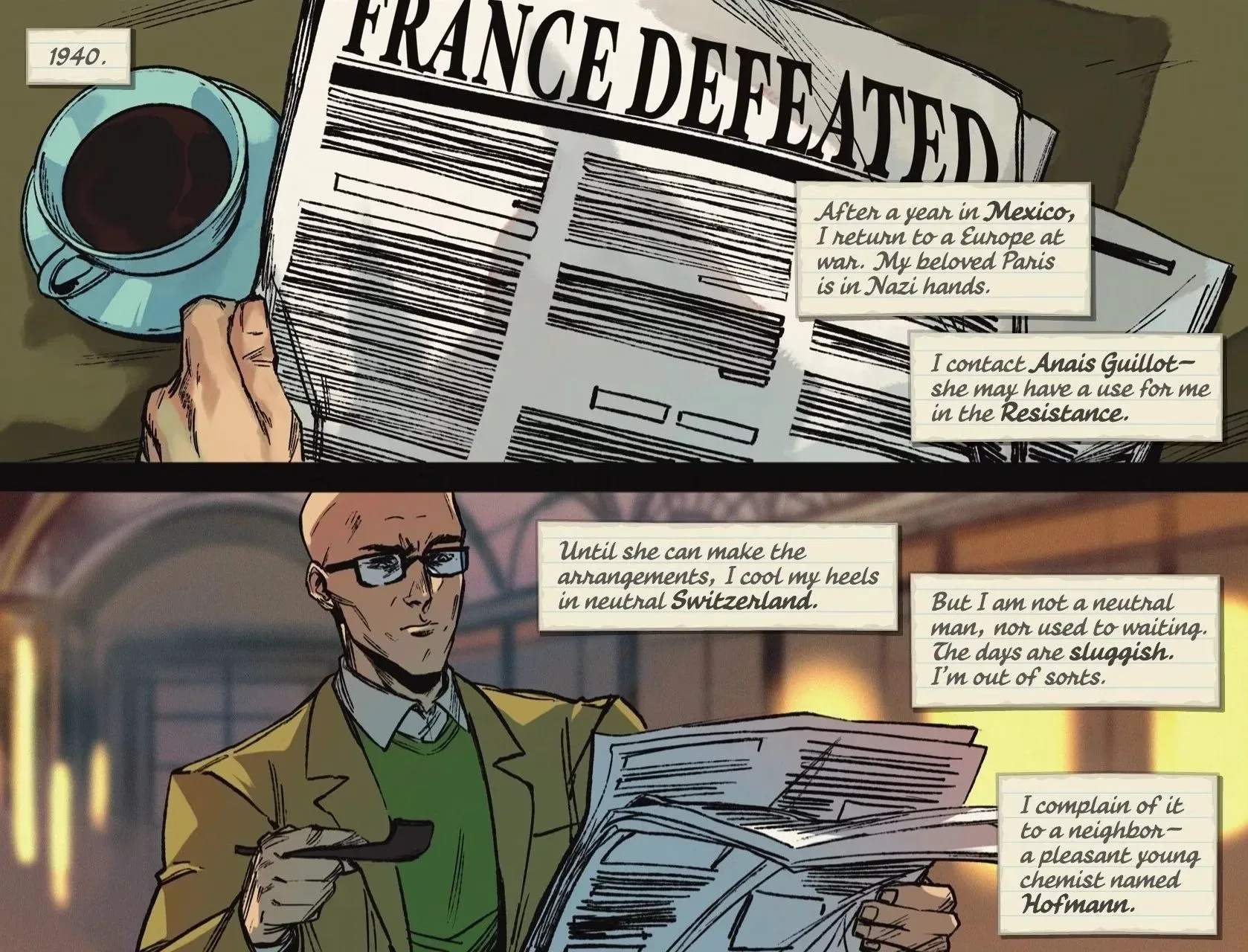
The issue begins its historical thread with Paul Kirk in 1935. Outside the Absolute setting, Kirk became closely associated with the Manhunter name after earlier iterations involving Rick Nelson were consolidated into the character’s publishing history. The main DC version of Paul Kirk later became the center of a 1970s conspiracy story involving the Council, and the Manhunter concept eventually extended to corrupted robotic Manhunters. Those layers matter here because the Absolute Universe is consciously treating old identities as material that can be reassigned and weaponized.
Paul Kirk becomes Control in the Absolute timeline. “Control” is a useful term to underline, because it describes both a specific leadership role and the issue’s larger preoccupation. The people directing ARGENT and its successors are not just gathering information. They are attempting to manage the appearance, growth and behavior of extraordinary people. Superheroes are treated as a problem to be understood, contained and, where useful, repurposed.
The wartime context brings in the real Office of Strategic Services, the U.S. intelligence organization that preceded the CIA, along with its founder William “Wild Bill” Donovan. But the comic builds a fictional branch of this setting around ARGENT and the Manhunter File. In the older DC material, Control was connected to an OSS-inspired organization and later to Task Force X. #19 reshapes that heritage so that ARGENT is tied directly to Task Force X’s role in the Absolute Universe.
For new readers, ARGENT is not presented as just another acronym to memorize. It is the root system for the institutional story. It becomes the Agency, while the DEO forms around Donald Richards. Task Force X closes at one point, only for its ideas and people to remain very much alive. The question is no longer whether an agency survives under a particular name; it is which version of the same project is operating now.
Paul Kirk, Slam Bradley, Rick Flag and Uncle Sam form one unstable legacy
The issue’s most striking reveal is that several names readers might expect to belong to separate characters instead map onto a single shifting identity. Samuel “Slam” Bradley, Richard Nelson, Paul Kirk and Rick Flag are not merely being referenced in parallel. The story ties them into one long, unsettling evolution that ultimately leads to Uncle Sam.
Slam Bradley’s inclusion reaches back to Detective Comics #1, where Jerry Siegel and Joe Shuster created the hard-charging private investigator. Rick Nelson, meanwhile, was an early costumed Manhunter whose history later became entangled with Paul Kirk’s. Rick Flag carries a different but related kind of DC legacy: Rick Flag Sr. led the World War II Suicide Squadron, while Rick Flag Jr. became the field leader widely associated with Task Force X and the Suicide Squad.
By collapsing these names into one figure across the twentieth and twenty-first centuries, the Absolute Universe turns legacy into something less celebratory and more coercive. A name is not necessarily a stable identity or a heroic inheritance. It can be a label imposed by an operation. It can be a means of erasing who someone was, redirecting what they do, or presenting a usable symbol to the public.
The endpoint, Uncle Sam, is especially loaded. In this continuity, he has existed across the twentieth century and into the twenty-first, serving “the real powers.” That phrasing makes Uncle Sam far more than a patriotic avatar. He becomes a human-shaped expression of the network behind the universe’s major decisions. The transformation also puts a grim spin on the issue’s identity theme: a person can be renamed so often that the latest version becomes an instrument rather than an individual.
Rick Flag’s role adds emotional and moral weight. He begins to understand that his self-interested choices helped sacrifice a world. The story therefore does not frame the conspiracy solely as an abstract lore puzzle. Its historical revisions have consequences for someone who has been passed through the system, remade by it and eventually forced to confront what he enabled.
Deep-cut characters make the new history feel deliberately assembled
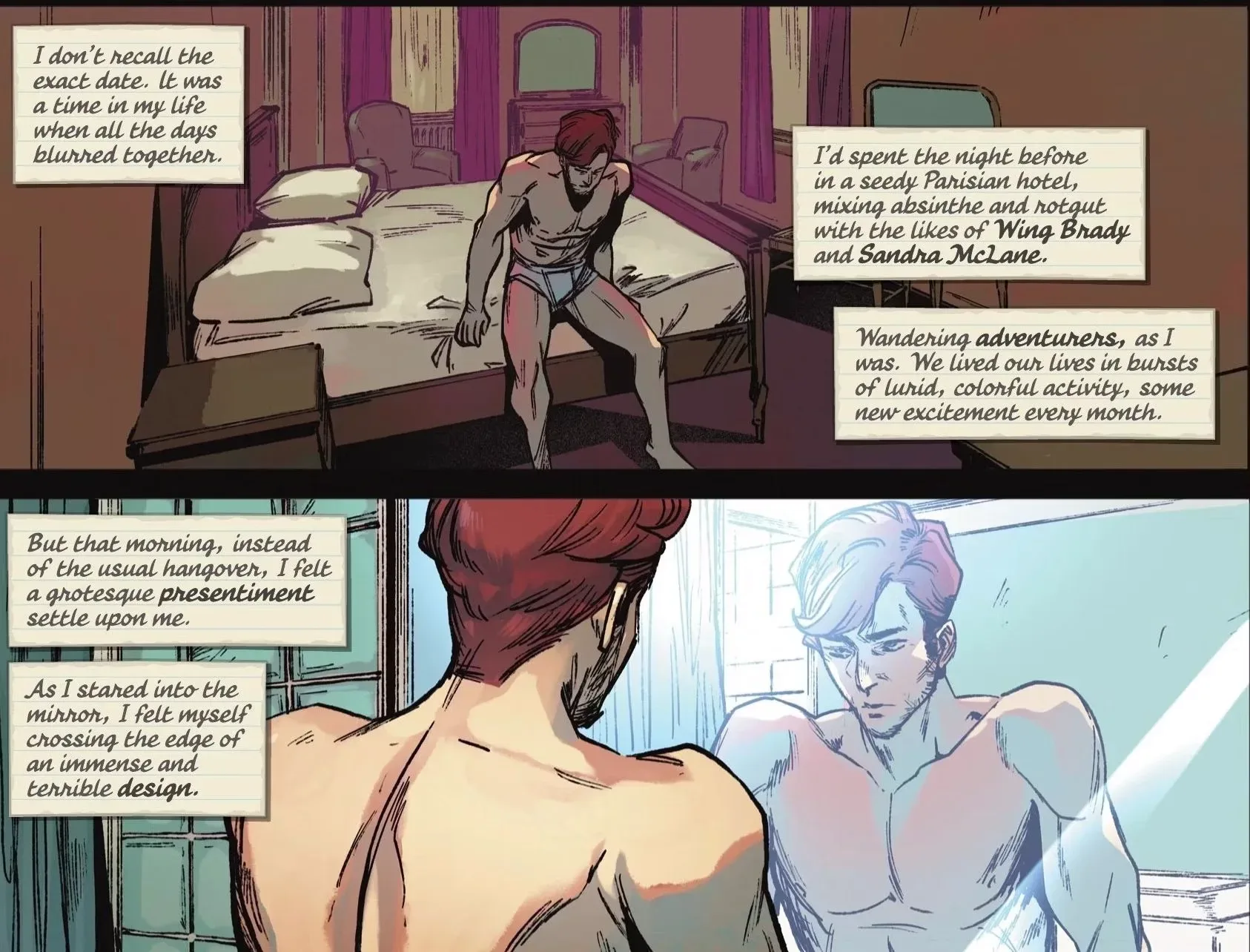
#19 pulls from an unusually broad range of DC’s past. Wing Brady, Sandra McLane of the Secret Service, Anais Guillot as one of the women called Mademoiselle Marie, André Blanc-Dumont/M’sieu Machine, Donald Richards, Darrell Dane/Doll Man and Harry “Tex” Thompson all enter the tapestry. The effect is less “spot the reference” than “watch a fictional archive become active.”
Donald Richards is particularly important because he takes over the narrative after Paul Kirk moves to another dimension. In pre-Absolute comics, Richards was the Quality Comics Manhunter, a police graduate who adopts a masked identity to clear a friend framed for murder and continues using it for cases beyond normal police reach. His dog Thor was later retroactively connected to the android Manhunter mythology. In #19, the character’s arrival gives the DEO strand of the story a Manhunter perspective separate from Kirk/Bradley/Flag’s shifting identity.
That distinction is vital. The issue is not arguing that every Manhunter is literally the same person. It is using Manhunter as a repeated pattern: people and systems answering perceived threats through investigation, vigilantism, surveillance, replacement and control. Donald’s story and the fate of Thor help make that pattern feel personal rather than purely bureaucratic.
Kate Spencer is another key loose end. In the main DC tradition, she is the modern Manhunter and the first woman to take the name, wearing armor that visually recalled Paul Kirk’s red costume. Here, Red Kate leaves with Task Force X, and the eventual present-day reveal identifies her as Amanda Waller. That reveal brings the Suicide Squad’s institutional shadow forward into the modern Absolute setting without requiring the series to simply repeat the familiar version of Waller.
Other unresolved names expand the board: the condemned Belle Reve Psychiatric Facility, Will Lawler, Renee Montoya, and Kyle Rayner, whom Waller is bringing into Absolute Green Lantern. These are not promises of specific plots or outcomes, but they clearly establish where future stories may apply pressure. Readers following the wider universe should take note of the people who remain outside the official file, or whose relationship to the agencies has not yet been settled.
Cosmic horror and meta-fiction are part of the explanation
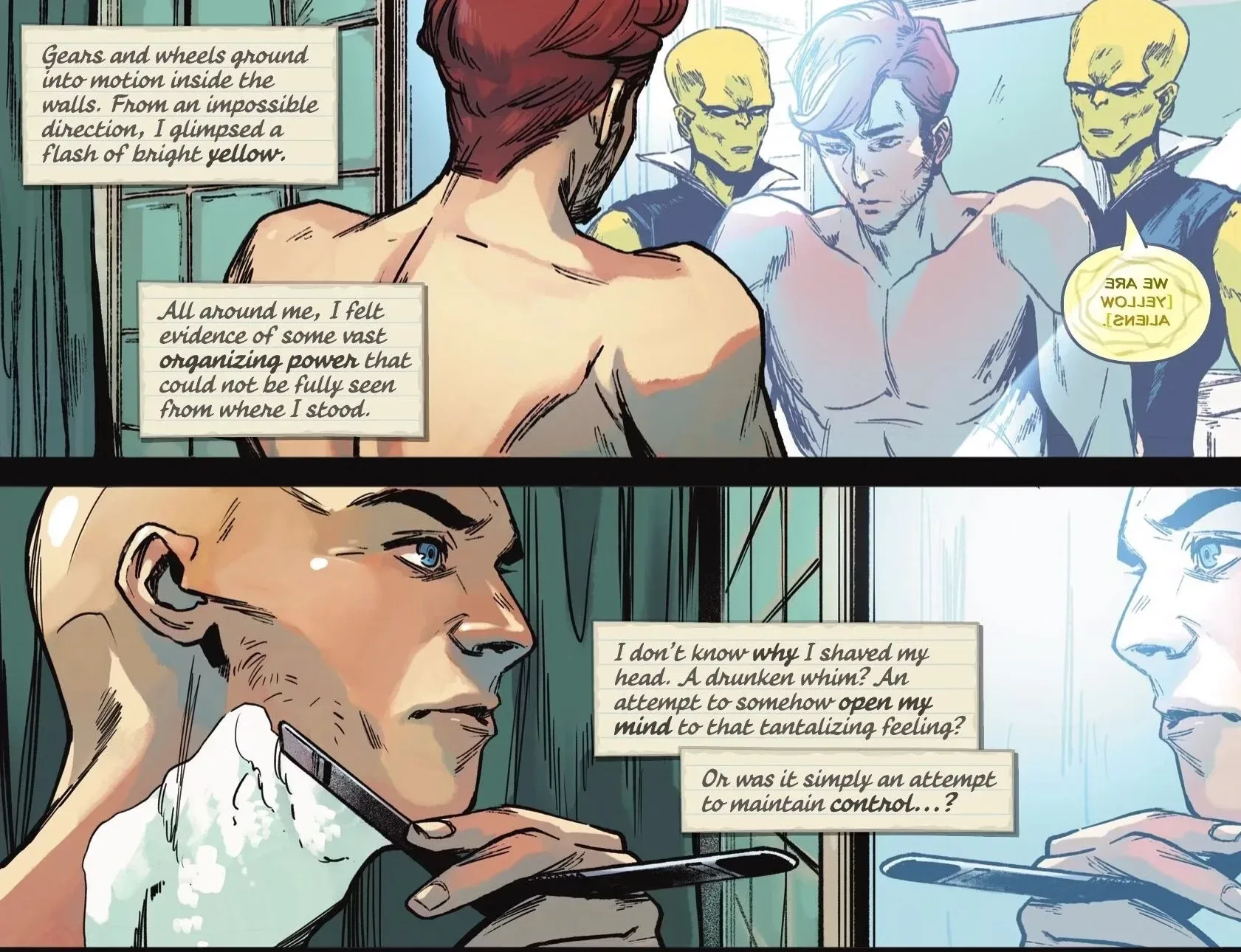
The political and espionage material is only half of #19’s approach. Ewing and Lindsay also use reality-bending ideas associated with Grant Morrison’s work, especially Morrison’s Animal Man. The Yellow Aliens, originally the invaders behind Buddy Baker becoming Animal Man in Strange Adventures #184, were later reimagined as agents of the force that brings the DC universe into existence. Their presence makes the Absolute Universe’s conspiracy cosmological as well as governmental.
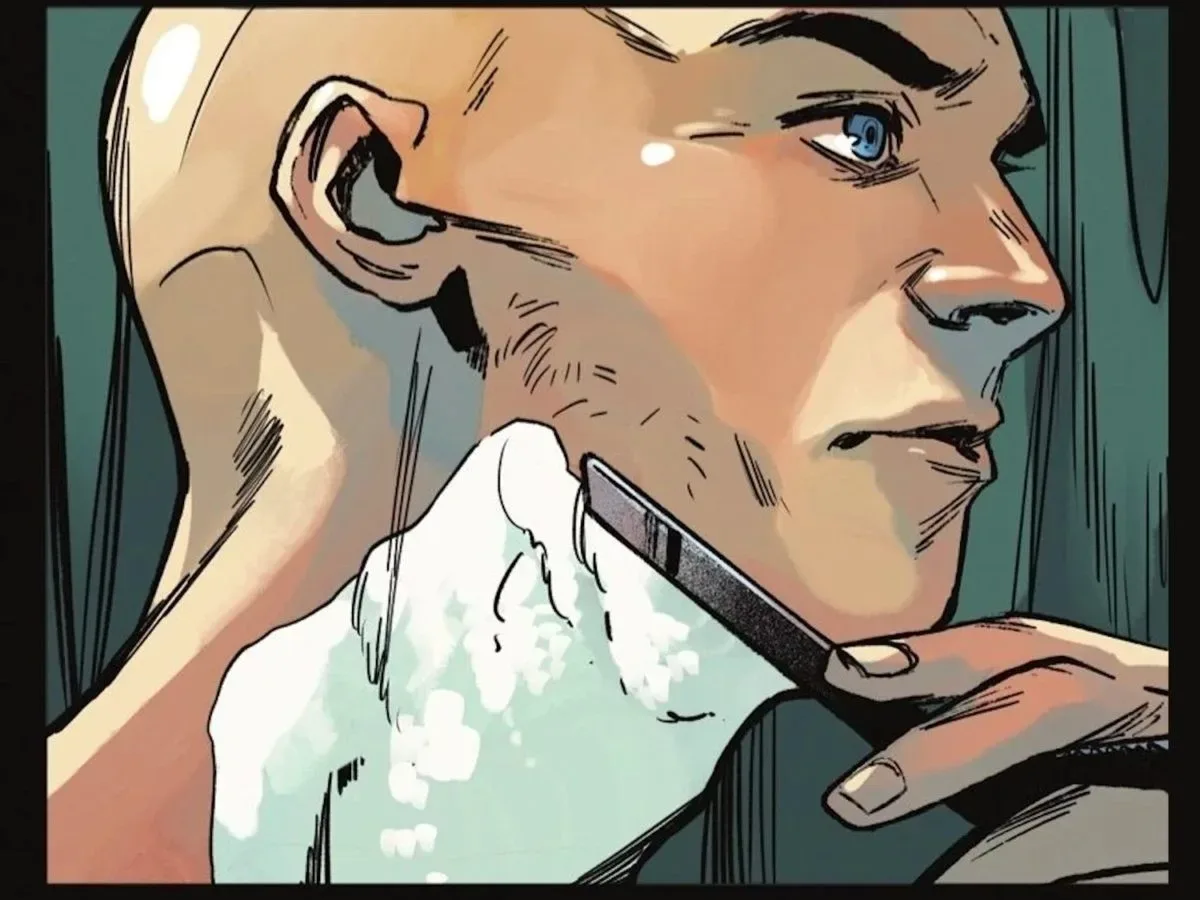
Paul Kirk’s resemblance to Morrison is part of the issue’s meta-fictional play. Meta-fiction means a story deliberately drawing attention to storytelling, creators, fictional construction or the boundary between narrative layers. The comic does not merely borrow a character name or visual reference; it invokes a strain of DC storytelling in which a universe can be examined as a made thing with manipulators beyond ordinary reality.
This is where the issue’s Lovecraftian “forbidden knowledge” atmosphere fits. ARGENT’s secret is not just a classified political scandal. It concerns what waits beyond reality. Cosmic horror, as a storytelling mode, emphasizes humanity’s vulnerability before forces too immense or alien to fully grasp. The Absolute Universe’s secret agencies try to make such knowledge legible and operational. That is an inherently dangerous project: the institutions seek control, but the thing they are studying may exceed any human system of control.
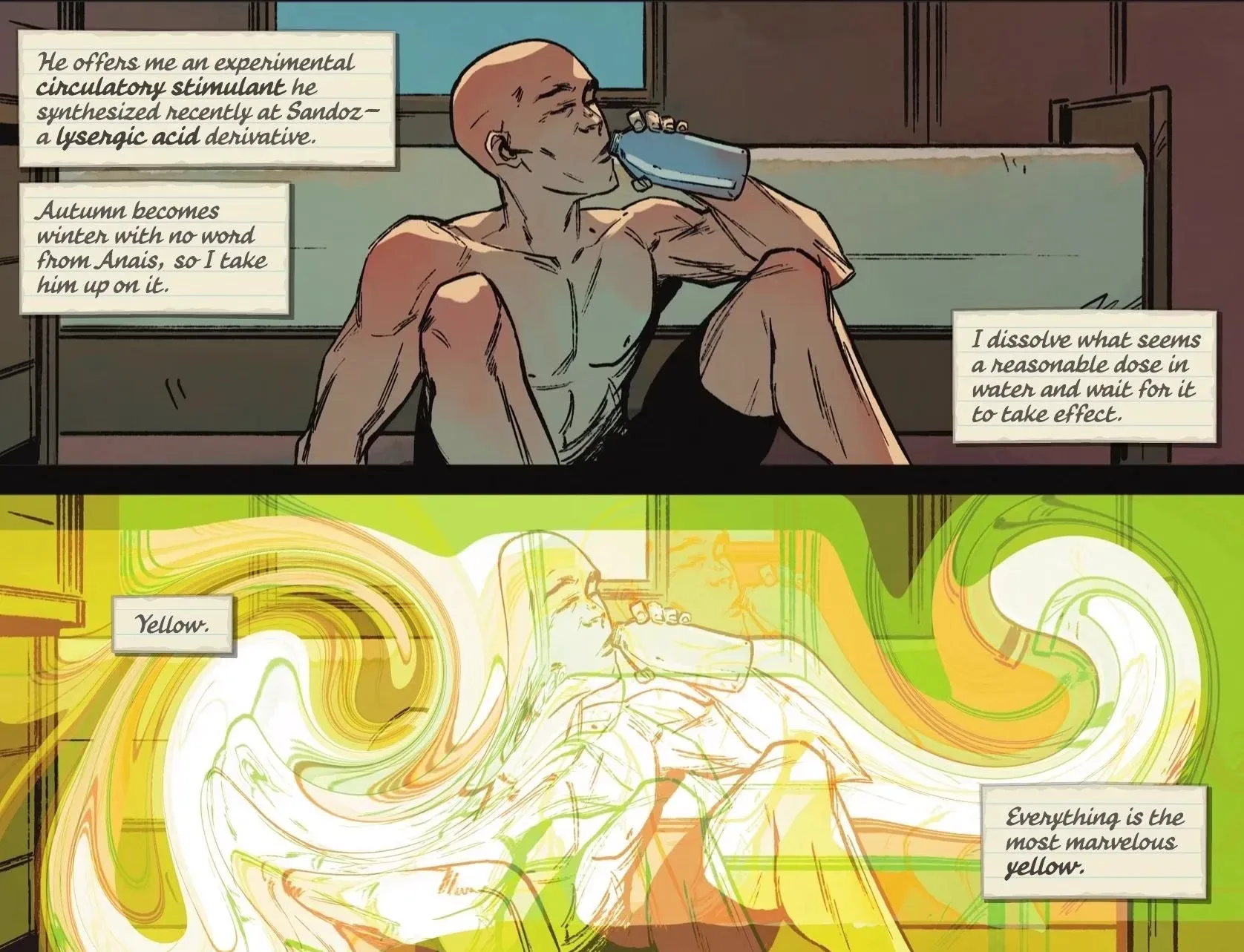
The story also invokes LSD in connection with experiments on superheroes. It does not offer this as a casual period detail. In the narrative, it is another example of authorities pushing into consciousness and perception to obtain answers. With reality itself in question, altered perception becomes a tool of investigation—and another opportunity for exploitation.
Why the links to Absolute Batman and Superman matter
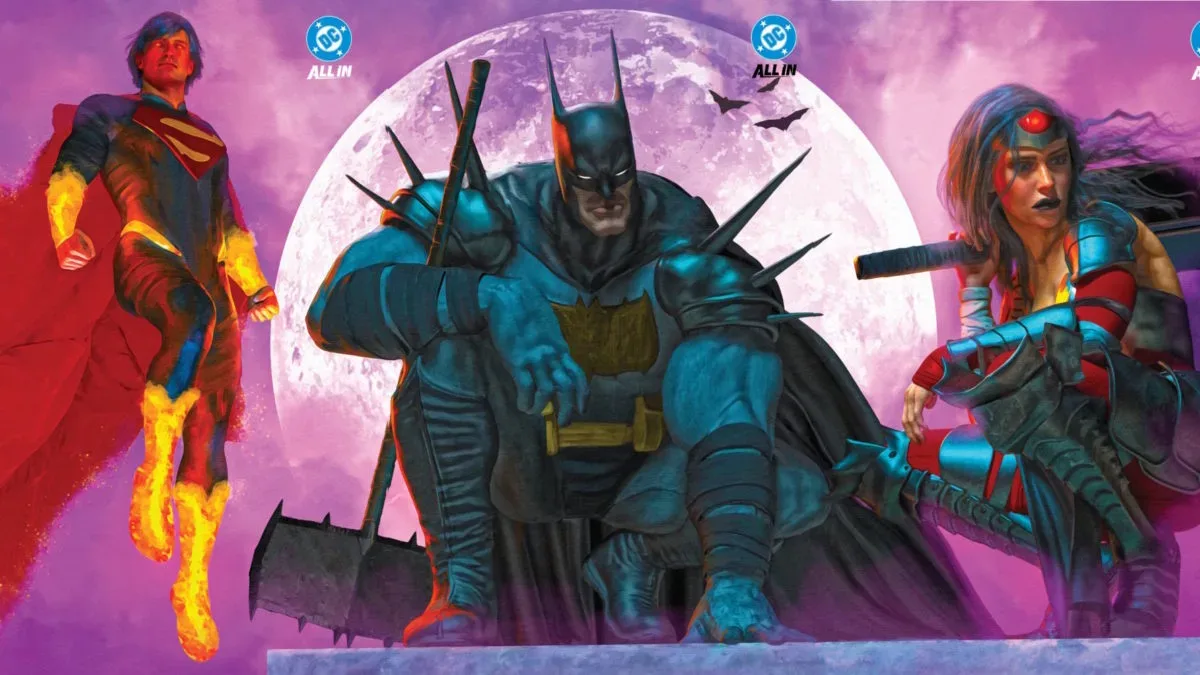
#19 makes the wider Absolute Universe feel structurally connected. It identifies the Lazarus Corps, associated with Ra’s al Ghul in Absolute Superman, and K.J. Holdings, tied to Jack Grimm, the Absolute Joker, in Absolute Batman, as part of the same wider pattern. Carter Hall’s Hawkman and Absolute Iron Munro also slot into the historical record established by the Manhunter File.
That does not mean every mystery is solved. In fact, the issue’s real achievement is defining the shape of the unanswered questions. The heroes and villains may have separate books, motives and genres, but the file suggests that a persistent power structure has been responding to them for generations. It identifies the infrastructure beneath the line: research, records, facilities, financial interests, personnel and symbols.
There is a practical reading order implication here. Anyone reading only Absolute Green Lantern can follow #19 as an explanation of its own agencies and the forces chasing hidden knowledge. Anyone also reading Absolute Batman, Absolute Superman, Absolute Justice and Absolute Evil now has clearer reasons to view their apparently separate details as coordinated signals. The issue is a map, not a final answer sheet.
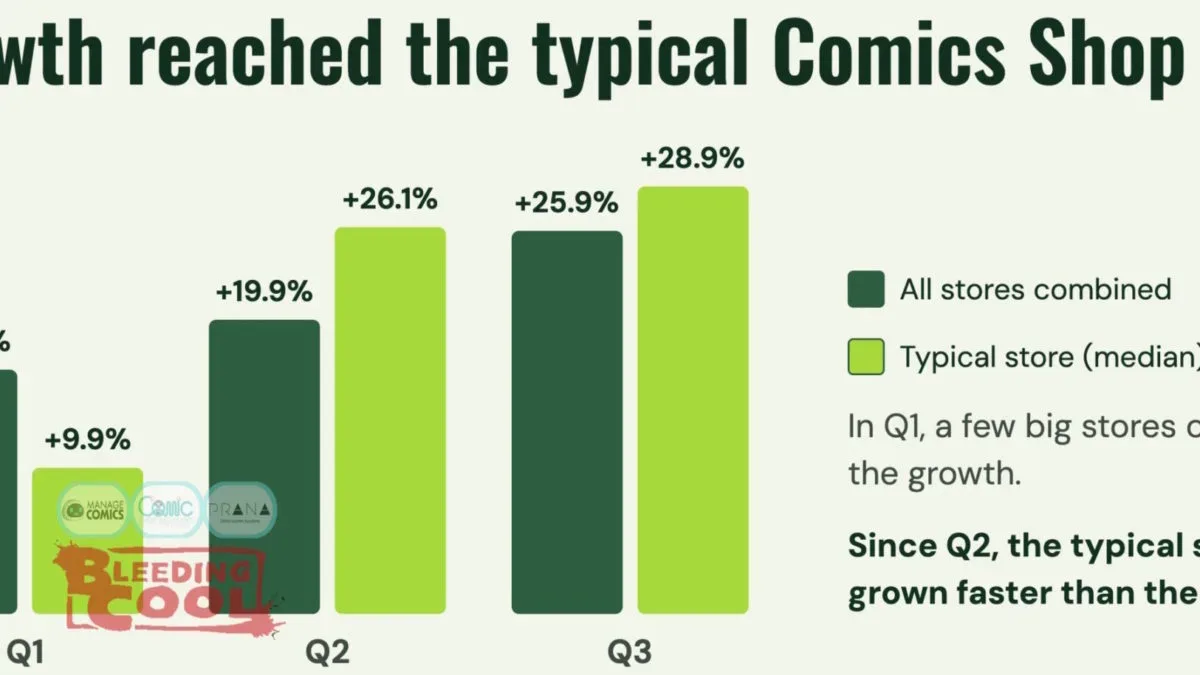
Its dense continuity also arrives at a time when comics remain a meaningful pillar for specialty stores alongside cards and books, as reflected in recent discussion of comic-shop sales. A lore-heavy chapter like this is exactly the kind of issue that encourages rereading, back-issue digging and conversations across a shared universe.
What #19 changes for the Absolute Universe
Absolute Green Lantern #19’s biggest change is conceptual. It establishes that the Absolute Universe’s twentieth-century history is not background decoration. It is a contested archive. Names have been edited, roles reassigned, organizations renamed and people made into assets. The Manhunter File exposes enough of that process to make the universe’s earlier mysteries feel connected, while holding back enough to keep the threat active.
The immediate stakes now rest with Cameron Chase’s revelations, the fate of ARGENT’s discoveries, Amanda Waller’s revived connection to Task Force X and Belle Reve, and Kyle Rayner’s impending entry into the book. Behind all of those threads is the unresolved question of Control: where Paul Kirk went, what he became and how much influence he still has over events.
For an issue rooted in archival detail, #19 is surprisingly forward-looking. It turns old DC names into a modern engine for the Absolute line, with the unnerving suggestion that its heroes have never been acting on a truly open board.
Shop the products
Check current price, model and availability at the retailer.