A lot of guide frustration starts the same way: you are following along, the story objective seems right, but the menu option is missing, the button prompt looks wrong, or the collectible note does not exist in your version. That usually means the walkthrough and the game in your hands are not actually the same release.
This gets more common as older games pick up HD collections, DX editions, remakes, digital ports, and convenience updates. The title on the box may stay familiar while the useful guide details drift apart. A route can still be correct while the step-by-step advice becomes unreliable.
The safest habit is to identify your exact build before trusting any walkthrough. For retro games and rereleases, four checks matter most: platform, branded edition name, region, and revision or rerelease line. Once you know those, it becomes much easier to tell whether an original guide is still helpful, only partly helpful, or the wrong tool entirely.
The words original, remaster, and remake help, but they do not solve the problem by themselves
Players often treat original, remaster, and remake like hard technical categories that tell you everything they need to know about guide compatibility. In practice, they are only a starting point. Publishers market rereleases differently, and the useful question is not whether fans would argue a release belongs in one label or another. The useful question is what changed in the version you own and whether those changes affect the kind of help you need.
That is why the name printed by the publisher matters so much. Shadow of the Colossus on PlayStation 2, the Ico and Shadow of the Colossus Collection on PlayStation 3, and Shadow of the Colossus on PlayStation 4 are all connected releases, but they do not promise the same completion advice. Sonic Adventure and Sonic Adventure DX are even better proof that a small change in branding can be a giant warning sign for guide matching. Paper Mario: The Thousand-Year Door on GameCube and on Switch may share the same broad adventure, yet convenience features can make old menu directions feel clumsy or wrong.
So do not start by debating terminology. Start by reading the actual store page, manual, disc label, cartridge listing, title screen, or system library entry. If the edition name differs, assume the guide may differ too until you confirm otherwise. That habit is more useful than trying to win an argument over whether a rerelease is technically a remaster, a remake, or something in between.
The four checks that matter before you open a guide
Platform is the first check because controls, save behavior, controller labels, and system-level features are tied to hardware families. A PlayStation 2 guide may assume original controller naming and save habits. A Dreamcast guide may expect VMU-related behavior and Dreamcast button labels. A Switch rerelease may add shortcuts or hint features that older console instructions never mention.
Branded edition name is the second check, and it is often the most important one. If the storefront says Sonic Adventure DX rather than Sonic Adventure, that is not cosmetic wording. It tells you the seller recognizes a distinct release line. Likewise, a collection release, director's cut, HD version, or Switch version should never be treated as automatically identical to the launch version. Even when the story progression is mostly shared, the surrounding assumptions can change enough to weaken a walkthrough.
Region is the third check. Some games keep the same name across regions while changing menu language, packaging terms, and release-family labels. A guide written around a North American release may still be useful elsewhere, but region differences are one more reason to read the guide's coverage note carefully rather than trusting the headline alone.
Revision or rerelease line is the fourth check. This is the part players skip most often. A game can return later as part of a collection, as a digital storefront release, or as a new platform edition many years later. That is where menu instructions, optional help systems, trophy or achievement notes, and convenience shortcuts often drift first. If you only remember one rule, make it this: the same game name does not guarantee the same guide fit.
- Check the platform before anything else.
- Read the full edition name, not just the main title.
- Confirm the region if the guide cites a specific release.
- Look for collection, DX, HD, or platform-rerelease branding.
What usually survives across versions, and what breaks first
The broad route through a game is often the most durable part of an old walkthrough. If a guide says a certain boss comes before another, or that a chapter objective sends you from one hub area to the next, that advice may survive several rereleases. Core progression usually stays recognizable longer than everything around it.
The first things to break are usually the practical details that live around the route. Menu paths age badly when interfaces are reorganized. Control instructions become awkward when button labels change across platforms. Save guidance can become misleading if an older version relies on separate hardware habits or prompts. Completion advice also drifts quickly because trophies, achievements, hidden extras, helper systems, and newer convenience tools often belong to later releases rather than the original one.
Collectibles are another danger area. Even when their physical locations do not move, the tools around them can change. A later release may track progress differently, surface extra hints, or attach platform-specific rewards to a completion run. That means a route guide can remain broadly useful while a full-completion checklist becomes outdated. Readers often think the whole walkthrough failed when really only one layer of it stopped matching their release.
This is the main distinction to keep in mind when you compare guides: route help tends to travel better than completion help. If you are stuck on where to go next, an original guide may still save you. If you are chasing every extra, every platform reward, or the cleanest modern menu path, you need much tighter edition matching.
- Trust chapter or boss order more than exact menu wording.
- Be cautious with trophy, achievement, and collectible sections.
- Treat save instructions as version-sensitive.
- Assume optional systems change faster than main progression.
Shadow of the Colossus: route guidance ages better than completion guidance
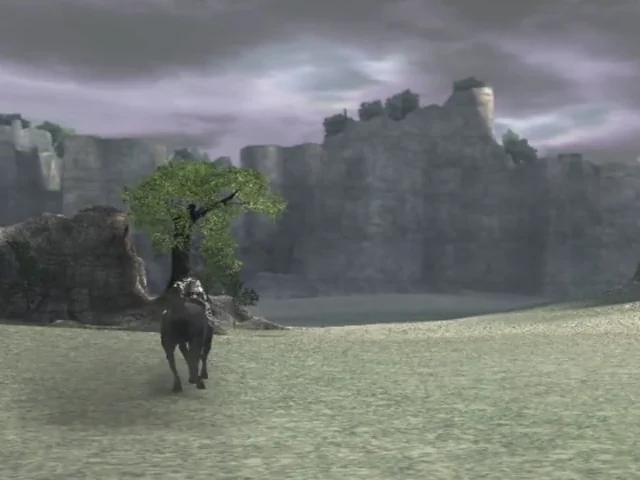
Shadow of the Colossus is a clean example because its central structure is easy to recognize across releases. If you only need help identifying the next colossus or understanding the broad solution to a fight, an original-platform guide can still be surprisingly useful. The underlying sequence is more stable than many players expect.
The differences matter once you move beyond pure route help. PlayStation presented the 2011 Ico and Shadow of the Colossus Collection as a rerelease with full 1080p HD output, stereoscopic 3D support, 7.1 surround sound, and trophies for each game. Those additions do not rewrite the adventure's backbone, but they absolutely affect what a completion-minded guide should talk about. A PlayStation 2 walkthrough cannot help with trophies because those belong to the later collection release, and it will not frame the game around PS3-specific feature sets.
The PlayStation 4 version creates an even clearer split. PlayStation describes that release as rebuilt from the ground up by Bluepoint Games and JAPAN Studio. Even if a fight explanation still carries over, a guide that starts discussing newer platform features has to be version-specific or it risks confusing players immediately. That is the point where a broad boss-order guide and a completion guide stop being the same kind of document.
So for Shadow of the Colossus, ask what kind of help you need before you pick a walkthrough. If you are lost on a colossus route or want broad combat logic, an original guide can still be a workable companion. If you want every extra, every platform feature, or a completion path tied to later-system rewards, stop and find a guide that names the exact release family you own.
- PS2 original guide: best for baseline route and fight flow.
- PS3 collection guide: needed for trophy-oriented completion advice.
- PS4 guide: best for later-version feature coverage.
- Do not assume a general Shadow of the Colossus guide covers all three release families.
Sonic Adventure: edition branding matters more than many players expect
Sonic Adventure is the case study that teaches players to look at the edition name before the game name. Steam's current PC storefront does not simply sell Sonic Adventure. It sells Sonic Adventure DX. That extra label is a practical warning that a guide for the original Dreamcast release and a guide for later DX-branded releases may not be interchangeable in all the ways that matter.
The original North American Dreamcast manual is a good anchor for what an original-release guide may assume. It presents Adventure Mode and Trial Mode as separate parts of the game's structure. It also states that the game is compatible with the Visual Memory Unit and that cleared action stages, events, and boss victories are saved automatically. Those details matter because they tie the player's expectations to Dreamcast-era hardware, interface language, and save behavior.
This is where players make a common mistake. They search the title, see familiar stage names, and assume any Sonic Adventure walkthrough is close enough. Sometimes it is. But if the guide gives hardware-specific setup notes, references Dreamcast button labels without translation, or talks through save behavior with VMU-era assumptions, you may spend more time converting the instructions than following them.
The useful lesson here is modest but powerful. You do not need to overstate the differences between the Dreamcast original and later DX releases to see why guide matching matters. The publisher's own branding already tells you there is a distinct release line in play. When a release is sold as Sonic Adventure DX, use DX-labeled guides if you need detailed menu, save, or side-feature help. Use an original Dreamcast guide more cautiously, mainly for the broad structure of the adventure rather than every practical instruction wrapped around it.
- Dreamcast manual details do not automatically map to PC DX releases.
- VMU and Dreamcast button assumptions are version-sensitive.
- Use DX-labeled guides for detailed storefront-port help.
- Use original Sonic Adventure guides mainly for broad route structure if your edition differs.

Paper Mario: The Thousand-Year Door shows how convenience upgrades can break old step-by-step advice
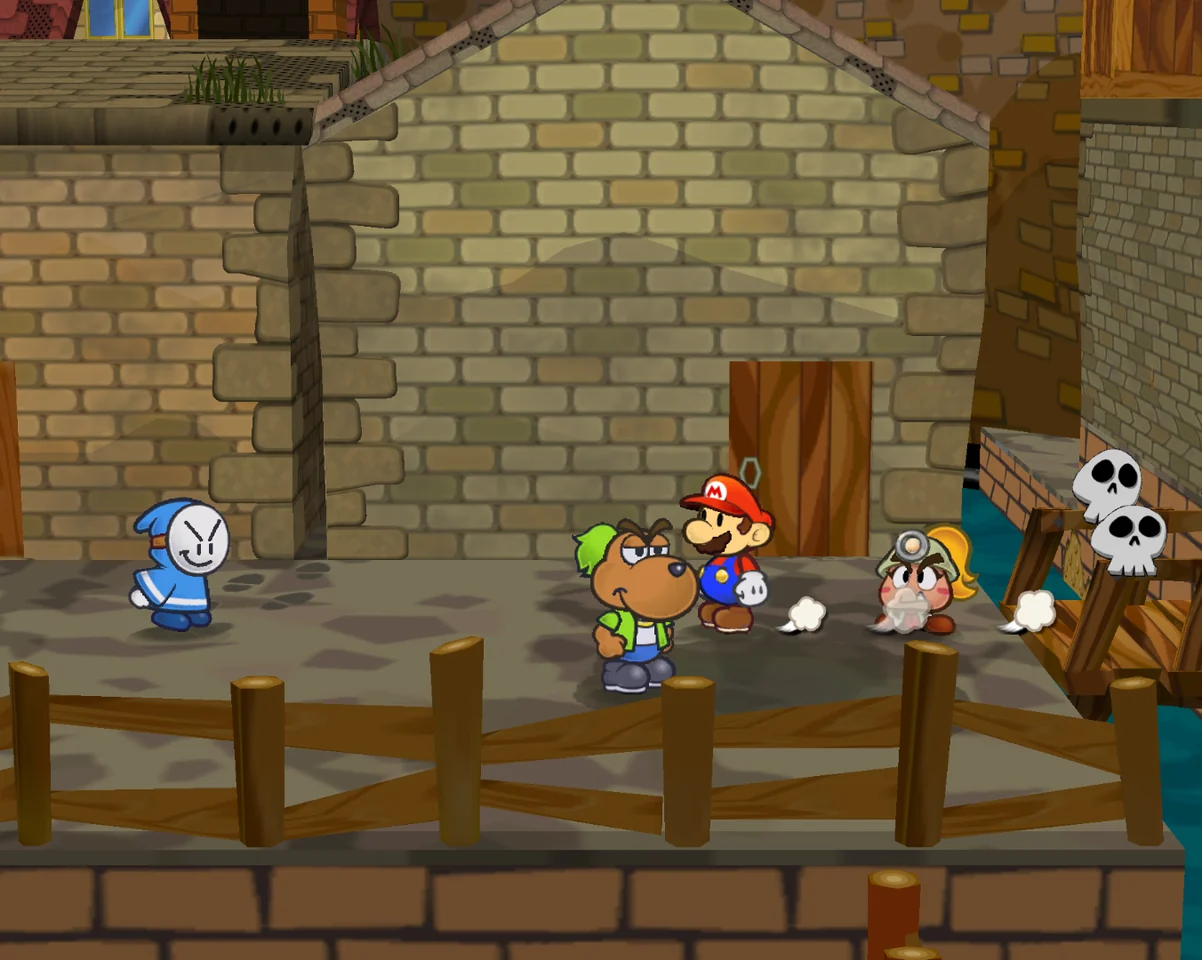
Paper Mario: The Thousand-Year Door is the clearest example here of a rerelease that can preserve the same destination goals while weakening older walkthrough instructions. Nintendo's current Switch store page says the newer version has revamped graphics, an updated soundtrack, updated quick-travel pipes, and a Partner Ring for faster partner swapping. Nintendo's feature coverage for the Switch release also highlights more easily accessible quick-travel pipes, gameplay hints, and the Nostalgic Tunes Badge for players who want the older-style music option.
None of that automatically means the main story path is unrecognizable. In fact, the broad adventure is exactly the sort of thing an older guide may still explain well. The trouble starts when a GameCube-era walkthrough gives granular instructions based on older interface expectations or slower convenience options. The original GameCube manual is useful as a baseline because it shows the older field, battle, and menu presentation that many original-version guides were written around.
This is a classic source of player confusion. The guide says to use a certain route because it is the best available shortcut, but the rerelease may offer a cleaner quick-travel option. The guide tells you to open menus in an older rhythm, but the newer release may streamline the same task. The destination can still be right while the method feels inefficient, outdated, or simply not written for your interface.
For Paper Mario, the safe approach is to separate objective help from method help. If you want to know what chapter goal comes next, an original-platform guide can still be serviceable. If you want the fastest way to use the newer shortcuts, the cleanest menu advice, or help tied to the Switch release's added convenience features, look for a Switch-specific guide.
- Old chapter goals may still be correct on Switch.
- Menu and shortcut advice may not be the best fit anymore.
- Quick-travel recommendations are especially version-sensitive.
- Look for Switch-specific help if you want convenience-focused instructions.
Region and rerelease signals that should make you slow down
Even when platform and title look familiar, certain words should make you pause before trusting a walkthrough. Collection releases are the most obvious signal. The Ico and Shadow of the Colossus Collection is not just a packaging tweak; it is a named rerelease line with its own feature context. DX is another strong signal because it marks a distinct branded family for Sonic Adventure. A Switch version of a formerly GameCube-only game is also not a minor patch by default. It is a separate release family that may add convenience features, interface changes, or optional assistance.
Region labels deserve the same caution. A guide may be written for a US copy, a PAL release, or a Japanese release without making that obvious in the headline. The more the walkthrough depends on exact menu names, button prompts, or packaging terms, the more region matters. If the guide never names its covered platform or release line, that omission is a warning sign in itself.
This is why vague walkthroughs are often worse than short walkthroughs. A brief guide that clearly says it covers the PlayStation 2 original or the Dreamcast original is usually more trustworthy than a long guide that only names the franchise and assumes every release behaves the same. Specific labeling is not trivia. It is part of the guide's usefulness.
- Treat Collection, DX, HD, and platform-rerelease labels as important signals.
- Be careful when a guide never states its platform.
- Region matters most when the guide relies on exact menu names or prompts.
- Specific release notes are a sign of a stronger walkthrough.
A short checklist for choosing the right walkthrough
Before you commit to a long guide, take half a minute to compare the release in your hands with the release the writer appears to be covering. This prevents most of the common mismatch problems, especially in games with multiple rerelease families.
Start with what you can verify immediately from the title screen, case, disc, cartridge listing, digital storefront page, or system menu. You do not need a collector's timeline and you do not need to memorize every port. You just need enough detail to reject obviously wrong guides and prefer ones that match your edition on the points most likely to affect controls, content, and optional systems.
- Match the platform first: PS2 is not PS3, Dreamcast is not PC DX, and GameCube is not Switch.
- Read the full edition name: words like DX, Collection, and platform-version branding matter.
- Check whether the guide explicitly names its covered release or platform.
- If you only need story progression, an original guide may still work across close release families.
- If you need collectibles, trophies, achievements, or hidden extras, find an edition-specific guide.
- Be cautious when button prompts, save advice, or menu paths are the reason you are stuck.
- If the guide starts conflicting early, stop converting it and look for one that matches your exact release.
When an original guide is still good enough, and when it is time to switch
An original-platform guide is often still good enough when the game's main structure is intact and your problem is simple direction. Where do I go next. Which boss comes next. What chapter objective am I chasing. Those questions usually survive version changes better than players expect. Shadow of the Colossus is the strongest example here because its basic sequence and encounter logic travel better than its extra-feature guidance.
Use more caution when the guide's advice touches systems around the route rather than the route itself. Sonic Adventure shows why: save assumptions, hardware references, and control labels can age badly across release families even when the adventure's bones remain familiar. Paper Mario shows the same pattern from a different angle, where convenience tools and interface changes can make old instructions technically usable but practically inefficient.
It is time to switch guides entirely when the mismatch affects what you actually care about. If you are collecting version-specific extras, following trophy or achievement requirements, using a newer helper system, or relying on exact menu instructions, forcing an old guide to fit is usually a waste of time. The more detailed your goal, the more exact your edition match should be.
That is the real solution to the mystery of the bad walkthrough. Most of the time, the guide did not fail. It just belongs to a different copy of the game. Once you start matching walkthroughs to platform, edition, region, and rerelease line, many of those confusing dead ends disappear before they waste an evening.
- Keep the old guide for route logic if the release family is close.
- Switch guides for completion goals, feature-specific help, or exact menus.
- Do not fight obvious edition mismatch once it starts costing time.
- A clearly labeled version-specific guide beats a famous but vague one.
When a walkthrough stops matching, the smartest first move is not to assume the writer made mistakes. Check your platform, the exact edition name, the region, and the rerelease line. Those four details explain most guide problems before you ever reach a spoiler-heavy search result.
Across Shadow of the Colossus, Sonic Adventure, and Paper Mario: The Thousand-Year Door, the pattern is consistent: broad route help often survives, while controls, menus, saves, conveniences, and completion layers drift faster. Match the guide to the build, and many of those frustrating contradictions stop looking mysterious.
That also makes older original-platform guides easier to use well. They are often still valuable, but only when you understand what kind of help they can safely provide. Use them for route logic when the release family is close. Reach for version-specific help when the details around that route are what changed.