Sony’s PlayStation 2 era was built across more than a decade of corporate preparation and platform management. The company entered console hardware through Sony Computer Entertainment, established a worldwide audience with the original PlayStation, then used the PS2 to connect games with the expanding DVD market and the broader living-room electronics business.
This history follows the documented choices behind that rise: Sony’s corporate formation, the first PlayStation’s lessons, the PS2’s regional launch, its hardware and software strategy, online experiments, redesigns, sales milestones and lasting influence. The games discussed here are evidence of the platform’s breadth, not a separate ranking or a claim that one release explains the entire result.
Sony’s first step into console hardware
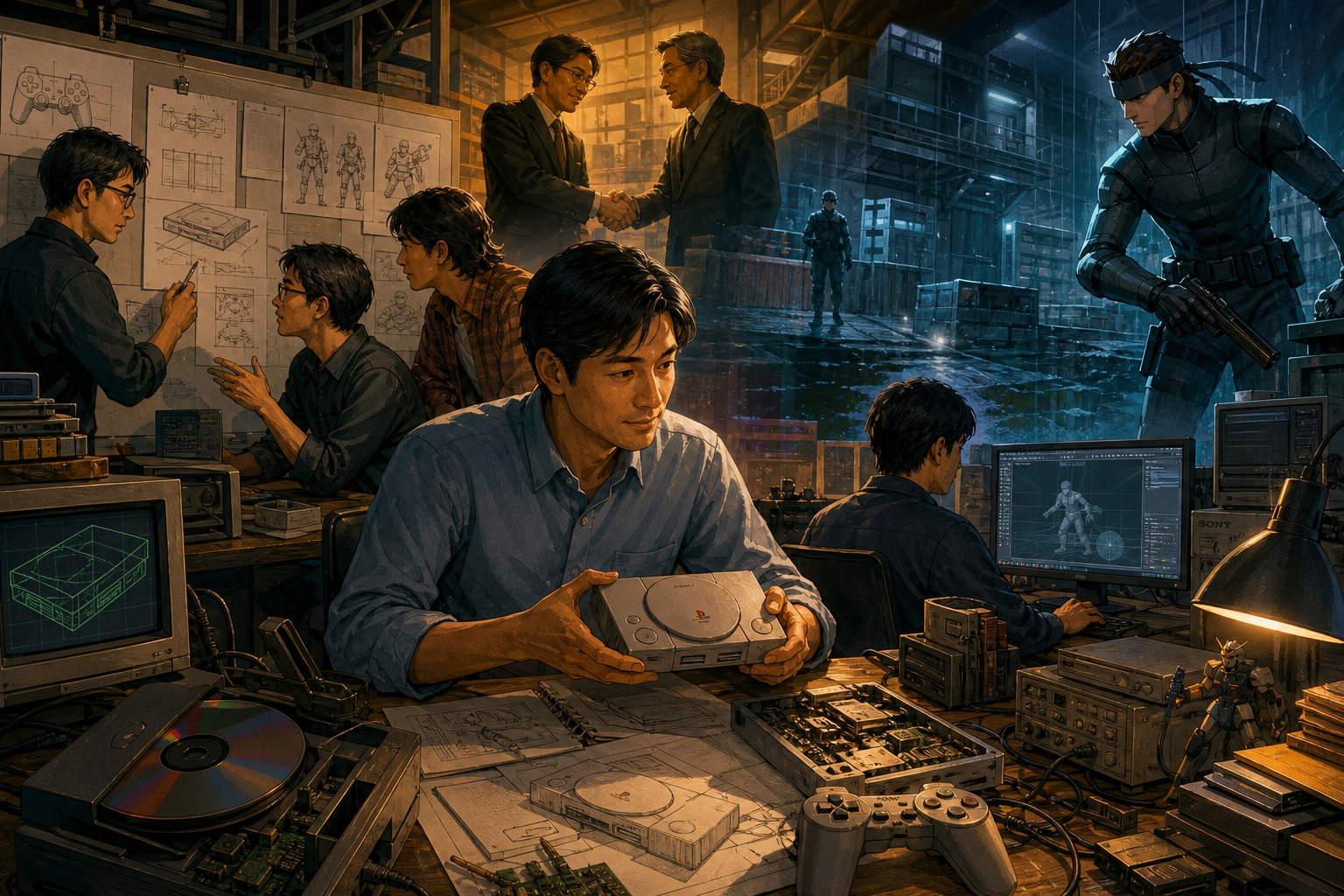
Sony Computer Entertainment Inc. was established in November 1993 as a joint venture between Sony Corporation and Sony Music Entertainment (Japan) Inc. That corporate identity matters because PlayStation was not simply another product from Sony’s existing consumer-electronics divisions. It was a dedicated game business with access to Sony’s wider technology, manufacturing and entertainment resources.
The original PlayStation launched in Japan in December 1994, followed by North American and European launches in September 1995. By March 2000, Sony reported worldwide production shipments of approximately 72.92 million original PlayStation systems. That installed base gave Sony more than a successful machine: it created relationships with publishers and developers, a recognizable brand and a large audience that could be invited into a second generation.
The PS2 would be designed for those existing players, but it also had to reach households that did not already think of a game console as essential equipment. Sony therefore approached the successor as both a games platform and a broader home-entertainment product.
A successor designed for the living room
Sony’s PS2 strategy combined familiar access with new media capability. The company’s 2000 annual report described the system as backward-compatible with PlayStation titles and able to play DVD-Video software. That pairing reduced the break from the previous generation: owners could bring forward an existing software library while the new machine also served a purpose outside games.
The DVD feature was important in context, but it should not be treated as a complete explanation for the PS2’s success. Sony also presented the console around its Emotion Engine CPU, Graphics Synthesizer, DualShock 2 controller and a new generation of software. The annual report described the Emotion Engine and Graphics Synthesizer as specialized hardware produced through major Sony and Toshiba manufacturing investments.
That hardware identity gave developers a distinct technical target, although it did not guarantee that every game would look or play alike. Backward compatibility connected the PS2 to an established audience, DVD playback linked it to the expanding home-video market and new hardware gave Sony a way to distinguish the platform from the original PlayStation. Together, those choices made the PS2 easier to understand as both a game system and a living-room device.
Sony’s own description also connected the PlayStation and PS2 platforms with games, movies, music and the coming broadband era. That language documents the breadth of the company’s ambition without proving that every part of the plan would mature at the same speed.
The launch sequence created early momentum
The PlayStation 2 launched in Japan on March 4, 2000, North America in October 2000 and Europe in November 2000. Those dates are easy to flatten into a supposed worldwide March launch, but the staggered sequence shaped the platform’s early manufacturing, distribution and software rollout.
Sony’s annual report recorded more than two million PS2 production shipments in less than three months after the Japanese launch. That figure describes production shipments rather than a universal measure of final consumers, so it should be read carefully. Even with that distinction, it demonstrates the scale of the manufacturing effort and the demand Sony was preparing to serve.
The launch also benefited from the original PlayStation’s momentum. Sony’s expanded company timeline records 10 million PS2 systems shipped worldwide by March 2001 and 20 million by October 2001. Ken Kutaragi became president and chief executive officer of Sony Computer Entertainment in April 2001, during that early worldwide expansion.
His leadership belongs to a larger institutional story. The PS2 was already being carried by manufacturing, distribution, software partnerships and the PlayStation brand rather than by a single executive decision.
A software portfolio wider than one house style
The PS2’s identity became clearer as its library expanded. Final Fantasy X offered a major role-playing showcase, while Kingdom Hearts connected Square’s role-playing expertise with Disney characters and worlds. These were not interchangeable first-party productions; they illustrate how Sony’s platform benefited from external publishers and development partners as well as internal teams.
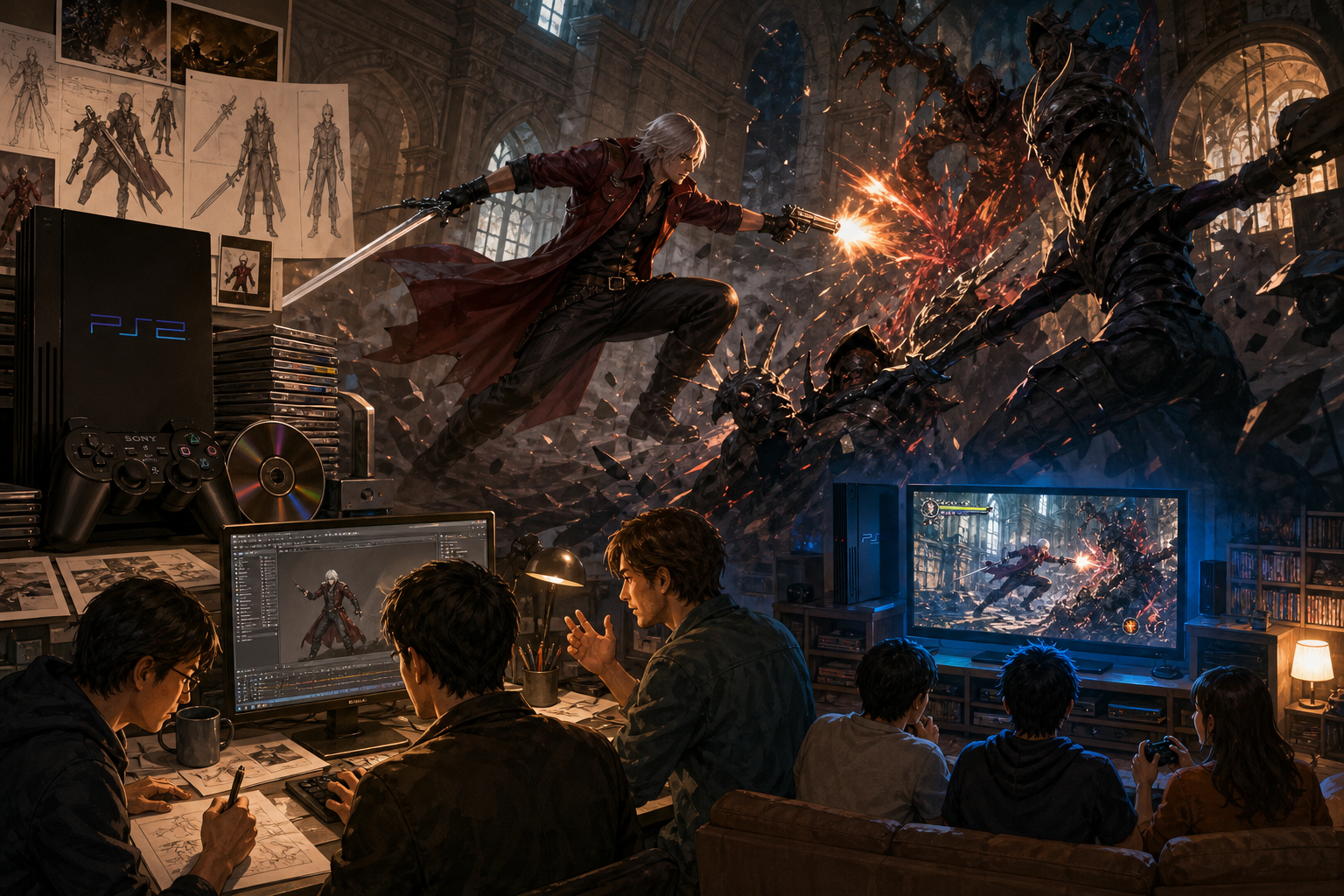
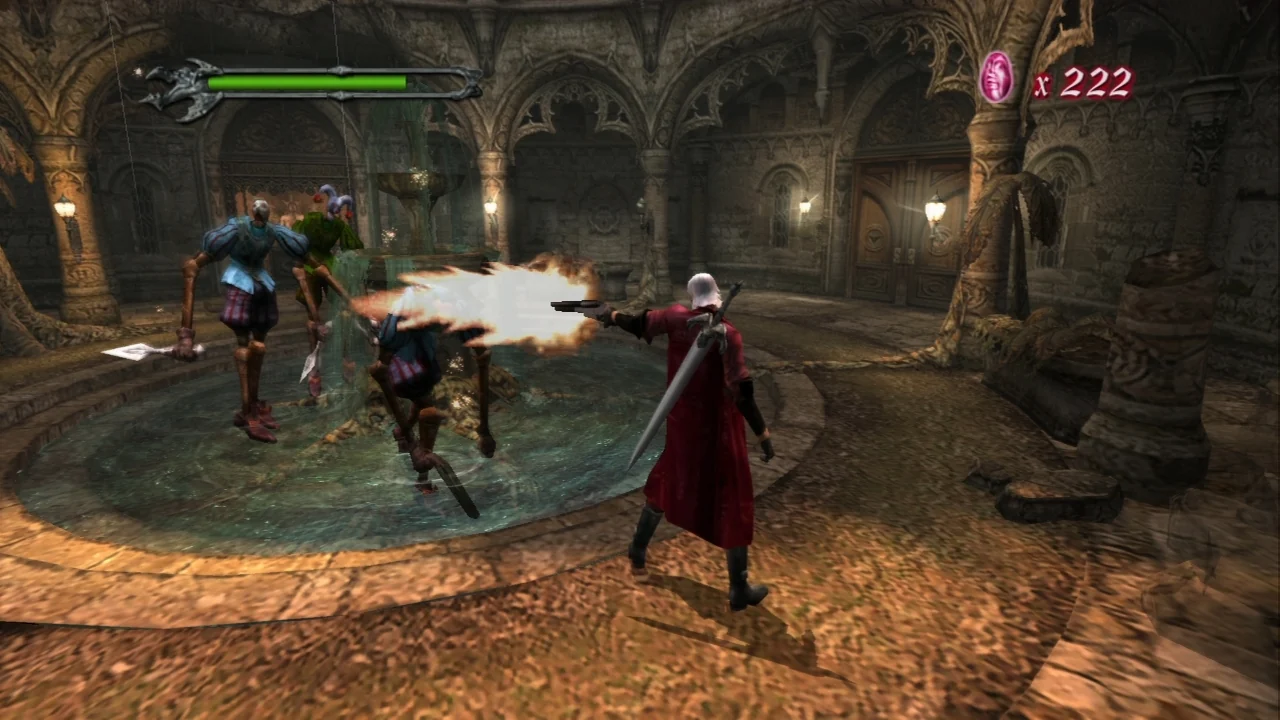
Metal Gear Solid 2: Sons of Liberty and Devil May Cry showed two different forms of action-driven ambition. Metal Gear Solid 2 emphasized cinematic stealth and spectacle through a major Konami release. Devil May Cry established a more combat-focused action vocabulary associated with Capcom. Silent Hill 2 added psychologically heavy horror, reinforcing that the system could carry more than broad family entertainment.
Sony’s own portfolio supplied another layer. Jak and Daxter: The Precursor Legacy, Ratchet & Clank and Sly Cooper and the Thievius Raccoonus gave the platform distinct approaches to action-platforming. Jak and Daxter emphasized a continuous adventure world, Ratchet & Clank combined shooting with platform play and Sly Cooper centered stealth, traversal and cartoon-heist ideas.
Their differences were commercially useful. Sony did not need every first-party release to resemble the others; it needed enough variety to make the platform feel like a destination rather than a machine built around one mascot or genre. That portfolio approach also gave the PS2 a stronger identity as its audience widened.

Blockbusters and unusual experiments could coexist
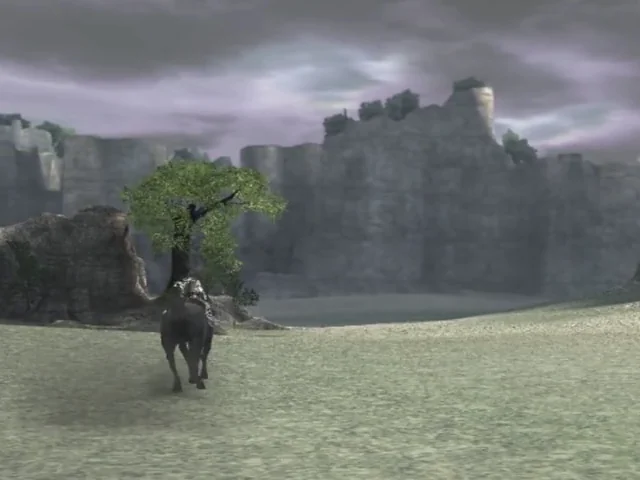
The PS2 also gave Sony room for games that were less obviously built around mass-market formulas. ICO and Shadow of the Colossus, associated with Fumito Ueda’s creative work, became important examples in PlayStation’s own historical presentation of distinctive, creator-led software. Their value to the platform was not that they replaced large franchises, but that they expanded what a high-profile console release could look and feel like.
These games also show why a platform history should not be measured only through its largest sellers. A console can use blockbuster franchises to establish commercial scale while allowing smaller or more unusual projects to shape its reputation among dedicated players. Sony’s later PlayStation materials have repeatedly treated ICO and Shadow of the Colossus as part of that distinctive creative legacy.
God of War arrived on PS2 in March 2005, followed by God of War II in March 2007. The series showed Sony developing a new internal action franchise late in the machine’s life rather than relying only on launch-period names. Its timing demonstrates why a console’s middle and later years matter: a mature platform can provide an audience, production knowledge and commercial room for newer properties.
Final Fantasy XII, released late in the PS2 generation, extended the system’s role-playing reputation while showing that ambitious software continued to arrive after newer hardware had entered the market. The combination of large franchises, external exclusives and unusual first-party projects made the library broad enough to serve different audiences without requiring every game to share the same design identity.
Sony formalized its first-party structure
Sony’s software strategy depended on internal development, but the company did not treat first-party production as a narrow list of games. The Gran Turismo production team became Polyphony Digital in 1998, giving Sony a dedicated internal studio for one of the PlayStation brand’s defining simulation series. Other teams worked in platform action, adventure, family software and more experimental forms.
Sony Computer Entertainment Worldwide Studios was established in September 2005 to combine game-development studios in Japan, North America and Europe. That timing places the organization in the transition between the PS2 and PlayStation 3 eras. It formalized a broader first-party structure at a moment when Sony needed to carry accumulated development expertise into the next generation.
Third-party support remained equally important. Metal Gear Solid 2, Silent Hill 2, Devil May Cry, Kingdom Hearts and the Final Fantasy releases were not all Sony-owned properties. Treating them as Sony first-party games would erase the partnership model that helped the PS2 become a central destination for publishers.
Sony’s achievement was partly to make its platform attractive enough for outside companies to bring major projects to it. First-party investment supplied recognizable identities and long-term continuity, while third-party software filled out the platform’s genre range and helped it remain relevant between Sony’s own releases.
Online play arrived through separate doors
Sony’s online plans developed before the company had a single, unified service comparable to later PlayStation Network infrastructure. The network adapter enabled online play for selected titles, while a 2001 announcement with America Online connected the PS2 to ambitions involving Internet-enabled games, messaging, chat and email.
The company’s 2000 annual report also described plans to use the PS2 as a broadband network terminal for digital distribution, software downloads and interactive communication. That proposal shows how broadly Sony was thinking about connected entertainment at the time, but it should not be confused with a fully realized, universal PS2 service.
The approach created possibilities, but it was fragmented. Online support depended on particular games, adapters, publishers, regional arrangements and services. It was therefore inaccurate to describe the entire PS2 library as having built-in online play, just as it would be too simple to call the effort a total failure.
Final Fantasy XI and PlayOnline represented a more persistent online direction than the PS2’s conventional local multiplayer library. Their availability and operation depended on region and service support, so they should be understood as specific online ecosystems rather than a universal PS2 feature. The online story is best viewed as a collection of experiments that helped establish lessons for later PlayStation infrastructure.
Slim hardware and a deliberately long life
Sony did not treat the PS2 as disposable when the PlayStation 3 arrived. A major slim redesign appeared in November 2004 across Japan, North America, Europe and several Asian markets, reducing the machine’s size and weight. A later SCPH-90000 redesign in 2007 reduced it further and integrated the power supply into the console.
These revisions made continued production and retail placement more practical while keeping the platform visible to new buyers. The strategy also extended the PS2’s useful commercial life beyond the moment when Sony’s marketing attention had shifted to newer hardware.
Sony’s 2009 announcement said PS2 sell-in units had exceeded 136 million worldwide and that the North American library was planned to approach 1,900 titles that year. Sony then announced 150 million cumulative worldwide sales as of January 31, 2011, after ten years and eleven months on the market. Later business data listed more than 160 million hardware units as of March 31, 2012.
Those numbers use different dates and definitions, so they should not be merged into one undated sales claim. They do show the effect of a long lifecycle: a platform can keep expanding its audience after its successor has launched when hardware revisions, price changes, software supply and retail support continue working together.
What the numbers show—and what they do not
The PS2’s sales milestones are unusually large, but they still need context. Sony’s 2009 figure was identified as worldwide sell-in units. The 2011 announcement described cumulative worldwide sales as of January 31, while Sony’s later business-data page lists more than 160 million hardware units as of March 31, 2012. These are related milestones, not identical measurements taken at the same moment.
The 2011 announcement also reported more than 10,828 software titles and more than 1.52 billion PS2 software units sold worldwide. Later business data lists more than 1.537 billion PS2 software units as of March 31, 2012. The progression reflects the platform’s continuing commercial life, but it does not mean that every individual game or initiative performed equally well.
Sales totals cannot, by themselves, prove that DVD playback caused the PS2’s success, that the Emotion Engine was responsible for every technical achievement or that online gaming was a complete strategic victory. They do support a more careful conclusion: Sony created a platform with enough hardware appeal, software breadth, manufacturing scale and longevity to keep attracting buyers for more than a decade.
That distinction matters because the PS2’s history is often reduced to one explanation. DVD playback was significant, but it operated alongside backward compatibility, third-party support, first-party development, price positioning, regional distribution and a library that continued to grow after launch.
The PlayStation 2 template
The PlayStation 2’s success was layered. Backward compatibility protected the value of the original PlayStation library. DVD playback helped normalize a console as a home-video device. Specialized hardware gave developers a new target. First-party studios supplied recognizable franchises and unusual creative projects, while third-party publishers brought some of the generation’s most important role-playing, stealth, horror and action releases.
The platform also demonstrated the value of patience. Sony supported the PS2 through redesigns, price positioning, continued software production and an online program that was exploratory rather than fully unified. Not every initiative worked in the same way, and sales totals alone cannot prove that every hardware or network decision was equally effective.
Its lasting template was the combination: a recognizable console identity, a broad software ecosystem, compatibility with the previous generation, media usefulness and enough commercial longevity for late projects to matter. The PS2 also showed that a manufacturer could use corporate resources across hardware, software, manufacturing and entertainment without reducing the platform to a single corporate division.
That is why the PS2 era cannot be reduced to DVD playback, one launch event or a handful of famous games. Sony built a platform whose parts reinforced one another over time, then kept refining that platform long enough for its commercial and creative effects to outlast the original launch window.
Sony built the PS2 era by making the console useful before its entire library existed, then sustaining it as that library widened. The company combined inherited PlayStation momentum with new hardware, DVD playback, internal studio development, third-party relationships, selective online services and a willingness to keep the machine commercially active for years.
The result was not a perfect or uniform strategy. Online services remained divided across games and regions, while ambitious hardware required developers to work within a distinctive technical environment. But the platform’s central achievement was durable: it expanded the idea of what a successful console could be while giving Sony a foundation for the next PlayStation generation.