Sony’s arrival in the console market is often reduced to a revenge story: Nintendo ended a CD-ROM partnership, Sony built PlayStation and changed the industry. The documented history is more interesting. Sony already possessed relevant expertise in electronics, optical media and digital entertainment, but it still had to persuade its own management, establish a new game division and convince developers to support a platform with no inherited software identity.
This history follows the road from Sony’s pre-console businesses through the Nintendo project, the creation of Sony Computer Entertainment, the original PlayStation launch and the transition to PlayStation 2. The central thread is not one heroic invention. It is the combination of engineering, corporate structure, developer support, distribution, media formats and games that gradually made Sony a console manufacturer.
Sony’s starting point was electronics, not game publishing
Sony did not approach the console market as an established game company. Its identity had been built through consumer electronics, audio equipment, professional technology and research into formats that could carry more information than traditional cartridges. Sony’s corporate history records milestones including the company’s early tape and television products, its work in audio, the launch of the CDP-101 CD player in 1982 and the portable D-50 CD player in 1984. That background mattered because a CD-based game system required expertise in optical reading, digital audio, data storage and mass-produced discs.
The distinction is important. Sony’s technical foundation gave it a plausible route into game hardware, but it did not automatically provide the things Nintendo and Sega already understood: relationships with game creators, a recognizable software portfolio, retail expectations and a clear sense of what console players wanted. Sony had to turn engineering capability into a complete platform business.
The period also saw computer graphics becoming increasingly important to games. Real-time 3D was still difficult and expensive, yet it offered a way for a new entrant to differentiate itself. Sony’s eventual strategy was therefore not simply to reproduce an existing cartridge console with a different logo. It was to build around CD-ROM distribution and hardware that could make polygonal graphics central to mainstream home gaming.
The Nintendo collaboration created the opening
Sony’s first major step toward a console was a collaboration with Nintendo around a CD-ROM project for the Super NES. The two companies finalized a contract in early 1990 for a joint development effort, and the proposed hardware was associated with the PlayStation name. It was a development project, not a commercially released Sony-Nintendo console, and that limitation should remain clear.
The partnership connected Sony’s format expertise with Nintendo’s position as a leading game company. A CD-ROM system promised more storage than a cartridge and could support richer audio and larger game data. At the same time, the project exposed Sony to the practical demands of console development, licensing and game software.
The relationship ended before the proposed machine reached consumers. Nintendo pursued a different arrangement, leaving Sony with technology, personnel and an unfinished strategic question: should the company abandon games or continue independently? Later retellings often frame the episode as a single betrayal that made Sony determined to defeat Nintendo. The available corporate history supports a more cautious conclusion. The failed partnership created a route into the business, but Sony still needed an internal decision to continue.
Ken Kutaragi carried the project inside Sony
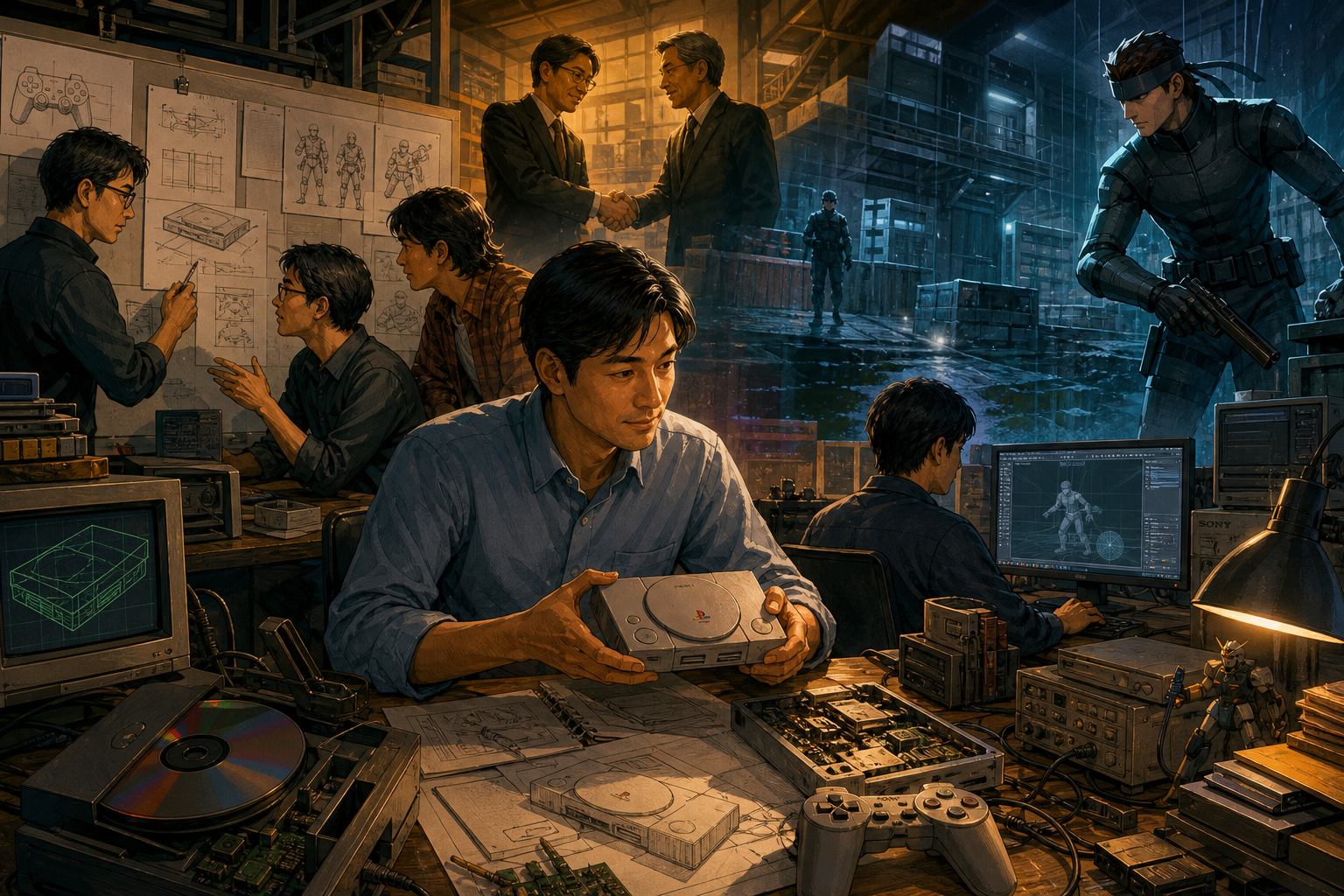
Ken Kutaragi became the most visible engineering champion of Sony’s game-console effort. His importance was not that he worked alone, but that he helped translate a technical proposal into a case Sony’s management could evaluate. The independent project emphasized real-time 3D graphics, a direction that could distinguish Sony’s machine from the predominantly 2D focus of much console software at the time.
Sony’s official history identifies a management meeting in 1992 as a turning point. After the Nintendo relationship had ended, the company considered whether the project should continue. Norio Ohga instructed the team to prove the concept, giving the project a path forward rather than treating the abandoned collaboration as the end of Sony’s involvement.
That decision did not make success inevitable. Sony still had to create a business around the hardware, define its licensing model and recruit studios. Kutaragi’s role is best understood as internal leadership within a much larger effort involving engineers, executives, Sony Music personnel, external developers and publishing partners. Describing him as the sole creator hides the organizational work that made the machine viable.
Sony Computer Entertainment gave the idea a home
Sony needed a corporate structure that could handle more than hardware research. Sony Computer Entertainment was announced as a joint venture between Sony Corporation and Sony Music Entertainment Japan on October 27, 1993, then officially established on November 16 of that year. Its responsibilities included hardware, software development and licensing external developers.
The arrangement reflected a practical problem. Sony did not own a deep game catalog, so the new company had to build relationships rather than rely on internal franchises. Sony Music’s participation connected the project to a part of the wider corporation that understood talent, production and entertainment businesses, although that does not mean the console was simply a music-industry project.
This structure separated the console initiative from the assumptions of Sony’s older electronics divisions while keeping it inside the larger Sony group. It also gave PlayStation a dedicated organization capable of negotiating with publishers, supporting developers and treating software availability as a core manufacturing concern. The company was not merely designing a box and waiting for games to appear.
Winning developers meant lowering the 3D barrier
Sony’s lack of an established game library made developer relations unusually important. A 1993 demonstration using prototype hardware and a rendered Tyrannosaurus model showed potential partners the intended 3D direction. The demonstration was not a finished game, but it communicated what the platform could do and helped studios imagine projects that were difficult to build on older hardware.
Sony also produced development libraries, sample code and tools intended to reduce the difficulty of creating real-time 3D games. That support mattered because polygonal graphics were not just a visual upgrade. They changed camera design, character animation, collision systems, level construction and the way teams planned their software. A powerful chip without usable development support could still leave studios struggling.
This was one of Sony’s most consequential decisions: treat external developers as part of the platform’s infrastructure. The company needed publishers to take risks on a new format, and those publishers needed evidence that PlayStation could support commercially viable games. The result was an ecosystem strategy rather than a hardware-only strategy.
The original PlayStation launched in stages
The original PlayStation launched in Japan on December 3, 1994, as a 32-bit CD-ROM home console. It reached North America on September 9, 1995, followed by Europe on September 29, 1995. These dates matter because the platform did not arrive as one simultaneous worldwide event, and its software, marketing and competitive circumstances varied by region.
Sony’s 1995 annual report emphasized the combination of 3D graphics, CD-ROM software and early third-party successes such as Ridge Racer and Toshinden. Those games helped demonstrate different strengths: one presented fast 3D racing, while the other connected the new hardware to the fighting-game market. The launch story was therefore about showing range as much as showing technical novelty.
CD-ROM also changed the economics and presentation of games. It offered substantial storage for recorded music, voice, video and larger game assets, while manufacturing pressed discs rather than cartridges. Sony’s later corporate history also describes shorter production turnaround and distribution advantages for CD-ROM software. Yet capacity alone did not guarantee quality. Sony’s achievement was linking the format to a developer-friendly platform and a growing software lineup instead of presenting optical media as a feature without purpose.
Four games gave PlayStation different identities
Crash Bandicoot, developed by Naughty Dog, helped Sony establish a recognizable character without creating one entirely inside the hardware division. Its colorful 3D platforming gave the system a friendly public face and demonstrated that PlayStation could support a mascot-style adventure. The lesson was broader than the game itself: an external studio could help define a platform when the manufacturer did not begin with a Nintendo-sized archive of characters.
Final Fantasy VII, released in 1997, showed another part of Sony’s strategy. It was not a launch title, and it was not developed internally by Sony, but its move into 3D connected PlayStation with cinematic presentation and large-scale role-playing. The game’s arrival illustrated the value of publisher relationships and the ability of CD-ROM to accommodate an ambitious presentation.
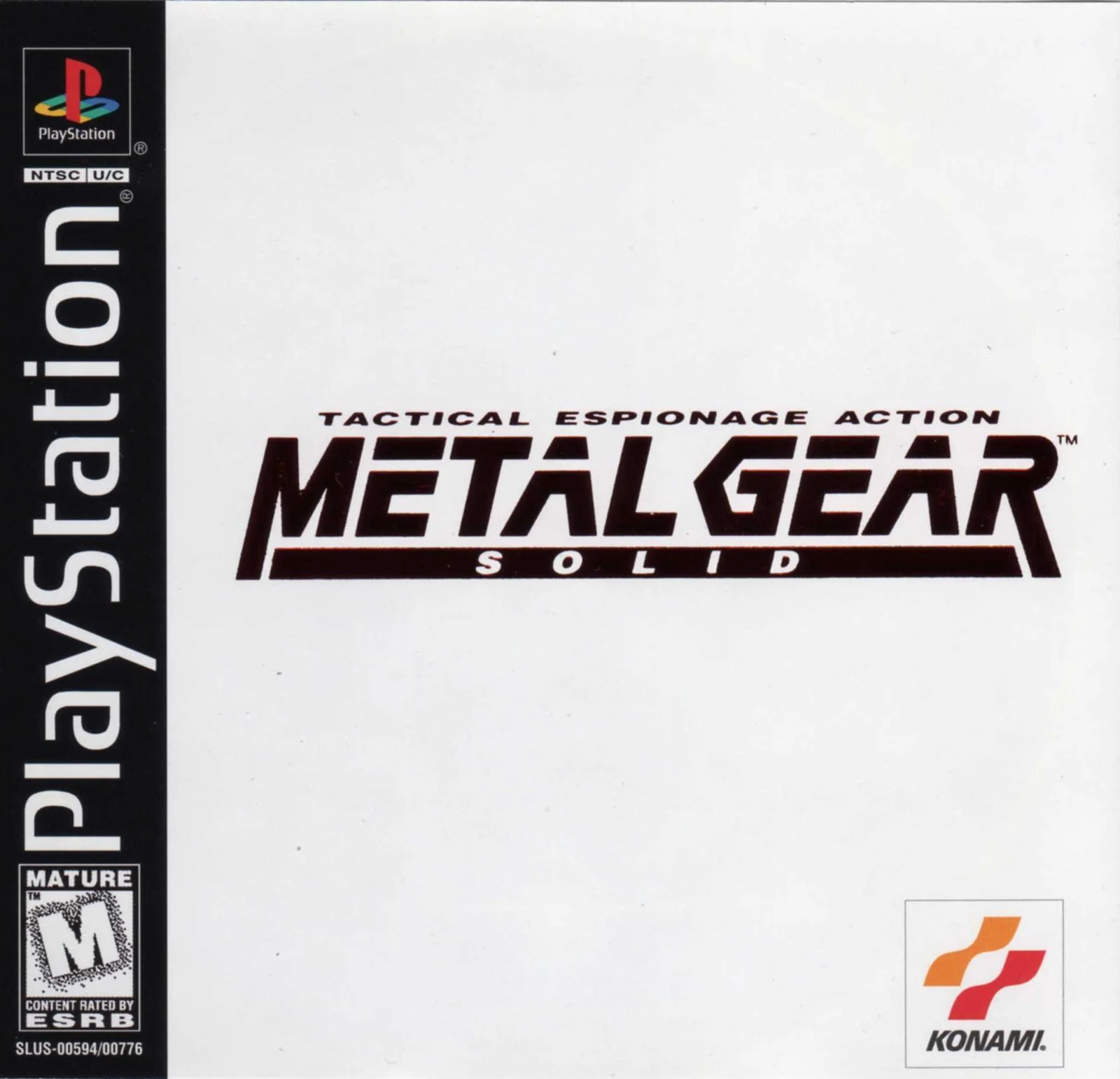
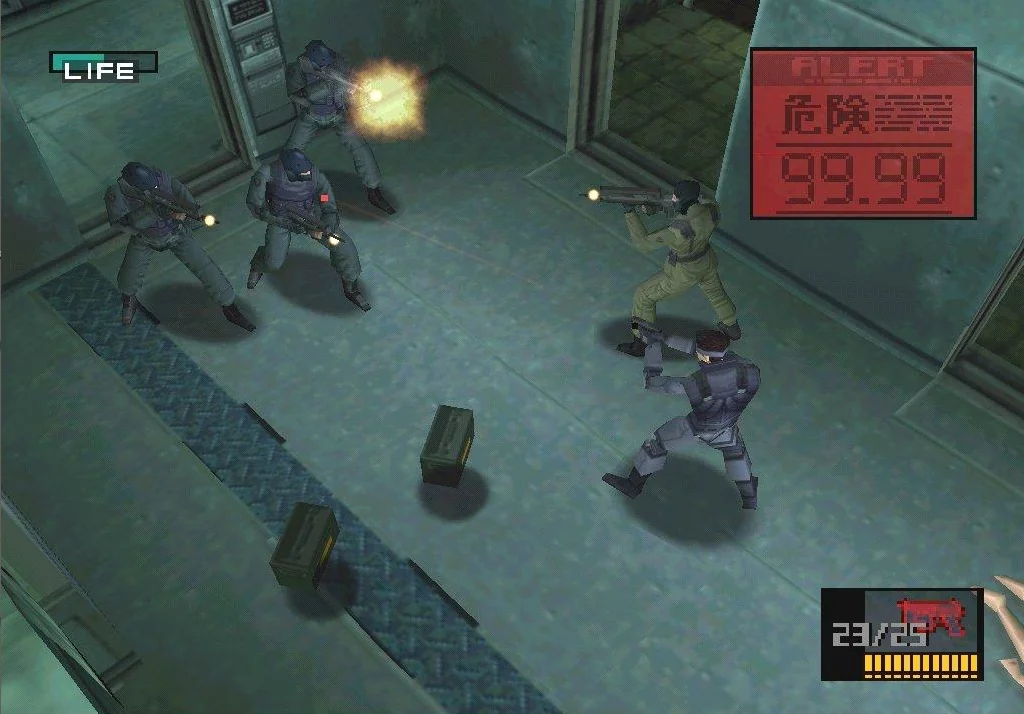
Metal Gear Solid followed in 1998 and helped make Hideo Kojima’s series broadly popular. Its combination of stealth, scripted scenes and deliberate cinematic framing showed that PlayStation could carry a different kind of mature, story-led game. Gran Turismo added yet another identity through detailed driving simulation. Together, these examples show why the platform became difficult to summarize with one genre or mascot: Sony’s software strategy accumulated contrasting reasons to own the hardware.
PlayStation became a business that could renew itself
Sony’s first console eventually surpassed 100 million cumulative global production shipments. PlayStation’s official history records more than 102 million consoles worldwide from 1994 through 2006, while Sony’s corporate reporting had already documented the platform’s rapid growth during the transition to its successor. That milestone describes more than a successful machine. It indicates that Sony had created a repeatable platform business involving hardware revisions, software licensing, publisher relationships and a customer base large enough to support a successor.
The PS one revision, launched in 2000, extended the original system’s commercial life as the next generation arrived. A smaller redesign could keep the older platform visible while Sony shifted attention toward new hardware. This pattern became familiar across the industry, but it was part of Sony’s transformation from a first-time entrant into a manufacturer managing a multi-generation product family.
The growth also exposed a continuing vulnerability. Sony’s identity depended heavily on outside publishers and studios, so major relationships could shape the platform’s fortunes. The company was building internal strengths, but it was not replacing the broader software ecosystem with a single in-house catalog. PlayStation’s success rested on making the platform attractive to many kinds of creators.
PlayStation 2 expanded the hardware argument
PlayStation 2 launched in Japan on March 4, 2000. Sony’s annual report described North American and European launches as planned for October 2000. The machine was backward compatible with PlayStation software and supported DVD-Video playback, giving Sony two ways to explain the product: it was a new game console, and it was part of a broader home-entertainment system.
Sony reported that PlayStation 2 production shipments reached two million units in less than three months after its Japanese debut. Backward compatibility helped connect the new machine to the existing PlayStation audience, while DVD playback made the hardware relevant to households considering a player for movies as well as games. It would be too simple to say DVD alone caused the system’s success, but the format broadened the product’s proposition. Sony’s report specifically connected PlayStation 2 with growth in Japan’s DVD-Video software market and described a wider goal of integrating games with movies and music.
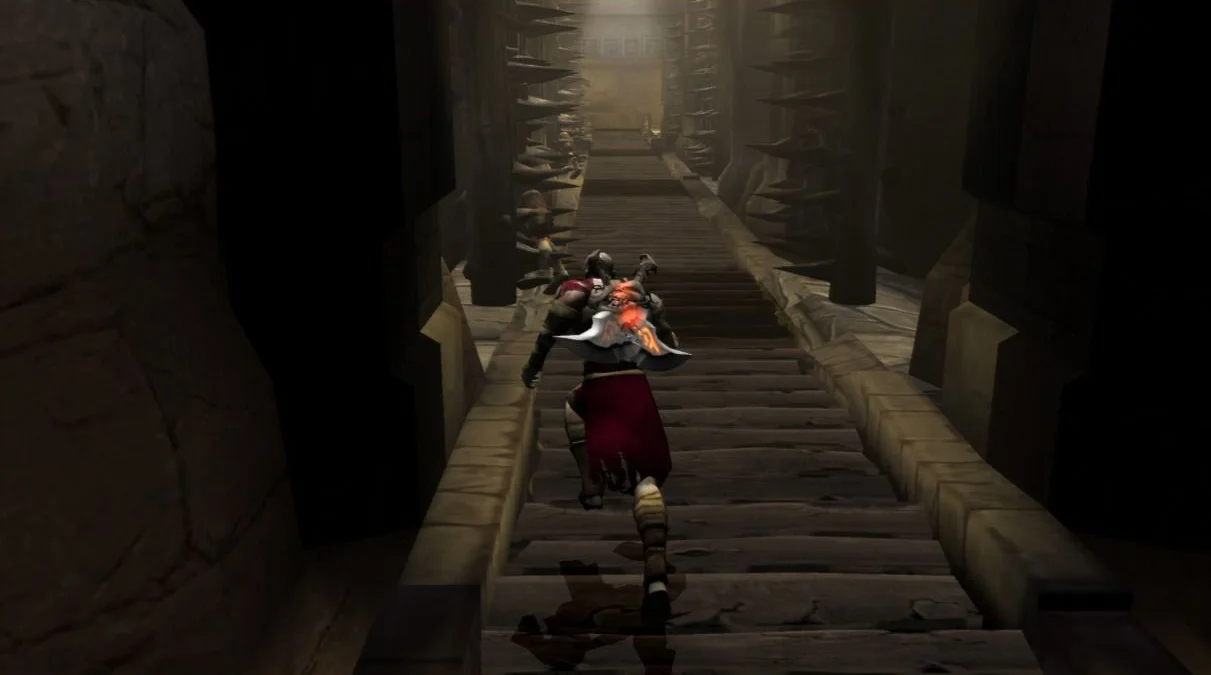
The software also became more varied. Games associated with the era included Jak and Daxter, Ratchet & Clank, God of War, ICO, Shadow of the Colossus, Final Fantasy X and Metal Gear Solid 2. These projects ranged from action and platforming to experimental adventure and role-playing. The manufacturer’s achievement was not just higher specifications; it was turning a successful first platform into a larger creative environment.

The setbacks were structural, not just competitive
Sony’s road to PlayStation included several constraints that are easy to lose in a triumphal retelling. The Nintendo project did not become a product, Sony began without a large internal game catalog and the company had to persuade established publishers to support a newcomer. Its developer tools and licensing relationships addressed those problems, but they did not erase them.
Sony also had to manage an uneven first-party identity. External games often carried the platform’s public image, while Sony’s own studios and associated labels developed over time. That created strength through variety, but it also meant the company’s identity could not be reduced to one internally controlled mascot or one software tradition.
The Nintendo relationship should therefore be treated as a starting condition, not a complete explanation. Sony did not win simply because it was angry, nor did Nintendo’s decision mechanically create a finished rival. A sequence of choices followed: continue the project, emphasize 3D, form Sony Computer Entertainment, support developers, use optical media and build a software network broad enough to sustain multiple audiences.
Sony’s console legacy is a platform model
By the mid-2000s, Sony Computer Entertainment had become a substantial business within Sony. The company’s own historical reporting presents the 1993 joint venture, the 1994 PlayStation launch and the 2000 PlayStation 2 launch as foundational milestones. Those events mark a change from experimenting with game hardware to operating a recurring platform business.
The lasting lesson is the combination of capabilities. Sony brought electronics and optical-media expertise, but hardware alone was insufficient. Kutaragi and the engineering teams pushed the project forward, executives provided a corporate decision point, Sony Computer Entertainment organized the business, developer support reduced the cost of adopting 3D and publishers supplied the games that gave the system meaning.
PlayStation also changed what a console manufacturer could be. Sony did not need to begin with decades of arcade history or a pre-existing family of game characters. It could assemble an ecosystem through technology, partnerships, media formats, marketing and eventually internal studios. That model became the foundation for later PlayStation generations and for Sony’s continuing role in the console industry.
Sony became a console manufacturer through a chain of documented decisions rather than one dramatic breakthrough. The abandoned Nintendo CD-ROM project opened the door, but Sony’s continued investment, the creation of Sony Computer Entertainment, the focus on accessible 3D development and the recruitment of outside publishers turned an experiment into a platform.
The original PlayStation established the business, while PlayStation 2 showed how backward compatibility, DVD playback and a broad software ecosystem could carry that business into a new generation. Sony’s road to PlayStation is consequently a history of organizational adaptation: an electronics company learned to build not only game hardware, but the developer and entertainment network that makes hardware matter.