There is a particular kind of retro-game announcement that feels less like a product reveal and more like somebody finally opening a sealed room in gaming history. Terranigma: Rebirth is one of those announcements. The much-admired Super Nintendo action-RPG is scheduled to return in 2027, giving a substantial new audience a legitimate route to play a game that has long been praised by the people who encountered it, but remained absent from official North American release history.
The newly revealed edition is headed to Nintendo Switch, Switch 2, PlayStation 4, PlayStation 5, Xbox platforms, and PC. Rather than rebuilding the game from scratch, Terranigma: Rebirth is positioned as a preservation-minded rerelease of the original, with a few carefully chosen conveniences for contemporary displays and players. That approach matters. A remake can bring a classic into the present, but it can also sand away the strange, specific texture that made the original worth tracking down in the first place. Here, the stated goal appears to be letting Terranigma remain Terranigma, while making it much easier to access.
A major SNES game with an unusually complicated legacy
Terranigma came from Quintet, the studio associated with other highly regarded 16-bit titles including ActRaiser and Illusion of Gaia. Yet its place in the broader retro conversation has always been peculiar. It is frequently held up as one of the Super Nintendo’s stronger action-RPGs, but it did not receive the same wide exposure as many contemporaries.
Timing was one reason. The game arrived late in the Super Nintendo’s life, when attention was already shifting toward newer hardware. Regional availability was another. Terranigma originally appeared in Japan, Europe, and Australia, but never received an official release in North America. For a game that predates digital storefronts, global online communities, and the modern rerelease boom, that geographical gap had lasting consequences. Plenty of players simply had no practical or official reason to encounter it when it was new.
That is why Rebirth’s platform rollout is more significant than a standard retro compilation entry. It gives the game a formal return across current systems and marks an official availability expansion beyond the territories in which the original was released. There is a difference between a title being discussed as a cult recommendation and being placed where interested people can actually buy and play it without first navigating decades of importing, compatibility questions, or secondhand-market scarcity.
For collectors, that distinction is familiar. Owning an original cartridge, box, or regional release can be rewarding, but it should not be the only doorway into an important game. The hobby is at its best when physical artifacts are respected and the games themselves remain playable. Anyone who has watched one innocent purchase spiral into a full collecting project may recognize the impulse in the collector’s five stages of buying one small thing; accessibility is a welcome antidote to that escalating hunt.
Rebirth is a rerelease, not a remake
The clearest detail so far is also the most reassuring one for longtime fans: Terranigma: Rebirth is not being presented as a remake or a reimagining. The original’s real-time action and adventure structure appear to be intact. Footage shown for the announcement suggests that the fundamental look and feel of the 16-bit game have been retained rather than replaced with a new visual style, altered combat system, or redesigned world.
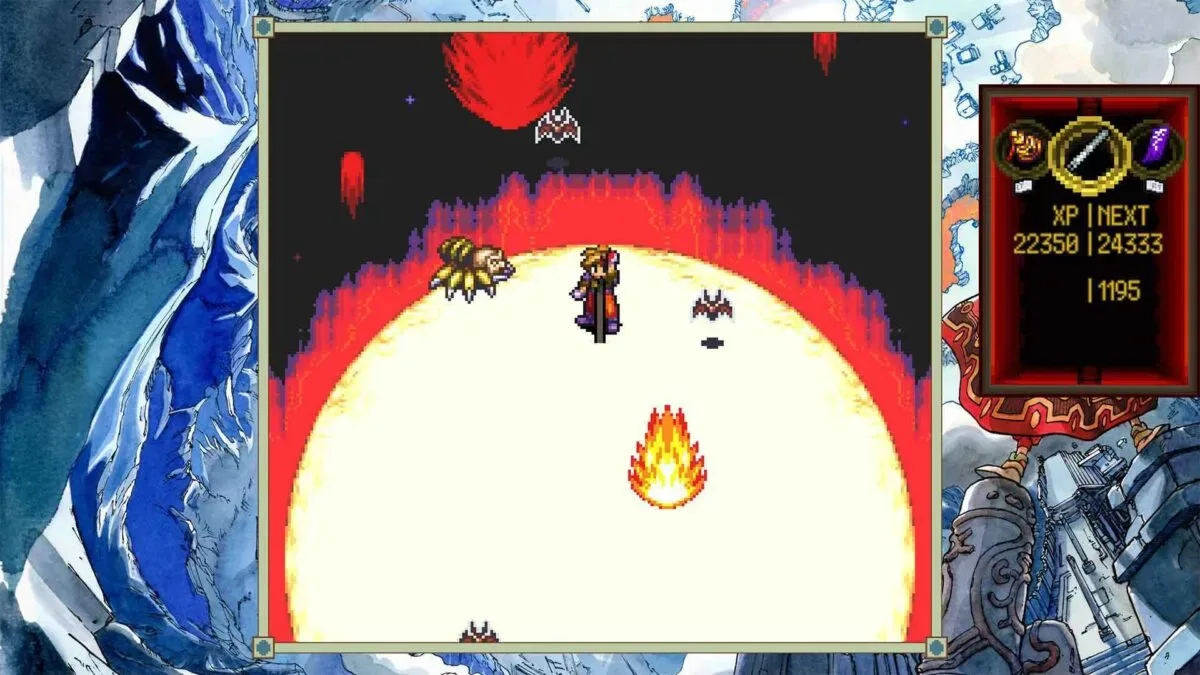
That does not mean the new release will be bare-bones. Rebirth includes quality-of-life additions intended to make the game more accommodating on modern screens. Most notably, certain statistics can be kept permanently visible in the unused space around the original 4:3 play area. It is a small feature on paper, but it reflects a sensible understanding of how older games fit into a contemporary setup. Instead of stretching or fundamentally reformatting the original image, the rerelease can use the surrounding display space for helpful information.
Related coverage includes Terranigma: Rebirth Brings the SNES Action-RPG to Modern Platforms in 2027.
It is also the kind of adjustment that avoids treating the original design as something to be corrected. The 4:3 presentation remains central, while the margins do a little practical work. For players discovering Terranigma for the first time, persistent stats could reduce menu-checking and make the flow of an action-oriented RPG easier to follow. For returning players, it may simply be a welcome option rather than an unwanted intervention.
Additional bonus features have been mentioned, though they have not yet been detailed. That leaves room for understandable curiosity, especially among players who know the original closely. The important qualifier is that these extras remain unrevealed. They may offer something new for veterans, but there is not enough information yet to define their scope, whether they affect gameplay, or how they will be presented.
New art connects Rebirth to Terranigma’s original identity
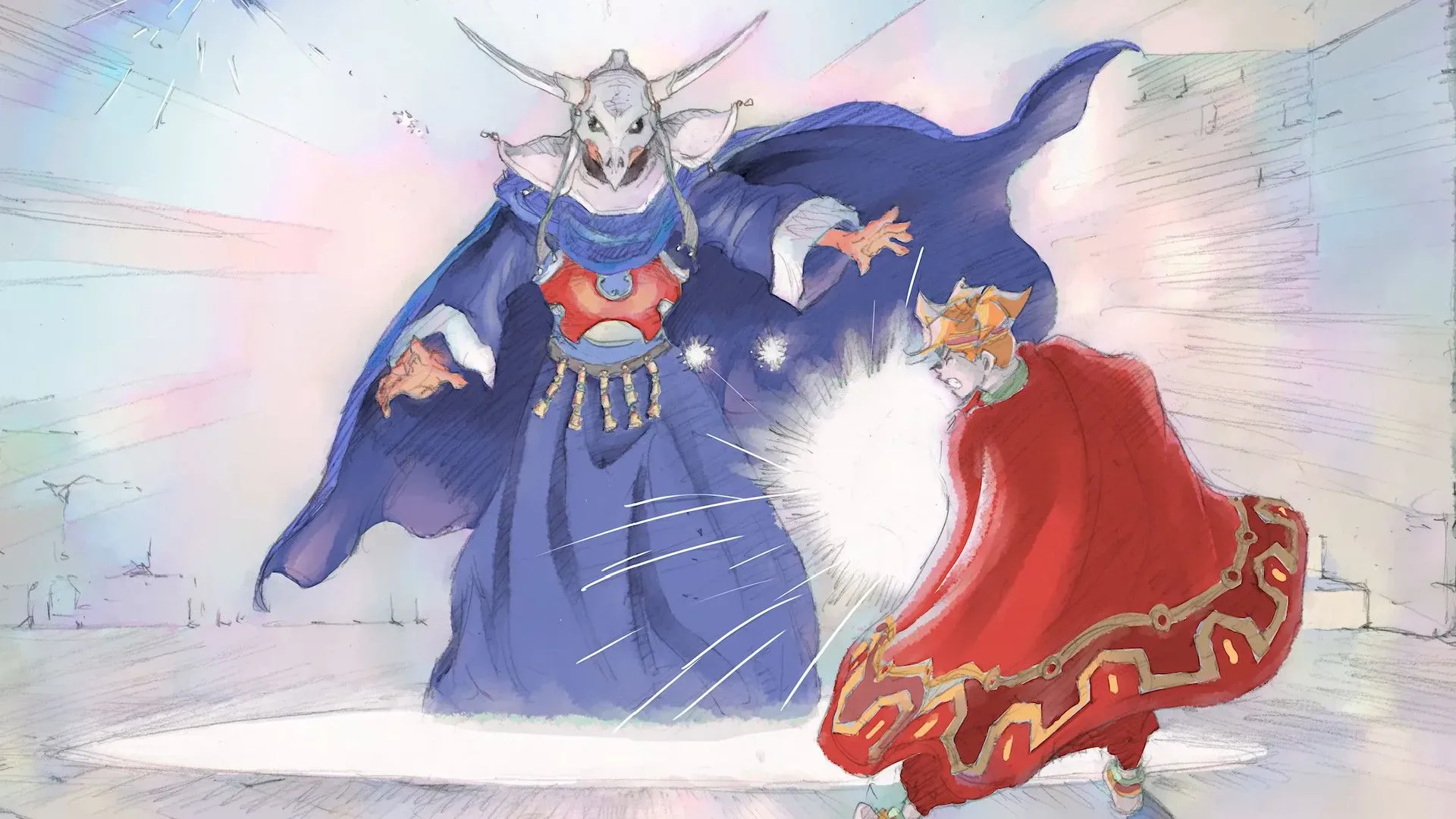
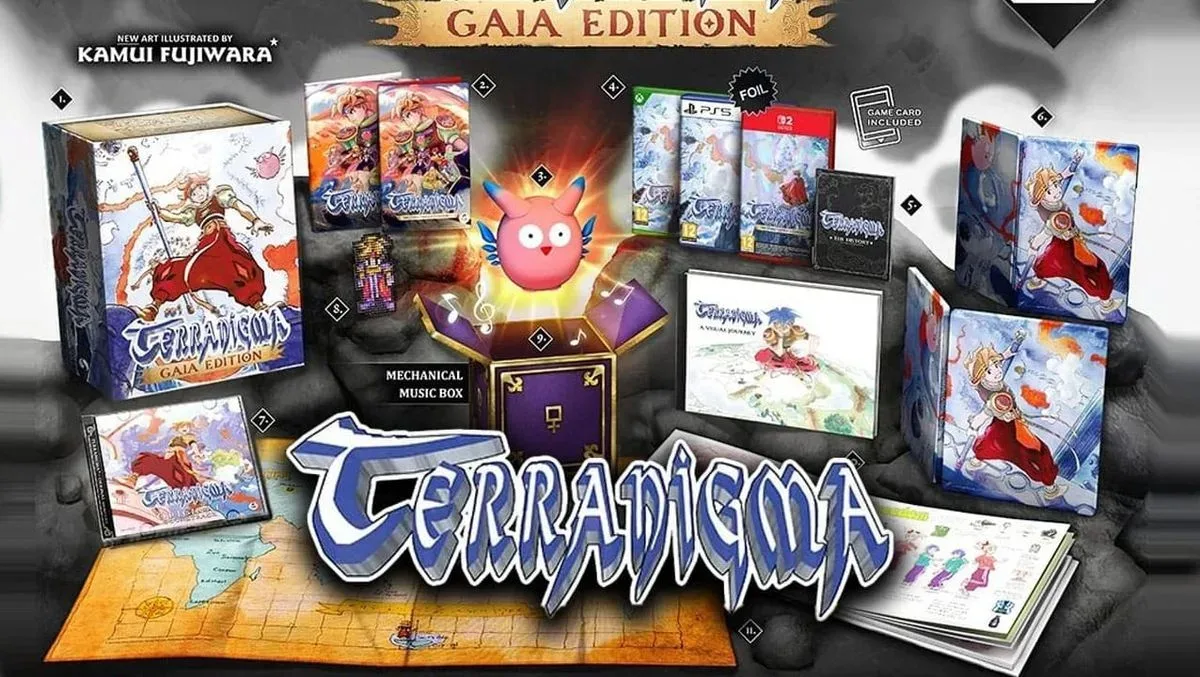
Rebirth is not merely reusing old branding and hoping nostalgia does the rest. Manga artist Kamui Fujiwara, who created character designs for the original game, has supplied new key art for the rerelease. That connection carries real symbolic value. New packaging or promotional art can set expectations for a returning game, and involving an artist directly tied to the original identity helps the project feel like a continuation of its legacy rather than a detached licensing exercise.
It also highlights the care required when presenting pixel-era games to a new audience. A rerelease needs to communicate what the work is without falsely promising a modern blockbuster overhaul. Terranigma’s appeal is linked to the style, ambition, and design sensibilities of its era. New key art can invite fresh players in, while the preserved game underneath can show why it earned devoted admirers in the first place.
There is still no need to pretend that preservation and modernization are always easy partners. Players can reasonably have questions about the final options, presentation settings, performance across platforms, bonus material, and whether every regional aspect of the old release has been handled thoughtfully. Those questions will need answers closer to launch. But the details currently available point toward a project that understands restraint can be a feature, not a compromise.
The physical-release question is still open
One unresolved point is especially relevant to retro enthusiasts and game collectors: physical availability. Terranigma: Rebirth is being developed as a modern multiplatform release, and its Steam listing identifies Limited Run Games as publisher. Clear River Games is attached to the new port. That combination naturally raises the possibility of a physical edition in North America and elsewhere, particularly given the importance collectors place on tangible releases and the ongoing concern around disc-based media preservation.
However, a physical release has not been confirmed. It is best treated as a possibility, not a promise. Limited Run Games’ presence on the Steam page may encourage speculation, but neither a format nor regions nor platforms for a boxed edition have been formally established in the information currently available. Anyone considering the game for a shelf should wait for explicit details rather than assume a cartridge, disc, collector’s edition, or platform-specific package is guaranteed.
That uncertainty does not lessen the significance of the digital announcement. Modern distribution can rescue a game from the practical obscurity caused by regional history and aging hardware. At the same time, a properly documented physical edition would have special resonance for a game whose legacy has been so closely tied to limited access and import culture. For now, the responsible position is straightforward: the 2027 modern release is planned; any physical format remains unannounced.
Why Terranigma’s return matters now
Retro gaming has become increasingly visible, but visibility is not the same as availability. A handful of famous titles can be endlessly rereleased while equally worthwhile games remain tied to old hardware, certain territories, or fan memory. Terranigma’s return is a reminder that the Super Nintendo library still contains major works many players have never had a fair chance to experience.
The announcement also offers a useful model for how these revivals can work. Not every classic needs a full remake, a new script, a revised art direction, or a dramatic mechanical overhaul. Sometimes the best service is a respectful version that keeps the original game recognizable, fits it comfortably onto modern hardware, supplies a few optional conveniences, and makes clear what is new and what has been preserved.
Terranigma: Rebirth has time to reveal more before its 2027 release window. The undisclosed bonus features, detailed platform specifics, pricing, and any potential physical plans are all still questions. But the central news is already substantial: one of the SNES era’s celebrated yet underplayed action-RPGs is finally preparing to reach modern PlayStation, Xbox, Nintendo, and PC players through an official release. For a game long treated as a whispered recommendation among 16-bit devotees, that is a rebirth worthy of the name.