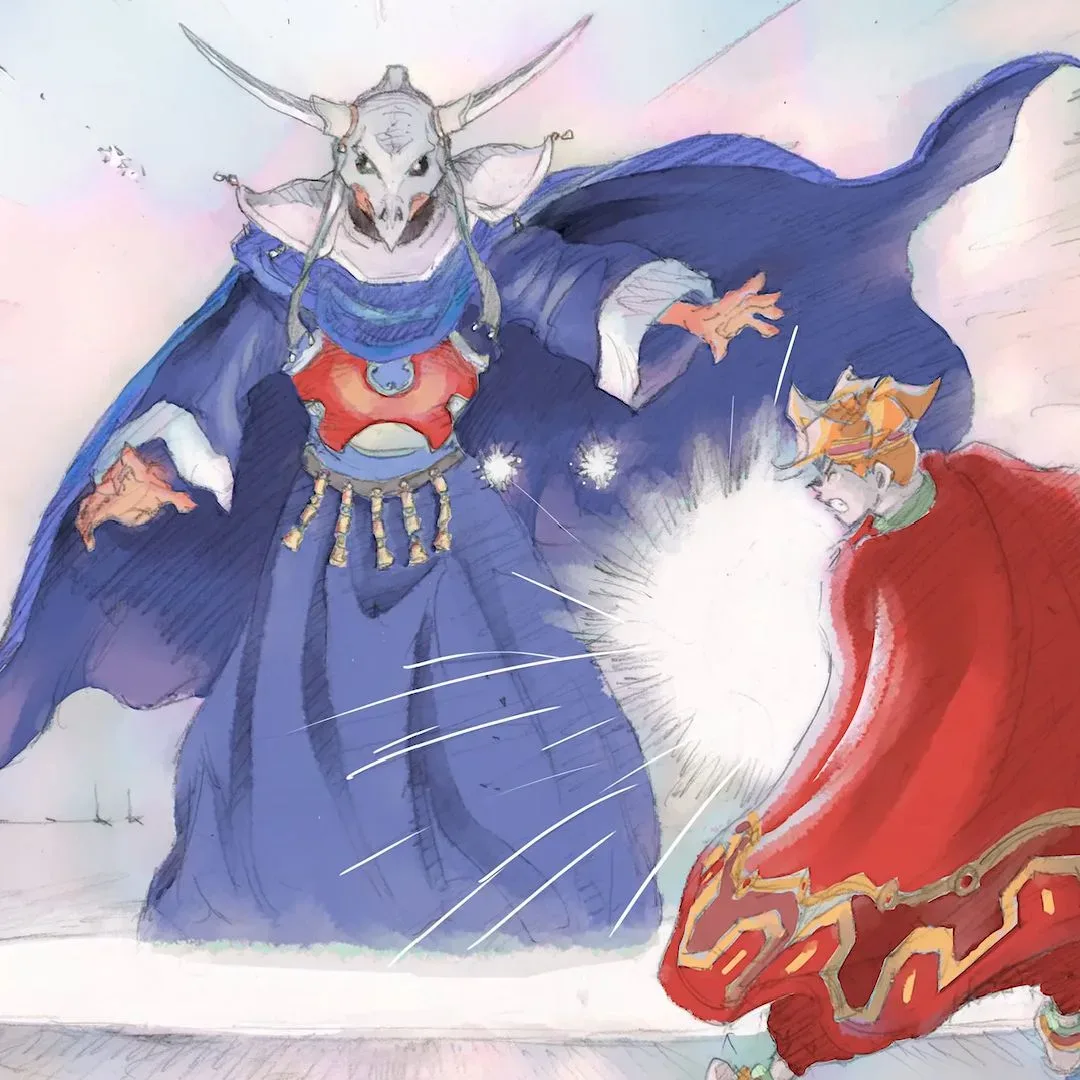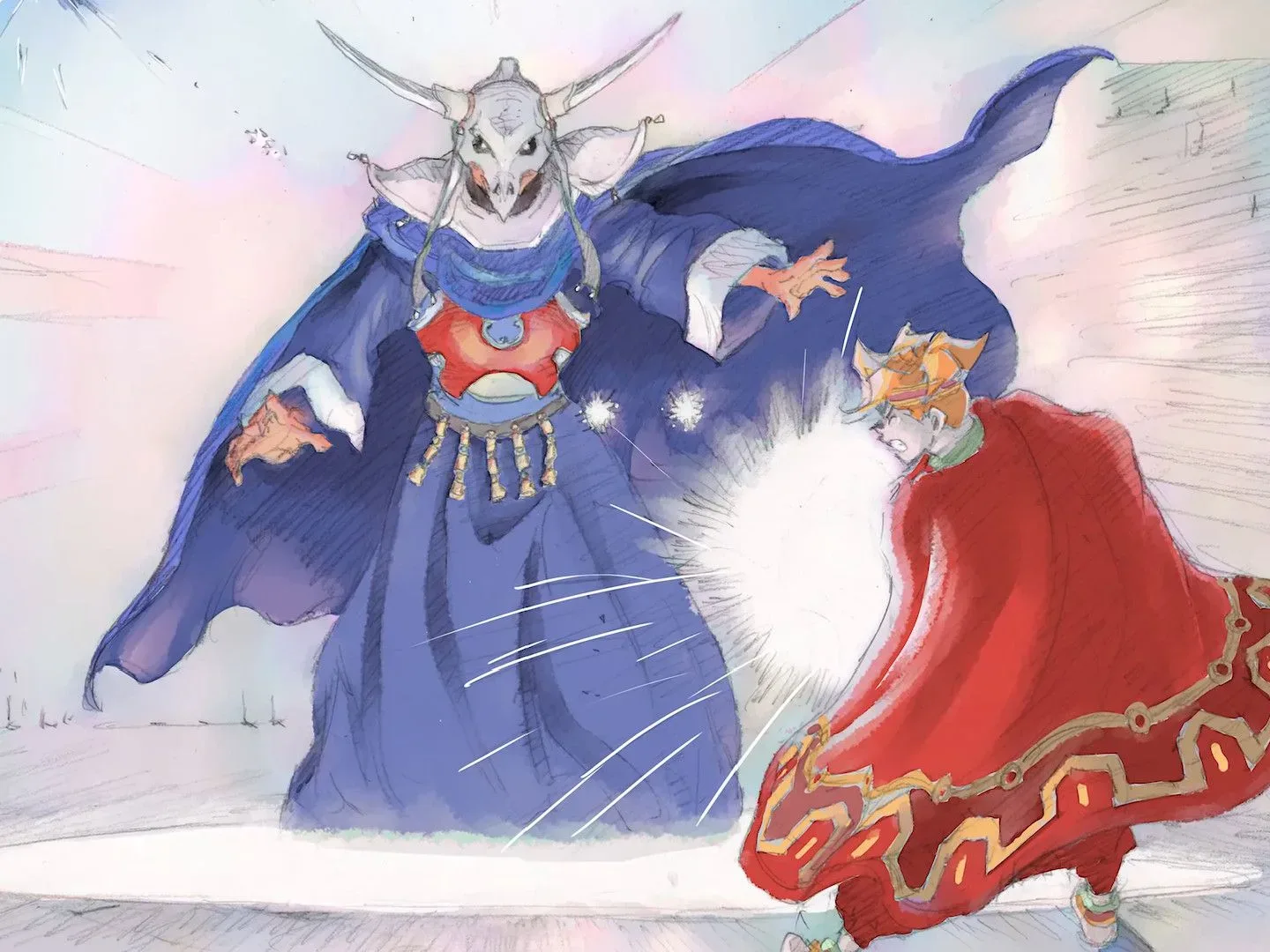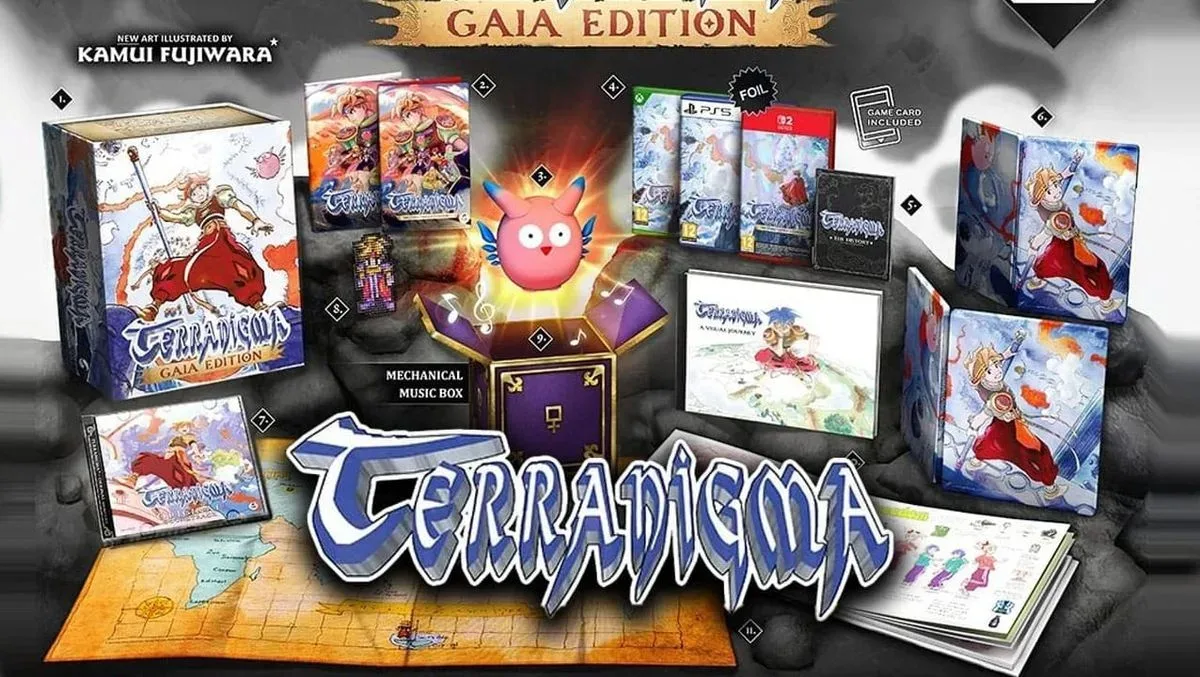
Terranigma is set to return on January 14, bringing the Super Nintendo action RPG to PS5, PS4, Xbox Series X/S, Switch 2, Switch, PC via Steam, and GOG. For North America, the release marks the game’s first official arrival after a long absence. Clear River Games is also planning physical editions for the listed console platforms, alongside a premium $200 Gaia Edition.
The headline is not merely that an older game is becoming easier to buy. The announced release is built around two distinct ways to approach Terranigma: an Original Mode intended to retain the game’s original balance and save system, and an Arranged Mode that introduces adjusted difficulty, enhanced progression, quick saves, rewind functionality, and a location minimap.
That split is important because remasters often force an all-or-nothing choice. A release may preserve the old game so rigidly that practical frustrations remain untouched, or it may revise systems so extensively that returning players no longer recognize the pacing they remember. Terranigma’s announced design instead aims to separate preservation from convenience while still supplying a few usability additions in the original-style option.
A long-awaited official return for a Quintet RPG
Terranigma was developed by Quintet, the studio also associated with SNES games including ActRaiser and Illusion of Gaia. It was originally published by Enix, the company that later became part of Square Enix. The game has remained difficult to access officially for a long period, amid what appeared to be unresolved licensing complications.
Its modern release therefore has two different audiences to serve. One group consists of players who know Terranigma from its earlier history and may want an experience close to the original. The other is made up of people encountering it through an official North American release for the first time, potentially on hardware far removed from the Super Nintendo.
The announced mode structure speaks directly to both. It does not promise that every player must accept a rebalanced version in exchange for modern tools. Nor does it make a strict legacy-style presentation the only available route.
What Original Mode is promising
Original Mode is described as retaining untouched balance and the original save system. In plain terms, balance refers to the tuning that shapes challenge and advancement: the relationship among enemy difficulty, player strength, resources, equipment, and progression. Keeping it untouched means the stated goal is to preserve those relationships rather than redesign them around contemporary assumptions about how demanding an action RPG ought to be.
The original save system is likewise a meaningful commitment. Saving is not just a menu feature in older games; it can define the stakes of exploration and a player’s routine between major encounters. Preserving that system lets players use the structure associated with the classic release rather than replacing it wholesale with unrestricted modern saving.
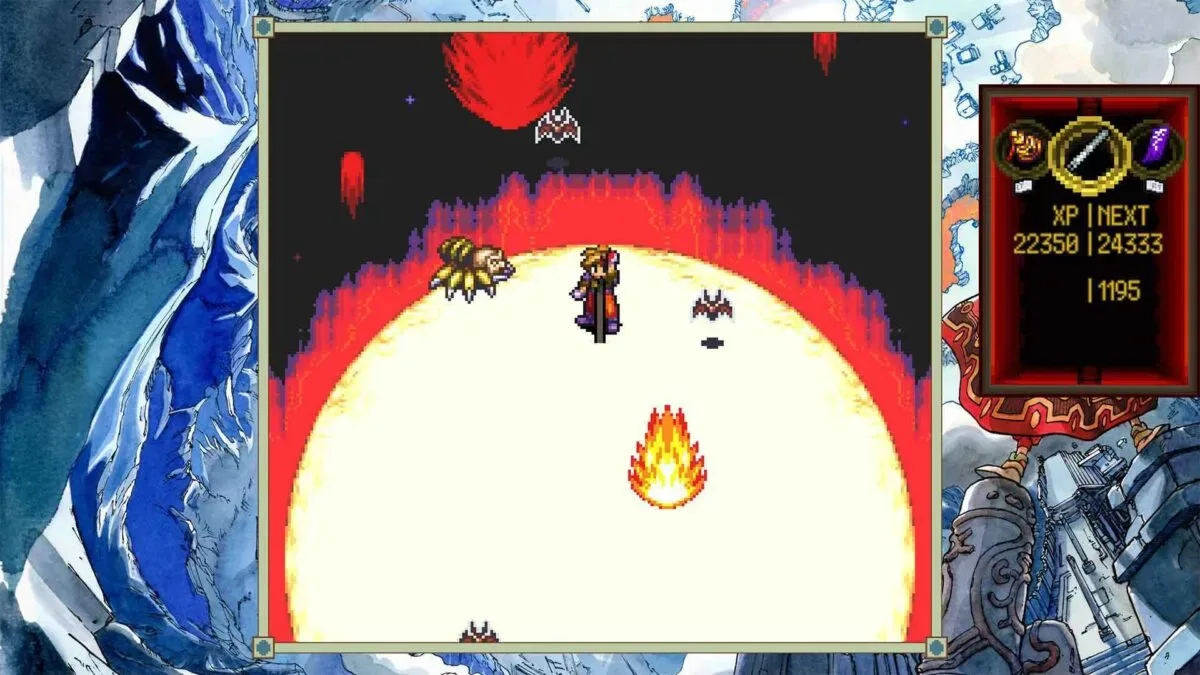
Yet Original Mode will not be visually and mechanically frozen in place. The game is planned to retain a 4:3 play area, the display shape associated with the original presentation, while adding a sidebar that shows current money and experience. It will also offer quick-access controls for swapping equipped items.
Those changes are modest on paper, but they address information and input friction rather than fundamentally revising the game’s rules. A money and experience display reduces the need to interrupt play to check basic status. Faster equipment swapping similarly focuses on access: the player can reach a tool more quickly without the announcement suggesting that the equipment system itself has been rebuilt.
That is a useful distinction for a preservation-minded remaster. Interface improvements can affect feel, certainly, but they do not necessarily alter encounter tuning, progression requirements, or the save structure that Original Mode explicitly seeks to retain.
Arranged Mode puts the modern comforts in one place
Arranged Mode is the alternative for players who prefer a version designed around updated accessibility and flow. It is slated to include enhanced progression and adjusted difficulty, though the precise extent of those changes has not been detailed. The announcement does not define what “enhanced progression” entails, so it is best understood as a stated direction rather than a complete list of mechanical revisions.
What has been specified is a familiar set of modern retro-game tools: quick saves, rewinds, and a minimap that identifies the player’s location within the current area.
A quick save is a save made rapidly, generally as an immediate convenience instead of relying solely on a game’s traditional save points or procedures. Rewind allows players to move backward through recent gameplay, effectively giving them a chance to retry a mistake without replaying everything leading up to it. Both functions can reduce the penalty for failed jumps, missed actions, or unexpected encounters. They can also be especially welcoming for newcomers who want to learn an older game’s rhythms without making every error costly.
The minimap may be the most consequential addition for day-to-day navigation. A minimap is a compact map display that gives the player spatial context while they play. Here, it is described as showing the player’s position in the current location. That does not mean it is being presented as a full guide to every objective or secret; the confirmed function is positional orientation. Even so, knowing where the player is can remove a common kind of uncertainty in large or visually similar spaces.
By reserving those larger convenience changes for Arranged Mode, the remaster appears to make its trade-off legible. Players who value the announced original balance and save structure can choose Original Mode. Players who prioritize flexible retries and navigation support can choose Arranged Mode. The release is not framing either preference as the only valid one.
Why the two-mode approach matters
“Remaster” can describe many different projects. Sometimes it means a cleaner presentation and broader platform support. Sometimes it also means redesigned menus, retuned difficulty, altered visuals, or revised systems. A player deciding whether to revisit a classic game therefore needs to know not only whether it has been updated, but which parts have changed and whether those changes can be avoided.
Terranigma’s announced options offer a relatively clear answer. Original Mode is designed around fidelity to original balance and saving, while Arranged Mode packages progression and difficulty adjustments with the most substantial play-assistance features. Meanwhile, the sidebar and fast equipment access in Original Mode indicate that the project is not treating authenticity as a reason to leave every interface hurdle intact.
That framework may be especially useful for a game reaching a new regional audience. Players without prior experience do not have to approach the release as a historical test they must pass exactly as it once existed. At the same time, those who care about the older structure have a stated option that maintains key elements rather than being silently replaced by the revised version.
The comparison many retro-RPG players will make is with Square Enix’s Final Fantasy Pixel Remasters. Those releases have offered a convenient route to several foundational RPGs, but preservation debates often turn on whether visual and gameplay alterations complement the originals or displace parts of their identity. Terranigma’s mode selection is notable because it explicitly presents the classic balance and saving approach alongside a more accommodating alternative, instead of positioning modernization as a single mandatory path.
It would be premature to judge the final execution before release. The available details do not establish every difference between modes, the exact behavior of rewind and quick saves, or the full scope of Arranged Mode’s progression changes. But the announced structure provides a useful expectation: this is intended as a version that lets players make an informed choice about the kind of Terranigma experience they want.
Platforms, physical editions, and the Gaia Edition
The remaster is scheduled for PS5, PS4, Xbox Series X/S, Switch 2, Switch, Steam, and GOG. That makes it available across current PlayStation and Xbox hardware, both generations of Nintendo Switch named in the announcement, and two PC storefronts. The cross-platform plan matters for a title whose official availability has been so limited; players are not being funneled to one ecosystem simply to access it.
Physical editions are planned for the console versions. Collectors considering the premium package should note that the $200 Gaia Edition is a separate deluxe offering, not a requirement for playing the remaster. Its listed contents include a Yomi figure, music box, art book, cloth world map, soundtrack CD, and additional items. Pre-orders are available through Limited Run Games in the United States and directly from Clear River Games in Europe.
The Gaia Edition’s contents lean into display and archival appeal rather than in-game advantages. The figure, map, art book, and soundtrack are tangible additions for people who want a commemorative package tied to the game’s return. For everyone else, the broader physical-edition plan and the digital releases remain the relevant routes to the game itself.
For Switch 2 owners weighing formats and storage, it is worth remembering that physical collecting and digital convenience create different practical needs. A physical console release can reduce reliance on a download storefront for ownership of the game media, while downloaded games depend on system storage. For more on the latter side of the equation, see this look at a 512GB microSD Express card for Nintendo Switch 2.
What to watch before January 14
The most important unanswered questions concern detail rather than direction. Clear River Games has identified the major mode differences, but players will likely want to know exactly how the difficulty and progression adjustments work, how broad the minimap coverage is, and whether other presentation or control options accompany the announced features.
Still, the current outline is encouraging for a re-release of a game with this kind of history. Terranigma is not simply being placed on modern platforms with a collector’s box attached. It is being presented with an explicit preservation-minded mode, a separate updated mode, interface improvements, and a wide platform rollout. For a Quintet classic that has spent years outside official reach for many players, January 14 now looks less like a routine port date and more like a carefully considered second introduction.