The GameCube’s shooter catalogue is easy to underestimate because it does not resemble the larger libraries associated with the PlayStation 2 or Xbox. It has fewer conventional military and science-fiction first-person games, but its strongest releases cover an unusually wide range of shooting ideas. A game on this list may be first-person, third-person, rail-based, arena-focused or a scrolling shoot ’em up, provided shooting is a substantial part of its design.
The ranking weighs four things: how distinctive the combat feels, how strongly the campaign establishes its own identity, how much multiplayer or replay structure the game offers, and how convincingly it uses the GameCube as a home for that particular idea. Hybrid games are identified honestly rather than being treated as traditional FPS releases. That approach makes room for Metroid Prime, Geist, Star Fox: Assault and Ikaruga without pretending they all belong to the same narrow subgenre.
10. Medal of Honor: Frontline
Medal of Honor: Frontline is the most conventional entry here, which makes it a useful baseline. Its World War II campaign moves through mission-driven combat built around infiltration, firefights and cinematic set pieces. The structure is familiar, but the game gives the GameCube a substantial console first-person campaign rather than a brief novelty or an arcade conversion.
Its limitation is precisely that conventional structure. Weapon handling, objectives and mission rhythm do not transform the shooter formula in the way Metroid Prime or Ikaruga does. Frontline earns its place through campaign focus and atmosphere instead. Players who want a historically framed, linear FPS should begin here, while players looking for unusual systems will find stronger choices higher up the list. It is a reliable example of what the GameCube could do with a mainstream console shooter, even if it does not define the machine’s most distinctive side.
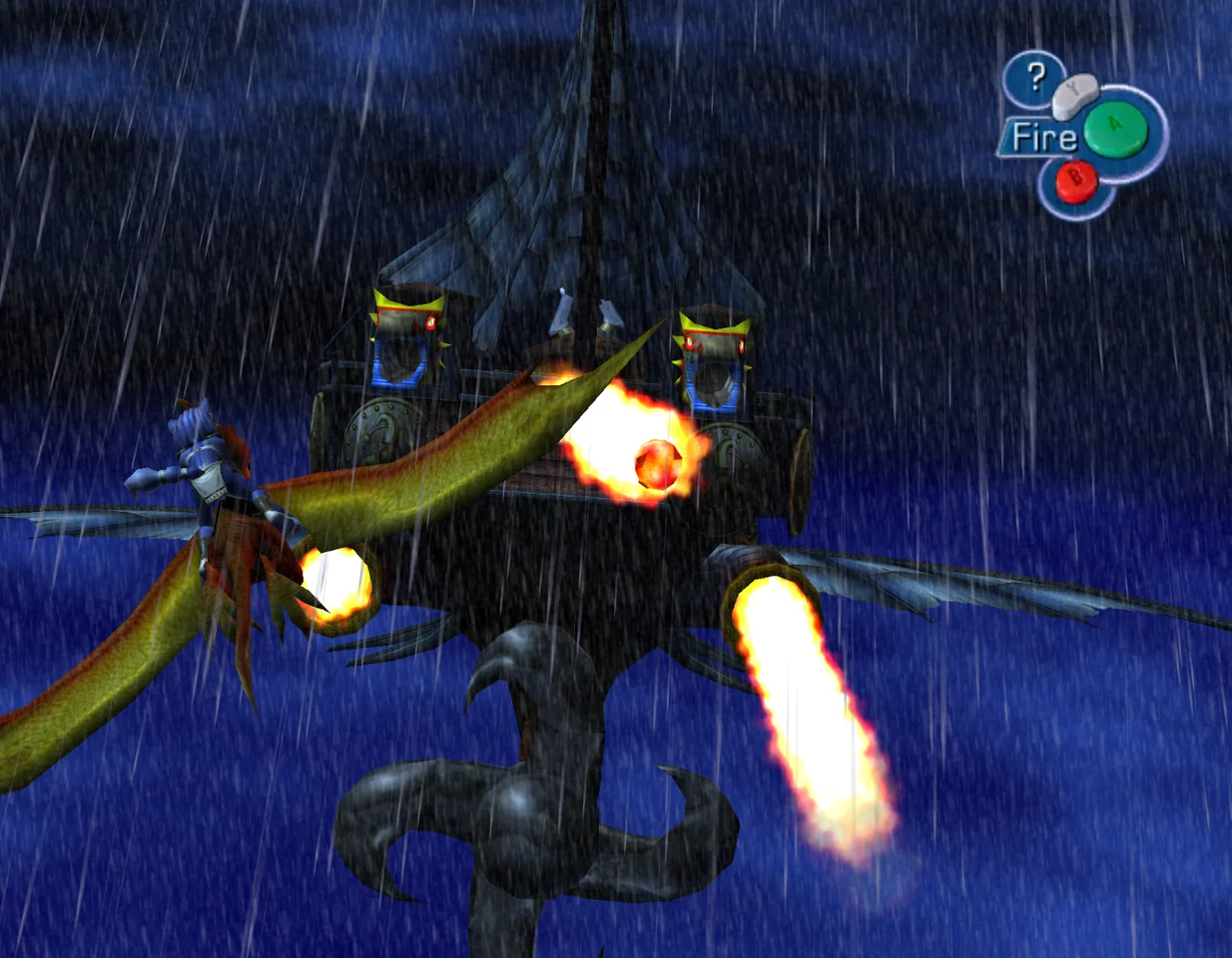
9. Star Fox: Assault
Star Fox: Assault qualifies through variety rather than purity. Its combat shifts between Arwing missions, third-person ground battles and Landmaster tank sections. Those formats give the campaign a broader range of movement and targeting than a standard corridor shooter, while the four-player battles provide a separate reason to return after the story.
The tradeoff is uneven emphasis. The game does not make every format equally deep, and players expecting a full Star Fox flight campaign may be surprised by how much time is spent on foot. That mixture is nevertheless its defining strength. Assault is a good recommendation for players who value changing combat contexts more than a single perfectly refined shooting loop. Its four-player mode also reflects the GameCube’s strength as a local multiplayer console, particularly for groups that want vehicles and infantry combat in the same match.
8. Geist
Geist is difficult to classify as a conventional FPS because its shooting is only one part of a larger supernatural design. The player can possess people, animals and objects, using possession to manipulate environments, solve problems and create openings. Some encounters are recognizably first-person firefights, but the campaign repeatedly asks the player to think about inhabiting the world rather than simply moving through it with a weapon.
That unusual structure gives Geist a stronger identity than many genre-following shooters. It also creates a clear audience divide. Players who want uninterrupted gunplay may find the possession puzzles disruptive, while players interested in experimental mechanics get a GameCube shooter unlike anything else on the system. Its multiplayer extends that possession idea into competitive matches, giving the game more than a purely decorative gimmick. Geist ranks here because its originality is substantial, even though its shooting is less consistent than that of the games above it.
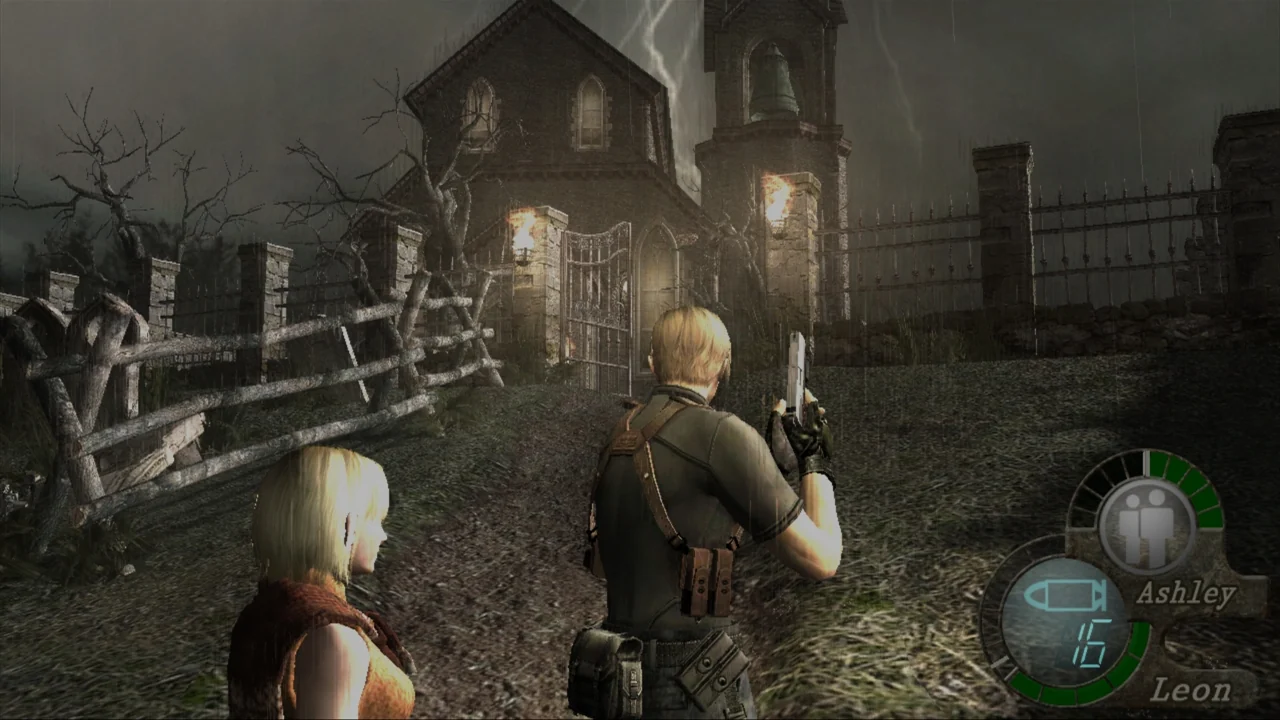
7. XIII
XIII turns its comic-book presentation into more than a visual coat of paint. Cel-shaded characters, graphic transitions and panel-like storytelling support a conspiracy campaign involving stealth, investigation and firefights. The weapon selection and encounter design allow a more flexible pace than a purely scripted military shooter, so the player can approach some situations with caution instead of treating every room as an arena.
The GameCube version is especially memorable because its visual identity remains inseparable from its combat presentation. XIII is not ranked higher because its campaign can feel more uneven than the best games here, and its multiplayer is less central to its identity than the TimeSplitters games. It is nevertheless an excellent choice for players who want a shooter with strong art direction and a story that feels structurally different from standard war fiction. The comic-book language gives even ordinary actions, such as opening fire or discovering evidence, a sharper sense of presentation.
6. James Bond 007: Nightfire
Nightfire provides a standalone Bond-style campaign built around espionage, gadgets, vehicles and set-piece action. Its missions are not limited to shooting galleries: the fantasy includes infiltration, technological tools and sequences designed to make the player feel like an adaptable secret agent. That variety gives the campaign a recognizable identity even when its underlying first-person controls follow familiar console conventions.
Its local multiplayer helps the GameCube version stand apart from a purely story-driven licensed game. The campaign remains the main attraction, but split-screen matches add longevity and make the package more useful for a group. Nightfire is best suited to players who want a cinematic FPS with Bond flavor rather than a simulation of espionage. It sits below the more mechanically ambitious entries, but its mixture of gadgets, vehicles, mission spectacle and multiplayer is substantial enough to avoid feeling like a disposable film tie-in.
5. Ikaruga
Ikaruga changes the scale and rhythm of the list. It is a precision vertical scrolling shooter rather than a character-led first-person adventure, and its central polarity system asks the player to manage matching and opposing attack colors. Matching attacks can be absorbed, while the wrong polarity creates danger. Every stage therefore becomes a sequence of positioning, timing and risk decisions rather than a simple test of reflexes.
The compact arcade structure encourages repetition and improvement. Players who enjoy learning patterns, refining routes and chasing cleaner runs will find a far more concentrated challenge than in the campaign shooters above it. Players seeking exploration, character progression or a long narrative should look elsewhere. Ikaruga ranks fifth because its combat system is exceptionally clear and distinctive, and because the GameCube release gives the system one of its sharpest examples of pure shooting design. Its two-player mode adds another layer of pressure without changing the core polarity puzzle.
4. Metroid Prime 2: Echoes
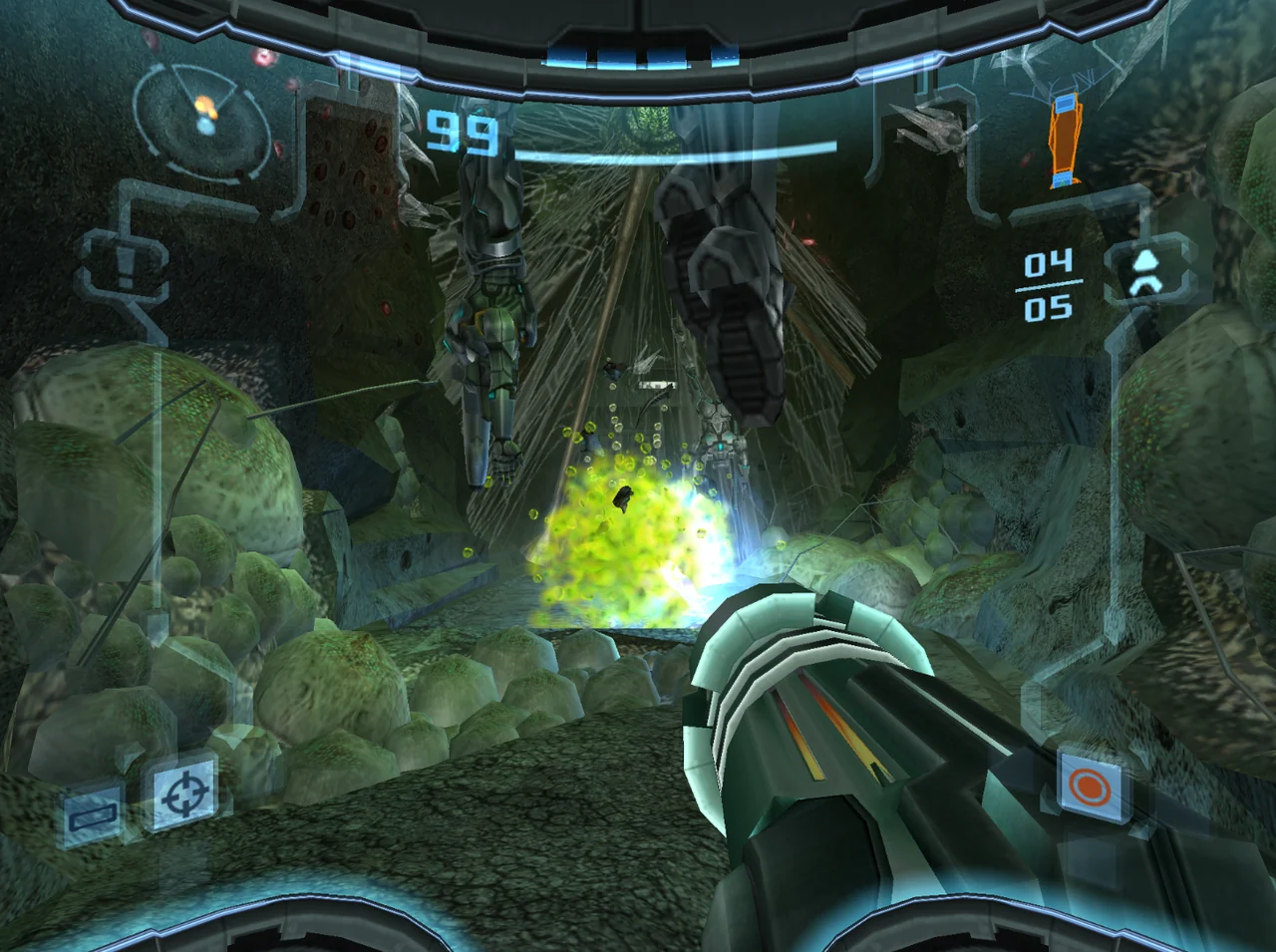
Metroid Prime 2: Echoes expands the first-person adventure formula with light-and-dark versions of its world. Moving between those spaces changes routes, hazards and combat priorities, while beam weapons and ammunition restrictions add another layer to equipment choices. The result is not simply a larger Prime. Its map structure and resource pressure make exploration more demanding and give familiar actions a different context.
Echoes also adds four-player multiplayer, a meaningful distinction from the single-player focus of the original. The campaign’s dual-world design can feel more complicated and less immediately welcoming, but that complexity is central to its identity. It belongs near the top for players who want a shooter where combat, visor use, environmental discovery and world-state changes continually influence one another. The game is a stronger fit for players who enjoy deliberate exploration and resource decisions than for anyone seeking a fast, uncomplicated action FPS.
3. TimeSplitters: Future Perfect
Future Perfect is one of the GameCube’s broadest shooter packages. Its time-travel campaign moves through contrasting historical and speculative scenarios, while cooperative story play gives a second player a reason to experience the main structure. Arcade and challenge modes extend the game beyond the campaign, and the large playable-character roster adds personality to local matches.
Its MapMaker feature is equally important to the ranking. Creation tools give the game a form of replay that does not depend only on replaying authored missions. Future Perfect is therefore a strong recommendation for groups that want an FPS with many ways to play, especially when cooperative sessions matter. It ranks below TimeSplitters 2 because its breadth can make the experience feel less concentrated, but it offers one of the most generous multiplayer-minded designs on the system. Choose it when cooperative play, variety and custom content matter more than a tightly focused campaign rhythm.
2. TimeSplitters 2
TimeSplitters 2 has a cleaner, more concentrated arcade FPS identity than its sequel. Its time-travel campaign provides sharply contrasting settings and objectives, while cooperative play, arcade challenges and local multiplayer make the game easy to revisit with different groups. The tone is energetic and playful, and the campaign rarely confuses spectacle with a needlessly heavy presentation.
The GameCube version supports up to four players, preserving the series’ local multiplayer focus. MapMaker adds further flexibility, but the game’s greatest strength is how naturally its modes fit together: the campaign introduces weapons and situations, arcade play encourages mastery, and multiplayer turns the same broad toolkit against other players. Choose Future Perfect for cooperative breadth and creation tools with a larger story package; choose TimeSplitters 2 for the tighter campaign and purer arcade rhythm. Its compact mission design also makes it the better starting point for players who want to understand why the series became a local multiplayer favorite.
1. Metroid Prime
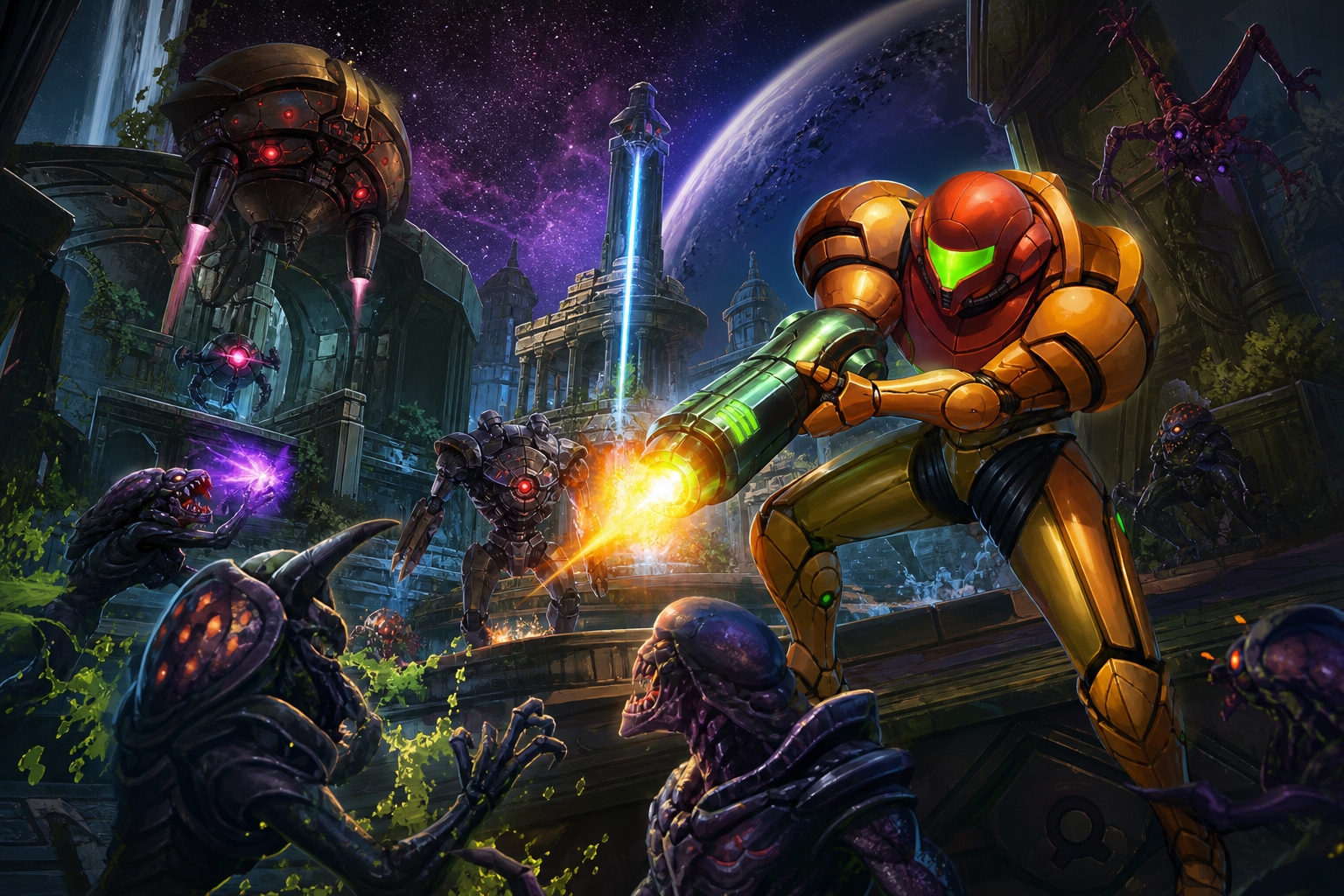
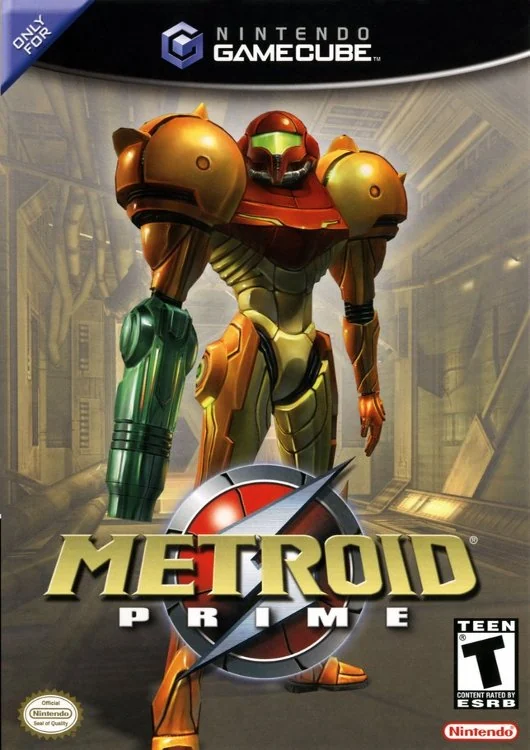
Metroid Prime earns the top position by integrating shooting into a complete world rather than treating the campaign as a chain of combat arenas. Its first-person viewpoint supports beam weapons, visor functions, scanning and environmental observation, while movement upgrades gradually open routes through interconnected areas. Combat is important, but the player is also reading spaces, identifying weaknesses and learning how the world fits together.
The scan visor gives the adventure a distinctive investigative layer, and beam switching makes enemy encounters more than a matter of holding the fire button. Atmospheric storytelling arrives through surroundings and discovered information instead of constant exposition. The different visors also change how the player understands hazards, enemies and hidden routes, helping exploration remain part of the combat design rather than a separate activity.
Players who want a conventional action FPS may find its pace deliberate, but that is exactly why it stands above the other GameCube shooters. Prime makes exploration, equipment, combat and world-building feel like parts of one design rather than separate features. It is the clearest example of the GameCube’s shooter identity at its best: not the broadest military catalogue, but a carefully integrated first-person adventure with enough combat depth to justify its place in the genre.
The GameCube did not need the largest shooter catalogue to produce a memorable one. Its strongest examples cover several different ideas: Frontline and Nightfire deliver traditional campaign shooting, TimeSplitters makes local multiplayer a central attraction, Ikaruga offers precision arcade discipline, and Geist and Star Fox: Assault stretch the category in different directions.
For the most complete single-player experience, start with Metroid Prime. For a tougher variation on that formula, choose Echoes. TimeSplitters 2 is the clearest multiplayer recommendation, Future Perfect is the broader cooperative package, and Ikaruga is the best fit for players who want short sessions built around mastery. That range is the real story of GameCube shooting: a small catalogue with unusually distinct personalities.