The Nintendo GameCube–Game Boy Advance Cable was easy to underestimate. Officially identified as DOL-011, it connected a GameCube controller port to the Game Boy Advance’s external extension connector. In practice, it could turn a handheld into a private map, a second controller, a personal menu, a hidden-information display or a bridge between two separate games.
That flexibility was also the accessory’s weakness. The cable did not magically make GameCube and Game Boy Advance software communicate, did not carry the handheld’s video signal to the television and did not power the handheld. Every unusual idea required specific programming, compatible software and, for some multiplayer modes, a separate Game Boy Advance and cable for each participant. This history follows the designs that made those requirements seem worthwhile, alongside the rollout and limitations that kept the concept from becoming ordinary.
A simple cable with an unusually broad brief
Nintendo’s instruction material describes three general jobs for the cable: exchanging data, using the Game Boy Advance as a supplemental screen and using it as an additional input device. That description matters because the accessory was not one fixed peripheral in the way a steering wheel or light gun was. Its behavior depended almost entirely on the game connected to it.
The physical arrangement was straightforward. One end plugged into a GameCube controller port; the other used the Game Boy Advance’s external connector. The link moved game data between the systems, but it was not a television adapter. A Game Boy Advance screen remained a separate display, and the handheld still needed its own batteries or AC adapter. The same broad compatibility could extend to a Game Boy Advance SP, Game Boy Player or compatible e-Reader hardware, but those combinations did not guarantee that every feature would work.
That distinction explains why Nintendo’s accessory descriptions could mention data exchange, high-score transfers, secret areas, extra levels and supplemental input without promising that every title offered all of them. The cable was a communication path, not a universal translation layer. A game had to be designed around it, and the available features varied from one title to another.
Origins, release timing and Nintendo’s connectivity pitch
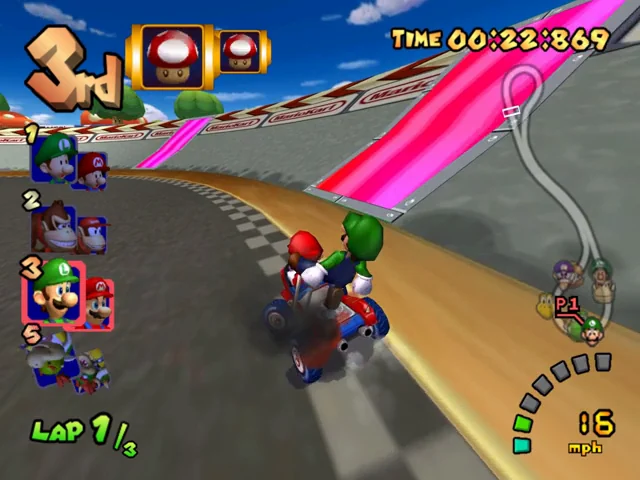
The accessory arrived during Nintendo’s attempt to make the GameCube and Game Boy Advance feel like parts of one entertainment strategy. The GameCube launched in Japan in September 2001, while the Game Boy Advance had already established Nintendo’s new handheld direction earlier that year. The cable’s Japanese release followed on December 14, 2001, placing it inside the first year of both systems’ shared commercial life.
A specialist hardware archive records a North American release on February 12, 2002, with a listed price of $9.95. Contemporary reporting from Nintendo World Report also described early North American availability as uneven, noting that the cable was appearing through Nintendo’s online store and other online retailers. The report specifically identified the accessory as initially available online rather than routinely stocked in stores. That is a useful reminder that announced connectivity and readily available connectivity were not always the same thing.
Europe requires more caution. The GameCube reached Europe on May 3, 2002, but the evidence here does not establish a separate, precise European DOL-011 release date with the same confidence as the Japanese and North American dates. Regional software support, e-Reader availability, bundles and packaging could also differ. Nintendo’s corporate material presented the GameCube, Game Boy Advance and e-Reader as a broader connectivity plan, but the commercial experience depended on the particular game and territory.
Four Swords Adventures made every handheld feel personal
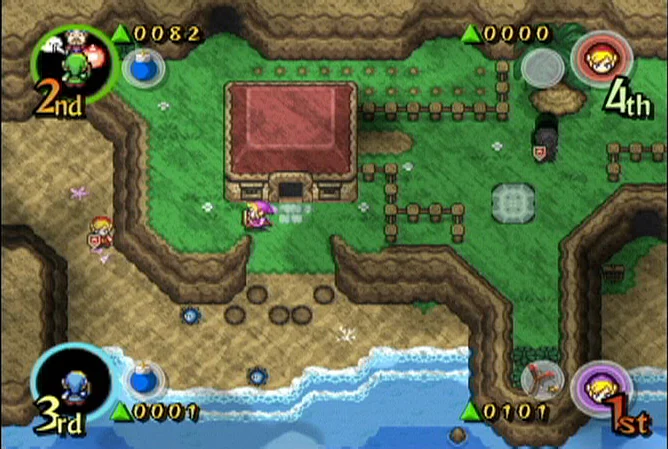
The Legend of Zelda: Four Swords Adventures is one of the clearest demonstrations of why a second screen could change a console game rather than merely decorate it. In multiplayer, each participant used a Game Boy Advance as a controller and private screen while the television showed the shared action. The handheld view became especially important when a player moved away from the main screen area: that character’s viewpoint could continue on the personal display instead of forcing the whole group to follow.
This arrangement created a useful tension between togetherness and separation. Players shared a world, objectives and consequences, but each person could also see information unavailable on the television. The Game Boy Advance was not simply a smaller controller screen. It gave each player a personal window into the same game state.
The design also exposed the cable’s practical demands. A group needed compatible handhelds and cables, not merely extra GameCube controllers. That made the game’s central idea difficult to reproduce casually, even though the concept itself was immediately legible: one television for the common space, several handhelds for individual spaces.
Crystal Chronicles turned menus into multiplayer territory
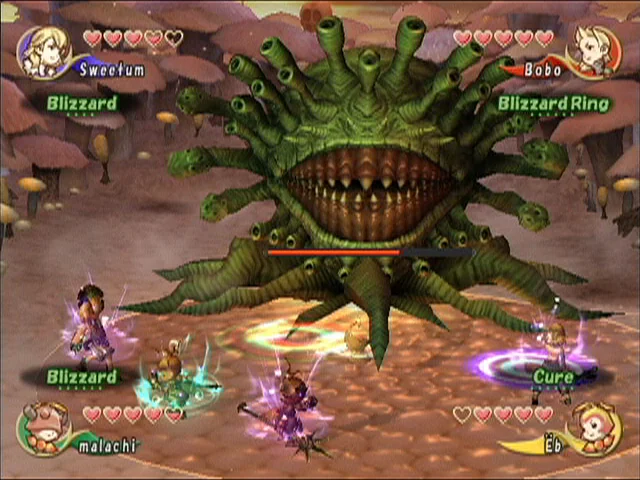
Final Fantasy: Crystal Chronicles used the cable for a different kind of asymmetry. Its multiplayer mode required a connected Game Boy Advance and cable for each player, with the television carrying the shared action while handheld screens handled personal menus and information. The North American manual specifies support for up to four Game Boy Advance systems and up to four Nintendo GameCube Game Boy Advance Cables.
Unlike Four Swords Adventures, Crystal Chronicles did not primarily use each handheld to show a separate character’s independent position. The personal display helped each player manage their own role without covering the common television view with everyone’s menus. That made the handheld feel like a private dashboard attached to a communal adventure.
The distinction is historically important. Both games are often grouped together as evidence of Nintendo’s second-screen ambition, but they solve different problems. Four Swords makes private spatial information central to movement and cooperation. Crystal Chronicles makes private interface space useful during shared action. Both also demonstrate why the idea was demanding in human terms: a four-player session could require four handheld systems in addition to the console and game.
Pac-Man Vs. made unequal information the whole point
Pac-Man Vs. offered perhaps the strangest social arrangement built around the cable. One player used a Game Boy Advance as Pac-Man’s private full-map display, while the other players controlled ghosts from the television screen. The central rule was not that everyone received the same information on different devices. It was that the information was deliberately unequal.
That imbalance changed the mood of a familiar arcade idea. The ghost players could coordinate in shared view, while Pac-Man possessed a personal map and a different perspective on danger. The handheld therefore became a secret-keeping device as much as a display. It separated knowledge, not just controls.
This was a bold use of a technically modest link. Nintendo did not need to render the entire game independently on every handheld. It needed to decide who should know what, then place the right information in the right screen. Pac-Man Vs. showed that asymmetric multiplayer could be built from information design and social rules rather than from a much more powerful network infrastructure.
The Wind Waker and the appeal of an optional helper
The Wind Waker’s Tingle Tuner used the cable for a less demanding but highly memorable experiment. A second player could use a connected Game Boy Advance to assist Link, turning the handheld into an optional companion interface rather than a requirement for the main adventure.
That choice gave Nintendo a way to make connectivity visible without redesigning the entire game around it. A player could experience The Wind Waker normally, then add another person and a private handheld screen for assistance. The arrangement also reflected a recurring pattern in GameCube connectivity: the cable could be most effective when it added a role that did not already fit comfortably on the television.
The tradeoff was that optional features were easier to ignore. A game built around Four Swords or Crystal Chronicles made the accessory central to its identity. The Tingle Tuner made it an extra layer. That broadened accessibility for the main game, but it also meant many players could finish the adventure without discovering what the cable made possible.
Cross-game rewards and linked Nintendo ecosystems
Not every important use involved multiplayer. Metroid Prime could connect with Metroid Fusion to unlock the Fusion Suit and the NES version of Metroid. Here the cable acted as a bridge between two separate games and rewarded ownership of both. The handheld was not a second screen for Prime; it was evidence that the player had another compatible piece of software. The Metroid Prime manual specifically required a GameCube, Game Boy Advance, both games, the cable and a memory card for the connection bonuses.
Nintendo used similar thinking across several parts of its catalog. Pokémon Colosseum and Pokémon XD: Gale of Darkness connected with Game Boy Advance Pokémon software for transfers and related functions. Pokémon Box: Ruby & Sapphire gave the link a practical role within the wider Pokémon ecosystem. These features made the cable valuable to players invested in a particular set of games, even when it did nothing for unrelated titles.
Animal Crossing used connectivity for several optional interactions, including a separate island, pattern-related functions and downloadable NES games. Compatible e-Reader features added another regional and hardware-dependent layer. Mario Golf: Toadstool Tour and Mario Golf: Advance Tour linked companion home-console and handheld releases for character-related content. Sonic Adventure 2: Battle and Sonic Advance likewise used the connection for Chao-related data. These examples show the cable as a continuity device: it let two versions of a series acknowledge one another.
Third-party experiments and the limits of a software-defined accessory
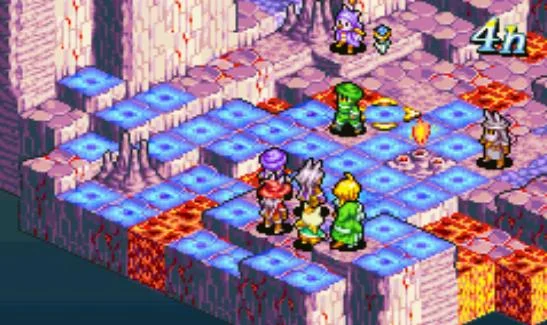
Third-party developers explored uses beyond Nintendo’s most visible examples. Some GameCube software used the Game Boy Advance for utility functions, including auxiliary or radar-like displays and remote interaction features associated with games such as Splinter Cell. These experiments could be clever precisely because the handheld was physically separate from the television: a small private display could hold information that would otherwise interrupt the main view.
But the cable’s limits were structural. Unsupported software could not communicate simply because the hardware was attached. A feature might require a matching Game Boy Advance cartridge, a particular GameCube disc, multiple cables, a compatible regional release or an e-Reader that was not equally available everywhere. Even when a game technically supported the connection, its use could be optional rather than central.
The cable also did not replace a GameCube controller in every situation. Some games treated the handheld as a controller and screen together; others used it mainly for data exchange; still others used it for a one-time unlock or transfer. Calling all of these experiences second-screen multiplayer erases the very variety that made the accessory historically interesting.
Reception: ambitious, memorable and difficult to normalize
The cable attracted attention because its best ideas were easy to describe and hard to reproduce. A private map, a hidden Pac-Man view or four players with individual menus sounded unlike ordinary console multiplayer. Nintendo’s own connectivity messaging emphasized that possibility, while later retrospectives have repeatedly returned to Four Swords Adventures and Crystal Chronicles as the strongest demonstrations.
At the same time, the accessory’s success depended on a chain of conditions. The right game had to be available, enough players needed compatible handhelds, each handheld needed a cable, and the feature had to justify the extra equipment. That made the cable more compelling as a design experiment than as a default part of GameCube play. Uneven early availability in North America added another obstacle.
It would be too strong to call the accessory either a universal commercial failure or an unqualified triumph. The evidence supports a narrower conclusion: Nintendo built an ambitious platform idea, and a small group of games used it memorably, but the requirements prevented the idea from becoming routine across the library.
From Game Boy Player to later second screens
The Game Boy Player created a related but separate use. It allowed Game Boy software to run through GameCube hardware, and a connected Game Boy Advance could function as a controller for that software. That expanded the cable’s usefulness, but it was not the original multiplayer vision of Four Swords Adventures or Crystal Chronicles. The distinction matters because the Player changed where the handheld software ran, while the connectivity games divided roles between GameCube software and a separate handheld.
The cable’s broader legacy is conceptual. It treated a handheld as a personal display and input surface attached to a shared television game. Later asymmetric multiplayer and second-screen experiments would explore similar relationships through newer hardware and wireless communication, but the GameCube–Game Boy Advance Cable belongs to an earlier, more physical version of that idea: every private screen had a person holding it, and every connection was visible in the room.
That physicality was both its charm and its barrier. The cable made information feel owned by the player holding the handheld. It also made every additional participant part of the hardware equation.
The DOL-011 cable was never just a wire, but it was also never a universal GameCube upgrade. Its importance came from the games that understood its special division of space: Four Swords Adventures made private viewpoints part of cooperation, Crystal Chronicles moved personal interfaces away from the shared screen, and Pac-Man Vs. made unequal knowledge into the game’s central rule.
Its uneven rollout, software dependence and need for multiple handhelds kept the idea niche. Even so, the cable demonstrated a durable design principle: a console game can become more interesting when everyone shares one world but not exactly the same screen, information or role.