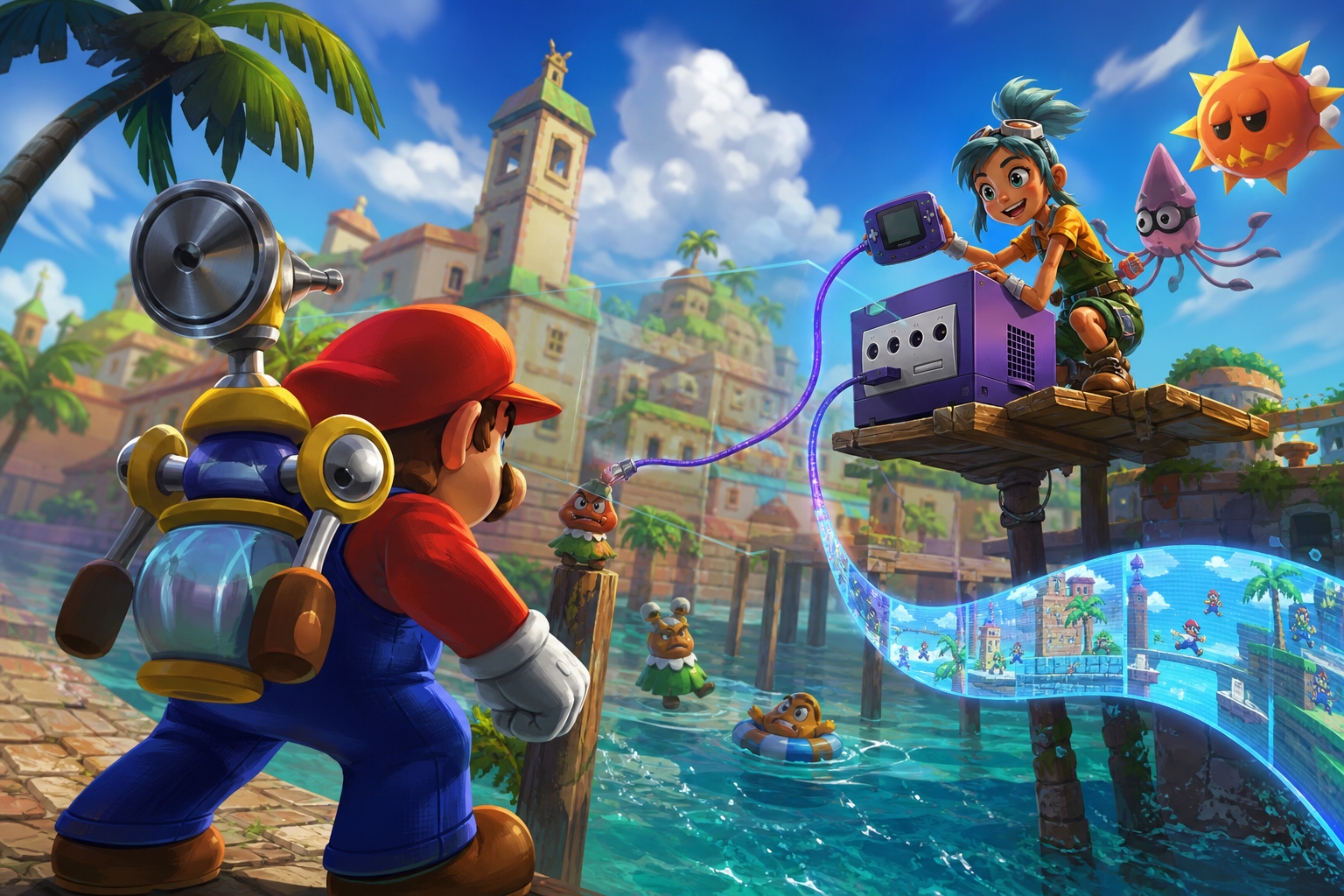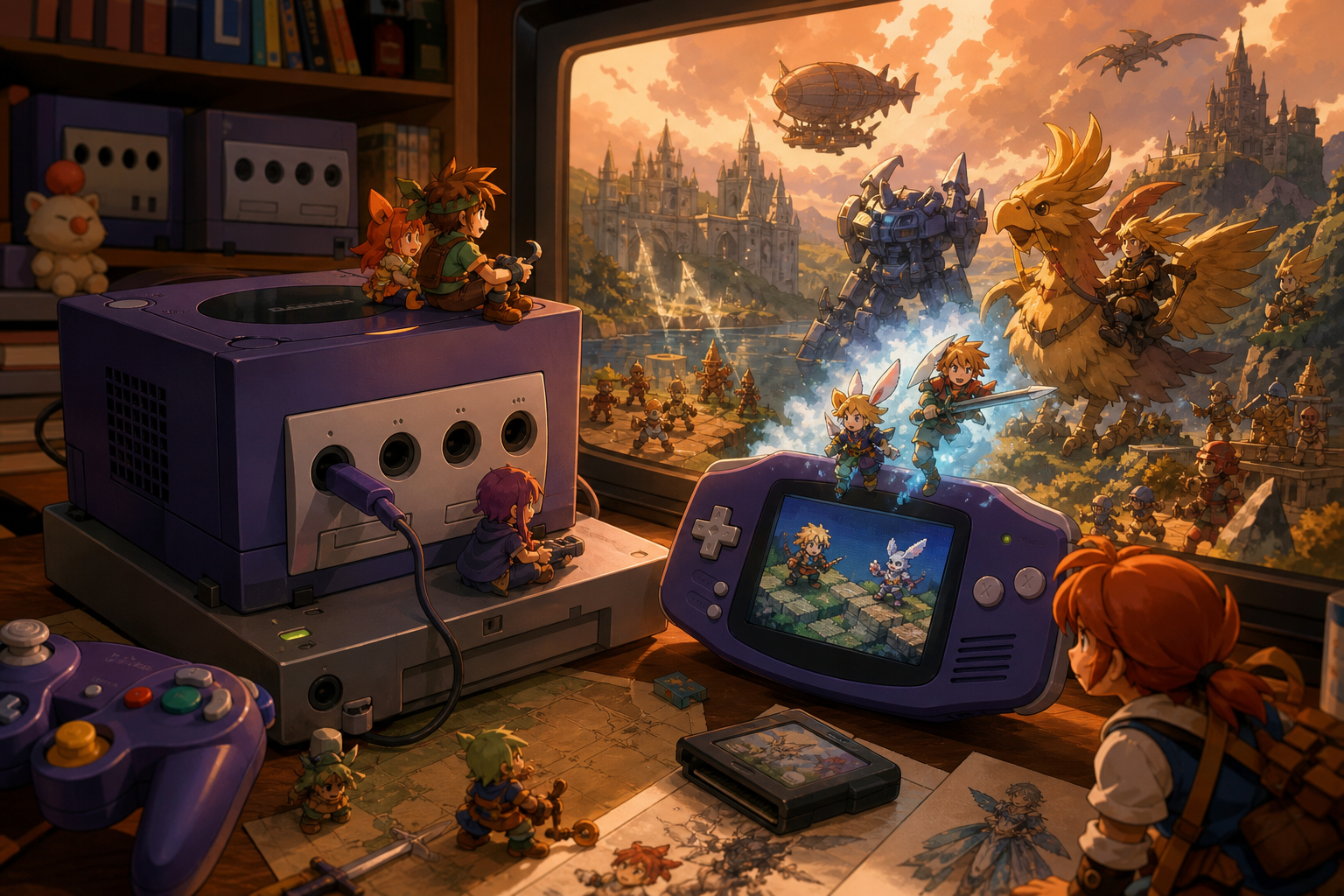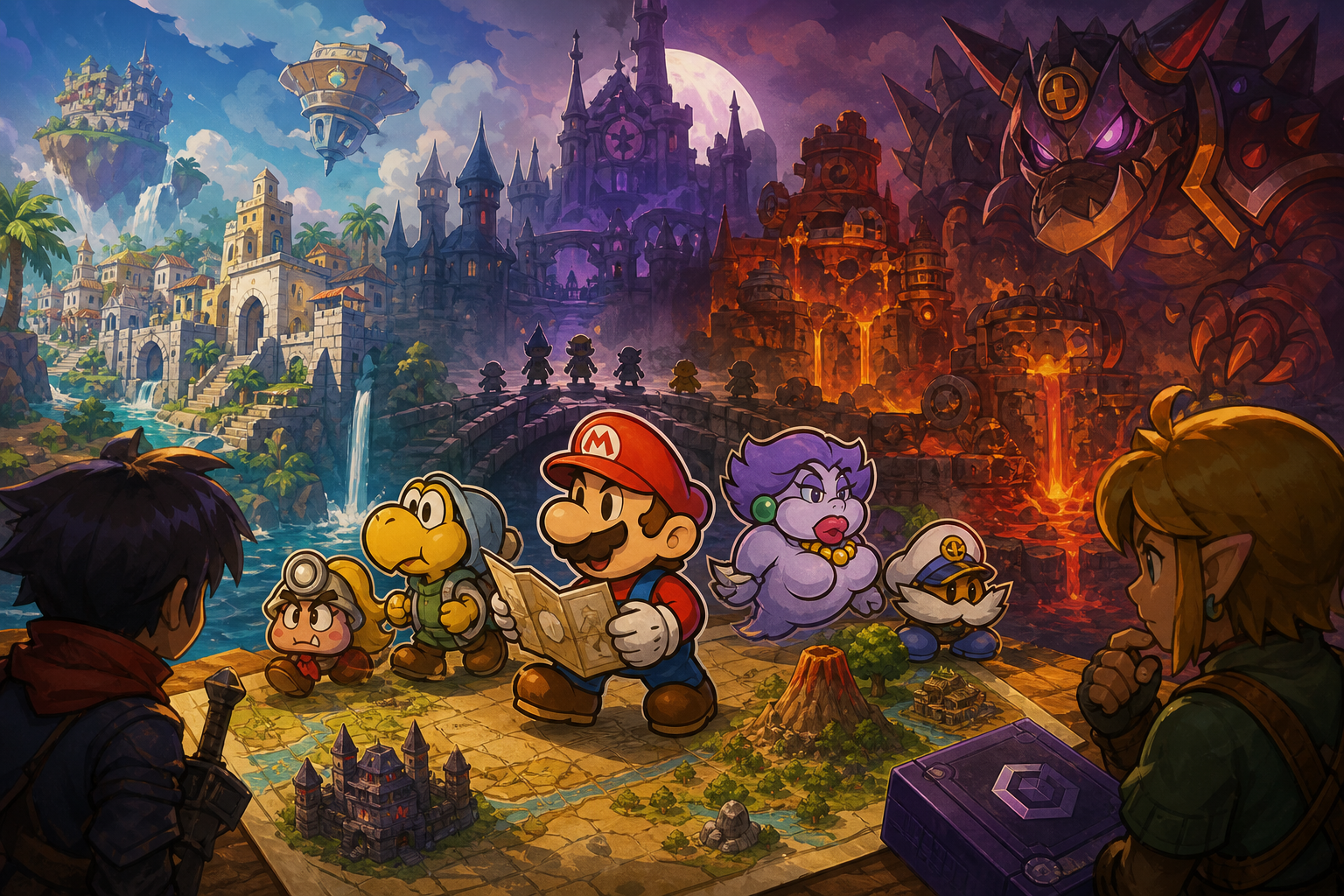
The Nintendo GameCube was never defined by a huge role-playing catalogue. That limitation is exactly what makes its RPG library interesting. Instead of offering dozens of similar menu-driven adventures, the system gathered a concentrated group of unusual games, including a tactical Fire Emblem, two card-based Baten Kaitos adventures, a console online RPG and a Final Fantasy built around shared exploration.
This ranking considers four main qualities: how distinctive the combat feels, how meaningfully characters or parties develop, how memorable the world is to explore, and how well each game creates an identity on GameCube. Narrative ambition, replay value and multiplayer design also matter, but this is an editorial ranking rather than an objective scorecard. The list includes games released for the system, not later remasters or games that merely contain experience points and an adventure story.
10. Lost Kingdoms
Lost Kingdoms earns the final place because its card-driven action combat gives it a clearer identity than its compact scope might suggest. Instead of equipping a conventional spell list or choosing commands from a menu, the player builds a collection of creature and ability cards, then uses those cards during real-time encounters. That structure makes each fight a quick test of preparation, positioning and card selection.
The result is an action RPG that feels experimental rather than expansive. Its world and character development are less developed than the higher-ranked games, and its campaign does not offer the same party-building breadth as a traditional role-playing adventure. Still, it is a strong recommendation for players who want a focused GameCube RPG with a combat system that does not resemble Final Fantasy or Dragon Quest. Its place on the list comes from mechanical identity rather than scale.
- Best for players who enjoy collecting combat options.
- Tradeoff: a smaller-feeling adventure than the games above it.
9. Lost Kingdoms II
Lost Kingdoms II keeps the original’s card-based foundation but gives the idea more room to breathe. The sequel presents a separate magical quest set two centuries after the first game, and its expanded card system supports more experimentation. Players are not simply selecting stronger attacks; they are shaping a combat toolkit that determines how encounters unfold.
Its action remains more immediate than strategic, but the card system creates a useful bridge between deck construction and character progression. The sequel adds broader quests, new abilities and the ability to transform into different creatures, making it a more developed version of the original formula. It still lacks the layered relationships, large party casts and world-building of the list’s upper half. Its appeal is concentrated in the battle system, which makes it a good choice for someone who values mechanical experimentation over a sprawling traditional RPG structure.
- Best for players who want a more developed version of card-based action combat.
- Tradeoff: the card system carries more of the experience than the story or party cast.
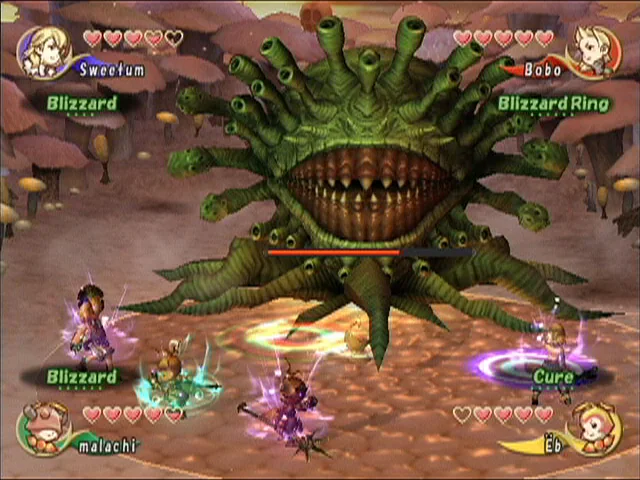
8. Final Fantasy: Crystal Chronicles
Final Fantasy: Crystal Chronicles takes the series in a deliberately different direction. Combat is real-time, the player travels with a caravan, and a crystal chalice protects the party from the poisonous miasma that covers the world. The journey is structured around returning to settlements, crossing hazardous areas and gathering the myrrh needed to protect the home village, giving the adventure a strong sense of movement even when the story is relatively simple.
Its most distinctive feature is simultaneous multiplayer for up to four players in the original GameCube release. That mode was designed around Game Boy Advance systems and GameCube–Game Boy Advance link cables, not ordinary extra GameCube controllers. Each player uses the handheld for personal information and controls while the GameCube displays the shared action. This limitation makes the game historically fascinating but also affects who can experience its central idea today. Solo play remains possible, yet the cooperative design is the reason Crystal Chronicles stands apart from conventional Final Fantasy games.
- Best for groups interested in an unusual cooperative RPG.
- Important limitation: original multiplayer requires compatible Game Boy Advance systems and link cables.
- Tradeoff: less conventional party control and character drama than a mainline-style Final Fantasy.
7. Phantasy Star Online Episode I & II
Phantasy Star Online Episode I & II brought a console online RPG format to Nintendo GameCube while also providing substantial solo content. The package combines the original Episode I material with content from Phantasy Star Online Version 2, then adds Episode II, a new adventure created for the GameCube release. Character classes, equipment drops and repeated missions encourage a progression loop built around improving a hunter, ranger, force or android character.
The game’s structure is less about carefully authored party relationships and more about building an effective character through combat and loot. Nintendo’s contemporary description confirmed that the game could be completed offline and offered split-screen play for up to four people on one console. Its original online design places it firmly in the early console network era, while modern availability is a separate question outside this article’s scope. This ranking concerns what the GameCube release was designed to do, not a promise of current official online support.
- Best for players who prefer classes, loot and repeatable combat.
- Tradeoff: thinner narrative development than the traditional JRPGs here.
- Edition note: the GameCube package is distinct from the Dreamcast releases and later versions.
6. Fire Emblem: Path of Radiance
Fire Emblem: Path of Radiance is the list’s clearest tactical RPG. Every map asks the player to evaluate terrain, range, unit roles and risk before committing to a move. Permanent character loss gives battles emotional weight, while recruitable units and support relationships make the roster feel like more than a collection of interchangeable statistics.
The laguz transformation system adds another layer to party planning, allowing certain units to shift between human and beast forms with different strengths and limitations. Skills further differentiate characters and encourage long-term decisions about deployment. The game’s animated scenes and 3D battles also gave the series a new presentation on GameCube, but its strongest achievement is the way combat, character development and narrative consequences reinforce one another.
Path of Radiance is slower and more deliberate than the action-oriented entries, and that can make it a poor fit for players seeking immediate combat. For tactical players, however, its patience is a strength. It ranks above the more experimental action RPGs because its systems remain connected from the opening map to the final campaign decisions.
- Best for tactical players who accept permanent consequences.
- Tradeoff: battles demand patience and can punish careless planning.
- Platform note: it was the first Fire Emblem title released for Nintendo GameCube.
5. Skies of Arcadia Legends
Skies of Arcadia Legends is the GameCube edition of Sega’s Dreamcast role-playing adventure, and its central fantasy remains wonderfully clear: explore a world of floating islands from an airship. The sky-based map gives travel a sense of discovery, while crew recruitment and ship improvements make the vessel feel like part of the party rather than a disposable menu option.
Battles use traditional turn-based commands, but airship encounters, ship combat and larger set-piece fights broaden the rhythm beyond ordinary dungeon progression. The game’s cheerful adventure tone also helps it stand apart from the more severe stories elsewhere on this list. Its world design does much of the heavy lifting, connecting towns, ruins, islands and open sky into a setting that feels built for exploration.
Skies of Arcadia Legends is not as mechanically unusual as Baten Kaitos or as tactically demanding as Fire Emblem. Random encounters and older pacing can also make it feel less direct than later RPGs. Nevertheless, it remains one of the GameCube’s strongest role-playing adventures because the world gives every journey a clear purpose and personality.
- Best for players who want classic turn-based adventure and exploration.
- Edition note: this is a GameCube version of a Dreamcast RPG.
- Tradeoff: random encounters and older pacing may feel less direct than later RPGs.
4. Baten Kaitos Origins
Baten Kaitos Origins pushes the series’ card combat toward greater speed and precision. Characters use individual decks, and battles depend on sequencing cards into effective attacks, defenses and combinations. The system feels more active than a conventional turn-based command menu because the player must recognize opportunities and assemble a useful hand under pressure.
As a prequel, Origins can be approached as its own story while also enriching the broader setting. Its character-focused structure gives the card mechanics a stronger role in party identity: the deck is not just equipment, but an expression of how each fighter operates. The use of real-time card sequencing means that decision-making does not stop after selecting a command. The player is continually evaluating what is in hand, what can be combined and which response is safest.
The system can be demanding, especially for players who prefer predictable commands, yet that demand is precisely why it ranks above more conventional entries. It is a GameCube RPG for people who want combat to feel like a continually changing puzzle. Its smaller audience appeal is part of the tradeoff, but its design remains one of the system’s boldest experiments.
- Best for players who enjoy deck construction and fast decision-making.
- Tradeoff: the battle system has a steeper learning curve than standard turn-based RPGs.
- Do not combine it with Eternal Wings; they are separate GameCube releases.
3. Baten Kaitos: Eternal Wings and the Lost Ocean
Eternal Wings and the Lost Ocean establishes the floating-island world and Magnus card system that make the Baten Kaitos games so distinctive. Cards represent weapons, armor, items and abilities, so progression involves both strengthening characters and refining the possibilities in their decks. The result is a role-playing adventure where preparation continues into the battle itself rather than ending when equipment is selected.
Its world design is unusually ambitious for the GameCube, moving between distinctive islands and cultures with a strong sense of mythic scale. The setting gives the game a visual identity that separates it from the more familiar medieval and science-fiction RPGs around it. Exploration is not merely a route between battles; each island introduces a different tone, environment and social structure.
The combat is slower and more deliberate than Origins, which can make it easier to understand but less immediately fluid. That difference matters. Eternal Wings is the better fit for players who want to learn a complex system gradually and spend time with a large, dramatic world. Origins is more demanding in the moment, but the original Baten Kaitos has the stronger sense of discovery and setting, which earns it the higher ranking.
- Best for players who want card battles paired with extensive world-building.
- Tradeoff: slower combat pacing than Origins.
- Platform note: later HD releases do not replace the identity of the original GameCube version.
2. Tales of Symphonia
Tales of Symphonia is the strongest choice on GameCube for players who want a large traditional Japanese RPG with real-time combat. Party members attack, cast spells and trigger special techniques directly, while the player can switch between characters and shape a group around different roles. Nintendo’s GameCube listing also identifies simultaneous multiplayer for up to four players, allowing additional players to control party members during battles with standard console controls.
Outside combat, the game builds its identity through character relationships, optional conversations, skits and a substantial journey across a connected fantasy setting. Its progression is more conventional than Baten Kaitos, but that conventional structure is a strength for players who want a broad, accessible adventure. The party feels active rather than decorative because each character contributes a different combat role and personality to the journey.
Tales of Symphonia misses the top spot only because Paper Mario combines comparable accessibility with more inventive moment-to-moment systems. Players who prefer anime-styled presentation, real-time battles and a long-form party adventure may reasonably choose it first.
- Best for players who want real-time party combat and a long-form JRPG.
- Strong multiplayer fit for groups using standard GameCube controllers.
- Tradeoff: its progression is more familiar than the card-based RPGs.
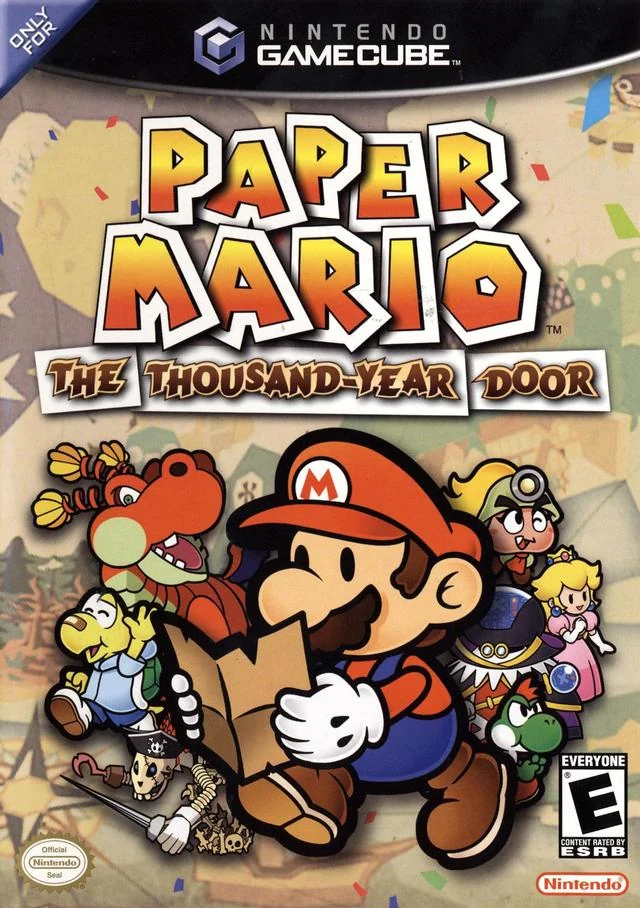
1. Paper Mario: The Thousand-Year Door
Paper Mario: The Thousand-Year Door is the most complete overall RPG on Nintendo GameCube because nearly every part of its design supports the same playful idea. Battles are turn-based, but timed attacks, audience reactions, badges, partners and situational abilities keep each command active. Building Mario around badges creates meaningful choices without burying the player in complicated statistics, while partners provide distinct tactical answers to different enemies.
The audience system gives ordinary battles a theatrical rhythm. Successful Action Commands improve attacks and help fill the meter for special moves, while the crowd can also affect the fight by throwing helpful or harmful objects. These features make encounters feel responsive without abandoning the clarity of turn-based play. The partner roster adds another layer, since switching companions changes available attacks and defensive solutions.
The world is equally important. Towns and chapters have different visual identities, side activities add texture between major battles, and the writing gives the journey a flexible tone that can move from comedy to genuine danger. Exploration also feeds back into progression through hidden areas, abilities and revisited locations, so the paper presentation is more than a visual gimmick.
It is more approachable than Baten Kaitos, less punishing than Fire Emblem and more mechanically varied than a straightforward action RPG. That balance earns the top position. The Thousand-Year Door offers party building, combat variety and memorable exploration without allowing any one system to overwhelm the adventure. Players seeking a serious fantasy epic may prefer another game here, but as an all-round GameCube RPG, Paper Mario is the most complete package.
- Best overall choice for turn-based combat with timing and customization.
- Best fit for players who want a readable entry point into GameCube RPGs.
- Tradeoff: its lighter presentation may not satisfy players seeking a serious fantasy epic.
The best starting point depends on which RPG tradition appeals most. Choose Paper Mario for approachable turn-based variety, Tales of Symphonia for real-time party combat, Fire Emblem for tactical consequences and Baten Kaitos for card-driven battles. Skies of Arcadia Legends is the natural pick for broad adventure, while Phantasy Star Online suits players who prefer classes, loot and repeatable missions. Crystal Chronicles is the most distinctive choice for cooperative experimentation, provided the original multiplayer hardware is available.
The GameCube’s RPG library is small, but it is not narrow. Its strongest games repeatedly challenge the idea that a role-playing game must use one fixed combat format. Across ten releases, the system offers tactical campaigns, cooperative caravans, online progression, deck construction and classic party adventures, making its RPG catalogue feel more inventive than its size suggests.