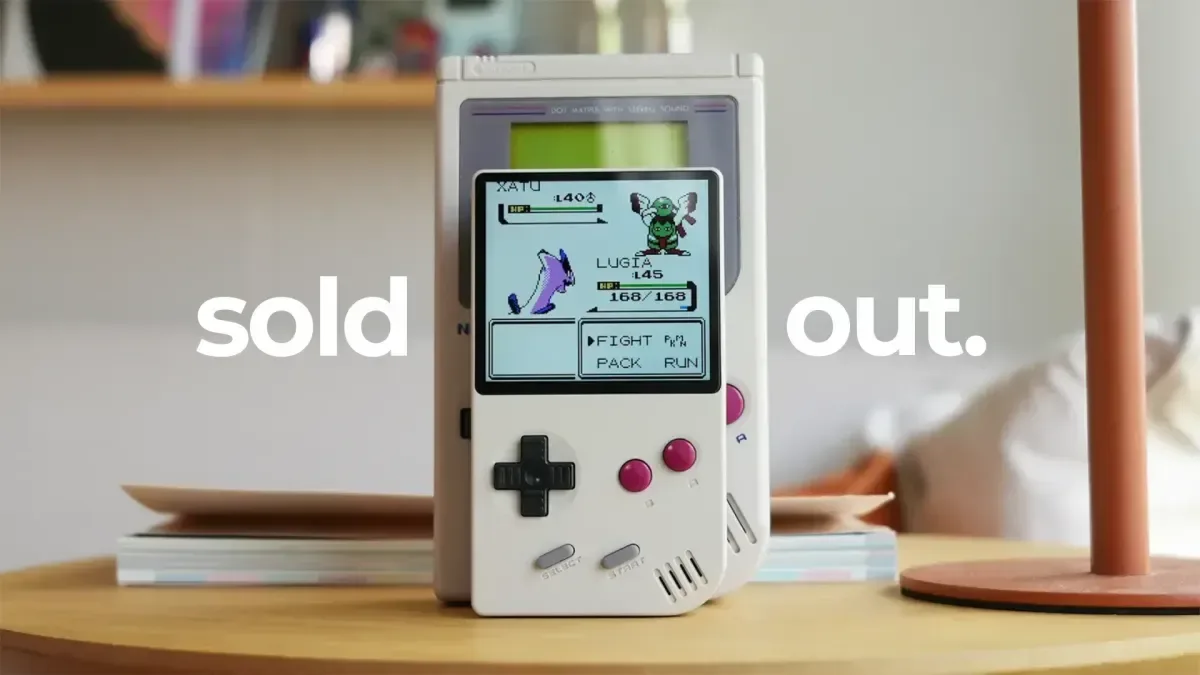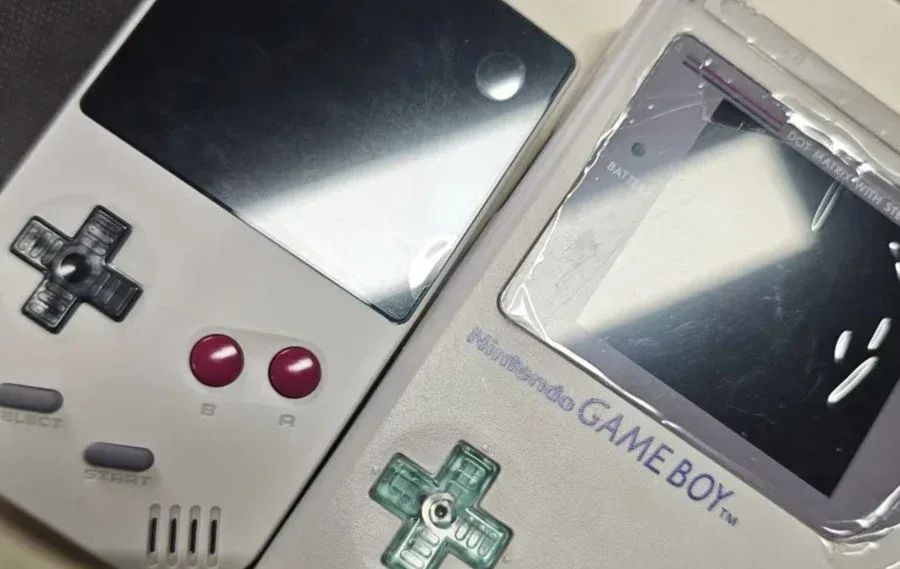
There is something beautifully unreasonable about shrinking a Game Boy-style handheld until the cartridges begin to look like oversized luggage. FunnyPlaying has teased exactly that kind of machine: a compact device with a cartridge slot that appears designed to play original Game Boy and Game Boy Color games. It is a tiny modern handheld with a very old-fashioned party trick—letting the plastic rectangles from the 1990s do the talking.
The device has not yet received a confirmed retail name, full specification sheet, release date, or price. Still, the details visible so far point toward an intriguing addition to the growing family of Game Boy-inspired hardware. FunnyPlaying is already known in retro circles for aftermarket Game Boy parts and for its small Retro Pixel Pocket handheld, so this is not a company wandering into the handheld aisle wearing a blindfold. The newly teased unit appears to build on that miniature-minded approach while adding support for physical Game Boy software.
A tiny shell with a cartridge-sized ambition
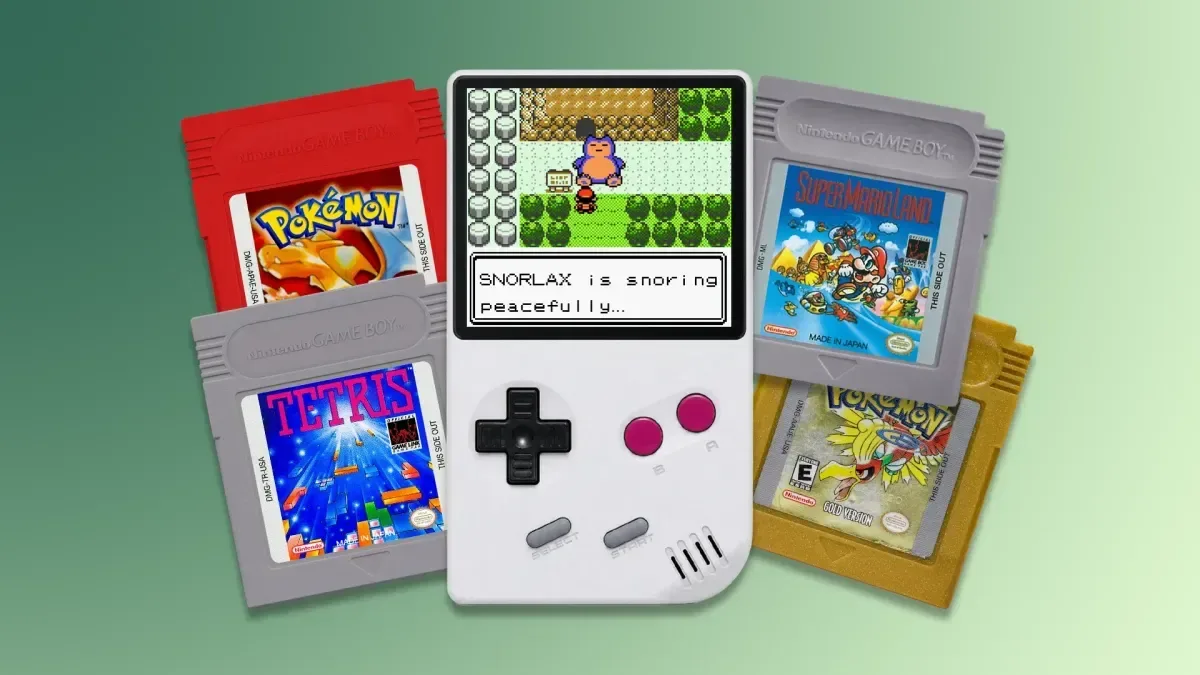
The most important detail is also the simplest: the teased handheld appears compatible with original Game Boy cartridges, with Game Boy Color support indicated as well. That makes it something different from the many compact emulation devices that can mimic old systems only through files placed on storage. Here, the cartridge slot is part of the appeal. A person can seemingly take a well-loved copy of Tetris, The Legend of Zelda: Link’s Awakening, or a Game Boy Color favorite from a shelf, insert it, and use the original game card as intended.
That does not automatically make the machine a replacement for Nintendo’s hardware, nor does it answer every technical question collectors may have. Compatibility can involve many variables, including cartridge revisions, save behavior, specialty hardware, and any accessories or unusual features a particular game relies on. FunnyPlaying has not published a detailed compatibility list, so it would be premature to declare that every Game Boy and Game Boy Color cart is covered perfectly. For now, the proper read is narrower: physical GB and GBC cartridge support appears to be a central feature of the teased device.
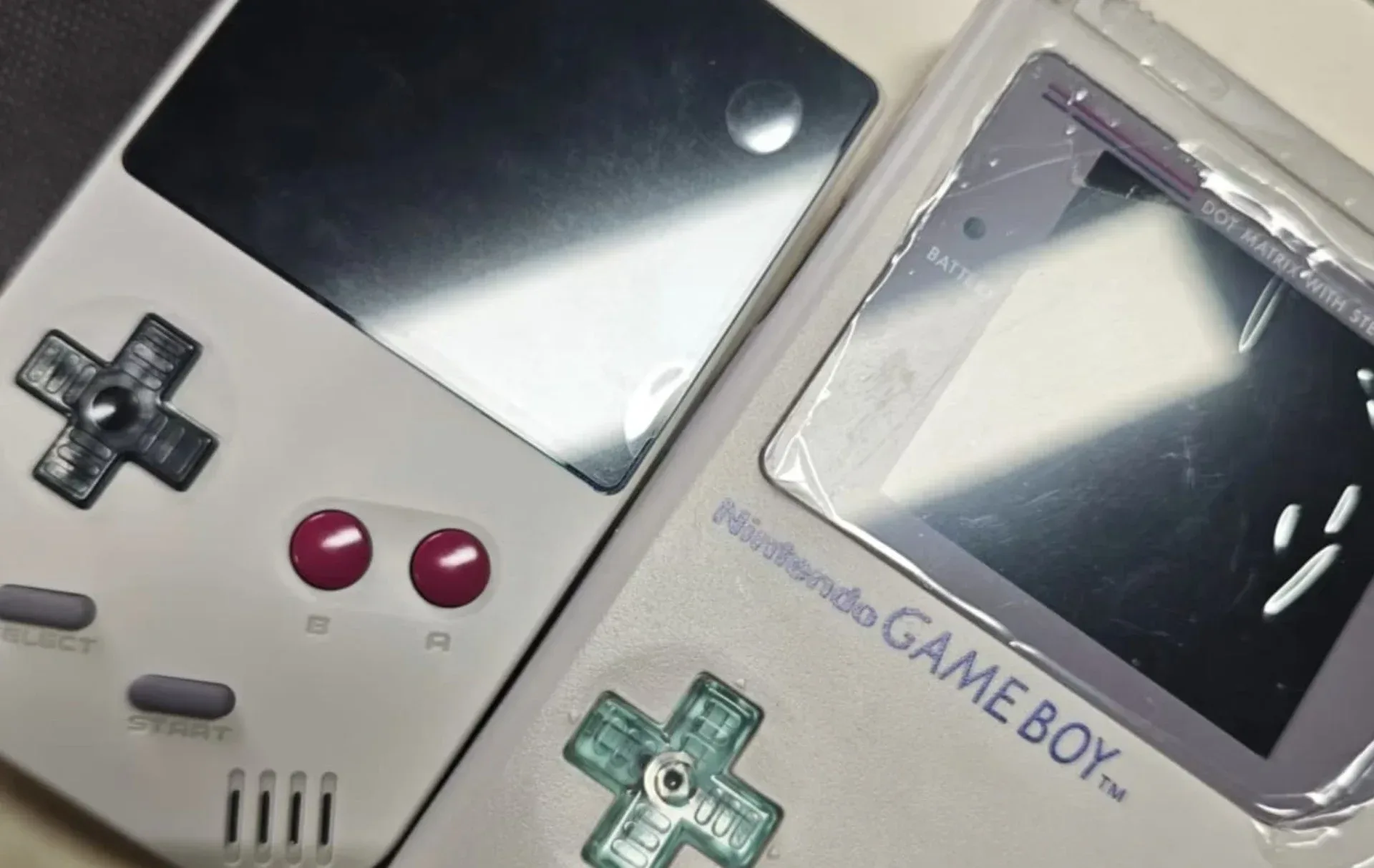
Its proportions look close to FunnyPlaying’s Retro Pixel Pocket, which means this is a seriously compact proposition rather than a full-size DMG-01 homage. In a pleasing bit of visual contradiction, the D-pad appears roughly comparable in size to the control pad on Nintendo’s original brick-like Game Boy. The machine, then, looks as if it is attempting to keep one of the most important physical ingredients at a usable scale while reducing much of the surrounding body.
That is not mere decoration. On little handhelds, control size can be the line between “adorably portable” and “a game of surgical thumb origami.” The tease suggests FunnyPlaying understands the potential issue, although photos alone cannot establish how the buttons, grip, shoulder controls if any, or overall ergonomics will feel. No hands-on conclusions should be drawn until the company provides more concrete information.
Physical cartridges meet SD-card convenience
The other apparent feature is SD-card loading for ROMs. If confirmed in the final product, that would give the device two distinct ways to approach Game Boy-era play: insert a cartridge from a collection, or boot compatible software from removable storage. The combination is increasingly familiar in the retro-hardware world, but it remains compelling because it serves two very different habits.
For collectors, cartridges are objects as much as they are game delivery systems. The label art, the particular color of a translucent Game Boy Color cart, the feeling of checking whether a save still exists, and even the occasional need to clean contacts all form part of the ritual. A cartridge slot gives those items a practical role beyond display. That may be especially attractive for people who own games but do not want to carry aging original hardware everywhere.
Related coverage includes FunnyPlaying Teases Tiny Game Boy-Compatible Handheld With Cartridge Slot.
SD-card support, by contrast, offers flexibility and portability. It could make a compact handheld a convenient place to keep a personal library of compatible titles without packing a small stack of carts in every jacket pocket. Yet it is worth separating what has been shown from what has not. The tease does not establish the device’s interface, firmware options, file support, display specifications, battery capacity, save handling, scaling modes, operating system, or whether the final unit will include any features beyond the basics. Those are not footnotes on a handheld this small; they are the things that determine whether a charming concept turns into a practical daily device.
Potential buyers should also remember that ROM use carries legal and ethical considerations that vary by territory and circumstance. The appeal of the cartridge slot may be refreshingly straightforward in that respect: use the games you own in the format they were originally sold. It is an old-school answer, which is fitting for a machine that seems determined to make a cartridge look enormous again.
The name is still not locked in
FunnyPlaying has not announced a final product name. However, “MiniGB” is visible on one of the supplied screens, making Retro Pixel MiniGB a plausible working identity. It would also fit the company’s existing Retro Pixel naming. Plausible is not confirmed, though, and buyers should treat that name as a clue rather than a finalized box label.
The lack of formal details leaves plenty unanswered. There is no confirmed launch window, no official retail price, and no complete rundown of what ships with the unit. It is also unknown whether FunnyPlaying plans multiple colors, different editions, broad regional distribution, or an aftermarket-kit angle alongside a finished handheld. The current glimpse is a tease, not a full product reveal.
Price is particularly important because the little handheld lives in a crowded part of the market. FunnyPlaying’s earlier handheld products have generally landed around £50, which offers a useful—but very unofficial—reference point. A cartridge reader, display, battery, compact case, controls, and SD functionality all have to coexist in this model, so there is no guarantee the new device will match previous pricing. The sensible expectation is simply that FunnyPlaying’s history suggests it may be positioned as a relatively accessible option rather than an ultra-premium luxury collectible.
Why the cartridge slot still matters
Game Boy-inspired handhelds are hardly rare. Modern retro gaming has spent years proving that the shape is endlessly remixable: larger screens, premium materials, FPGA-focused machines, pocket emulators, replacement boards, illuminated shells, and an entire ecosystem of upgrades. Yet a device that visibly accommodates original cartridges continues to carry special weight. It speaks to the idea that old games are not only files to preserve but physical possessions with ongoing use.
That distinction matters for people who maintain shelves of boxed games, loose carts in storage cases, or childhood favorites that survived every house move. A Game Boy cart is durable, compact, and instantly recognizable, but it can be inconvenient to play on aging equipment with worn displays or tired power systems. A contemporary small-form device potentially offers another route: preserve the cart, keep the ritual, and move the actual play experience into newer hardware.
Of course, modernizing old setups often introduces its own questions. Display output, charging, adapter choices, and input latency can become a maze quickly once a collection expands past one device. Anyone mapping a wider retro setup can start with this guide to checking a retro console HDMI adapter connection; a tiny self-contained handheld may avoid some television-related complications entirely, but it belongs to the same broader effort to make classic games easier to enjoy without treating the original hardware as disposable.
What to watch for next
Before the MiniGB—or whatever final name FunnyPlaying selects—can be properly judged, several facts need confirmation. A complete announcement should clarify the screen’s size and resolution, battery life, charging method, supported cartridge formats, SD-card behavior, system software, dimensions, weight, colors, included accessories, price, and release plans. A compatibility statement would be valuable too, particularly for Game Boy Color cartridges and games with unusual save configurations.
Collectors may also want to know how the cartridge slot protects games during travel, whether carts sit flush or protrude substantially, and how saves are managed when using physical media. Fans of compact hardware will likely focus on button spacing and whether the device is comfortable for longer sessions. Meanwhile, the question for budget-conscious retro players is brutally simple: does the final price leave enough room between this machine and other existing Game Boy options?
For now, FunnyPlaying’s teaser succeeds because it understands the core joke of miniature retro hardware: the smaller the console gets, the more dramatic that familiar cartridge becomes. If the final device delivers reliable Game Boy and Game Boy Color cartridge play, sensible SD support, and controls that do not punish normal-sized hands, it could become a neatly focused option for players who want their retro library to remain physical—even when the handheld itself has been put through a shrink ray.