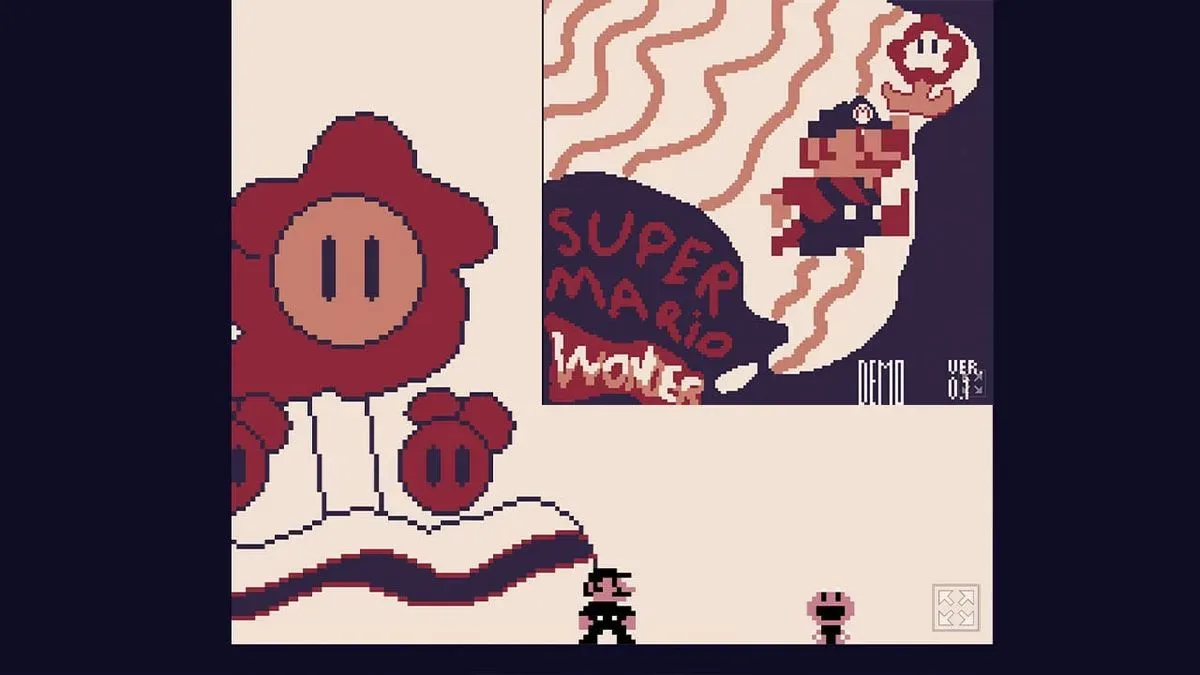
A fan-made Super Mario Bros. Wonder demake is taking a deliberately modest first step toward the original Game Boy. Created by Ostakere, the project is currently a browser-playable demo that lasts roughly two minutes. Its creator has been candid about its rough, extremely short state, but that candor is part of what makes the project worth watching: it is a learning exercise built in GB Studio, not a polished attempt to reproduce a modern Switch game feature for feature.
There is another detail Ostakere has stressed: the project was made without AI. That is not a guarantee of quality, nor does it need to be. It instead sets expectations for what this early build represents—a small work-in-progress from someone learning the process of making a Game Boy-style game. The demo is reportedly intended to possibly work on original Game Boy hardware eventually, though that remains a possibility rather than a confirmed result.
A demake is adaptation through limitation
“Demake” is the usual term for a new interpretation of a game as though it had been made for older, less capable hardware. It is not simply a port. A port aims to bring substantially the same game to another platform; a demake generally reimagines a game around an earlier machine’s technical and design constraints.
That distinction matters especially with Super Mario Bros. Wonder. A modern game and the original Game Boy sit very far apart in presentation and scope, so a direct one-to-one translation would not be a realistic target for a small beginner project. A demake can instead focus on the most recognizable basics: a character moving through a compact level, platforming rhythm, simple hazards, and visual cues that point back to the newer game.
At this stage, Ostakere’s demo should be viewed in precisely those terms. It is a brief prototype rather than a replacement for the full game, and it has not been presented as a complete adaptation. Its short running time also means players should not read the current build as evidence of what a longer release would contain. There is no confirmed expansion plan, level count, release date, cartridge version, or final hardware target.
What the “no AI” claim does—and does not—mean here
Discussion around AI-made games can turn into a broad argument very quickly, but this project supplies a narrower and clearer point. Ostakere says the demake was made without AI while they learned GB Studio. That tells interested players something meaningful about the project’s stated process: the creator is treating it as hands-on practice in game development rather than asking a generative tool to produce the game concept wholesale.
It does not establish a universal standard for fan projects, nor does it make the prototype automatically more advanced than other work. It also does not change the need for a game to be judged on its own controls, readability, design, and stability as it grows. The immediate value is more personal and practical. A very short prototype can be a useful milestone when its maker is learning how game scenes, movement, collisions, art, and testing fit together.
That kind of visible, limited first release can be healthier than pretending a learning project is already a finished product. It gives the creator a defined baseline and gives viewers a chance to see whether future iterations become more confident, clearer, or more ambitious. Ostakere has tied the prospect of updates to people commenting and expressing interest, so public response may help determine whether the demo develops further.
Related coverage includes Super Mario Wonder Game Boy Demake Takes a Small First Step.
GB Studio is part of the story
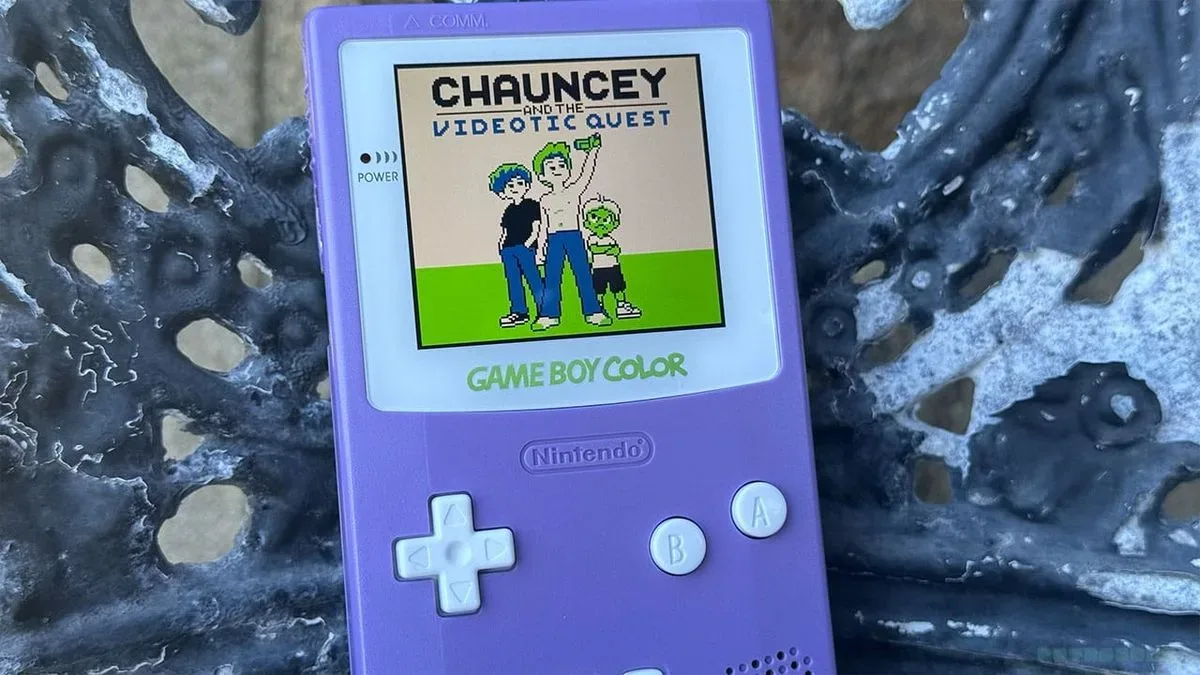
GB Studio is the tool Ostakere is learning for this project. In context, its importance is not that it magically solves the task of adapting Wonder; it gives a new developer a route into creating a Game Boy-oriented game. Tools lower barriers, but they do not eliminate the work of making decisions, building content, finding mistakes, and revising a playable level.
For newcomers, the phrase “made in a tool” can sometimes obscure that distinction. A game-making environment can provide a framework, but a developer still has to decide what the player sees, how the character responds, where platforms go, what ends a run, and how a level communicates its rules. A two-minute demo is small, but it can still involve a real sequence of choices and revisions.
That is why the project’s roughness is not necessarily the headline to dwell on. Early game builds are often valuable because they reveal an achievable next step. In this case, the creator has already moved from the idea of a Game Boy Wonder demake to a playable browser build. If the work continues, the meaningful changes will be tangible ones: a longer route, improved movement, more complete presentation, or confirmation that it runs on the intended hardware.
Browser playability keeps the first build accessible
The current demo runs in a browser, giving people a simple way to see the project in its present form. That is significant because it separates what is available now from what is merely hoped for later. The browser version is the demonstrable build; Game Boy operation is a stated possibility, not a proven promise.
Players approaching it should therefore set expectations appropriately:
- Expect a very brief demo of around two minutes, not a full-scale remake.
- Expect an early learner project that its creator has described as janky.
- Do not assume it is already verified for original Game Boy hardware.
- Do not assume updates are guaranteed; interest from players may influence whether more is added.
Those limits do not make the project less legitimate. They make it easier to appreciate for what it currently is: a small proof of concept with room to grow. Fan demakes are often most interesting not because they promise impossible completeness, but because they force creators to decide what a game’s identity looks like after its scale has been radically reduced.
Why Game Boy demakes remain compelling
The appeal of the Game Boy format is not just nostalgia. Its implied restrictions push designers toward clarity. With less room for detail, a developer has to prioritize the cues a player needs most: where to move, what can be landed on, what is dangerous, and what deserves attention. That can make demakes a useful design exercise even when the result is intentionally tiny.
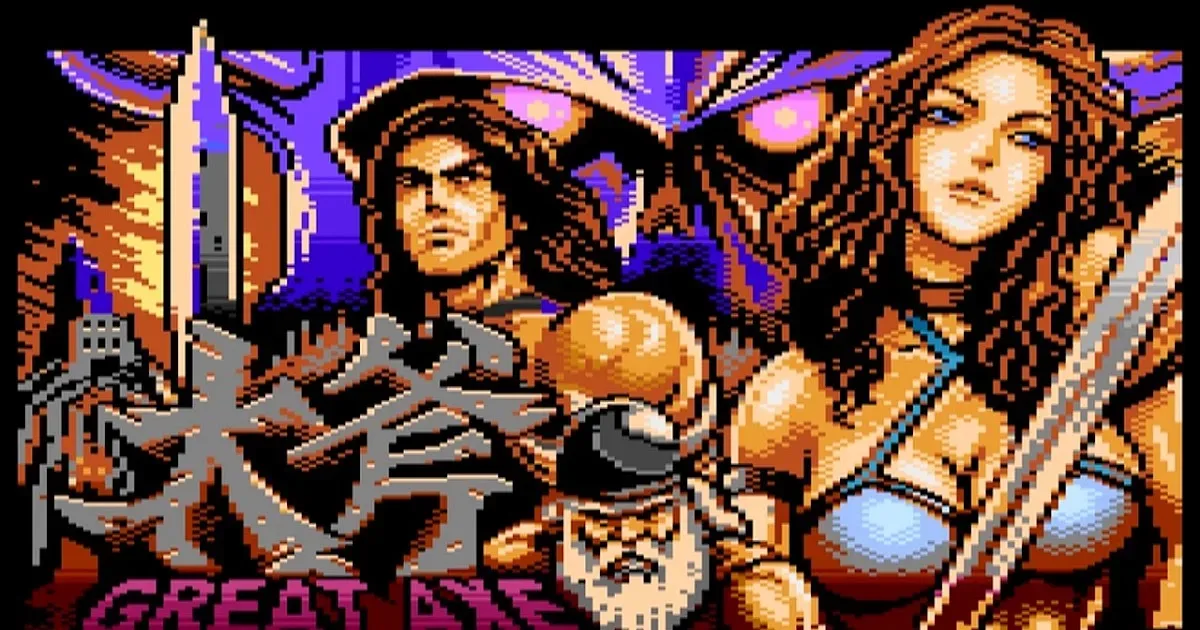
Ostakere’s project joins a broader enthusiasm for revisiting game ideas through older hardware aesthetics and limitations. For another recent example of a modern fan-led reinterpretation tied to classic hardware, see this Atari XL/XE take on Golden Axe. The platforms and games differ, but the underlying attraction is similar: building something new while working within a sharply defined technical frame.
There is also a creative honesty in choosing a smaller goal. Calling a demo short and rough up front avoids the familiar trap of treating every public prototype as though it must compete with commercial releases. The more useful question is whether the maker is learning, sharing progress, and identifying the next feasible improvement. By that measure, a compact browser demo can be a worthwhile start.
What to watch for next
If Ostakere continues development, the most relevant updates will be concrete rather than speculative. A longer demo would show how the central idea holds up beyond its opening moments. More polished movement or level flow would demonstrate growing comfort with the development process. And verified Game Boy compatibility would turn the current possibility into a specific technical accomplishment.
Until then, the available version is best understood as a snapshot of a creator learning in public. It is brief, imperfect, and openly described as such. But it is playable in a browser today, it has a defined retro target, and its maker has outlined an interest in expanding it if enough people engage. For a demake, that is a sensible place to begin: not with the impossible task of squeezing an entire modern game into an old format, but with one small, playable piece of the idea.