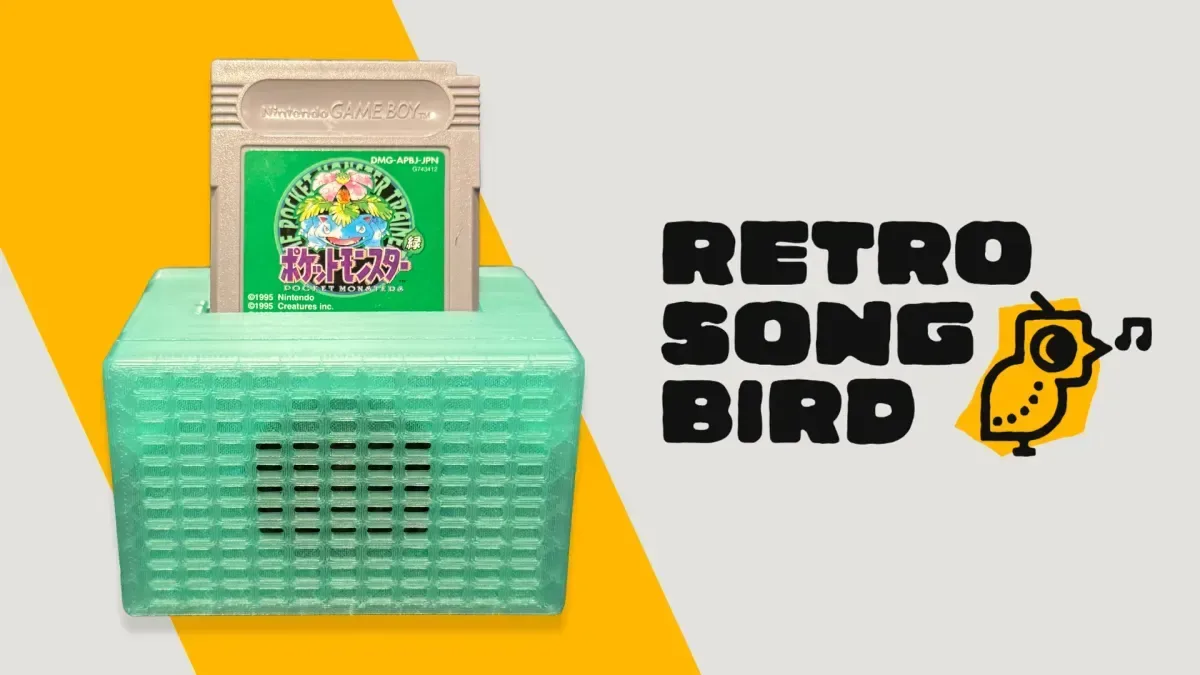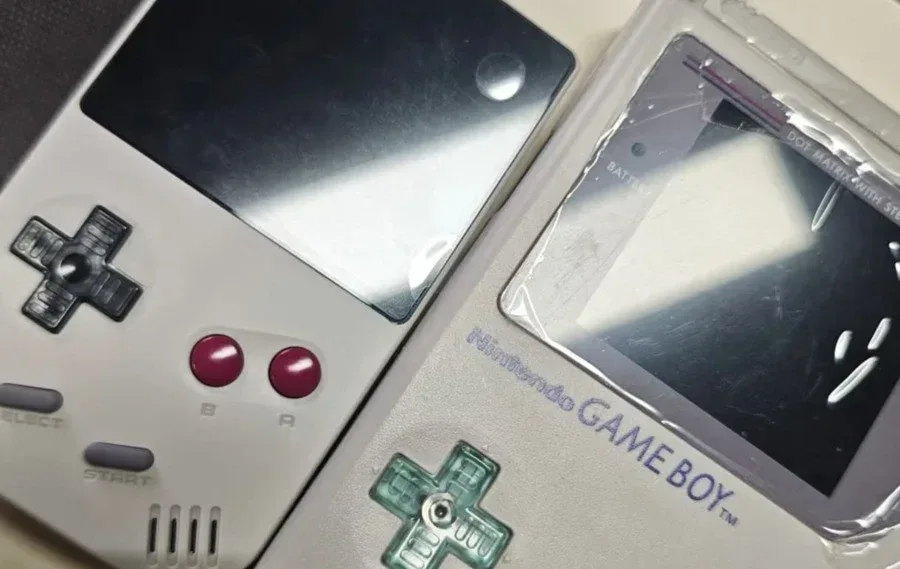
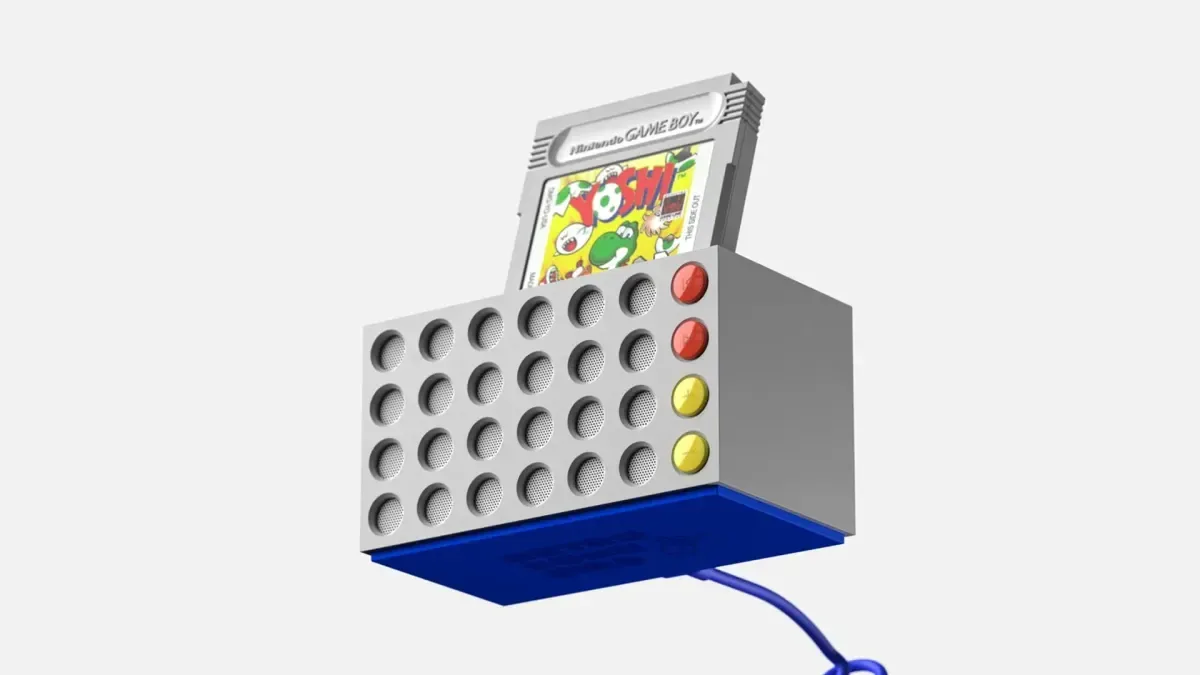
Game Boy cartridges are usually treated as tiny game libraries, save-file vaults and, occasionally, expensive artifacts that make their owners nervous around drinks. Retro Song Bird proposes a more focused use: plug in a Game Boy or Game Boy Color cartridge and listen to its music, rather than booting the full game on a handheld.
The device’s crowdfunding campaign is now live, having passed its £11,000 target and approached £30,000 at the time the campaign update was reported. Retro Song Bird is presented as a dedicated speaker for music and sound effects stored in compatible cartridges, with physical previous-track, next-track and volume controls. The project says it supports more than 1,900 games, while also leaving room for further cartridge support through updates.
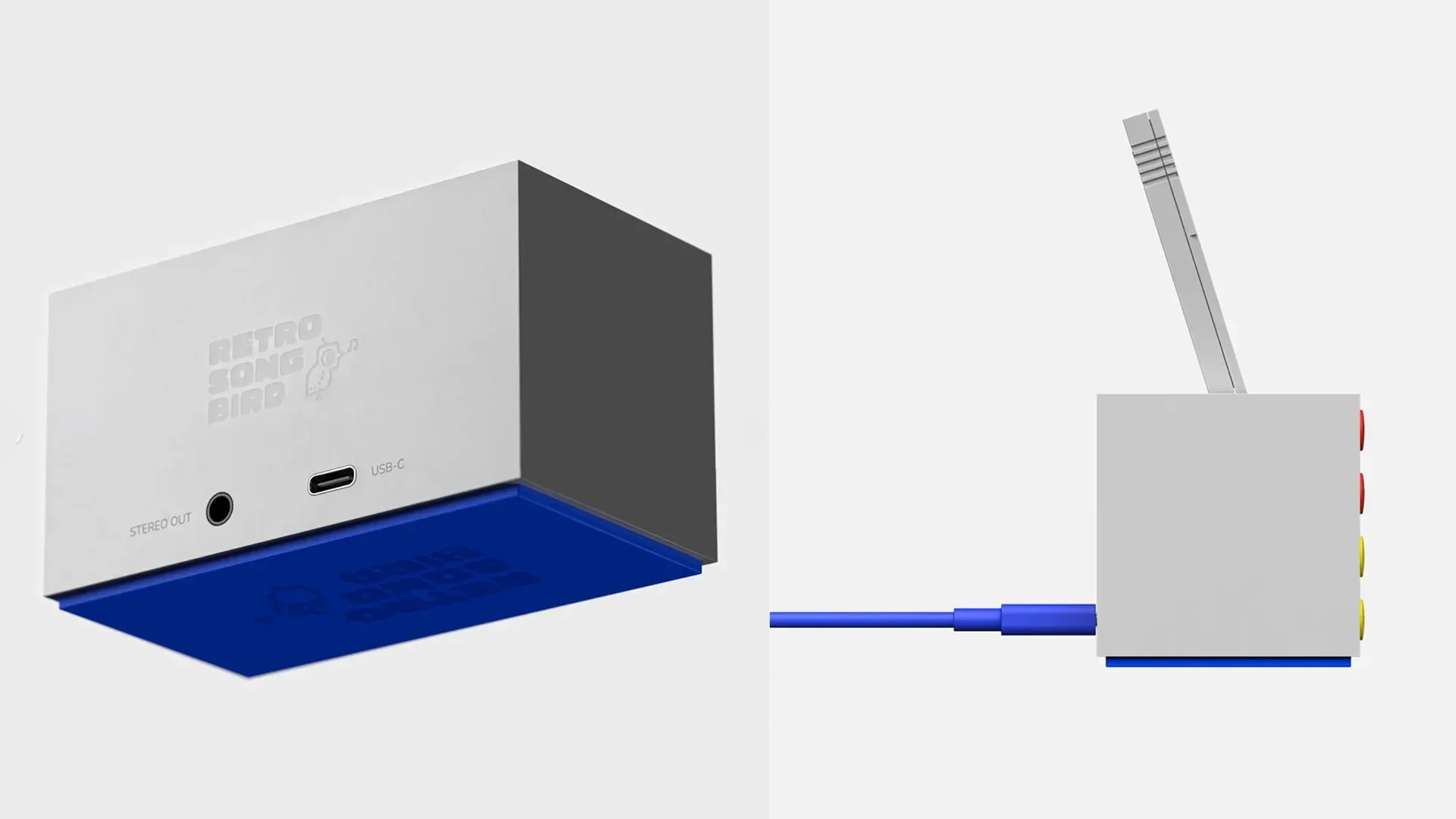
Its promise is appealingly specific. Rather than merely replaying a familiar game, Retro Song Bird is intended to make the soundtrack itself the main event: the dungeon theme while working, a menu jingle as an alarm, or a collection of cartridge tracks arranged into a deliberately very 1980s-style mixtape. The concept renders are not final product images, so prospective backers should keep that distinction in mind.
A speaker first, but a much larger toolkit behind it
At its most basic, Retro Song Bird is a cartridge-based music player. The proposed hardware can play a game’s music and sound effects, and it has a stereo line output for connecting to a hi-fi system. That matters because it gives the device a role beyond its own speaker: it could sit beside a stereo as a physical way to select a Game Boy soundtrack from an existing cartridge collection.
But the planned feature list goes considerably further than a nostalgia-focused speaker. Retro Song Bird is also designed to read and back up cartridges, restore save files, back up ROMs and work with flash-writable carts. A flash-writable cartridge is a cartridge whose contents can be written or rewritten, rather than a fixed retail game cartridge. That opens the door to user-created compilations and other projects, though it also means owners should understand the legal and preservation responsibilities involved when handling game data.
The device is also meant to export individual songs and sound effects as WAV files. WAV is a common uncompressed audio-file format used by music software and audio editors. For listeners, that could be a convenient way to bring a favorite track into an audio library. For musicians and sound designers, it is part of a more ambitious feature set built around the Game Boy’s audio hardware.
What “register-level sound emulation” is trying to achieve
One of the project’s key technical claims is “accurate, register-level sound emulation.” In plain terms, this refers to reproducing the way software communicates with the Game Boy’s sound hardware at a low level. Registers are small hardware control locations that games use to set properties such as pitch, volume, instrument behavior and timing. Emulating that interaction is different from simply playing back a pre-recorded audio file.
That distinction is important for Game Boy music. A cartridge soundtrack is not necessarily stored as a playlist of ordinary audio tracks waiting to be played. It is produced by the game’s program and the console’s sound system. Retro Song Bird’s proposed approach is therefore intended to recreate the underlying behavior that generates the music and effects, preserving the character of the original sound rather than converting the cartridge into a generic media source.
Related coverage includes Retro Song Bird Kickstarter Turns Game Boy Cartridges Into a Dedicated Music Library.
The project describes the Game Boy sound system in four channels: two square channels, one wave channel and one noise channel. A square channel produces the sharp, electronically pulsed tones commonly associated with melodies and arpeggios in classic portable-game music. The wave channel can play a custom waveform and is useful for different tonal colors, including bass-like sounds. The noise channel produces noise-based sounds often used for percussion, bursts, hits and effects.
Retro Song Bird is planned to expose those four channels as separate USB audio streams for a DAW, or digital audio workstation. A DAW is software used to record, arrange, edit and mix sound. Separate streams would let a creator capture and work with each channel independently instead of receiving only one mixed stereo output. In practical terms, a musician could potentially adjust the balance of a noise-channel drum part separately from a square-channel melody after capture. That is a more production-oriented proposition than simply listening to a soundtrack through a speaker.
Homebrew and chiptune uses are central to the pitch
The device is not limited, in concept, to commercial games. It is also intended to play homebrew soundtracks made with GB Studio, a tool associated with creating Game Boy projects. That support matters because the Game Boy ecosystem is not solely historical: developers and musicians continue making work for the platform and its cartridges.
Retro Song Bird is planned to support LSDj cartridges as well. LSDj is used to create Game Boy music, and the proposed playback support positions the device as a potential companion for people who make songs on cartridge hardware. It also lists a GBAlbum workflow, described as turning a music album into a ROM that can play on real hardware and Retro Song Bird. Together, those features suggest the project is aimed at two overlapping groups: people revisiting the music in their game collections and creators actively using Game Boy-era sound tools.
The planned ability to sync two units and set a tempo for beat matching is even more specialized. Beat matching is the process of aligning the tempos of two pieces of music so transitions can be made in time. In this case, the pitch is effectively a cartridge-based DJ setup, with game carts in the role normally associated with records. It is an unusual idea, but it follows from the device’s emphasis on treating Game Boy music as material for performance rather than just a background curiosity.
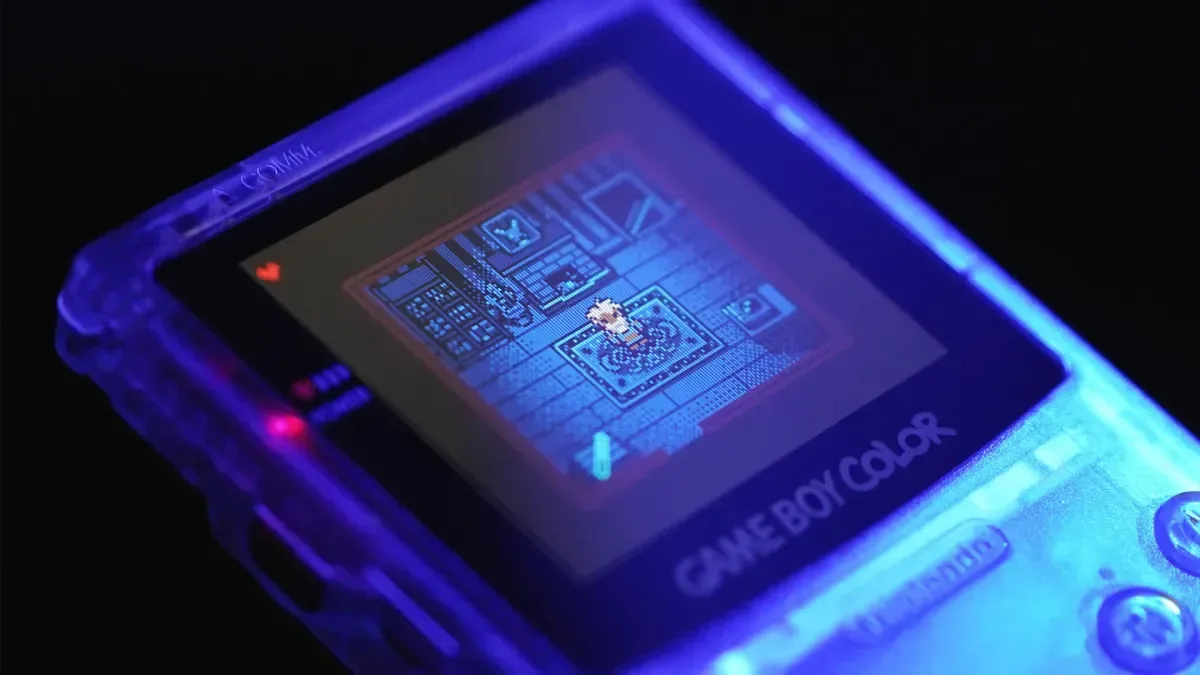
For readers interested in the continuing Game Boy Color homebrew scene, Retro Song Bird arrives alongside projects such as Sanctuary DX’s Game Boy Color release. The broader point is that compatible hardware can have value not only for old cartridges, but also for new work built around the same physical format.
Utility features go beyond playback
Retro Song Bird’s proposed feature set includes save backup and restoration, ROM backup and a history of every cartridge inserted. Save backups can be especially useful for preserving a player’s progress before a cartridge battery or other storage component fails. The project also describes an open API that would allow developers to read, flash and back up cartridges, obtain Game Boy Camera frames and perform related actions through web requests.
An API, short for application programming interface, is a defined way for one piece of software to communicate with another service or device. Here, an open API could let developers build their own tools around Retro Song Bird’s cartridge-reading functions instead of being limited to a single official interface. That is potentially one of the project’s most consequential promises, although its usefulness will depend on the finished implementation, documentation and the reliability of the hardware once shipped.
There are also more playful planned extras: browser play with Game Genie and GameShark codes, cartridge-spanning mixtapes written to compatible flash carts, Game Boy Camera frame access and an Alarm Mode. The alarm concept is particularly on-brand: a cartridge supplies the wake-up sound; pressing the button snoozes it; removing the cartridge stops it. It is a clever use of the cartridge slot, even if it could turn a treasured game into the least welcome object on a workday morning.
The project additionally mentions a 128×112 display, four shades, classic dithering and an approximately five-frames-per-second visual feature. Dithering is a visual technique that arranges pixels in patterns to suggest additional tones or texture with a limited palette. The slow update rate is framed as a bonus rather than a display built for smooth animation, which sets reasonable expectations for that element.
Price, timing and the crowdfunding caveat
Retro Song Bird’s early-bird tier was listed at $59, while the standard crowdfunding price is listed at $79. The early-bird allocation has sold out. Shipping is currently planned to begin in April 2027.
As with any crowdfunded hardware project, the feature list is a statement of intent, not a guarantee that every listed function will appear exactly as described or on the original schedule. That is especially relevant here because the product images are concept renders and the device is still being finalized. Potential backers should weigh the campaign’s proposed capabilities, compatibility claims and delivery estimate as crowdfunding information rather than treat them as the specifications of a retail product already on shelves.
Still, Retro Song Bird has a clear identity. Its simple pitch is a physical music player for Game Boy and Game Boy Color cartridges. Its wider pitch is a preservation, capture and creative tool that gives cartridge audio a life outside the game screen. If the finished device meets the scope described by its campaign, it could make one of the oldest habits in portable gaming—blowing the dust off a cartridge and slotting it in—feel less like launching a game and more like choosing an album.