
Shenmue becomes easier to appreciate when you stop measuring every in-game day by how much story you completed. Its original Dreamcast design is built around investigation: you ask questions, follow leads, notice where people spend their time and return when circumstances are right. The clock matters, but it is not a productivity timer demanding that every minute be optimized.
That rhythm can feel welcoming or frustrating, depending on what you expect from an adventure game. The useful goal is not to remove every pause. It is to make the pauses understandable, then decide which parts deserve your attention. The advice below is for the original Sega Dreamcast release and avoids story solutions, late-game destinations and exact event routes.
Replace the checklist mindset with one daily intention
Begin each play session with one question rather than a list of everything you could possibly do. That question might be finding out who knows more about a clue, returning to a place mentioned in conversation or checking whether a previously unavailable contact can now be found. The exact story details are less important than the habit: give the day a direction before you start walking.
Shenmue’s Free Quest mode can tempt you into exhausting every conversation and inspecting every object. That approach may uncover pleasant details, but it can also make the game resemble clerical work. A single priority keeps optional discoveries in their proper place. If another lead appears naturally, follow it. If not, you still had a clear purpose rather than spending the whole session asking the same question in every district.
This does not mean rushing. It means accepting that a successful session can end with better understanding rather than a dramatic scene. The game’s investigation structure makes small advances meaningful, especially when a conversation changes what you know or gives you a reason to revisit a location later.
Think of your intention as a question you can answer, not a quota you must complete. “Find out whether this person can help” is useful. “Speak to everybody in town before dinner” is likely to turn the game into homework. The first approach leaves room for the setting; the second makes every detour feel like a failure.
- Choose one current lead before leaving home.
- Treat unexpected discoveries as bonuses, not obligations.
- Stop trying to complete every conversation during one outing.
- Measure progress by clearer information, not by the number of locations visited.
Use the notebook as a memory aid, not an automatic quest tracker
The notebook is the best defense against the feeling that Shenmue expects you to remember everything. Information Ryo hears and experiences is recorded automatically, including clues, practical details and phone numbers. On the original Dreamcast controller, the notebook can be opened directly during play and can also be reached through the system interface. Pages can be turned in either direction, with shortcuts for reaching the beginning or end.
Check recent entries first. They usually reflect what has just changed in your investigation and are the quickest way to recover your immediate context after a break. Look for useful nouns and relationships: a person, a place, a type of business or a time-related hint. You do not need to memorize every sentence or read the notebook from the front each time.
Older pages matter when a current lead stops making sense. They can remind you why a name seemed relevant or connect a new conversation with something learned earlier. Still, the notebook is a record of discovered information, not a complete automatic quest tracker. It will not always tell you exactly what to do next, and that gap is part of the investigation rather than evidence that you have failed.
A good notebook check has three passes. First, read the newest entry or entries. Second, identify the names and places that appear connected. Third, decide what can be tested with one conversation or one visit. If the entry does not suggest a sensible action, do not panic and do not immediately search a complete walkthrough. Let the next ordinary interaction provide more context.
The notebook also gives you a natural stopping point. If you have read the latest entries, followed the obvious lead and reached a location that is closed or unproductive, the session has still done its job. You can save, stop playing and return later without reconstructing the entire investigation from memory.
- Scan the newest notebook entries before searching the whole town.
- Use names, places and timing clues as prompts for your own reasoning.
- Return to older pages only when the current lead needs context.
- Treat the notebook as organized evidence rather than a modern objective marker.
Learn routines by noticing anchors
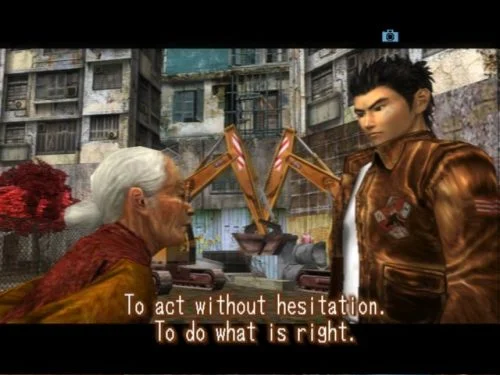
Characters follow occupations and daily routines, while shops and other businesses operate on schedules. That gives Shenmue’s neighborhoods a changing texture: a location may be useful at one point in the day and quiet or closed at another. You do not need to chart the entire population. Remembering one or two broad patterns is enough to make the world more readable.
Think in anchors instead of minutes. A person may be easier to find around work, after a shift or on a familiar route home. A business may be associated with a particular part of the day. The point is not to build a perfect timetable; it is to notice why a failed visit might have failed. “This person is unavailable right now” is more useful than repeatedly concluding that the game is being arbitrary.
The original release rewards observation, but it does not make every movement equally important. Some routines support atmosphere, some help you recognize a place and some matter to selected encounters. If you see someone heading somewhere, you can follow the situation when curiosity leads you there. You do not have to shadow every resident to play correctly.
Start with the routine closest to your current lead. If you need to speak with someone who works at a business, remember the business as the anchor rather than attempting to memorize the character’s complete route. If a person is repeatedly absent, ask whether you are arriving during the wrong broad part of the day. You are testing a hypothesis, not building a database.
This approach also makes repeated travel more informative. A failed visit is not wasted if it teaches you that the location is closed, the person is elsewhere or the conversation needs a new trigger. Once you have learned that pattern, move on instead of collecting more evidence than the situation requires.
- Remember broad periods such as work, opening hours and evening activity.
- Use a failed visit to form a timing hypothesis before trying again.
- Observe routines that help your current lead, not every routine in town.
- Prefer broad anchors over exact minute-by-minute schedules.
Plan around the clock without worshipping it
Shenmue’s in-game clock affects when people, businesses and story events are available. Travel therefore works best when errands are grouped by area. If you are already near a useful conversation, handle it before crossing town for a low-value question. This is not a demand for perfect route planning; it simply reduces the number of trips that produce no new information.
When a lead points toward a later meeting or a closed location, accept that the game may be asking you to wait. The clock shapes the day, but it should not be treated like a minute-by-minute fail-state timer. The Dreamcast manual describes an overall seasonal time limit: the story begins in winter and is expected to reach its main objective by early spring. It also says there is no specific completion time limit and that players have enough time to proceed without rushing. Treat that as a broad pressure on the calendar, not as a reason to panic over every detour.
The original release does include an Area Jump option in the settings. Under the conditions supported by the game, it can allow travel from the Hazuki residence directly to a specified destination. It is a limited travel convenience, not a free control for selecting any hour of the day. If your goal is to observe the town, leave it off or use it selectively; if repeated walking is making the game feel like a chore, it can reduce unnecessary travel without turning the investigation into an instant checklist.
The important distinction is between reducing travel and skipping the game’s schedule. Area Jump can change how much time you spend moving between places, but it does not mean every character is available whenever you want. A closed shop, absent contact or scheduled event still needs to be approached on the game’s terms.
Group nearby errands when the clock allows it, but do not cross half the map merely to fill an empty stretch of time. If a lead points later, choose a nearby diversion, observe the area or return home when the day is naturally winding down. The goal is to spend time with intention, not to eliminate every quiet minute.
- Group nearby errands when the clock allows it.
- Treat the spring endpoint as broad seasonal pressure, not a minute-by-minute alarm.
- Use Area Jump selectively if travel is becoming tedious.
- Do not confuse faster travel with the ability to skip any time or schedule.
- Avoid repeated visits to a closed place without a new timing reason.
Turn unavoidable downtime into a choice
Spare time can be used for optional activities such as arcade play, training, collecting or casual exploration. These diversions help the setting feel like a place rather than a corridor between cutscenes, but they are not a second campaign that must be completed alongside the main investigation. Choose one because it sounds enjoyable or because it suits the amount of time before your next lead.
The arcade is a particularly obvious way to occupy spare time, but it is not the only option. The manual also documents training and other mini-games. Training can make sense when you want to spend the evening productively, especially if you enjoy the combat system. It does not need to become a nightly obligation simply because the game offers it.
A short diversion is often better than trying to squeeze value from every available minute. You might explore a familiar area, practice for a while or visit an arcade activity, then stop when the experience becomes repetitive. Shenmue’s slower pace works best when optional play remains voluntary. The moment a hobby feels like another obligation, it has stopped serving its purpose.
Collectibles deserve the same treatment. Finding something memorable can be satisfying, but a first playthrough does not need to become a cataloging project. If you want a completion-focused run later, keep that goal separate. For a spoiler-light first run, optional activities are ways to inhabit the world and make waiting less empty, not requirements for understanding the story.
Use the amount of remaining time as your guide. If the next lead is soon, choose something that can be abandoned easily. If you have reached the end of a session, saving is often more valuable than starting an activity that encourages you to continue past your comfortable stopping point.
- Pick downtime activities based on mood and available time.
- Use training when you want to practice, not because every day must be optimized.
- Stop optional play when it becomes tiring rather than enjoyable.
- Do not confuse collecting everything with following the main investigation.
Build a short Shenmue session
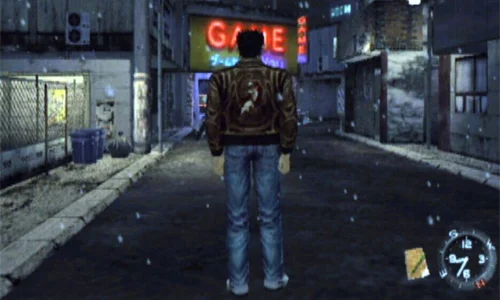
A repeatable session structure helps if you only have a limited evening. Start by checking the notebook and identifying the most recent useful lead. Leave with one purpose, follow the next conversational opening and pay attention to whether the game gives you new information. If the lead is blocked by a schedule, choose a nearby diversion instead of wandering across every district.
When the outing naturally concludes, return to the Hazuki residence and make a permanent save at the documented Save Point in Ryo’s bedroom. This creates a clean stopping point and makes the next session easier to resume mentally as well as mechanically. You do not need to force a major story beat before quitting.
A compact session can follow this pattern: recover the lead, travel with a purpose, test one or two conversations, accept the next timing clue and decide whether to continue or save. If you have more time, add one optional activity. If you have less time, skip the diversion and make the save. The structure scales without requiring a fixed number of in-game hours.
This routine also reduces the anxiety of returning after a break. You know where the durable save is, where to look for the newest information and what counts as a reasonable next step. Shenmue does not need to be played in marathon sessions to make its routines understandable.
A session can therefore be modest: notebook, one investigation, one optional activity and a save. The game’s design is compatible with longer visits, but it does not require every player to spend hours reconstructing the whole town in one sitting.
- Check the notebook before setting out.
- Choose one investigation and one optional activity at most.
- End at the bedroom Save Point when you are ready to stop.
- Skip optional play when your available time is short.
Know when to stop asking the same question
Repetition is one of the easiest ways to turn Shenmue’s investigation into homework. A conversation has probably given you everything useful for now when the notebook has recorded a new detail, the person repeats the same response, the location is closed or the new information clearly points somewhere else. None of these signs requires a story spoiler; they are simply signals to change your approach.
If the same person repeats an answer, consider whether the issue is timing rather than persistence. Try returning during a different part of the routine only when you have a reason to think the schedule matters. If the notebook has not changed and no new circumstance has appeared, asking again immediately is unlikely to produce a different result.
The same principle applies to locations. Inspecting an area once can establish its relevance. Repeatedly circling it without a new clue usually adds frustration rather than knowledge. Move to the next conversational opening, take a break or let the day progress through an appropriate activity. Exploration remains available after you have stopped forcing it.
There is also a difference between checking for information and checking for reassurance. The first may reveal a new lead. The second repeats an action because you are worried you missed something. When you notice that distinction, use the notebook or help screen to confirm the basics, then give the investigation room to move.
A full walkthrough should be the last resort for this problem. If the concern is simply “Did I already ask this person?” the notebook and the character’s repeated response may answer it without revealing what happens next.
- Leave a conversation when its answer repeats without new context.
- Use notebook updates as evidence that a lead has moved forward.
- Do not circle the same location without a new clue or timing reason.
- Check whether you are seeking information or merely reassurance.
Save in a way that protects your patience
The original Dreamcast release has two different kinds of saving that should not be confused. A permanent game save is made at the Save Point in Ryo’s bedroom at the Hazuki residence. The instruction manual also documents a temporary Resume save for stopping when you cannot return home immediately. Resume is an interruption tool, not a replacement for maintaining regular saves.
Only one Resume file is available, and continuing from it removes that temporary file. That makes it unsuitable as your only record of progress. Use it when circumstances demand a quick stop, then make a normal save when the game allows it. For permanent files, rotating between multiple slots gives you protection against saving at an inconvenient point or losing the context of an earlier day.
The manual states that the game supports three game files on one memory card and requires a VMU with 80 blocks of free memory for effective extended play. Those are original Dreamcast requirements, not universal rules for emulators, flash-memory devices or later releases. Before starting, check that the intended VMU has adequate space rather than discovering the limitation after you have invested time.
A practical rotation might keep one current file, one earlier recovery point and one flexible slot. You do not need to save after every conversation, but retaining an earlier file can protect your patience if you later decide that you preferred a previous position. Never remove the VMU, disconnect the controller or power off while the game is saving or loading.
The save system is part of the reason a session plan helps. If you know you are close to stopping, return home rather than beginning an activity that leaves you dependent on Resume. The temporary file is useful when real life interrupts; it is not designed to replace a deliberate bedroom save.
- Use the bedroom Save Point for permanent saves.
- Treat Resume as a single temporary interruption file.
- Keep more than one regular save when possible.
- Reserve 80 VMU blocks for the original Dreamcast game as documented in the manual.
- Do not interrupt VMU saving or loading.
Use in-game help before reaching for a full guide
The original game includes a help screen accessible during play. It can explain relevant controls and contextual information for the current mode or location, making it a useful first stop when you are unsure whether a problem is mechanical or investigative. A control reminder can preserve the satisfaction of solving a situation yourself better than immediately opening a complete walkthrough.
This matters particularly in a game with several broad modes: Free Quest, Quick Time Events, Free Battle and View Mode. Not every moment uses the same expectations, and a brief explanation may clarify what the current situation is asking without revealing why it matters. Check the help information before assuming that a missing prompt or unfamiliar action means you need an external solution.
The help screen is also useful for optional activities. If you forget how a mini-game works, the manual directs you to the same in-game help function. That keeps a small mechanical question from becoming an accidental story search.
A full guide has its place when you are deliberately pursuing completion or have exhausted your own approaches. For a first, spoiler-light run, use it surgically if needed. Search for a narrow control or save answer rather than reading an entire route and replacing the investigation with instructions.
- Consult the original help screen when a control or mode is unclear.
- Use narrow reference questions before opening a complete walkthrough.
- Check help for mini-game controls instead of abandoning the activity immediately.
- Keep story solutions separate from basic mechanical troubleshooting.
Keep original Dreamcast advice separate from later ports
This guide concerns Shenmue on Sega Dreamcast, not Shenmue I & II on modern platforms and not either sequel. Later versions can change presentation, controls, convenience features and save behavior. Advice that is correct for a modern collection should not automatically be applied to the original release, especially when it concerns skipping time, accessing menus or saving away from home.
The distinction is practical rather than merely historical. The Dreamcast manual is the relevant authority for the original controller layout, notebook access, help screen, VMU space and the difference between permanent saving and Resume. If your copy is a later version, consult documentation for that edition instead of assuming that every instruction here maps directly to its menus.
Area Jump is an especially important reason not to generalize. The original Dreamcast manual includes that setting, but it describes it as a function available under specific conditions for jumping from the Hazuki door to a destination. That is different from assuming that every release has a universal time-control feature or that the entire daily schedule can be bypassed.
Keeping the versions separate also protects the intended pace. A convenience feature in another release may change how you plan a day, while the original asks you to work within its schedules and travel options. Neither approach needs to be defended as the only proper way to play; they are simply different versions with different constraints.
- Confirm that your copy is the original Dreamcast release.
- Do not import later-port controls or save behavior.
- Use Area Jump as a limited travel option, not a universal time skip.
- Use edition-specific documentation when playing another version.
A spoiler-light test for whether Shenmue fits you
Shenmue may suit you if you enjoy observing a place, remembering broad patterns and letting an investigation unfold between ordinary activities. Players who like atmosphere and conversational discovery can treat the clock as a source of texture. The game gives these players room to notice details that a more direct adventure might hurry past.
It can also work for players who prefer clear objectives, provided they can tolerate pauses and indirect progress. The notebook, help screen, Area Jump option and one-lead session structure provide support without removing all uncertainty. For this audience, the best approach is to accept that a day may be successful because it clarified the next step, not because it delivered constant action.
Players who dislike scheduled downtime, repeated travel or asking people for information may find the rhythm tiring even with good planning. That is not a failure of patience or taste. The practical test is to play several short sessions using one priority at a time. If the pauses feel like atmosphere, continue. If they consistently feel like chores, no checklist can transform the game into a faster adventure.
A useful middle category is the player who enjoys the world but dislikes unnecessary friction. That player should use the notebook aggressively, group nearby errands and enable Area Jump when repeated walking stops being interesting. There is no virtue in making every trip longer than the original game requires. The point is to preserve the investigation and atmosphere, not to prove endurance.
The final question is whether Shenmue’s ordinary moments feel meaningful enough to justify its slower movement. If the answer is yes, the game’s rhythm can become its strongest feature. If the answer is no, better planning may reduce frustration but will not change the kind of adventure Shenmue is.
- Choose Shenmue if observation and routine sound appealing.
- Use short, focused sessions if you prefer clearer objectives.
- Use Area Jump selectively if travel is the main source of friction.
- Stop trying to optimize the game if its downtime consistently feels like work.
The most comfortable way to play Shenmue is to treat each session as a visit to a place rather than a productivity sprint. Check the notebook, pursue one useful lead, notice the schedule and let optional activities remain optional. The game’s pauses become easier to accept once they have a purpose.
Protect that relaxed rhythm with sensible saves and edition-specific expectations. On the original Dreamcast release, the bedroom Save Point, temporary Resume file, three-file limit and VMU requirements are part of planning around the game. The calendar does provide broad seasonal pressure, but the manual also makes clear that players have enough time to proceed without rushing.
You do not need to know every routine or solve every day perfectly. Use the tools the original release gives you, reduce travel when it becomes tedious, and leave enough room for curiosity to guide the rest.