Centipede, Atari’s landmark 1981 arcade game, is being brought to Commodore Amiga by developer Acidbottle. The project is intended to support the full spread of Amiga graphics chipsets: OCS, ECS and AGA. Its stated goal is a close reproduction of the original coin-op, from the mushroom-filled playfield to the fast, escalating pressure of shooting apart an advancing centipede.
That makes the port a particularly appealing prospect for Amiga players who value arcade games not just as historical artifacts but as systems built to be replayed. Centipede is direct enough to explain in a sentence, yet its moving parts create the sort of score-chasing tension that still holds up: the player controls a blaster along the lower portion of the screen, fires upward at the segmented enemy, and attempts to keep the field manageable while several other threats interfere.
There is an important caveat, however. The current build is identified as a beta. Acidbottle notes that the game may crash or run either too quickly or too slowly depending on the machine. Some development has also been AI-assisted. Those disclosures matter, especially for a release whose stated compatibility covers Amiga hardware configurations with meaningful differences between them.
An arcade game built around an increasingly messy screen
Centipede’s basic objective is to destroy the creature descending through a patch of mushrooms. The centipede moves across the screen and changes direction as it encounters the fungi, progressively working its way toward the player’s area. Shooting individual segments breaks the enemy up, so what starts as one long target can become several shorter, independently troublesome pieces.
That segmentation is central to why the game is more demanding than its simple premise suggests. The player is not merely trying to land shots; they are continually trying to prevent the playfield from becoming too crowded and unpredictable. Each decision has a spatial consequence. Mushrooms shape the centipede’s route, while the shifting collection of enemy pieces makes clear firing lanes more difficult to preserve.
Other insect enemies make that job harder. Spiders can enter the lower portion of the screen, putting pressure on the player’s blaster from close range. Fleas add further disruption, while scorpions create another hazard in the mushroom field. The result is a game where attention must be divided between aiming at the main target, monitoring the bottom of the screen and responding to changes in the board’s layout.
The new Amiga version is planned to retain that arcade rhythm: eliminate every centipede section, advance to the next level, and do it again with the pace and danger increasing. Calling a game “arcade-focused” is often vague, but here the practical meaning is clear. Centipede was designed around immediate rules, quick failures, repeat attempts and the pursuit of a better score. A faithful port needs to preserve the clarity and urgency of that loop, rather than merely reproduce its characters and colors.
What OCS, ECS and AGA support means
The announced scope covers three major Amiga graphics standards. OCS, or Original Chip Set, refers to the original Amiga hardware generation. ECS, the Enhanced Chip Set, expanded aspects of that foundation. AGA, or Advanced Graphics Architecture, belongs to later Amiga systems and offers greater graphical capability.
Related coverage includes Centipede Is Heading to Commodore Amiga in a New Arcade-Focused Port.
For players, support across those configurations is less about a checklist of labels than it is about access. The project is intended to reach users across the Amiga family rather than being restricted to one later hardware tier. That is a sensible fit for Centipede’s design, which relies on legible enemy movement and responsive action more than visual excess.
It also raises the technical bar for the port. The developer’s warning that performance may currently vary by machine is therefore useful information rather than a minor footnote. When a game is expected to run on systems with different capabilities, consistent speed is especially important for an arcade title. A version that runs too fast changes the reaction-time challenge; one that runs too slowly changes the flow and timing the original experience depends on. Crashes, obviously, are an even more immediate obstacle.
For now, the sensible expectation is that this is a work in progress, not a finished preservation-grade release. Prospective players should treat the compatibility ambition and pixel-perfect claim as development targets while the beta continues to be refined.
High scores are a meaningful addition for repeat play
One confirmed feature is high-score saving to disk. It is a modest addition by current standards, but it fits Centipede extremely well. In a score-driven arcade game, a best run is not just a record of time spent; it is the visible result of surviving faster, denser and more chaotic situations than before.
Saving those scores gives each session continuity. It lets a household, group of friends or individual player build a local leaderboard without losing it every time the Amiga is powered down. More importantly, it supports the behavior that arcade games were made for: replaying a familiar set of rules because improvement remains measurable.
That feature also separates a home-computer port from a straight, momentary imitation of the cabinet experience. The game’s challenge remains rooted in the coin-op structure, but disk saving adapts its competitive appeal to a machine players return to over days and weeks. For a title with no need for a lengthy campaign or complex progression system, persistent scores can supply an effective reason to keep returning.
Why Centipede remains an important arcade name
The original Centipede was created by Dona Bailey and Ed Logg, and became a major commercial success for Atari. It has also long been recognized for reaching a substantial audience of women at a time when the industry’s audience was often discussed more narrowly. That history gives the game significance beyond its instantly recognizable insects and mushrooms.
It is worth being precise about what that legacy does and does not establish. The forthcoming Amiga project is a port of a game with an important place in arcade history; it is not a new Centipede entry with newly described mechanics or an announced reinvention. Its appeal comes from the prospect of bringing the original game’s tightly focused design to another classic platform, with practical modern-for-the-platform conveniences such as persistent scores.
That focus is arguably a strength. Centipede needs no elaborate premise to make sense. Every element in the field has a readable function: the centipede sets the main objective, mushrooms alter movement routes, and the other enemies complicate positioning and survival. In the best arcade designs, complexity emerges from interactions among straightforward parts. The planned port is positioning itself around retaining exactly that.
What remains unknown
No release date, final distribution details, system requirements or pricing have been provided in the available project information. Nor has a detailed feature list been outlined beyond chipset support, the intended arcade-faithful recreation and disk-based high-score saving.
There is likewise no reason yet to assume that current speed and stability issues will affect every configuration in the same way, or that they will remain in a later build. The developer has flagged those possibilities openly, which gives players a clear picture of the project’s present status without promising more than the beta can deliver.
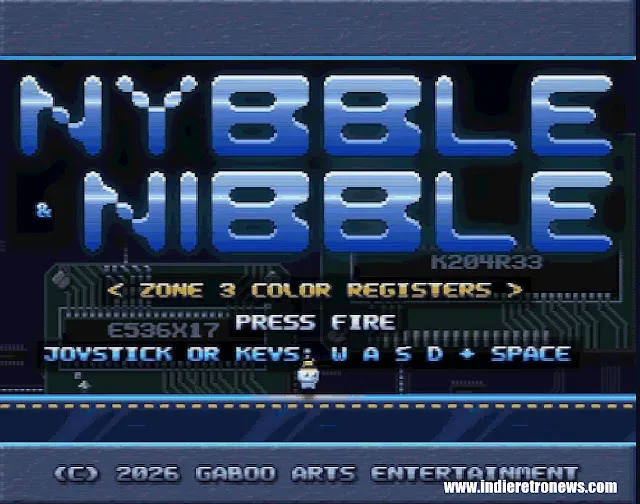
Amiga fans following new work for the platform may also want to keep an eye on other cross-platform activity, including NYBBLE & NIBBLE’s planned Amiga version. In Centipede’s case, the attraction is a different kind of retro release: not a new adventure made in an old-school style, but an effort to put a foundational arcade score-chaser onto Amiga hardware.
For now, Acidbottle’s Centipede is one to watch rather than a finished recommendation. If the project reaches stable performance across its promised OCS, ECS and AGA targets, it could offer Amiga owners a clean route back to one of arcade gaming’s most enduring tests of movement, aim and composure under pressure.