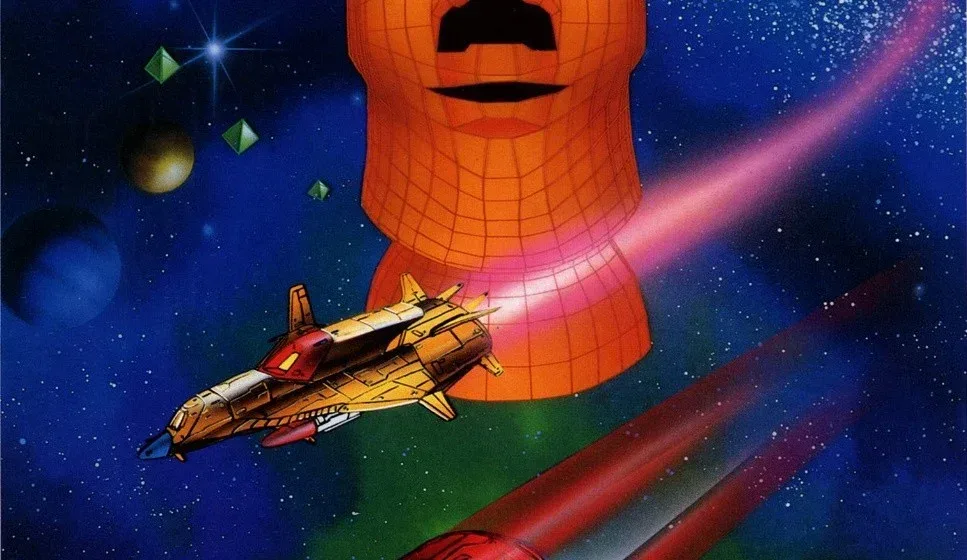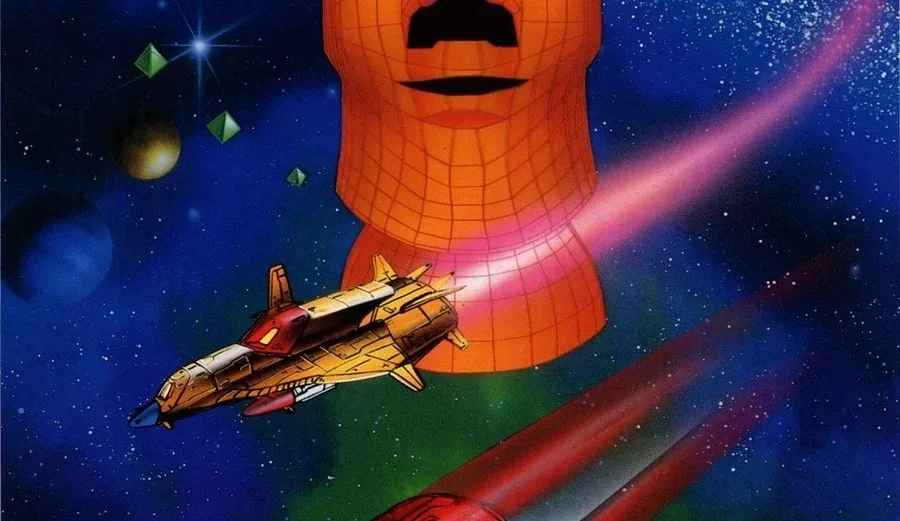
DOH is once again attempting the sort of interdimensional property damage that only a tiny paddle and one determined Energy Ball can prevent. Arkanoid: Revenge of Doh, Taito’s 1987 arcade sequel, is heading to current console platforms as a standalone release through Hamster’s Arcade Archives line. The game is due later this week for Nintendo Switch, Nintendo Switch 2, PlayStation 4, PlayStation 5, and Xbox Series X|S.
For an arcade sequel built around smacking a ball into elaborate formations of bricks, Revenge of Doh has an impressively durable legacy. It followed the original Arkanoid into arcades only a year later, retaining the tense paddle-and-ball rhythm that made the first game a fixture of the era while making meaningful additions to the formula. The ball still has to stay in play. The walls still have to come down. But the route to disaster—and victory—has more complications.
A sequel that gives brick-breaking more to do
The central idea remains elegantly simple: players guide the Vaus craft at the bottom of the screen, returning the Energy Ball and using it to demolish the Space Walls above. That simplicity is deceptive, of course. A badly judged bounce can turn a nearly cleared screen into a sudden loss, while one well-timed angle can send the ball careening through the remaining bricks with the ruthless efficiency of a pinball possessed.
Arkanoid: Revenge of Doh expands that familiar setup rather than replacing it. Its stages can lead into branching left and right routes, meaning a cleared level can influence the layout encountered next. The sequel also introduced mini-bosses, a broader selection of items, and more types of bricks. Those changes gave the arcade game extra variety without abandoning the immediate readability of its predecessor. The player’s task is still obvious in a split second: keep the ball alive, break everything possible, and try not to watch a valuable power-up drift past the paddle like a tiny, mocking comet.
The official premise is appropriately maximalist for an arcade game of its period: DOH has crossed dimensions and invaded this universe, leaving players as the force standing between reality and another hostile collection of destructible blocks. It is a high-stakes setup for a game in which a capsule that makes the paddle larger can feel as consequential as a miracle.
Which platforms are getting it—and what it costs
Hamster is splitting this release between its established Arcade Archives format and the newer Arcade Archives 2 line. The version for the original Nintendo Switch and PlayStation 4 is priced at $7.99. Nintendo Switch 2, PlayStation 5, and Xbox Series X|S receive the Arcade Archives 2 edition, priced at $9.99.
- Nintendo Switch: Arcade Archives edition, $7.99
- PlayStation 4: Arcade Archives edition, $7.99
- Nintendo Switch 2: Arcade Archives 2 edition, $9.99
- PlayStation 5: Arcade Archives 2 edition, $9.99
- Xbox Series X|S: Arcade Archives 2 edition, $9.99
That means players have a choice dictated more by hardware than by nostalgia. Switch and PS4 owners get the $7.99 release, while players using the newer Switch 2, PS5, or Xbox Series machines will find the $9.99 Arcade Archives 2 version. The announcement identifies these editions and their prices, but does not establish cross-buy arrangements, upgrade paths, or differences beyond their respective Arcade Archives labels, so those details should not be assumed.
The game has already appeared in another modern-era retro package: it was included with the paddle and trackball controller configuration of the Egret II Mini. This standalone console rollout gives people who do not own that miniature arcade setup a more direct way to revisit the sequel on their preferred current platform. It also gives existing fans another option, which is a familiar feature of preserving arcade history: eventually, the game may be available in several forms, and the hard part becomes deciding which cabinet, mini cabinet, console storefront, controller, display, and shelf arrangement best suits the mission.
Related coverage includes Arkanoid: Revenge of Doh Heads to Modern Consoles Through Arcade Archives.
The Arcade Archives routine returns
The release is expected to include the kinds of extras commonly associated with Arcade Archives offerings. These include additional modes, visual screen filters, and online leaderboards. For a title rooted in the scoring pressure of the arcade, leaderboards are an especially fitting inclusion. Clearing a stage is one thing; doing it efficiently, controlling the ball’s angles, collecting the right items, and surviving long enough to post a number worth showing off is another.
Filters also matter more than they may initially seem. Arcade games were designed for particular displays, environments, and physical cabinets. A modern television is not an arcade monitor, just as a handheld screen is not the darkened corner of a game center with a row of machines competing for attention. Options that let players alter the presentation do not recreate every aspect of the original setting, but they acknowledge that display preference is part of the appeal for many retro players. Anyone building a wider old-school setup may also find our guide on mapping the connection before buying a retro console HDMI adapter useful when sorting the much less glamorous, but very real, cable side of the hobby.
Hamster previously brought the original 1986 Arkanoid to Arcade Archives and Arcade Archives 2 in May. With Revenge of Doh now following, the two arcade entries can sit much closer together on contemporary storefronts than they did in the decades when finding a preferred version could depend on which machine happened to be nearby, which home computer a household owned, or whether a local shop had the right box on its shelves.
From arcade hit to a long home-format afterlife
The sequel became a major success for Taito after its arcade debut and subsequently reached the Nintendo Famicom as well as several home-computer platforms. Its computer ports included versions for the Atari ST, Amstrad CPC, ZX Spectrum, and Commodore 64. Those editions were published by Ocean Software under the Imagine Software label.
That spread helps explain why the name still carries weight beyond the arcade faithful. Revenge of Doh belongs to a generation of games that often moved across dramatically different hardware, controls, and display standards. A player might remember it as an upright arcade cabinet, a home-computer tape or disk, a Famicom cartridge, or a more recent emulation-based collection. The core image remains the same—a ball, a paddle, and a wall that absolutely has it coming—but the route to that memory can be wildly different.
The new standalone release does not erase those older forms, nor does it need to. Its value is accessibility: a historically important sequel can be bought for platforms people are already using, without requiring original hardware or the Egret II Mini accessory package. For players discovering it for the first time, it offers a compact example of how arcade sequels could enlarge a proven design through stage structure, enemy encounters, and new gameplay modifiers rather than a complete genre overhaul.
Wiz is also joining Arcade Archives 2
Arkanoid: Revenge of Doh is not Hamster’s only retro release in this window. An Arcade Archives 2 edition of Seibu Kaihatsu’s action game Wiz is also scheduled for tomorrow on PlayStation 5, Nintendo Switch 2, Xbox Series X|S, and Xbox for Windows. Its listed price is $9.99.
The pairing underscores the broad remit of the Arcade Archives catalog: one release preserves a celebrated paddle-driven brick breaker from Taito, while the other returns a Seibu Kaihatsu action game to newer systems. Neither needs a remake-sized reinvention to justify attention. Sometimes the attraction is the opposite—a chance to meet an arcade game on terms recognizably close to its original design, right down to its compact demands for focus, reflexes, and a willingness to blame the ball when it chooses the one angle no human being asked for.
For Arkanoid fans, this week’s arrival is a straightforward invitation to take on DOH again. The sequel’s branching stages, mini-bosses, item variety, and extra brick types remain its defining twists on the original game’s formula. The only universal certainty is that the first missed return will feel like the paddle’s fault, the controller’s fault, the screen’s fault, DOH’s fault, and almost certainly not the player’s.