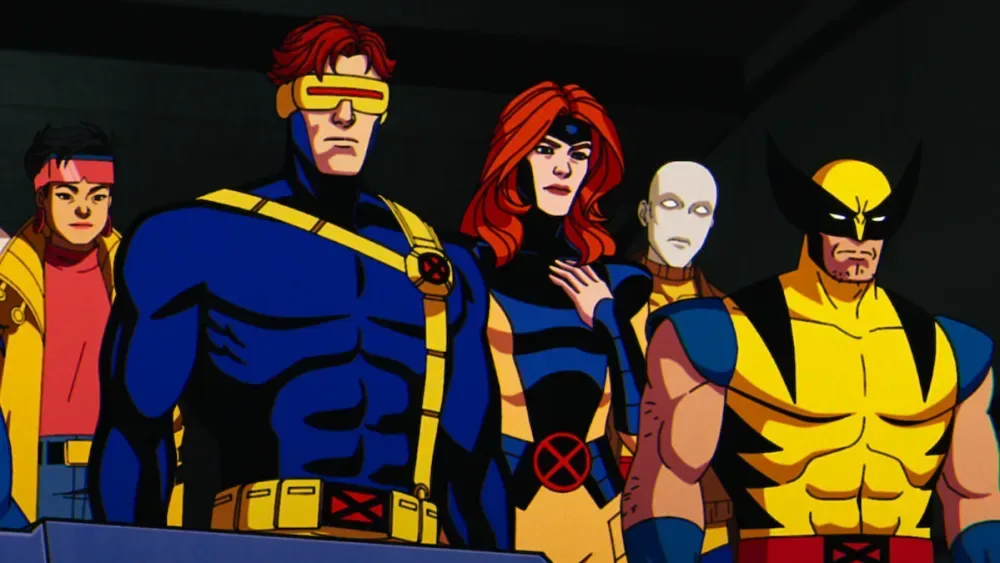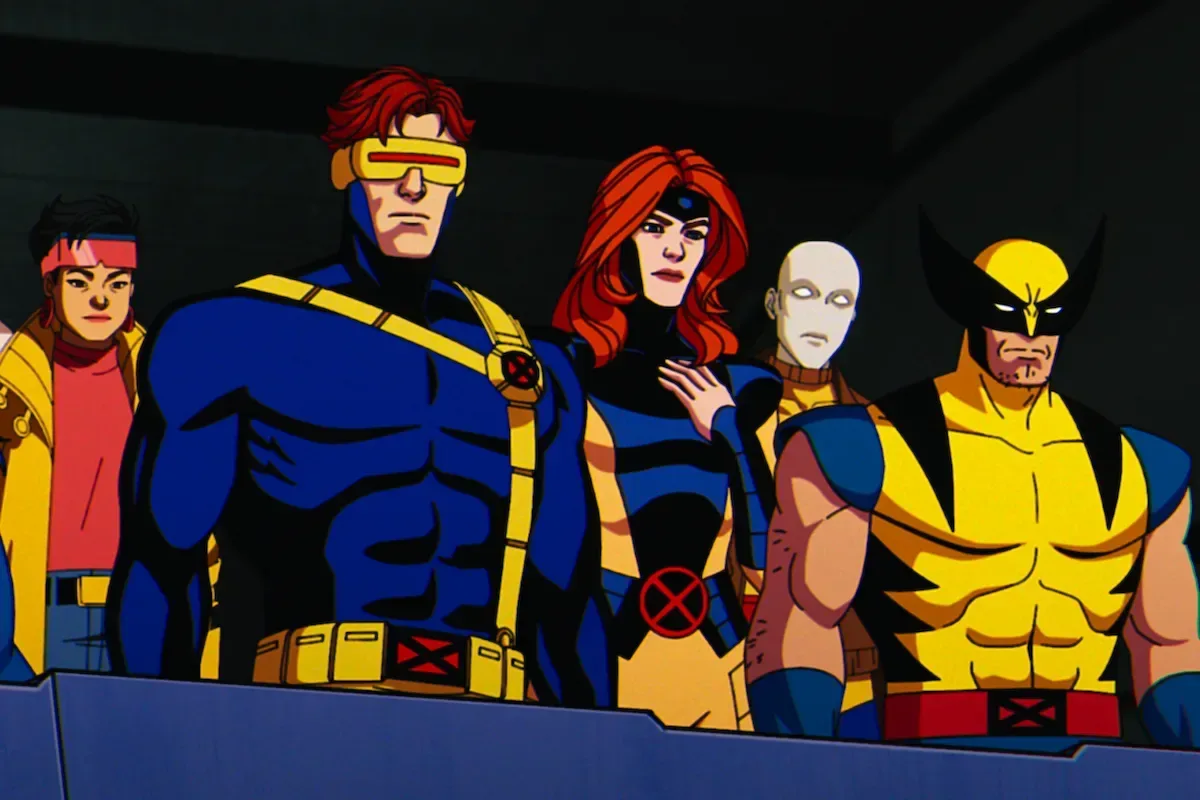
X-Men ’97 has been renewed for a third season on Disney+, and the first material shown from the new episodes suggests the series is moving straight into another pressure-cooker conflict for mutantkind. The preview establishes a city in chaos, with authorities shutting down movement and leaving mutants unable to reach Professor Xavier’s school unless they possess letters of transit.
That is a grim premise even by X-Men standards: not simply another supervillain attack, but a restriction on where people can live, travel and find shelter. The footage opens with graffiti asking, “Where are the X-Men?” It is a deliberately loaded question for a show whose heroes have repeatedly become separated, displaced through time, or politically outmaneuvered just when ordinary mutants need them most.
The answer offered by the clip is not quite what the young mutant at its center expects. After she attempts to cross the blocked boundary and is branded a threat, a mutant group intervenes to rescue her. When she asks whether they are the X-Men, they identify themselves as the Brotherhood.
That reveal gives Season 3 an immediate source of tension. In the broadest sense, the Brotherhood has historically been a name associated with mutant resistance, but the preview’s point is more urgent than a label: the people providing protection in this moment are not the heroes the frightened child was looking for. With the X-Men apparently absent from public view, the question is who gets to represent mutant interests—and what methods they will use.
A city where transit has become the conflict
The preview’s references to a closed border and letters of transit are among its most consequential details. A letter of transit, in this context, functions as official permission to move through a controlled area. Its inclusion signals a system in which mutants are being filtered through bureaucracy as well as force. They cannot simply head to the school for safety; access itself has become conditional.
That setup fits the X-Men’s longstanding dramatic territory without requiring the show to fall back on a simple battlefield. A police blockade creates multiple kinds of stakes at once: people are stranded, communities are split apart, and anyone without the right documentation is vulnerable. The young mutant’s attempted crossing puts a face to those circumstances before the major cast members arrive.
The clip also makes clear that the conflict reaches the highest level of government. Storm and Professor X are shown travelling together and discussing their confrontation with the president of the United States. The previous season’s ending supplied a major reason for apprehension on that front: Mystique killed X-Factor leader Valerie Cooper, took her identity, and Mystique’s non-mutant son Graydon Creed was elected president.
That combination leaves Professor X and Storm navigating a political landscape in which identity, authority and intent are all unreliable. Mystique is a shapeshifter, meaning her power enables her to physically imitate another person. Her impersonation of Cooper is therefore not merely a surprise twist; it is a direct threat to institutions and decision-making. Season 3’s transit restrictions may be part of the political conflict teased by Storm and Xavier’s conversation, though the footage does not yet establish who ordered them or how events reached this point.
Related coverage includes X-Men ’97 Renewed for Season 3 as First Footage Teases a Mutant Crisis.
The Brotherhood’s entrance changes the central question
The Brotherhood’s rescue makes the first clip more complicated than an uncomplicated “heroes save civilian” opening. The group is introduced at a moment when it can plausibly look like the most responsive force on the ground. That does not tell viewers whether its aims will align with Xavier’s, but it makes the public absence of the X-Men matter even more.
It also reframes the graffiti question. “Where are the X-Men?” is not only a mystery for the audience. It is the sort of question people within the world are asking while normal life breaks down around them. Season 2 left several reasons that the team may be difficult to assemble, beginning with its extensive time displacement and continuing through the aftermath of its last major sacrifice.
The show’s earlier episodes already established a version of the X-Men universe where alliances are rarely fixed. Magneto has been both a recurring adversary and an occasional ally. X-Factor operates with government sanction and includes Polaris, Magneto’s daughter. X-Force is described as a rogue group led by Cable, the time-travelling son of Cyclops and Jean Grey. Those factions make the distinction between official, independent and outlawed mutant action especially important as the city enters lockdown.
The practical implication is that Season 3 may have room to explore competing responses to the same emergency. Xavier and Storm appear positioned near the political center of the crisis. The Brotherhood is shown acting directly in the streets. Other groups could have their own priorities, but the footage offers no confirmation of their involvement. For now, the most concrete takeaway is that the show has placed a vulnerable young mutant between state power and an intervention by a faction other than the X-Men.
How Season 2 left the team in a precarious place
Season 2 pushed the X-Men through a time-spanning struggle against Apocalypse, a villain associated here with time travel. The team became scattered across time, and a key confrontation occurred in ancient Egypt. Professor Charles Xavier and the heroes were unable to prevent Apocalypse from killing Magneto in that climactic chapter.
The season also expanded the number of teams around the X-Men. They faced X-Factor, including Polaris, and encountered X-Force under Cable’s leadership. Cable himself has travelled back from the future, another reminder that time is more than a backdrop in this story. It is an active force shaping which characters can be together, when they arrive, and what knowledge they carry.
Yet the most personal thread heading into the new season is Gambit and Rogue’s. Season 1 had killed Gambit, a loss that became one of the series’ defining emotional shocks. Season 2 brought him back as one of Apocalypse’s Horsemen. A Horseman here is a powerful agent serving Apocalypse, and Gambit initially acts against his former teammates under that role.
Rogue ultimately reaches him by drawing on the vast power of a Celestial and offering herself in the process. A Celestial is presented in this story as the source of an enormous power beyond the team’s usual abilities. Her attempt succeeds in restoring Gambit, but it does not end without cost: Nightcrawler trades places with Rogue and sacrifices himself so that she can survive.
Those events explain why the wedding image in the Season 3 footage carries so much weight. The preview shows Storm and Professor X arriving at Gambit and Rogue’s wedding. After death, resurrection, divided loyalties and Nightcrawler’s sacrifice, a wedding is not just a lighter interlude. It is evidence that Gambit and Rogue have reached a new stage together—at least at the point shown in the footage.
Deadpool and She-Hulk are also visible among those attending. Their presence promises a strikingly broad guest list, but the clip alone does not reveal how large their roles will be. It does, however, place a celebratory gathering beside images of a city in lockdown and a confrontation with the president. That contrast is very much in the spirit of an X-Men story: private joy exists, but it is never fully insulated from a public crisis.
A continuation that is building on two eras
X-Men ’97 began in 2024 as a continuation of X-Men: The Animated Series, the animated show that ran from 1992 to 1997. The newer series has used that foundation to bring the animated version of the team to another generation while continuing established relationships and conflicts rather than starting from scratch.
That continuity matters for Season 3. The series can make a single preview do several jobs at once: introduce a civic emergency for newcomers, reward viewers who know the group’s complicated history, and turn Gambit and Rogue’s wedding into a payoff after the events of the first two seasons. The first footage does not offer a premiere date, episode count or a complete roster. It offers a direction instead—one that combines the X-Men’s personal aftermath with a system-wide threat to mutant safety.
For readers tracking how other major film and television properties are being reworked for a new format, the planned Crazy Rich Asians television continuation offers another recent example of a familiar screen world being extended rather than simply restarted.
For X-Men ’97, the next question is no longer whether more episodes are coming. It is whether Xavier’s team can reclaim a meaningful role before the Brotherhood, the president’s administration, and a city’s increasingly hostile infrastructure define the future for them. The first look has intentionally left much unrevealed, but its central image is clear: mutants are looking for somewhere safe to go, and the X-Men may not be the ones who reach them first.