Wildwood is built around a contradiction that becomes its greatest strength: it is a fantastical wilderness tale with a deliberately handmade physicality. Directed by Travis Knight and written by Chris Butler from Colin Meloy’s novel, the 130-minute Laika feature stretches stop-motion animation toward gothic mystery, family adventure, political fantasy and open conflict. It is an ambitious undertaking, and its abundance is both the film’s central pleasure and its occasional burden.
The film begins in unsettling territory. During a thunderstorm, a boy falls from a high terrace at a woodland castle while his mother watches helplessly. The aftermath reveals a crucially strange detail: the apparent child was an android, with gears visible in his shattered chest. It is a grim, cryptic start for an animated fantasy, and it establishes why Wildwood carries a PG-13 rating. Parents looking for a lightweight children’s diversion should take that classification seriously; the story includes emotional intensity, frightening imagery and violence rather than treating animation as a guarantee of gentleness.
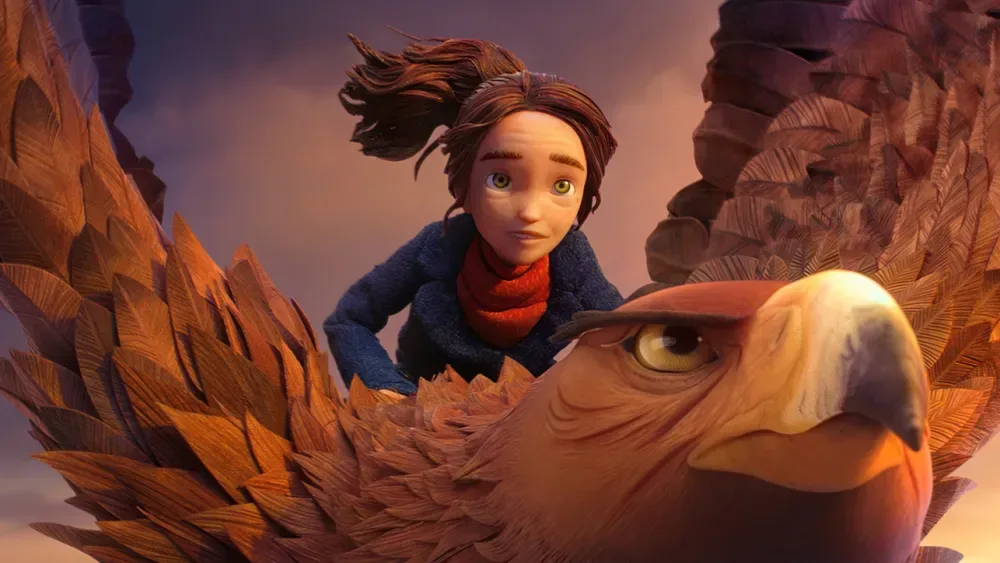
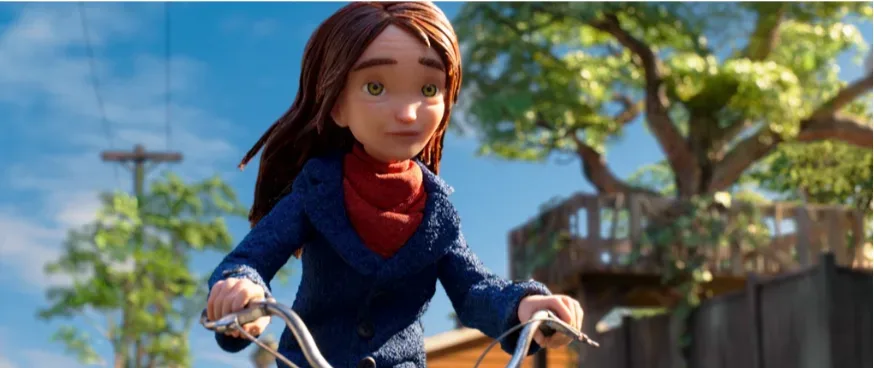
After that prologue, the story moves to Portland, Oregon, and to 12-year-old Prue, voiced by Peyton Elizabeth Lee. Prue lives with her highly protective parents, played by Jake Johnson and Maya Erskine, and her baby brother Mac. Her home life has a deliberately ordinary, even stifling quality, while the forbidden Impassable Wilderness sits at the edge of town as an obvious invitation. The family’s rules and superstitions become much more urgent when Mac is snatched from a playground by a flock of crows and carried toward the forest.
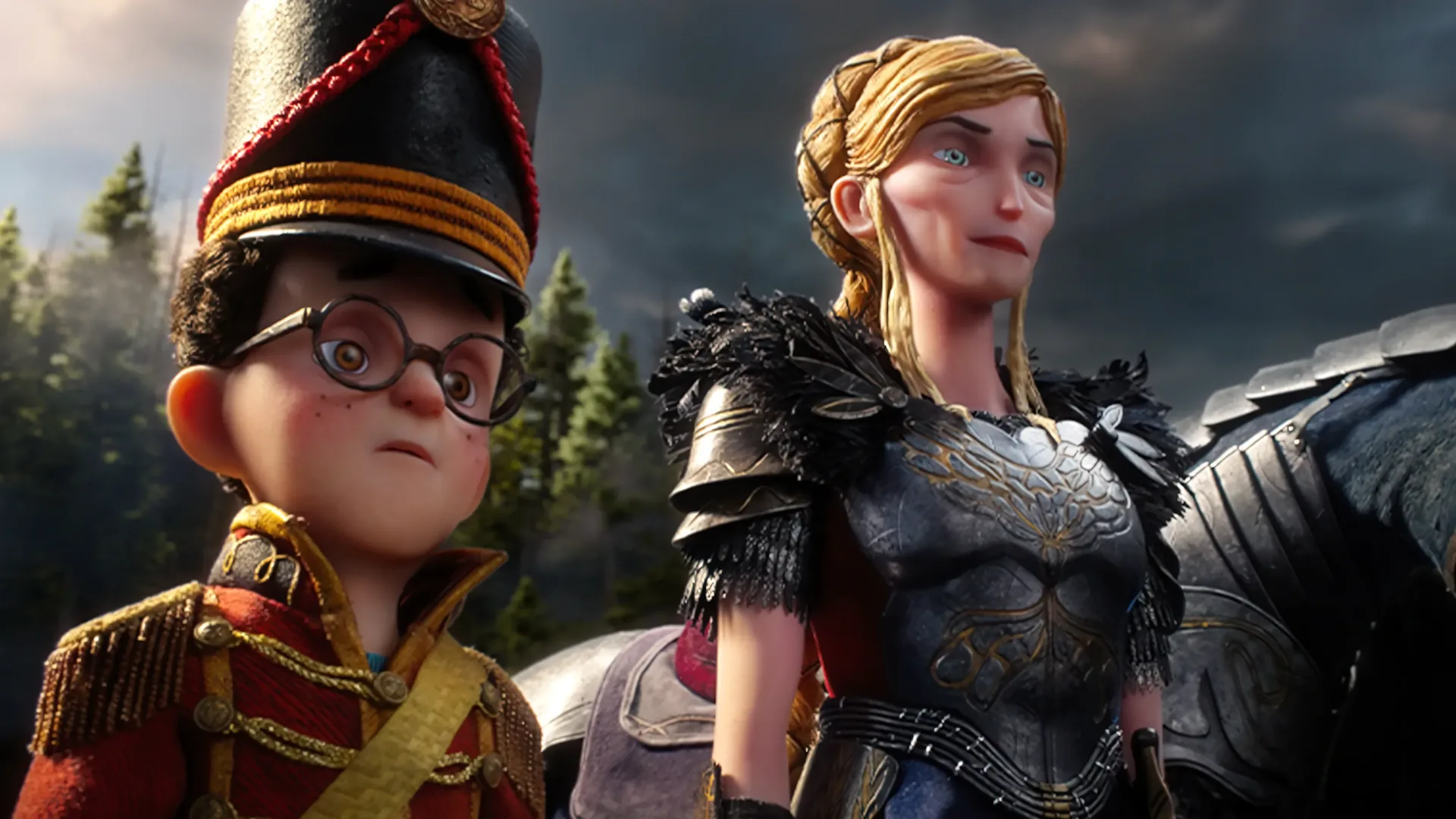
That abduction launches a chase through Portland and into the wilderness, where the thorns and brush part before Prue. She is initially accompanied by Curtis, a seemingly ill-equipped classmate voiced by Jacob Tremblay, though the pair are soon separated. What follows is not one neatly unified fantasy kingdom but an ecosystem divided among rival interests: military-styled coyotes, enormous and intelligent birds of prey, sorceresses, bandits and bureaucrats. Prue’s immediate need to find Mac intersects with tensions that have been developing long before she arrives.
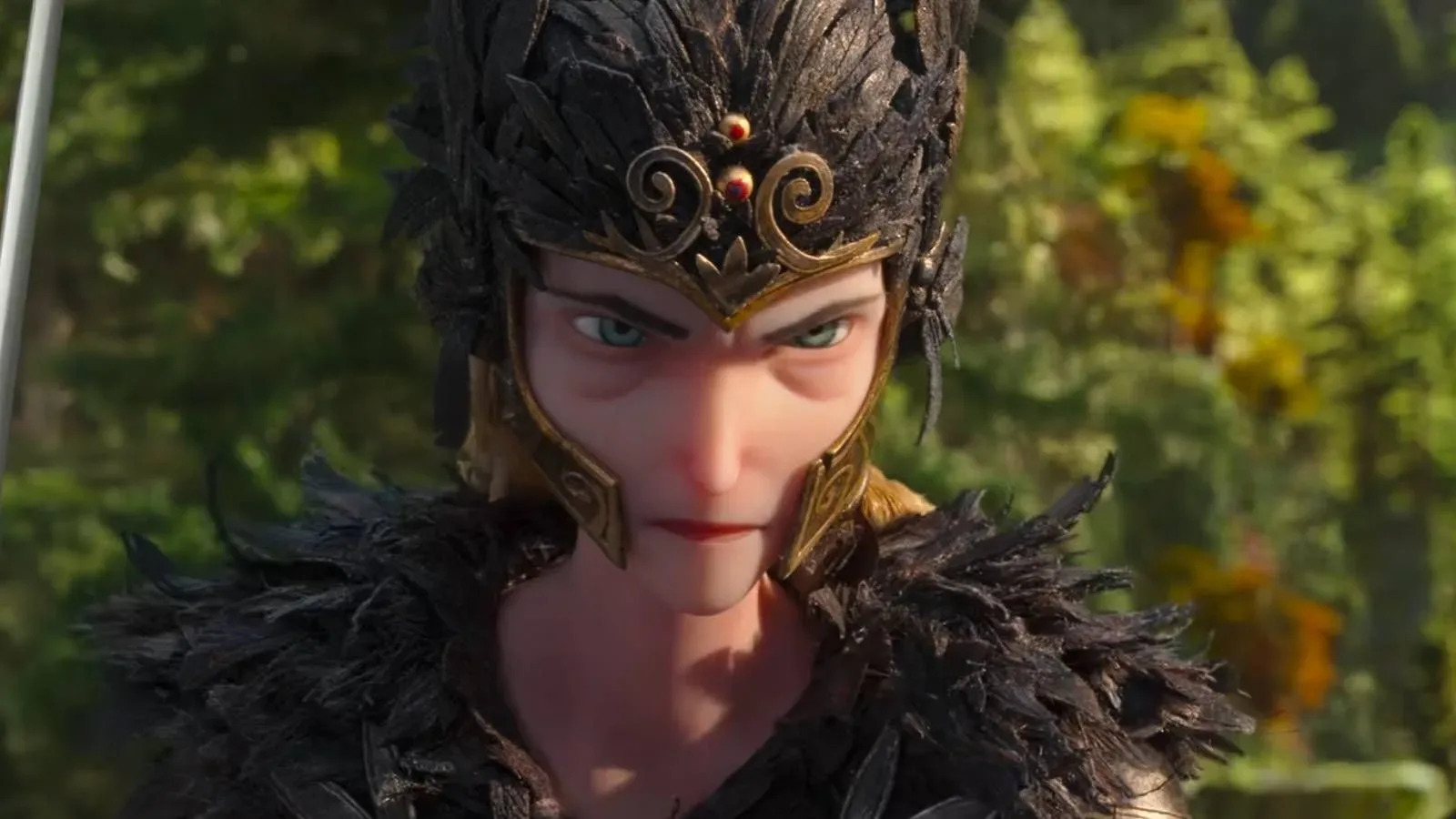
At the center of those tensions is the Dowager Governess, voiced by Carey Mulligan. The character is presented as powerful, grief-stricken and dangerous, a villain whose pain matters to the story rather than existing merely as decoration. The supporting cast is equally extensive: Mahershala Ali voices a hard-edged but principled warrior, Awkwafina plays a sharp-tongued rat who proves useful, and Angela Bassett brings authority to a giant golden eagle. Tantoo Cardinal, Charlie Day, Richard E. Grant, Amandla Stenberg, Jemaine Clement, Tom Waits, Rob Delaney and Blythe Danner are also among the voice ensemble.
A stop-motion epic rather than a small-scale curio
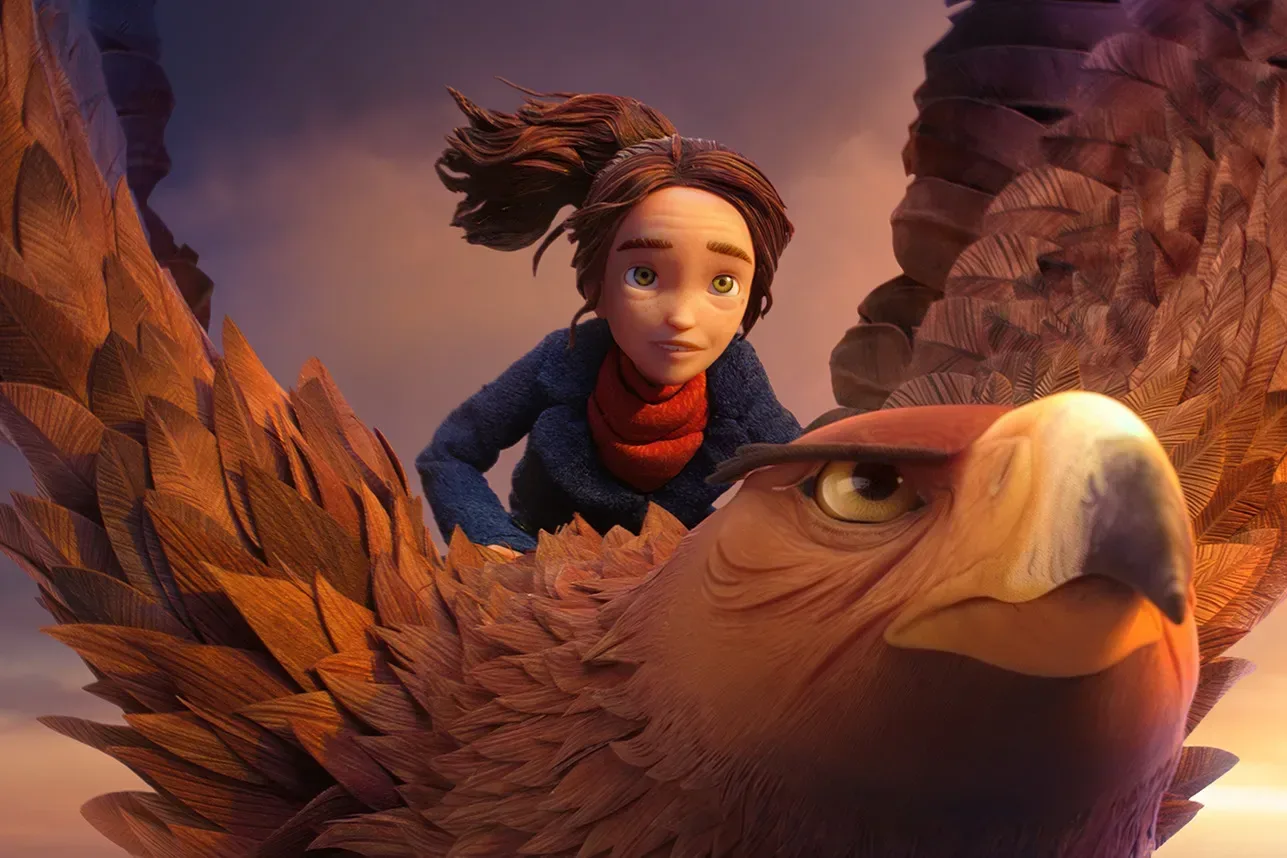
Stop-motion is an animation process in which artists physically move puppets, props and sets in tiny increments, photographing each position to create the illusion of movement when the images are played in sequence. The result can preserve evidence of materials, surfaces and scale that differs from fully digital animation. Wildwood leans into that tactile advantage. Its people and creatures are described through tangible detail: the hostile set of a coyote’s jaw, a tear held on a reddened cheek, feather-by-feather work on a massive eagle, and ivy that appears to swarm through parts of the forest.
That does not mean the production rejects digital assistance outright. Laika’s visual approach has long combined handcrafted work with subtle CG augmentation. The distinction is less about purity than effect: the practical roots give the environments texture and weight, while digital tools can help extend a world whose scope would otherwise be difficult to stage. In Wildwood, that blended method allows a studio known for distinctive oddball stories to attempt a considerably larger fantasy landscape.
The scale is particularly clear in the film’s natural imagery. A holy tree shifts through several seasons of foliage in moments, while the wilderness continually reveals new regions, creatures and power structures. These are not background embellishments. In a quest narrative, world-building is the process of making an imagined setting feel legible enough that its dangers, borders and social conflicts carry stakes. Wildwood appears to make the forest itself a source of discovery: every newly entered place has its own materials, colors and mythic associations.
Related coverage includes Wildwood Review: Laika Builds a Vast Stop-Motion Fantasy.
Caleb Deschanel’s cinematography is a major part of that effect. Lighting in animation can be as narratively important as it is in live action, guiding attention and controlling a scene’s emotional temperature. Here, enchanted glades receive a subdued twilight glow, while woods at night are shaped by thin, ominous shadows. The approach serves the film’s movement between wonder and threat. Even when the plot invokes familiar fairytale tools, the visual design gives those conventions a particular atmosphere.
A familiar fantasy grammar, energized by craft
There is no real attempt to disguise the story’s relationship with older fantasy traditions. The premise has room for forbidden woods, imperiled children, grieving rulers, animal armies and a young outsider whose arrival changes the balance of power. Those are durable fairytale components, but they are not novel by themselves. The source novel likewise occupies territory familiar to readers of children’s and young-adult fantasy.
What makes the screen version work is not a claim that it has invented a new mythic language. Rather, it uses recognizable language with energy and care. Butler’s adaptation gives the characters quick, lively exchanges and emotional connections that register even when they are drawn briskly. That matters in a film with a large population of characters and factions: a viewer needs to understand the emotional line running through Prue’s search for Mac, even as the surrounding political conflict grows more complicated.
The practical implication is that audiences should calibrate expectations correctly. This is not presented as a spare, intimate stop-motion piece. It is a long, packed adventure that moves from domestic Portland to an enormous fantasy realm and makes space for battles, mysteries, side characters and folklore. Some viewers may prefer the smaller, more eccentric mode associated with earlier Laika work. Others may find that the expanded canvas is exactly what gives Wildwood its appeal.
That expansion follows a path Laika had already explored with Knight’s 2016 film Kubo and the Two Strings, which pushed the studio’s miniature-based medium toward grand historical fantasy. Wildwood goes further: at 130 minutes, its run time is a meaningful creative choice rather than a footnote. The film does reportedly lose momentum in places, and not every stretch seems essential. Yet its length also permits the wilds to feel broad rather than like a single backdrop rushed through for a standard rescue plot.
For more context on the response to the film’s scale and fantasy ambitions, see our look at Wildwood’s early reactions.
Sound, voices and a PG-13 edge
Dario Marianelli’s score matches the film’s changing modes. It moves among Celtic-leaning strings, percussion with a military character and lighter acoustic passages, supporting a world where different territories and factions have distinct identities. An early use of Loretta Lynn’s “Portland Oregon” provides a contemporary jolt amid the folklore, while Meloy’s band contributes a song for the closing credits.
The voice casting reinforces the story’s multigenerational design. Lee gives Prue a young protagonist’s drive without making the character merely a chosen-hero figure, while Mulligan’s performance supplies gravity at the story’s darker center. Bassett’s eagle is built for majesty; Ali’s warrior provides a different, grounded kind of authority. Awkwafina’s rat brings a more slippery comic texture. A cast this full can become distracting in an animated feature, but here it corresponds to the deliberately crowded world around Prue.
The PG-13 designation is perhaps the clearest signal of who may get the most from the film. The rating does not mean the film abandons younger audiences, but its opening death imagery, bloodshed and serious emotional register set it apart from animation designed solely for very young children. Older children, teenagers and adults open to a dark-edged fairytale may be better positioned for its tonal shifts. Families should not assume that the stop-motion look translates to a low-stakes bedtime fable.
Why Wildwood’s handmade look matters
The movie’s fascination with handmade art is more than a visual slogan. Stop-motion’s labor-intensive nature is visible in the final image: objects appear to occupy space, fabrics and faces have minute imperfections, and physical lighting falls on physical forms. These qualities are especially valuable in a film about entering a wilderness full of old magic and contested history. The medium makes the strange terrain feel built, handled and inhabited.
There is an inevitable risk of sensory overload when every corner of a fantasy world has a new creature, texture or piece of lore to display. Wildwood comes close to that threshold in both sound and image. But the excess is fundamentally aligned with its theme: Prue’s journey asks her to see more of the world than the protected life she knew allowed. The woods are not meant to be tidy. They are meant to be too big, too beautiful and too unstable to comprehend at a glance.
That makes the film a notable demonstration of what Laika can do at scale. Its story draws on well-established fairytale materials, and its length will likely invite debate. But its tactile imagination, confident atmosphere and willingness to bring darkness into a family-oriented adventure give the project a distinctive identity. Wildwood is not small, subtle or always streamlined. It is a grand stop-motion fantasy that treats handmade detail as the foundation for spectacle.
Wildwood at a glance
- Director: Travis Knight
- Screenplay: Chris Butler, based on the novel by Colin Meloy
- Runtime: 130 minutes
- Rating: PG-13
- Key voice cast: Peyton Elizabeth Lee, Carey Mulligan, Jacob Tremblay, Mahershala Ali, Awkwafina, Angela Bassett, Jake Johnson and Maya Erskine
- Music: Dario Marianelli
- Cinematography: Caleb Deschanel