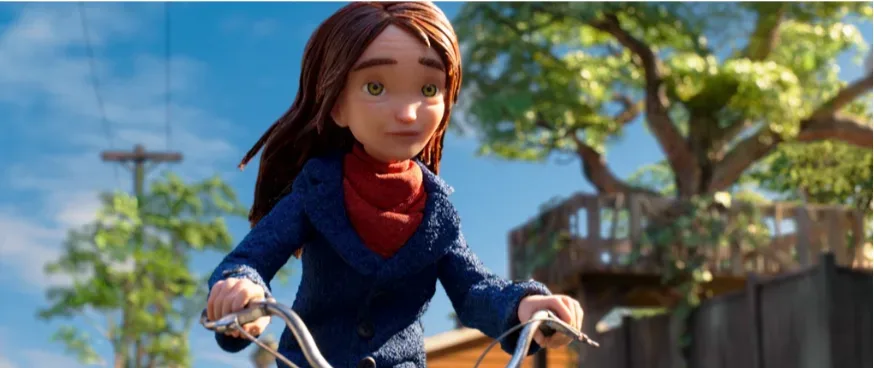
Laika’s Wildwood will take the closing-night slot at the ninth Animation Is Film Festival in Los Angeles. The stop-motion fantasy will screen on Oct. 19 at the Academy Museum’s Geffen Theater, closing a festival that runs from Oct. 16 through Oct. 19.
The event will also include a post-screening conversation between Wildwood director and producer Travis Knight and filmmaker Jason Reitman. Knight is also Laika’s president and CEO, making the appearance a chance to discuss a production described as the studio’s most ambitious to date.
For audiences who cannot attend the festival screening, Wildwood is scheduled to open theatrically on Oct. 23. Fathom Entertainment is handling its U.S. theatrical distribution, while FilmNation Entertainment is responsible for international sales.
A rescue mission beyond Portland
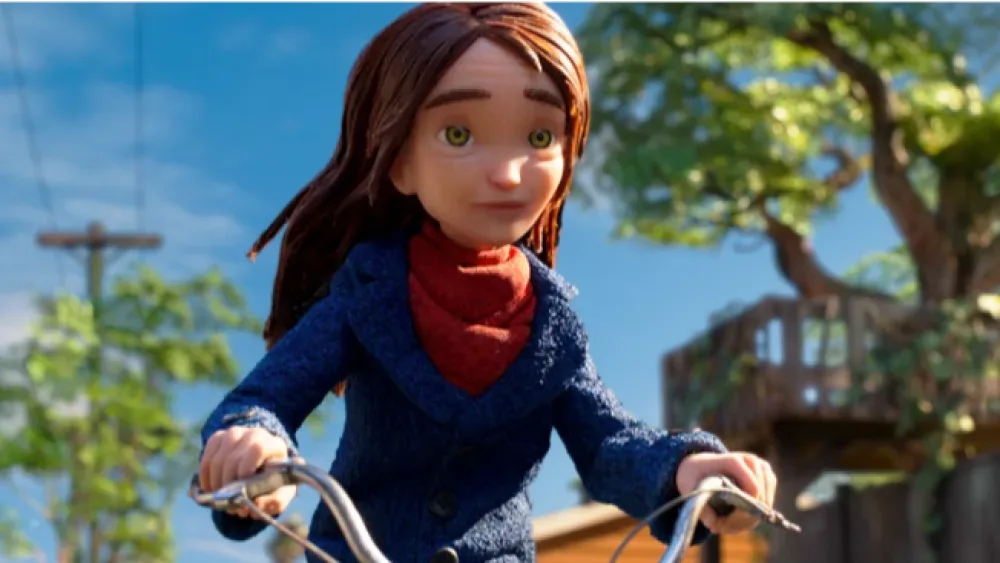
Wildwood centers on Prue McKeel, a headstrong teenager voiced by Peyton Elizabeth Lee. After a murder of crows abducts her brother, Prue heads into the Impassable Wilderness, an enchanted forest concealed just beyond Portland, Oregon. Her classmate Curtis Mehlberg, voiced by Jacob Tremblay, joins her.
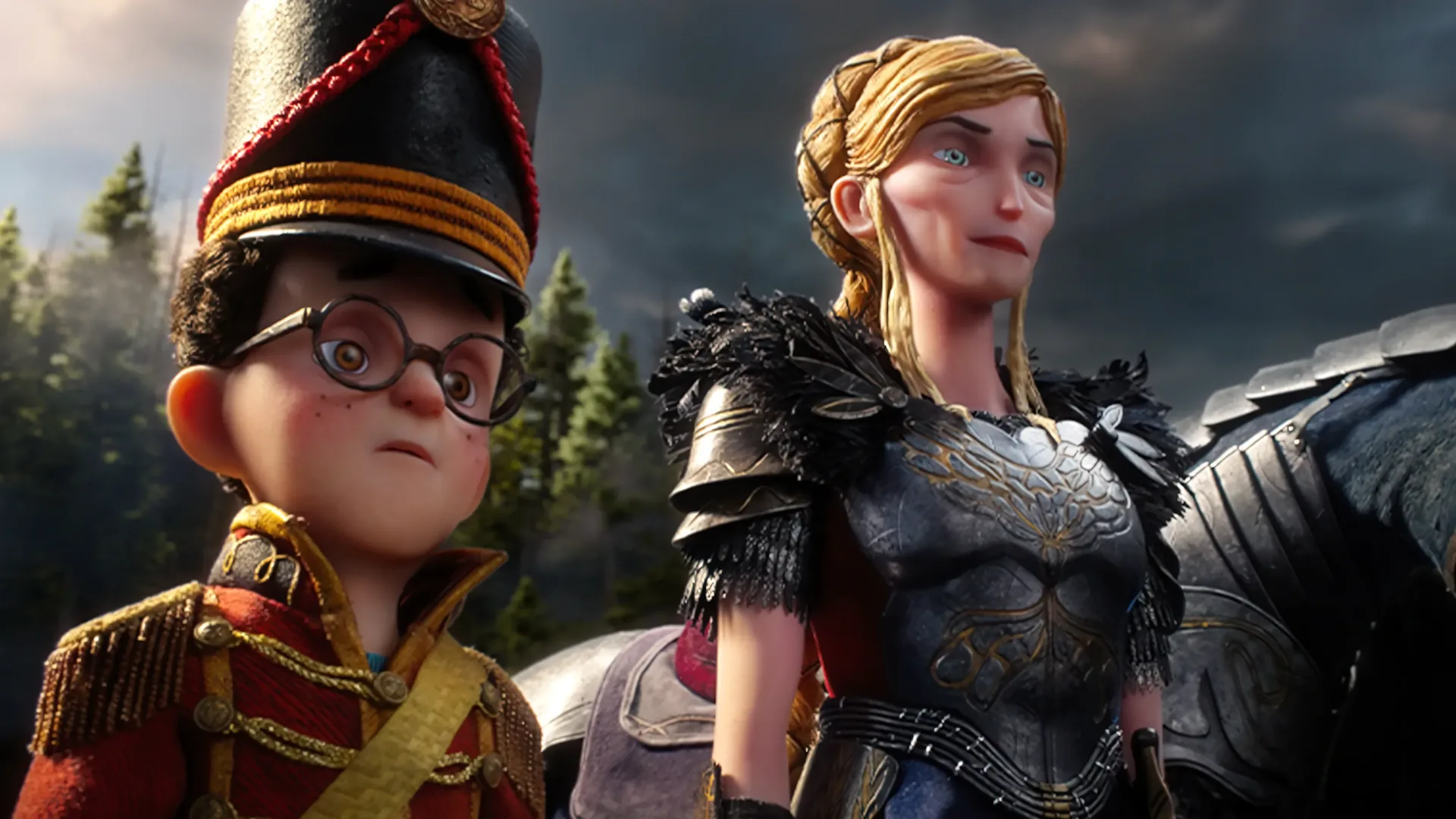
The pair’s search takes them into a setting populated by talking animals, bandits and influential figures whose motives are shaped by grief and ambition. The immediate objective is clear: Prue must rescue her brother. But the journey expands into a larger struggle over the future of the forest and the balance within it.
That setup gives the film a fantasy-adventure framework with a personal emotional stake at its center. Prue is not simply entering a strange world for its own sake; she is pursuing someone she loves, while the wilderness introduces conflicts that reach beyond her family. Curtis’ presence also establishes the adventure as a partnership rather than a solo quest, with the two students confronting the wilderness together.
A large voice cast for an expansive world
Lee and Tremblay lead an ensemble that includes Carey Mulligan, Mahershala Ali, Angela Bassett, Awkwafina, Jake Johnson, Charlie Day, Amandla Stenberg, Jemaine Clement, Maya Erskine, Tantoo Cardinal, Tom Waits and Richard E. Grant.
The supplied character outline only identifies Prue and Curtis’ roles, so the parts played by the wider cast have not been detailed here. Still, the scale of the credited lineup matches the film’s premise: the Impassable Wilderness is presented as a world with multiple factions, creatures and powerful personalities, not merely a backdrop for one rescue.
Voice casting is particularly consequential in animation because performers must establish character through spoken delivery without appearing physically on screen. That does not mean a famous cast automatically defines a film’s quality or scale, but it does signal the number of voices needed to populate the story’s varied forest society. Readers interested in how ensembles shape screen storytelling may also want to follow the broader conversation around casting teams and the work behind assembling them.
What “stop-motion” means here
Laika is presenting Wildwood in its established stop-motion style. Stop-motion is an animation technique in which physical objects are moved incrementally between separately captured frames. When those frames are played in sequence, the objects appear to move.
In practical terms, the method places special weight on design, miniature environments, character construction and frame-by-frame performance. The source material describes Wildwood as the result of 15 years of work by hundreds of artists, emphasizing the long development and extensive collaborative effort behind the finished film.
That 15-year figure should be understood as the production’s overall journey rather than a claim that every artist worked continuously on it for the same length of time. What it clearly conveys is sustained development on a project with a large creative scope. Laika chief marketing and operations officer David Burke characterized the film as the product of imagination, craftsmanship and commitment from hundreds of artists.
The stop-motion designation also helps explain why a festival focused on animation is a fitting early showcase. The festival’s stated mission is to celebrate animation as cinema capable of artistic and emotional ambition, while Laika’s representatives describe a shared belief that animation should be treated as filmmaking in its fullest sense. The closing-night selection places Wildwood at the end of a program designed around that idea.
From a 2011 novel to the screen
The film is inspired by Colin Meloy’s 2011 novel Wildwood, which was illustrated by Carson Ellis. The screen version retains the story’s central premise of a hidden wilderness near Portland, Prue’s search for her abducted brother and the unusual inhabitants encountered along the way.
An adaptation is not necessarily a scene-for-scene transfer of its source material. In this case, the confirmed information establishes the novel as the film’s inspiration and identifies the major elements of the screen story, but it does not provide a chapter-by-chapter comparison. Viewers should therefore avoid assuming which specific elements have been preserved, changed or expanded until the film itself is available.
What can be said is that the premise is built to support the visual possibilities of a handcrafted fantasy environment. A forest hidden beside an ordinary city, talking animals, bandits, crows and competing powers all create a setting where physical textures and stylized characters can do considerable storytelling work. That is analysis based on the announced premise, not a claim about scenes or techniques that have yet to be shown publicly.
Why the festival placement matters
Closing night is a high-profile position in a festival schedule. It functions as the final major communal screening and, in this case, gives Wildwood a Los Angeles audience four days before its theatrical opening. The post-screening Knight-Reitman discussion adds a filmmaker-focused component rather than presenting the showing as a standard public screening alone.
The rest of the festival’s main program is hosted at TCL Chinese 6 Theatres in Hollywood, while the Wildwood closing-night screening is set for the Academy Museum’s Geffen Theater. The festival will also host premieres of Louis Clichy’s Iron Boy, Leah Nelson’s Tangles and Julián.
For prospective moviegoers, the key distinction is straightforward: the Oct. 19 presentation is a festival event, while Oct. 23 is the stated theatrical opening date. The supplied information does not detail tickets, showtimes, theater count or international release dates, so those specifics remain unconfirmed here.
The practical takeaway
- Festival closing-night screening: Oct. 19 at the Academy Museum’s Geffen Theater in Los Angeles.
- Onstage conversation: Travis Knight will speak with Jason Reitman after the screening.
- U.S. theatrical opening: Oct. 23, distributed by Fathom Entertainment.
- International sales: Handled by FilmNation Entertainment.
- Story focus: Prue McKeel and Curtis Mehlberg enter the Impassable Wilderness during a mission to rescue Prue’s brother.
- Creative foundation: The film is inspired by Colin Meloy’s 2011 novel, illustrated by Carson Ellis, and uses Laika’s stop-motion approach.
With its closing-night festival position, sizable voice ensemble and unusually long creative runway, Wildwood arrives as a major new project for Laika. The film’s next confirmed milestone after the Los Angeles event is its Oct. 23 theatrical release.