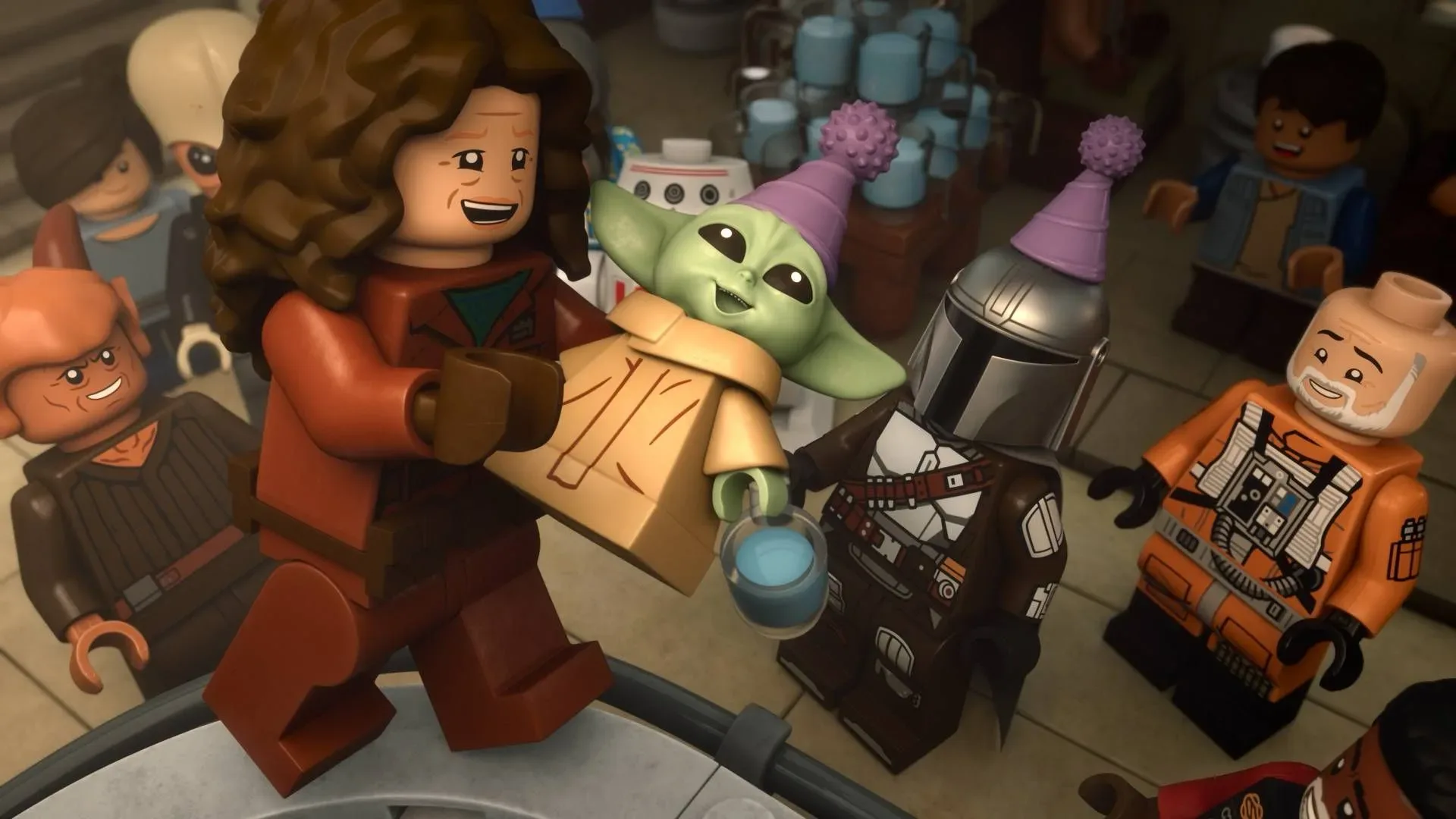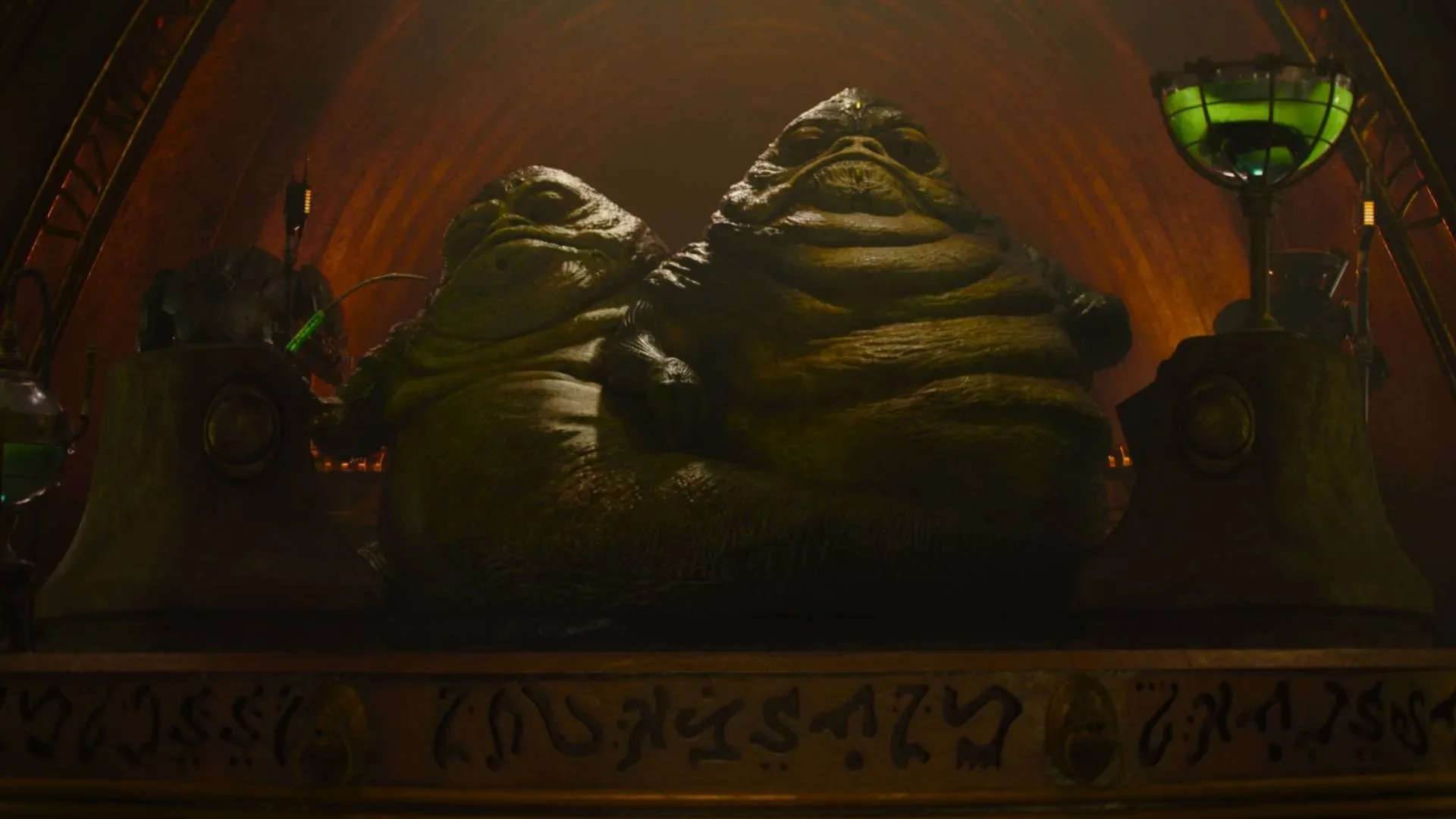
Big franchise storytelling is often trained to announce its importance at maximum volume. There is usually a looming threat, a rescue in progress, a ship making an extremely expensive sound, or a character standing in front of something that has definitely been set on fire by a visual-effects department. The Mandalorian and Grogu, however, apparently places its emotional center somewhere much quieter: on a beach, where Grogu and Rotta the Hutt pass a ball between them.
Industrial Light & Magic animation supervisor Hal Hickel has said that this exchange was especially important to director Jon Favreau, describing it as the movie’s heart. That makes the scene more than a pause after the action. It is the point where the film’s rescue story gets to demonstrate what “rescued” is supposed to mean.
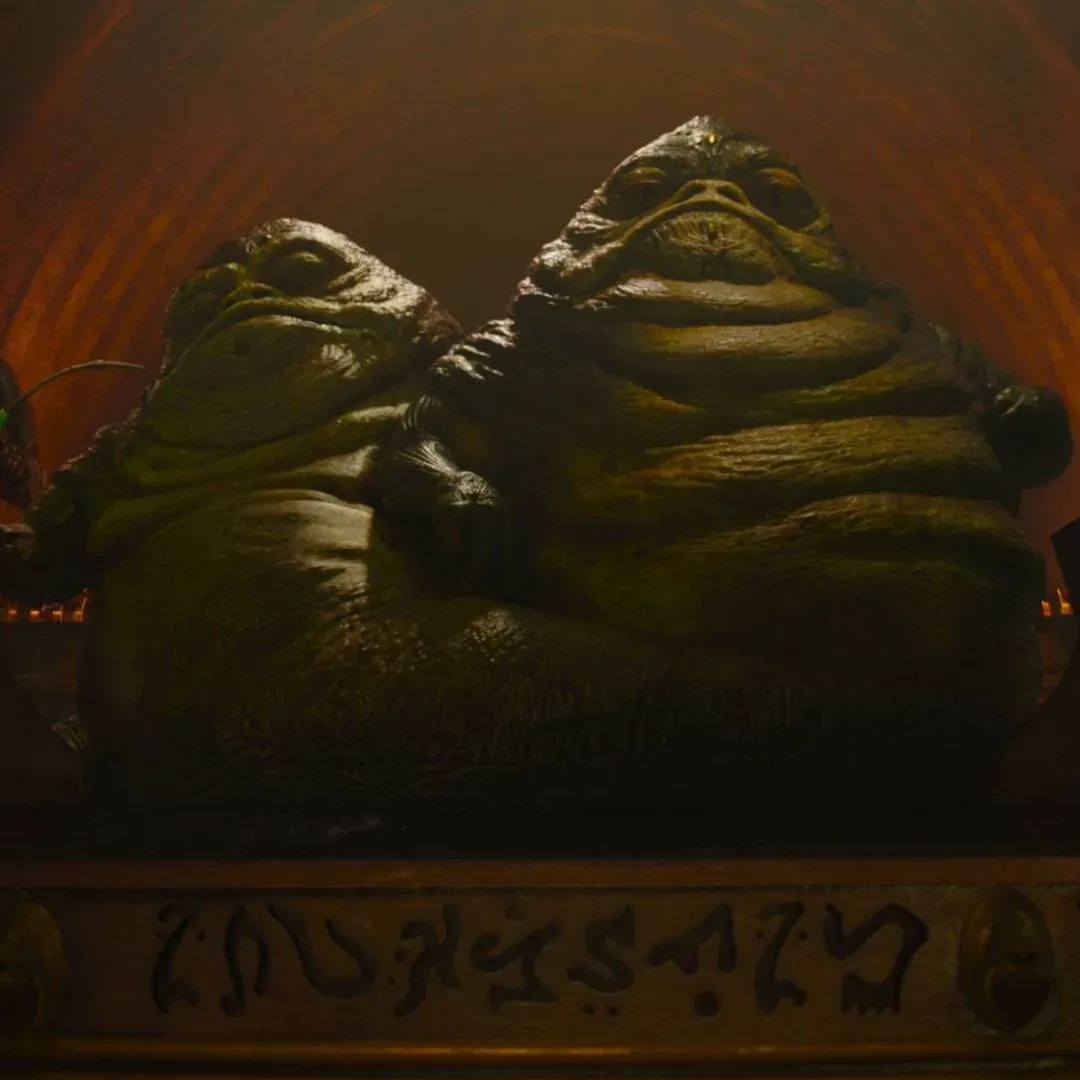
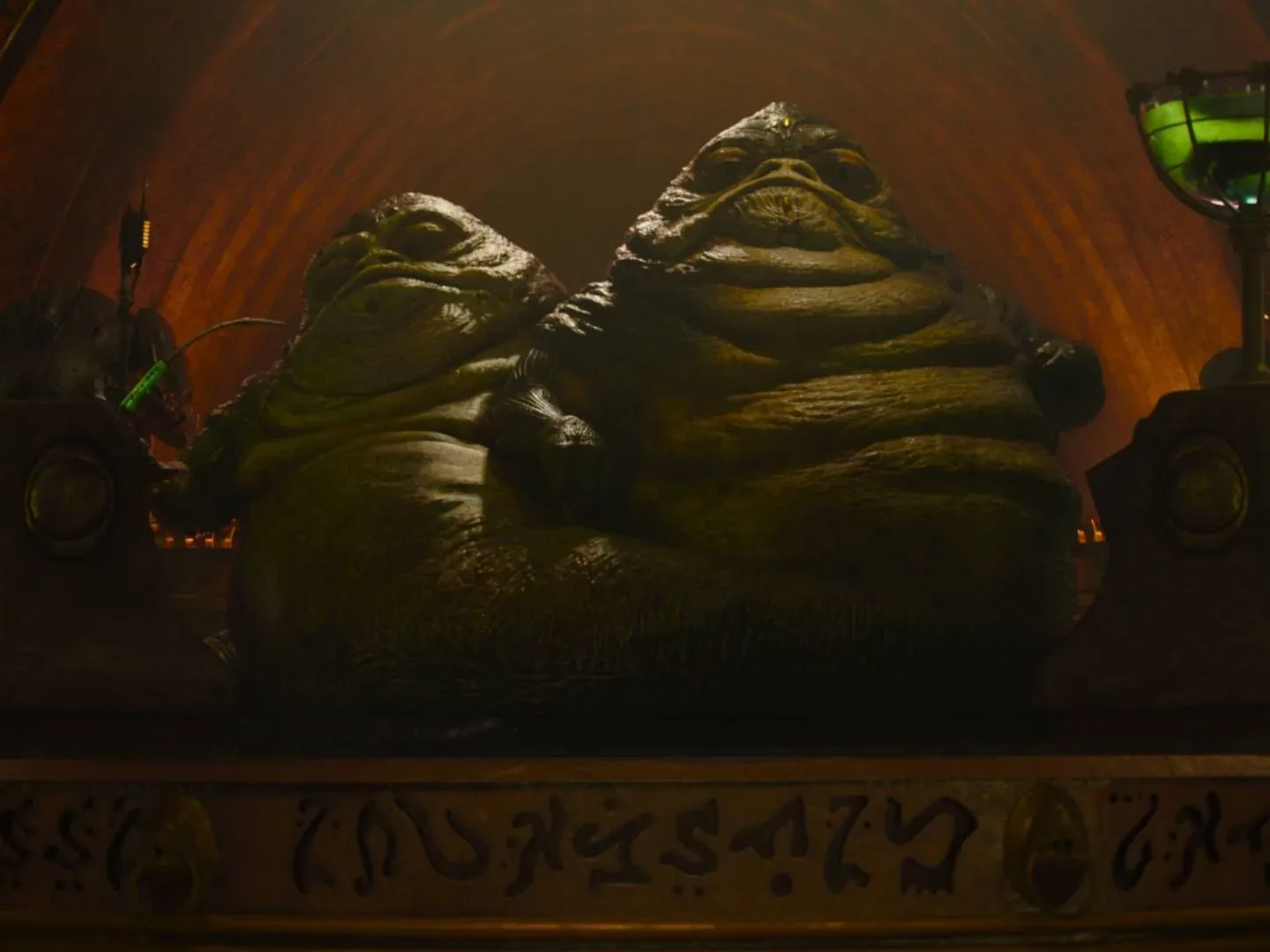
Rotta, voiced by Jeremy Allen White, has just been pulled out of a grim situation by Din Djarin. He had been held in an arrangement that treated him as a fighter and spectacle for the people of Shakari, after a deal went badly wrong. The beach sequence arrives when the immediate danger seems to have passed. No one needs to explain the emotional arithmetic with a hologram briefing: a child who was denied a normal childhood is, for a moment, allowed to play.
A ball game with more at stake than a ball game
The setup is wonderfully simple. Grogu and Rotta throw or roll a ball back and forth. In another kind of film, that might be a quick visual gag before the plot accelerates again. Here, Hickel’s comments indicate that Favreau saw it as a foundational beat. The scene gives the audience a chance to consider Rotta not as a Hutt name, a narrative complication, or an exotic CGI creature built for the next merchandise display, but as a young person discovering a basic form of safety.
That distinction matters because Rotta’s surname brings a lot of baggage. The Hutt family is associated with menace, power, criminal dealings, and the kind of family atmosphere that makes a holiday dinner feel like a hostage negotiation. Rotta does not choose any of that. The movie’s beach scene apparently lets him exist outside those expectations long enough to be playful and unguarded.
Grogu is an unusually effective companion for that moment precisely because he does not need to deliver a grand speech about healing. He can simply participate. Passing a ball establishes a rhythm of trust: one character sends something over, the other receives it, and then returns it. There is no transaction, no threat, no audience demanding entertainment. For Rotta, who has recently been exploited as entertainment, that reversal is particularly meaningful.
It is also a small but useful reminder that action adventures need space around their action. A rescue only becomes emotionally legible when viewers can see what has been restored. If the story moved directly from extraction to the next dangerous mission, Rotta’s experience could risk becoming plot machinery. The beach gives him a moment of personhood. It tells us that surviving was not the only goal; being able to feel like a kid again was part of the goal too.
Why stillness can do what spectacle cannot
Franchise films can sometimes mistake scale for feeling. Bigger threats may raise the logistical stakes, but they do not automatically make an audience care more. A quiet scene, by contrast, can clarify what every chase, blaster shot, and impossible escape is protecting. Hickel’s account of Favreau’s priorities suggests that The Mandalorian and Grogu understands this principle.
The choice is notable because the moment involves two characters whose performances rely heavily on animation and effects work. It would be easy to think of a scene like this solely in technical terms: digital characters, simulated environment, carefully controlled movement, and a prop that must travel convincingly from one tiny alien pal to another. But the technical work is serving something much less mechanical. The animation must communicate ease after fear, curiosity after confinement, and the gradual realization that nobody is asking Rotta to perform.
That is the stealthy power of an everyday activity in a fantastical setting. The beach may be alien; the players may be a tiny foundling and a young Hutt; the surrounding saga may involve galaxy-spanning conflicts. Yet the gesture is immediately readable. Kids play when they have room to play. Friends make games out of nearly anything. A ball does not care about family dynasty, criminal reputation, or whether the person sending it your way comes with an enormous amount of lore.
There is a useful parallel in stories that find life in moments that appear modest rather than monumental. Our look at a messy Dostoevsky biopic that feels surprisingly alive similarly considers how a work can draw energy from human-scale texture rather than tidy, oversized gestures. The comparison is not about plot. It is about the value of letting characters breathe long enough for an audience to recognize them as people.
Grogu’s role is more than adorable support staff
Grogu’s presence in the sequence has obvious charm, because putting Grogu near practically any object already creates a strong possibility of a memorable reaction shot. Yet his part in Rotta’s recovery is more substantial than that. He is not positioned as a teacher or savior delivering wisdom from a mountaintop. He is a peer in play.
That equality is important. When characters have endured captivity or coercion, narratives can sometimes frame their recovery as a debt owed to a heroic rescuer. Din Djarin’s intervention is undoubtedly crucial: Rotta is alive and free because Mando got him out. But Grogu’s interaction shows another side of care. It is not about winning a rescue; it is about sharing time afterward without demanding that Rotta prove he is grateful, useful, or suddenly fine.
There is a tiny social contract in the ball game. Each participant gets a turn. Each expects the other to be there. Each is trusted with the next pass. Those are gentle ideas, but they are not trivial ones. In fact, their lack of drama is exactly why the scene can land so hard. After a life shaped by the Hutt family and the danger on Shakari, uneventful companionship may be the most extraordinary thing Rotta has experienced.
The structure is also true to what makes shared play work outside a galaxy far, far away. The best games are not always the ones that produce the largest scoreboards or the loudest victory screens. Sometimes they are a cooperative rhythm, an understood joke, or a low-pressure activity that says, “You can be here.” For a playful reminder of how those small social agreements shape game time, see the unwritten rules of couch multiplayer. Grogu and Rotta are not exactly setting up a four-player tournament, but the core idea of making room for another player is familiar.
Rotta’s future remains open
As moving as the beach scene may be, it does not provide a confirmed map for Rotta’s next appearance. There likely will not be another season of The Mandalorian, leaving uncertainty around when—or whether—the character will return. That uncertainty makes the scene feel more self-contained. It cannot rely on a later episode to complete its emotional promise. It needs to register now, as a complete moment of relief and connection.
The next identified Star Wars release is Ahsoka season 2, scheduled to arrive on Disney Plus in the new year. Whether Rotta has any place in that story has not been established. For the present, his onscreen future is unknown, and it is best not to treat a tender scene as a secret guarantee of a larger plan.
What is clear is that The Mandalorian and Grogu is streaming on Disney Plus, and that Favreau’s apparent focus on this exchange offers a helpful lens for watching it. The important question is not merely whether Din Djarin saves Rotta from immediate harm. It is whether the film allows Rotta to reclaim something that harm had interrupted.
A ball passed across a beach is a very small answer, but it is a persuasive one. For a few minutes, Rotta is not a Hutt heir, a captive attraction, or a piece on somebody else’s board. He is just a kid playing with Grogu. In a saga full of destiny, dynasties, and weapons with extremely confident names, that modest freedom may be the biggest thing the movie has to offer.