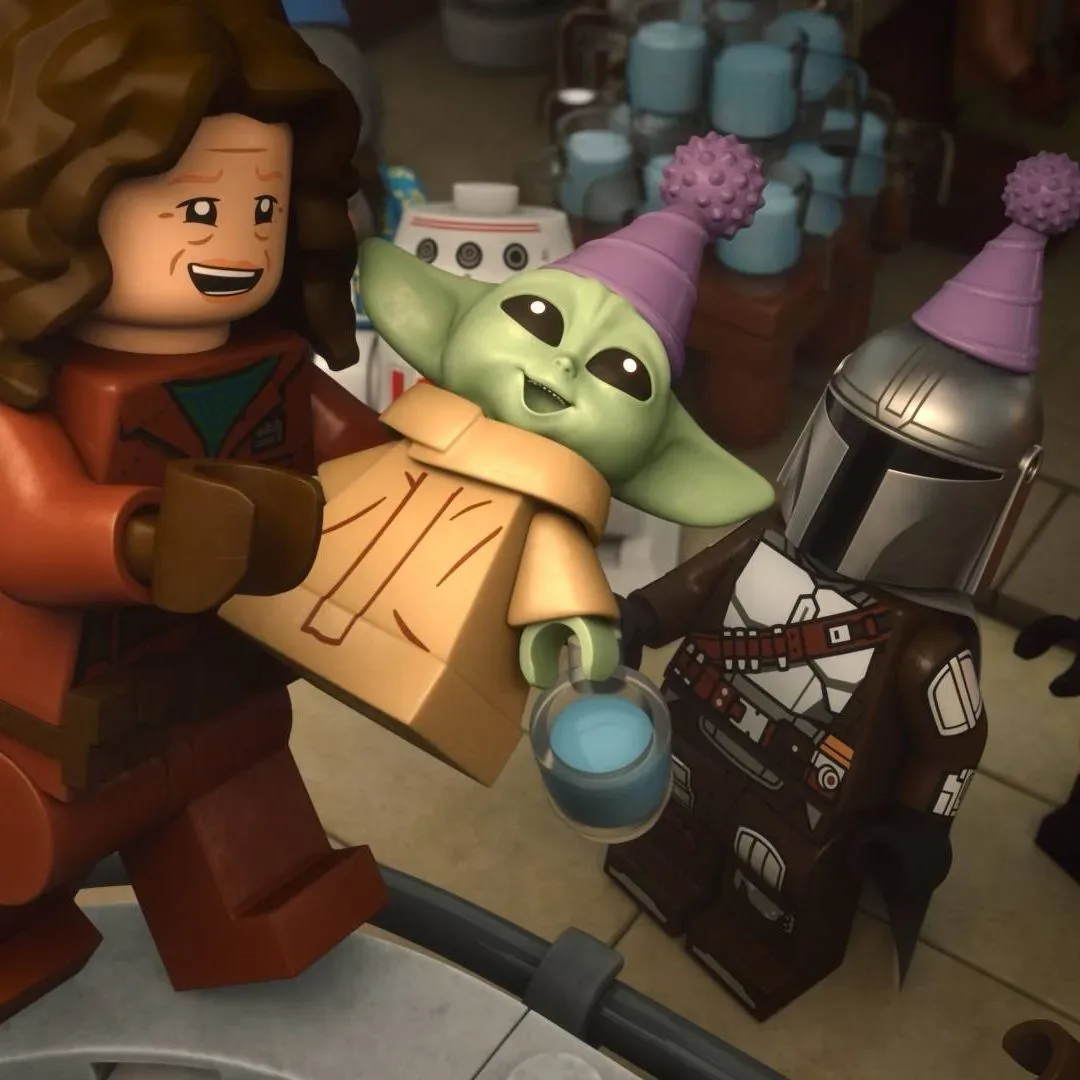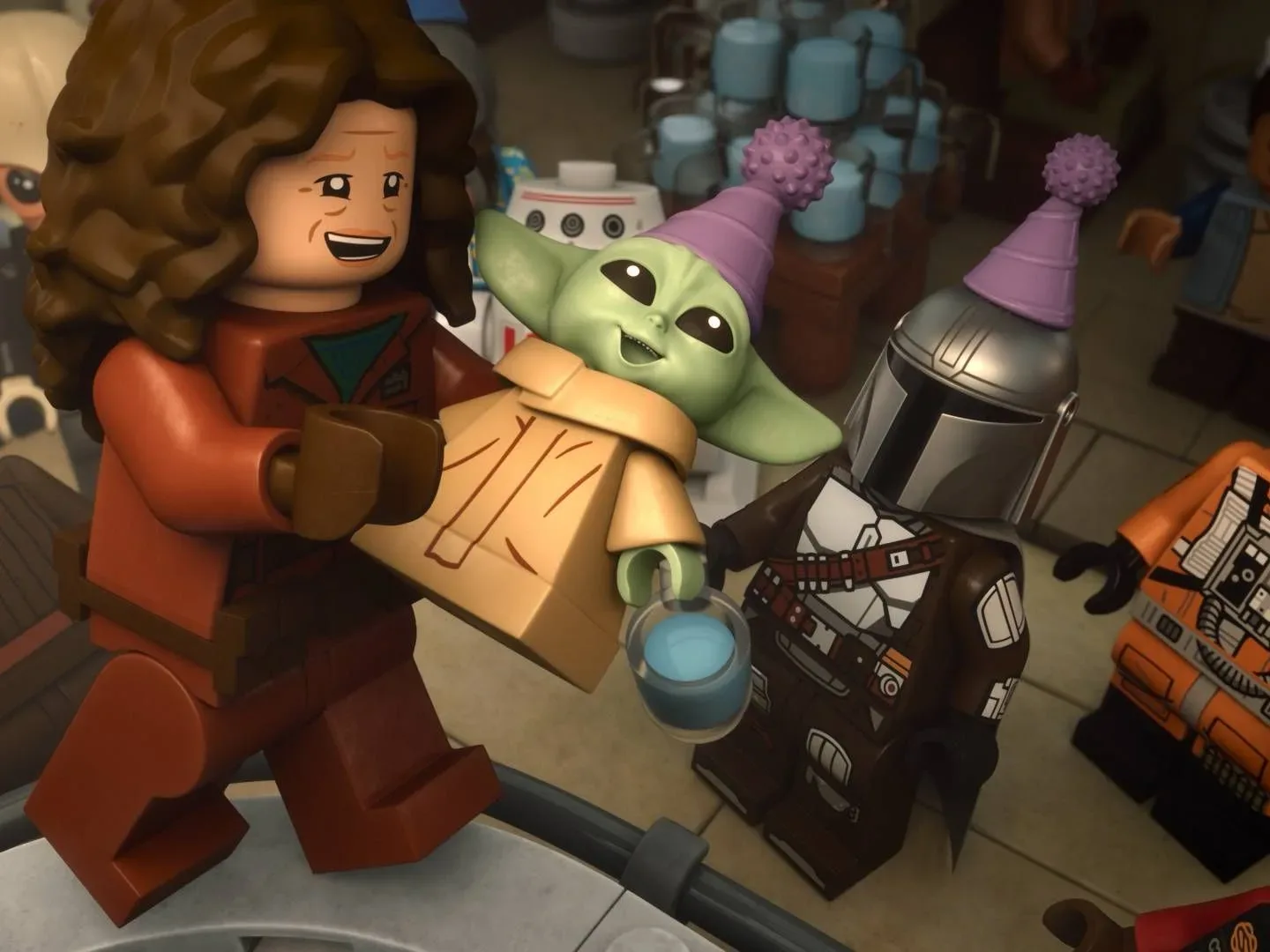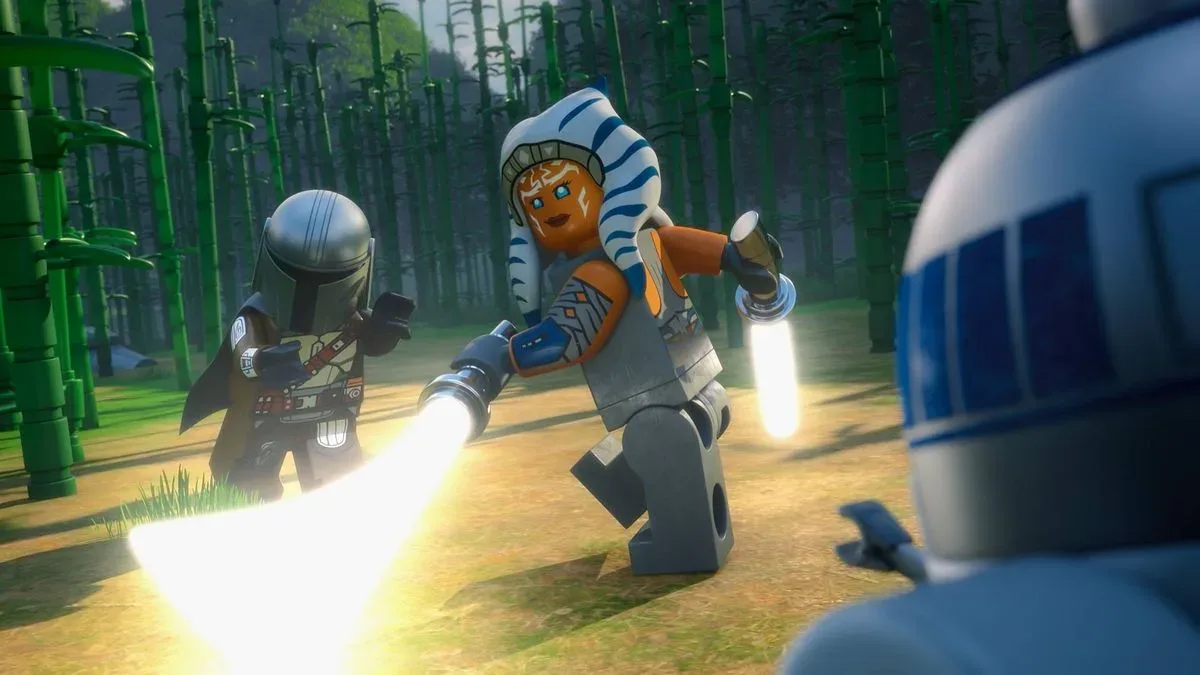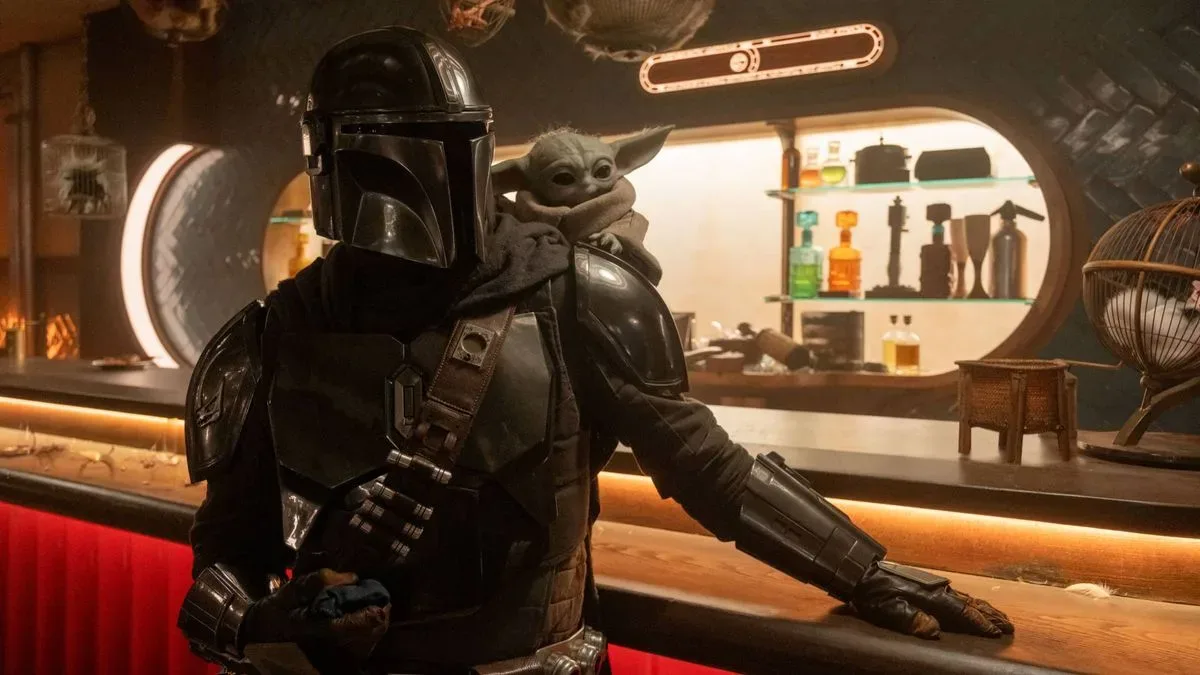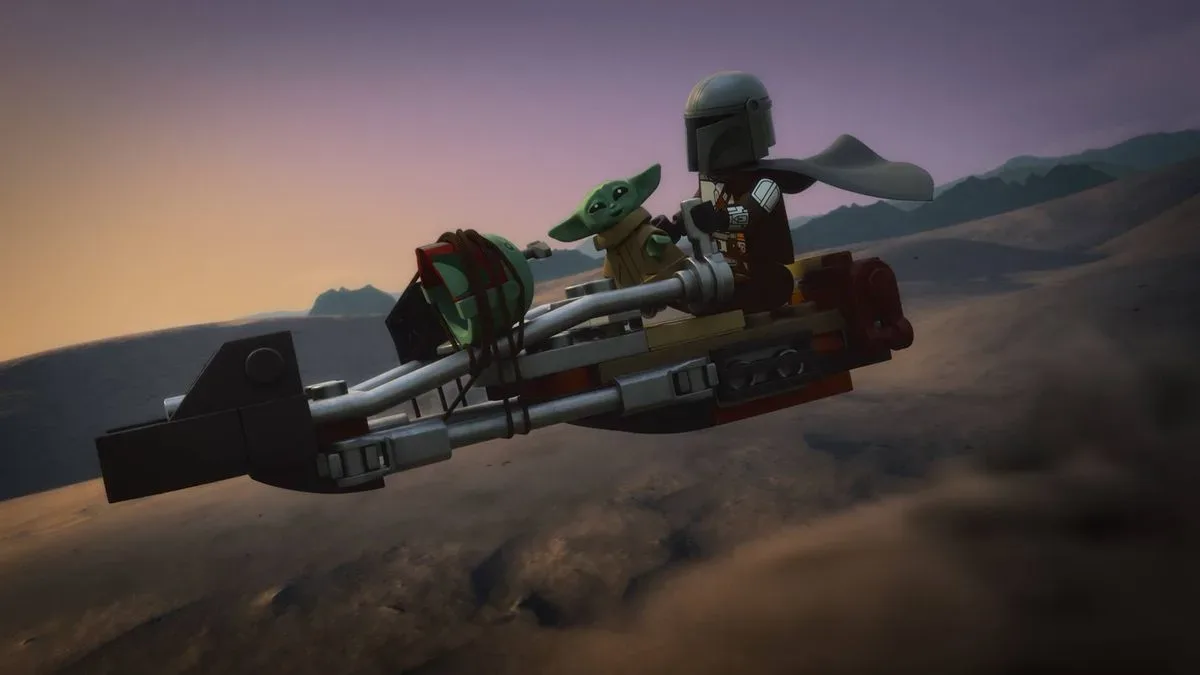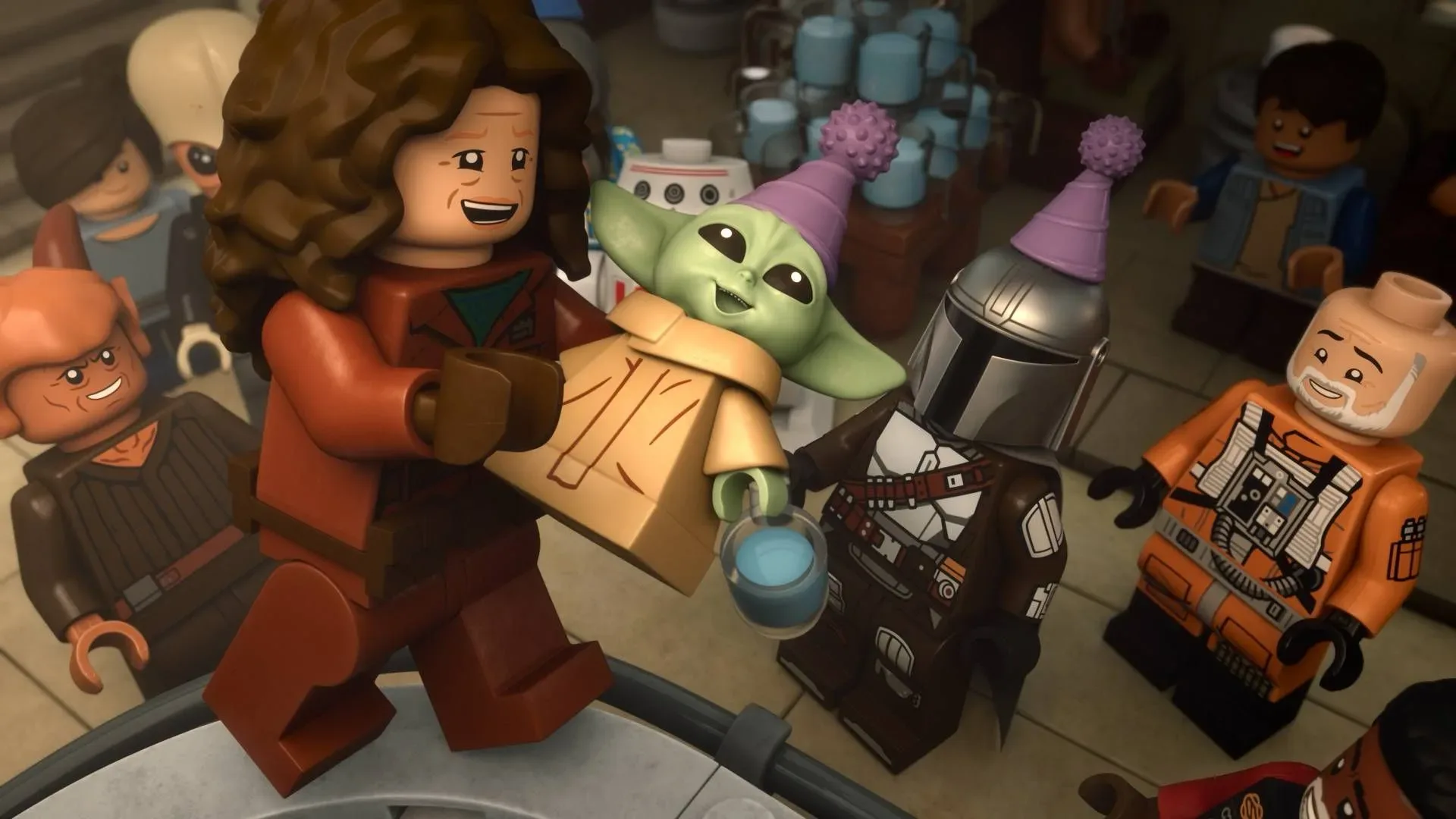
Din Djarin has survived bounty hunters, Imperial remnants, Mandalorian politics, Jedi complications, and the constantly escalating responsibility of raising the galaxy’s most marketable little green child. But in LEGO Star Wars: The Mandalorian, his latest trial is considerably more terrifying: his friends have organized a party for him, despite the inconvenient detail that it is not his birthday.
The 45-minute animated special is now streaming on Disney Plus alongside The Mandalorian and Grogu. It is explicitly outside Star Wars canon, which gives it room to be gleefully loose with the universe’s biggest dramatic moments. Rather than trying to extend official continuity, the LEGO outing uses its party premise to revisit Din and Grogu’s adventures from the Disney Plus series through a knowingly silly lens, carrying the story forward to the events of the newer film.
That combination makes the special useful in two distinct ways. It is a quick, comic refresher for viewers who want their Mandalorian history unscrambled without committing to multiple seasons of television. More importantly, it has enough fondness for the characters and enough willingness to tease the franchise’s peculiar storytelling detours that it can function as a warm reunion for fans who already know the road well.
A party is the ideal excuse for a Mandalorian recap
The central setup puts Din and Grogu in party hats while their circle of allies recounts the major turns in their story. There is an inherent joke in placing a famously guarded helmeted warrior in such a cheerful social setting, but the framing serves a practical purpose. It allows different characters to relive different pieces of the saga, which naturally turns an episodic recap into a group event.
LEGO Star Wars productions have long thrived by treating revered mythology as something audiences can love without handling too delicately. Here, the humor reportedly targets familiar Mandalorian and wider Star Wars habits: Din and Grogu’s reunion occurring in a separate series, IG-11’s repeated inclination toward self-destruction, and Luke Skywalker’s difficulties with Jedi pupils all become fair game.
Those are jokes that depend on audience recognition rather than a desire to dismantle the material. The special is not presented as a hostile parody of the live-action show. It is built around the oddities that longtime viewers have already noticed, then gives them the oversized expressions, improbable timing, and toy-box physics that LEGO animation is especially suited to deliver.
That makes its non-canon status an advantage. Official Star Wars storytelling often has to carefully account for dates, character knowledge, surviving factions, and future plot requirements. A LEGO special can instead pause to ask the more important question: what if a tiny steering wheel were installed in the Razor Crest for Grogu?
The Clan of Two still anchors the silliness
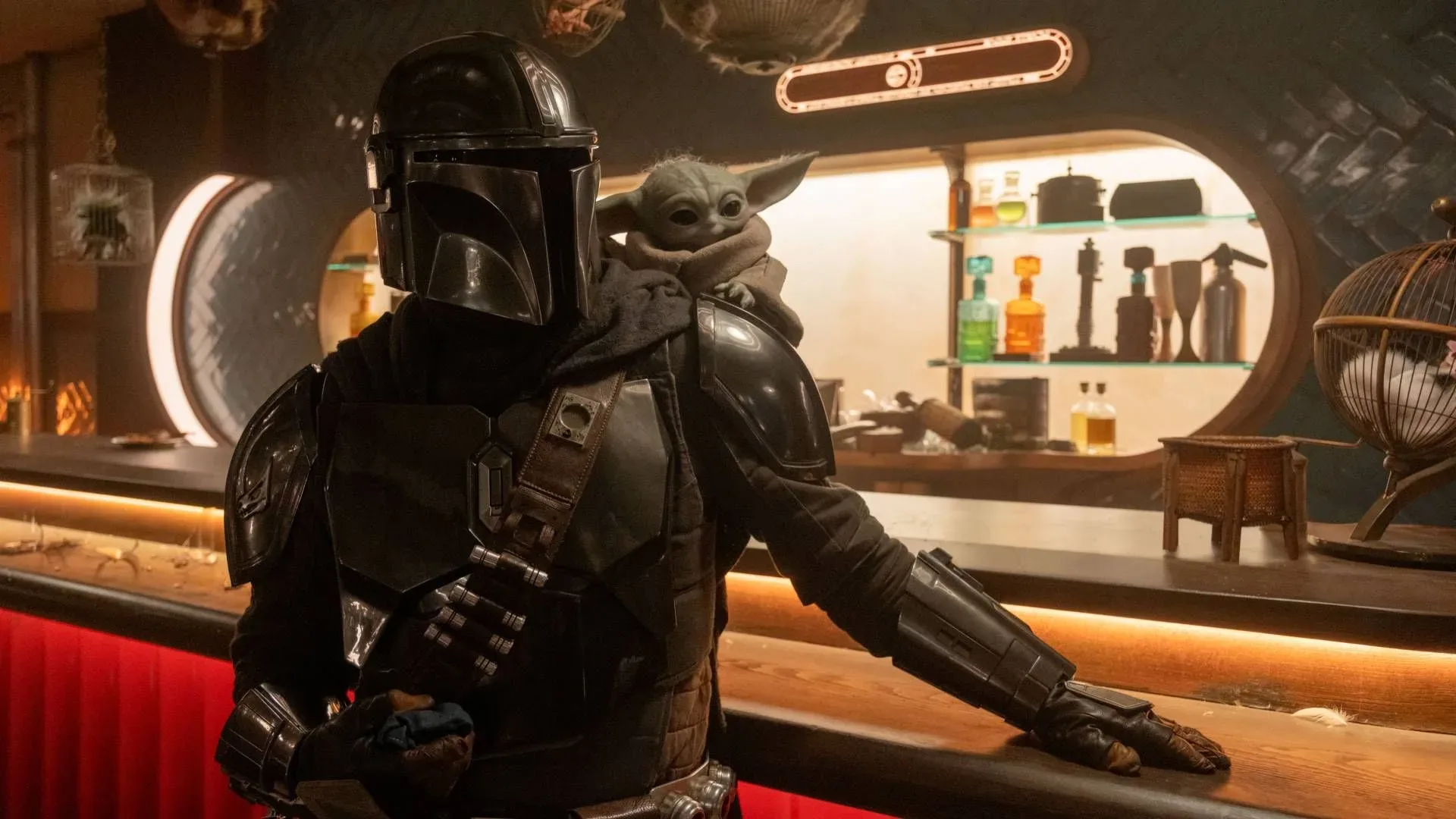
For all the gag potential of a LEGO Star Wars event, Din and Grogu remain the emotional center. The pair’s relationship has always worked because it combines the severe exterior of a lone Mandalorian with the chaos introduced by a Force-sensitive toddler. The special draws from that contrast rather than abandoning it.
Related coverage includes LEGO Star Wars: The Mandalorian Brings Din and Grogu Back for a Joyful Disney Plus Recap.
Among its newly imagined moments, Din encourages Grogu to make his famous coo sound tougher if the child intends to pursue bounty hunting. Grogu, meanwhile, uses the Force to float a party hat onto Din’s beskar helmet. The miniature Razor Crest steering wheel is another compact visual joke that feels tailor-made for a brick-built version of the ship.
The special also revisits the separation between Din and Grogu in the season 2 finale. That scene carried considerable emotional weight in the live-action series, and its inclusion means the comedy is not simply a chain of disconnected references. The story can recognize why viewers cared about the goodbye even while translating it into a more playful animated mode.
It also supports a more substantial theme beneath the jokes: Din’s gradual acceptance that he is not truly alone anymore. The party is awkward for him precisely because it reflects a transformation that has unfolded across his adventures. He has become part of a community, whether he is comfortable admitting it or not. For a character introduced as an isolated professional, that is meaningful development—even if it is being explored while somebody has put a ridiculous hat on his helmet.
A recognizably Mandalorian guest list
The party format is also an effective means of assembling people who have been scattered across the screen story. Several actors return to voice their established characters, giving the animated special a particularly strong connection to the live-action corner of Star Wars.
- Rosario Dawson returns as Ahsoka Tano.
- Temuera Morrison appears as Boba Fett.
- Giancarlo Esposito reprises Moff Gideon.
- Amy Sedaris is back as Peli Motto.
- Katee Sackhoff returns as Bo-Katan Kryze.
- Timothy Olyphant reprises Cobb Vanth.
- Bill Burr returns as Migs Mayfeld.
Mayfeld’s role is especially suited to the special’s self-aware structure. He recounts events from season 2 despite having been present for only 20% of them, a deliberately absurd bit of bookkeeping that captures the project’s attitude toward recap logic. It is less interested in pretending every narrator is authoritative than in letting familiar personalities have a turn at the microphone.
The presence of so many returning performers helps prevent the production from feeling like a generic animated summary with Mandalorian names pasted onto it. The characters’ vocal identities matter, particularly in a franchise where fans have followed these people across series, films, animation, and cameo appearances. Bringing them together turns the party into more than a convenient narrative device.
Where it fits—and where it does not
There is a specific placement suggested within the broader Star Wars chronology. The special takes place after The Mandalorian and Grogu, with the Razor Crest’s yellow paint serving as a visual clue. Zeb Orrelios also appears to help tell this phase of the story before being interrupted.
Still, the chronology should not be mistaken for a new piece of official lore. LEGO releases are not canon, and events in this special do not alter the ongoing saga. Viewers should approach it as an imaginative downtime snapshot: the kind of friendly, chaotic gathering one might picture Din and Grogu having between New Republic assignments, not an installment that creates obligations for future series or movies.
That distinction matters because the next confirmed screen destination for Din Djarin and Din Grogu remains unclear. Nothing has been confirmed regarding The Mandalorian season 4 or a further movie after their recent big-screen appearance. In the absence of a defined next chapter, the special offers a low-stakes way to spend a little more time with the duo.
It is also a reminder that a franchise can make room for stories at different scales. Major Star Wars releases carry enormous continuity expectations; a 45-minute LEGO celebration can afford to be a compact, affectionate detour. The contrast is comparable to why game worlds often benefit from side activities that reveal personality without forcing the main quest to pause—although a good side activity generally involves fewer formalwear-related hazards than Din’s evening does. For another look at how a fantasy game builds character through everyday systems and consequences, see Fable’s Albion and its reputation-driven world.
Why the special is more than a disposable novelty
A LEGO version of a serious sci-fi adventure could easily stop at recognizable props and broad jokes. What makes this premise promising is that it reportedly preserves the show’s main emotional truth: Din’s life has changed because Grogu and a widening group of allies have made solitude impossible. The party is a comic inconvenience, but it also becomes proof that the once-lone bounty hunter has people who want him around.
That is a fitting lens for the Mandalorian story so far. Its spectacle has included dragons, darksabers, starfighter chases, and Force users, but its staying power has often come from smaller gestures between guardian and child. Grogu’s tiny wheel, a Force-lifted hat, and Din’s attempt to turn a cute noise into a threatening one all understand this dynamic. The objects and jokes are miniature; the relationship behind them is not.
For Star Wars viewers seeking a solemn canonical chapter, this is not that. For people who want a brisk recap, a deep bench of returning Mandalorian characters, and a lighthearted celebration of the Clan of Two, LEGO Star Wars: The Mandalorian offers exactly that kind of detour. Its brick-built universe may not count toward the official record, but its affection for Din, Grogu, and their increasingly crowded found family clearly does.