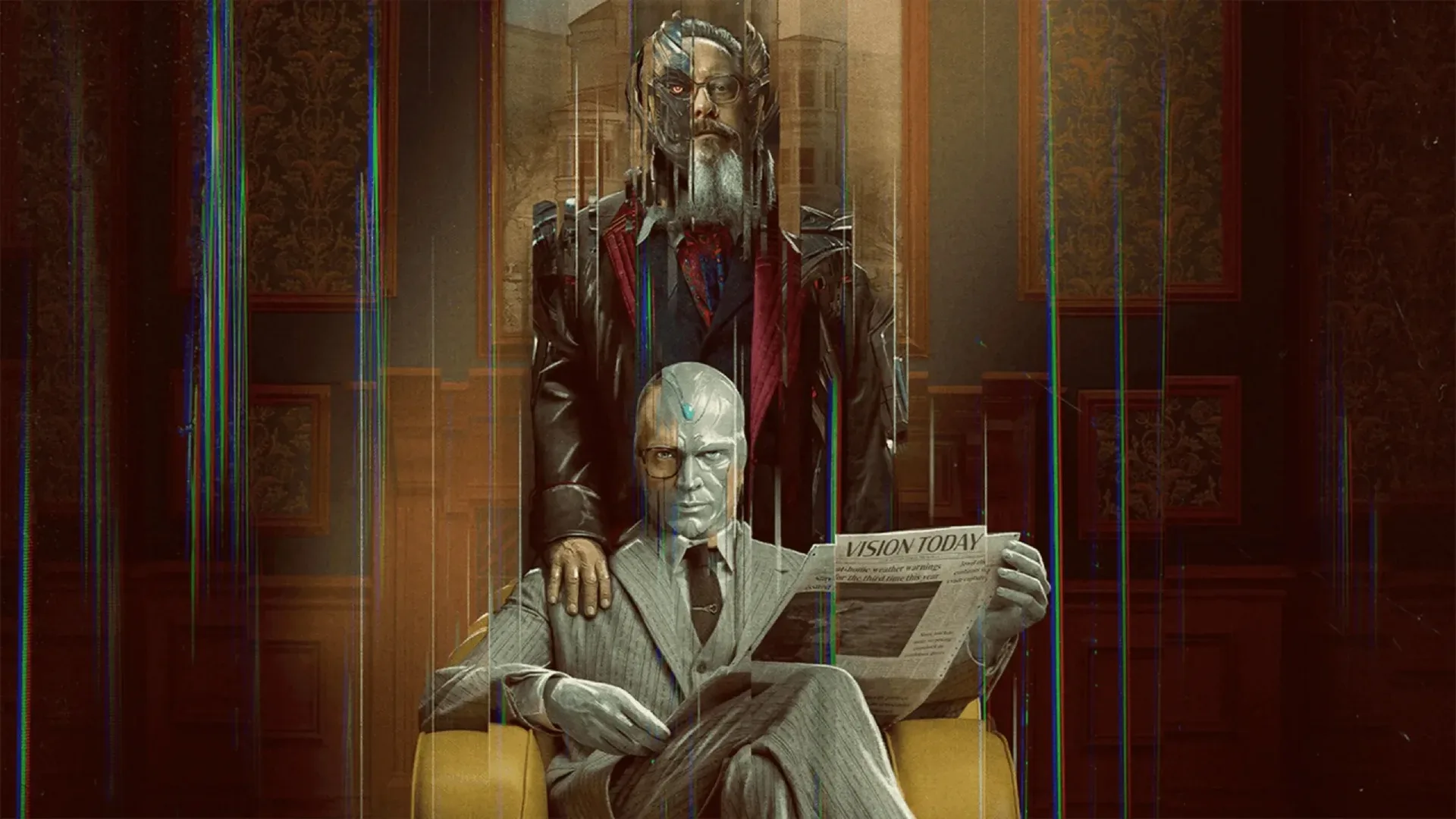
Minor spoilers for the first two episodes of VisionQuest follow.
Marvel’s sprawling continuity has often treated the past as a library of references: a place to retrieve a familiar face, a recognisable object, or a setup for a larger event. VisionQuest takes a more promising route in its opening two episodes. It treats continuity as baggage—personal, painful, and impossible to sort neatly. For White Vision, possessing someone else’s full history does not automatically mean possessing that person’s life. For Tommy, memories of a vanished family do not provide a home in the present. That shared problem gives the series a clear dramatic engine.
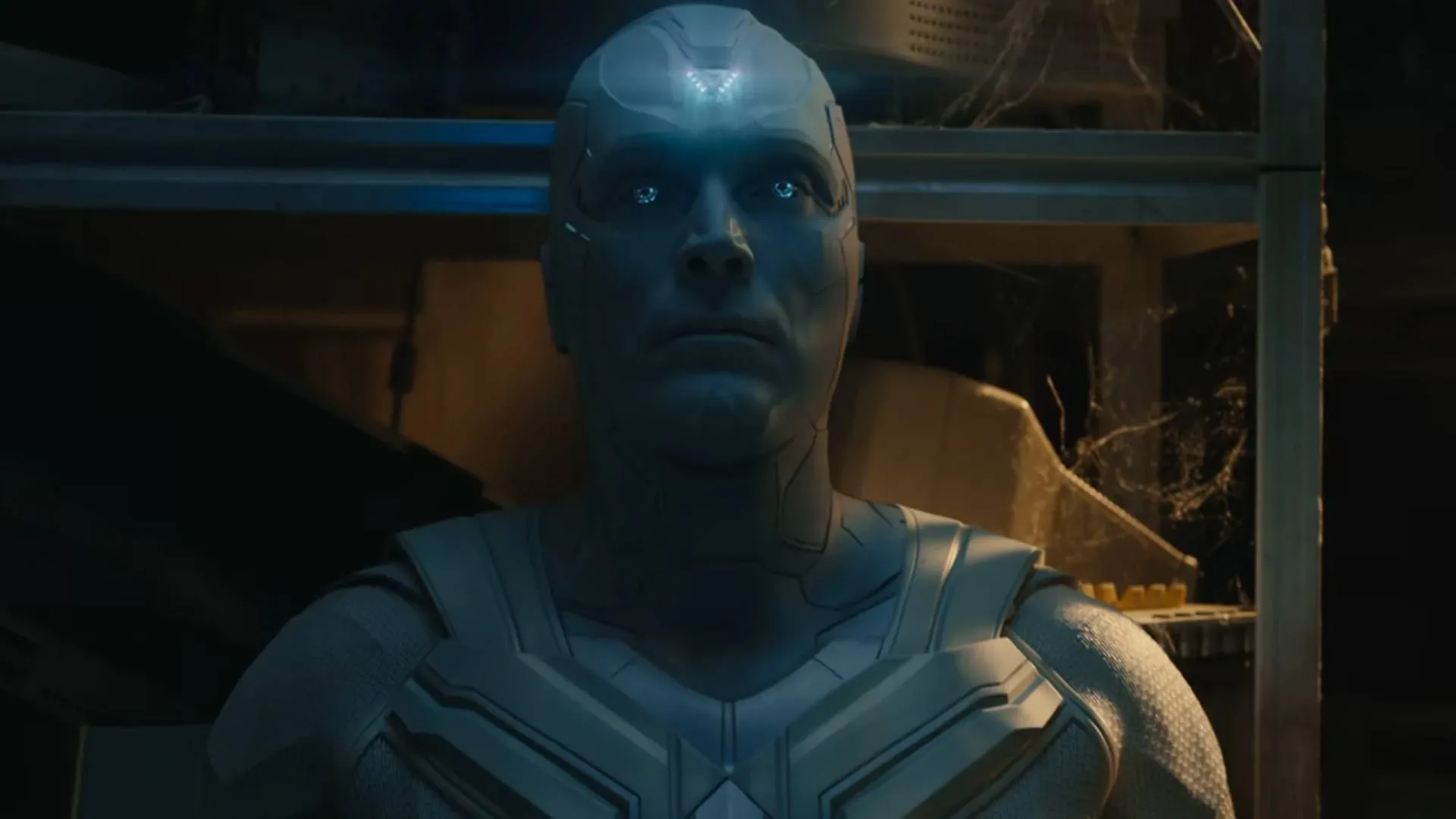
The Disney+ show is the third part of a connected run that began with WandaVision and continued in Agatha All Along. Its central figure is White Vision, the reconstructed version of Vision played by Paul Bettany. He has access to the original Vision’s memories, including events going back to Avengers: Age of Ultron, but does not feel emotionally connected to them. That distinction is not merely lore housekeeping. It is the series’ central question: if a person can recall every moment of another person’s existence without the feelings those moments produced, what exactly has been restored?
Memory is not the same thing as identity
VisionQuest’s early episodes build their drama around a difference that superhero stories frequently rush past. Memory is information: names, events, images, learned facts, and experiences a character can describe. Identity is more complicated. It includes the meaning a person assigns to those memories, the relationships they feel, and the choices they make because of them.
White Vision can account for the original Vision’s history, but he does not claim an automatic emotional inheritance. That makes him more than a replacement body with a familiar voice and power set. He is a character negotiating whether he has any right to call Wanda, Billy, and Tommy his family—or whether doing so would mean claiming a life that belonged to somebody else.
The idea is particularly effective because Vision’s history is already inseparable from questions of personhood. He is a synthezoid, an artificial being whose humanity has always been debated by other characters and audiences alike. VisionQuest does not need a new cosmic MacGuffin to make that premise matter. It instead asks whether a recreated being can be both continuous with the person he remembers and distinct from him.
That tension also keeps the show from turning White Vision into a simple return-to-status-quo device after WandaVision. The original Vision’s memories have not erased the gap between them. They have made that gap visible.
A mind palace becomes a family house
White Vision’s internal world provides the show’s most playful expression of its premise. Inside his processing system, he has built a house where AI figures from across MCU history appear in human-like form. Characters who largely existed as voices in headsets, support systems, or background technology are allowed to function as an onscreen ensemble. The device is cute on its surface, but it carries a pointed implication: even a character who doubts his own emotional claim to a family has created a place for one.
The house is essentially a mind palace, a fictionalised interior space used to make thought, memory, and computation visible. Rather than asking viewers to watch a character silently process data, the show lets that internal conflict take the shape of conversations among avatars. It is a useful technical-and-dramatic shortcut, translating artificial intelligence into a familiar domestic environment without pretending that the metaphor is literally a normal home.
The most consequential occupant is Ultron, again portrayed by James Spader. In the broadest possible human analogy, Ultron is Vision’s father figure: Vision originated from the same chain of creation, but has spent his existence resisting what Ultron represents. The relationship is especially uncomfortable for White Vision because he is already uncertain about which relationships are truly his. Ultron is part of the history in his head, yet he is also a history he would understandably prefer to discard.
VisionQuest makes that contradiction concrete. Ultron is not simply a past villain to be name-checked for audience recognition. He is a hostile presence embedded in the mental household, a manipulative and distant parent figure White Vision cannot comfortably live with but cannot easily remove. The series is not subtle about the metaphor, and it does not need to be. The image of an unwanted father causing trouble upstairs captures the show’s concern with inherited damage efficiently.
Tommy makes the question generational
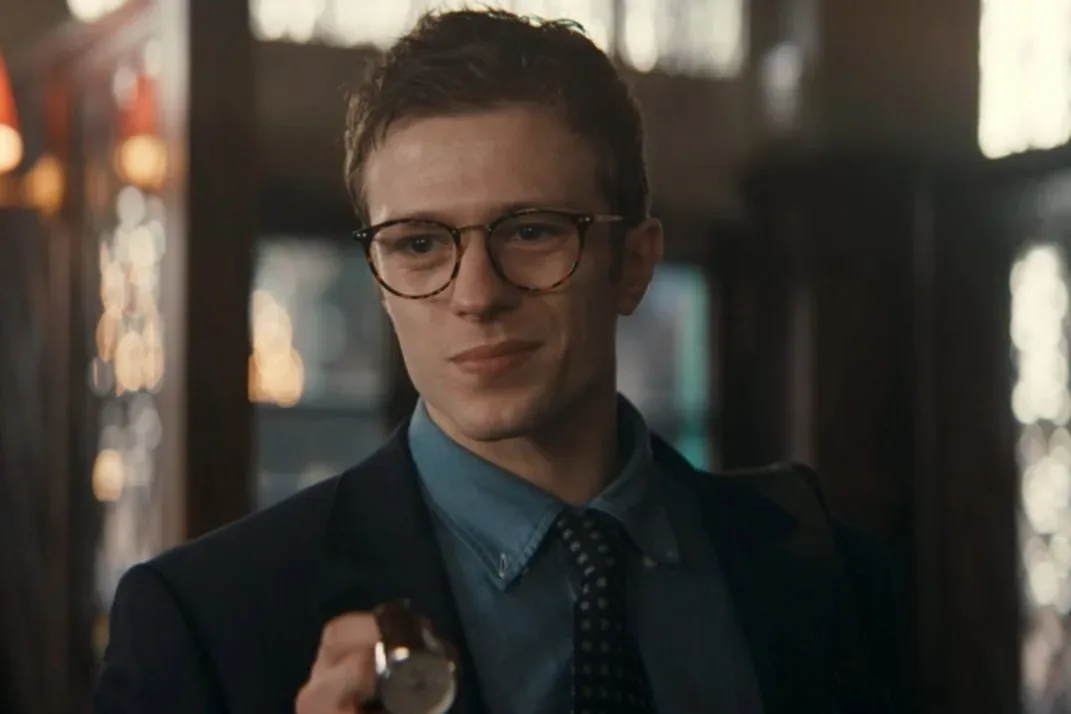
Tommy’s story broadens the show’s identity theme beyond White Vision. During Agatha All Along, Tommy—one of Wanda and Vision’s conjured sons—ended up in the body of Thomas Shepherd, a teenager living in London. He now carries conflicting lived experiences: the memories of a son from a suburban family that no longer exists, and the reality of a life without the support system his brother Billy found.
That contrast matters. Billy’s circumstances gave him a loving family in his new life, while Tommy lacks that stability. VisionQuest therefore avoids treating the boys’ survival as a tidy miracle with identical outcomes. A memory can offer a person an emotional anchor, but it can also sharpen their isolation when everyone and everything connected to it is gone.
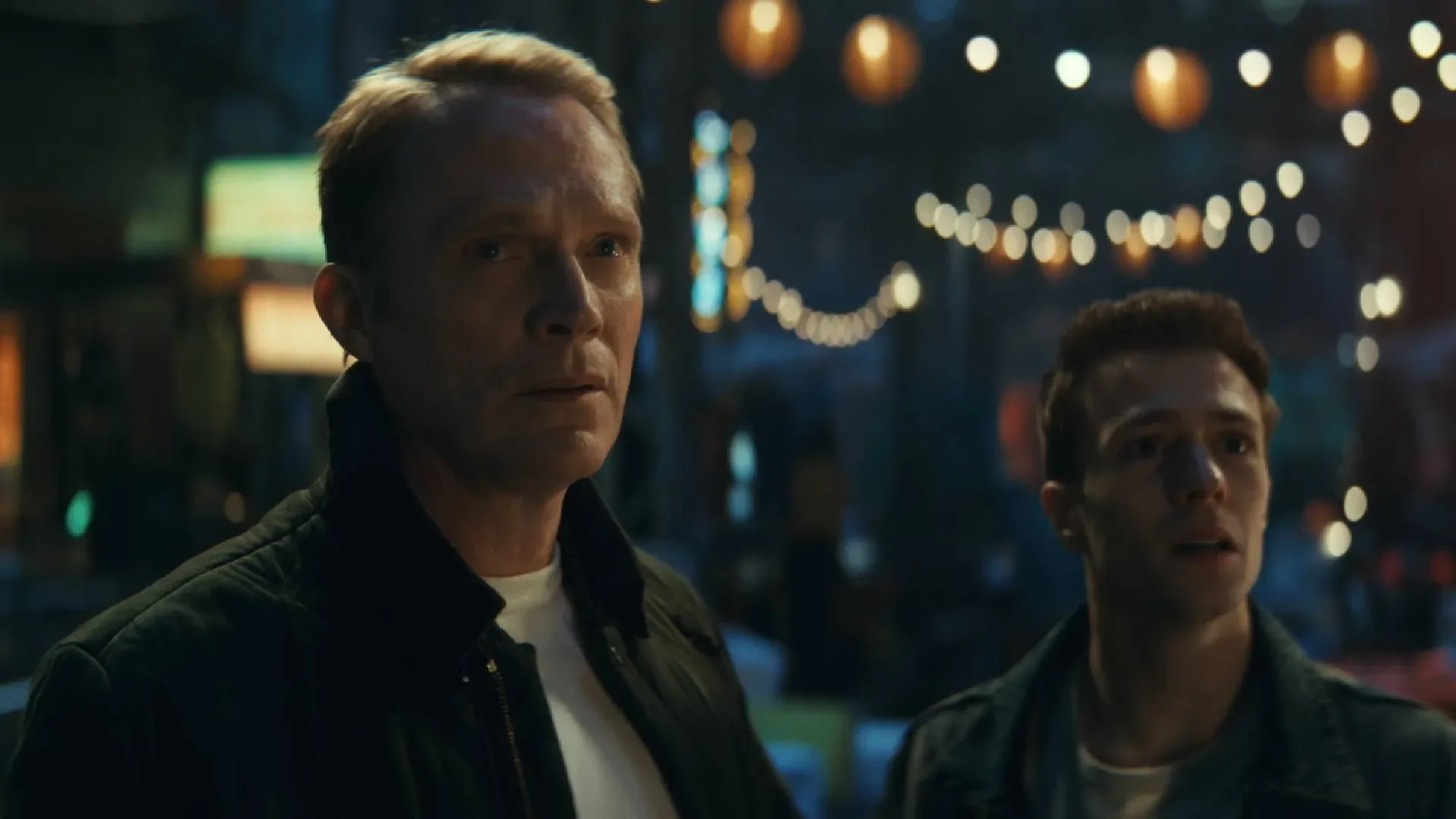
Tommy’s reunion with Vision at the close of the second episode is deliberately cautious. Neither character is ready to use the clean labels of father and son. Tommy’s description of Vision as his “something” is less definitive but more emotionally honest. It acknowledges a connection neither fully understands, without demanding that either immediately perform the version of family they remember.
There is a practical storytelling advantage to that restraint. The show has room to explore a relationship rather than simply declare it restored. Vision and Tommy can act to protect one another while still disagreeing about what they are to each other. That is far more compelling than treating genealogy, supernatural or otherwise, as an instant solution to grief.
The action is present, but the family conflict has more weight
The first two episodes also put White Vision and Tommy in the sights of Paladin, the bounty hunter played by Todd Stashwick. By the end of episode two, Vision, Tommy, and an Ultron projection escape together by car, leaving Paladin behind. Paladin has access to Vibranium bullets, yet the opening stretch has not fully established him as a persuasive threat against a metal-bodied former Avenger and a speedster.
That does not derail the show, because the pursuit is currently more valuable as pressure than as its main attraction. It keeps Vision and Tommy moving before they are emotionally prepared to be together, and it forces the story’s unusual family unit into close quarters. The chase has a functional purpose: it turns an abstract debate about identity into a series of immediate decisions about trust, protection, and belonging.
Still, the series will need to give Paladin greater dramatic definition if he is meant to remain a major obstacle. A villain does not necessarily need to overpower Vision physically, but the threat needs a sharper human or strategic dimension than simple pursuit. VisionQuest’s best material so far is intimate rather than destructive. Any external antagonist will work best if he exposes the fault lines already present in Vision and Tommy’s relationship.
Why this corner of Marvel’s television story feels coherent
WandaVision, which launched Marvel’s Disney+ initiative in 2021, stood out because it committed to a character-specific form and emotional subject: Wanda’s grief. Agatha All Along and VisionQuest are connected to that foundation, but neither needs to repeat the earlier show’s exact shape. Instead, the trilogy appears to be following consequences. Wanda’s family, once held together by an impossible reality, continues to exist in fragments that do not fit cleanly into the wider MCU.
That is what makes VisionQuest feel more purposeful than continuity for continuity’s sake. Familiar elements—Ultron, the original Vision’s memories, Wanda and Vision’s sons, the aftermath of Doctor Strange in the Multiverse of Madness—are not being assembled merely to signal that the viewer has done the homework. Each one bears directly on the same question: can people define themselves after the foundations of their lives have been removed?
It is also a useful reminder that shared-universe fiction is strongest when connections create consequences rather than obligations. A prior film or series should matter because it changed a character, not only because it introduced an object or a future crossover possibility. Other comic-book stories face the same balancing act, including the publishing and screen worlds around the latest DC comic-book slate: continuity has real value when it gives a new story a meaningful starting point.
What to watch as new episodes arrive
The opening chapters establish several questions more important than whether White Vision can win the next fight. Can he accept the original Vision’s memories without treating himself as a lesser copy? Can Tommy build a life that is not defined entirely by loss? And can Ultron’s reappearance function as more than a dangerous familiar face, becoming a sustained challenge to Vision’s idea of what he inherited?
The answers will determine whether VisionQuest can maintain its early promise. Its strongest asset is not simply the return of Paul Bettany or James Spader, nor the prospect of MCU connections. It is the disciplined decision to put a specific family at the center of a massive fictional universe and let their unresolved identities drive the plot.
New episodes of VisionQuest arrive on Disney+ Tuesdays at 9 p.m. Eastern.