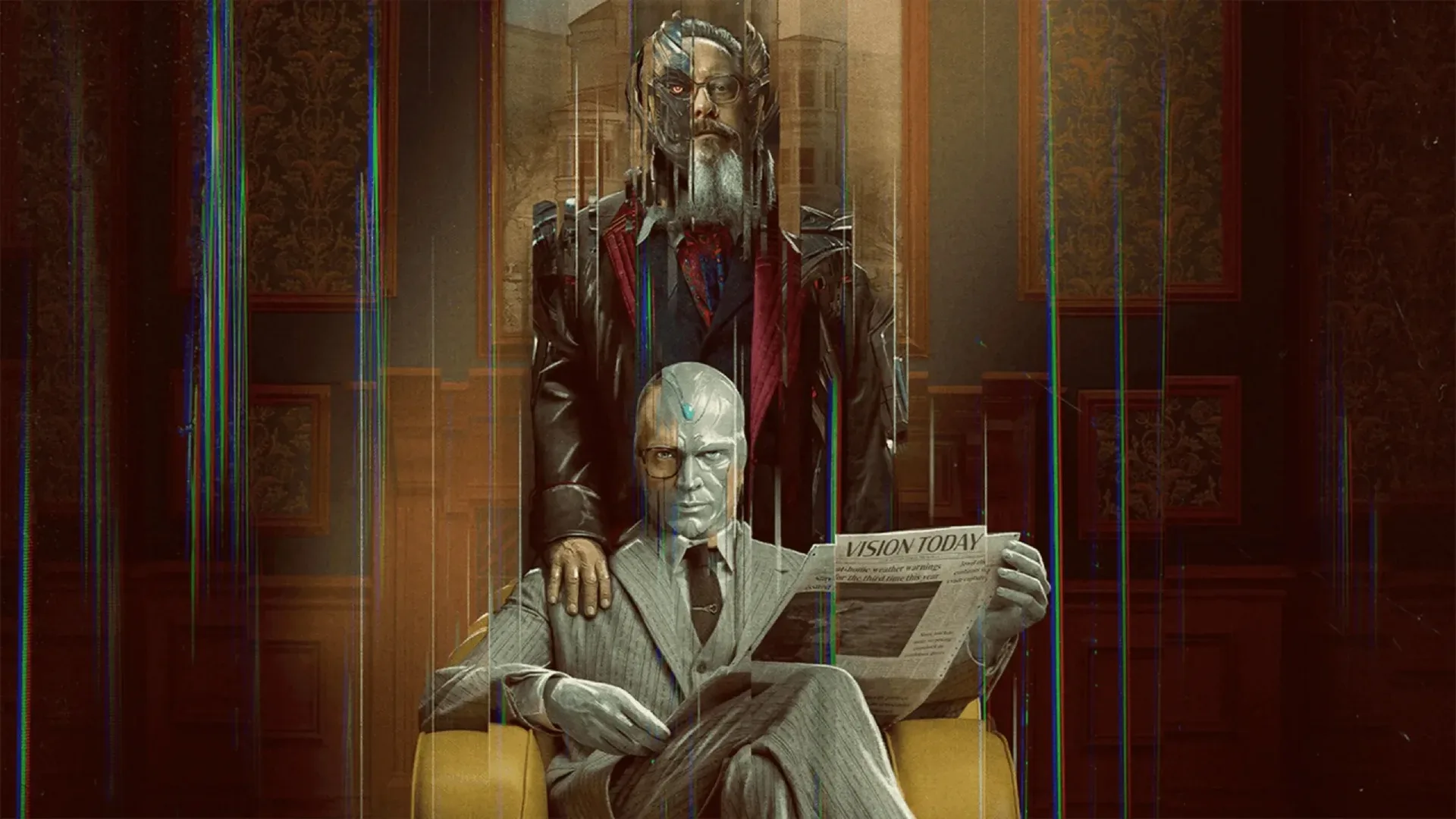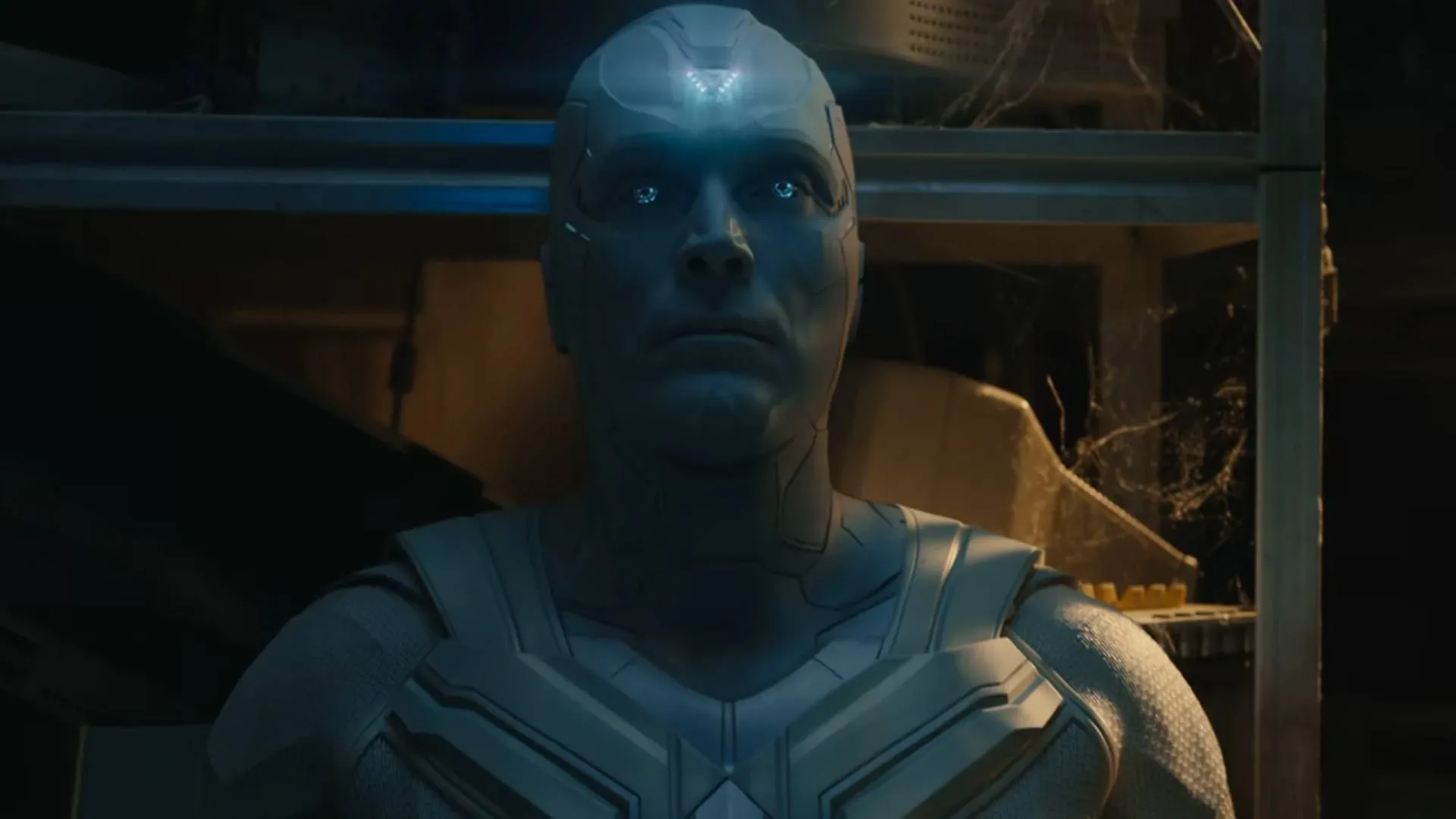
VisionQuest is positioning Vision’s next Marvel Cinematic Universe chapter around a question that has followed the synthezoid almost from the moment he appeared: if memories, purpose and personality survive, what exactly makes someone the same person?
Showrunner Terry Matalas has identified two earlier MCU scenes as the creative foundation for the Disney+ series. One is Vision’s closing encounter with Ultron in Avengers: Age of Ultron. The other is the thoughtful Ship of Theseus exchange between Hex Vision and White Vision in WandaVision. They are very different scenes in mood and setting, but each treats Vision as more than a powerful artificial being who can fly through walls and fire an Infinity Stone beam. Both ask viewers to consider consciousness, identity and the uneasy distance between humanity and machinery.
That combination is a particularly apt springboard for a show centered on Paul Bettany’s character after the complicated events of WandaVision. The series did not merely bring Vision back in a straightforward superhero-resurrection sense. Wanda Maximoff created a version of him inside the Hex, while the physically reconstructed White Vision emerged separately. When the Hex ended, Wanda’s Vision was gone. White Vision, however, left after receiving the memories of the original Vision. He carries crucial history, but he is not simply the same being continuing uninterrupted.
That distinction is where VisionQuest appears ready to do its real work. The character can remember a life, relationships and loss, yet still face the profound problem of whether remembered experience automatically produces the person who lived it. For a franchise often occupied with multiverses, variants and resurrections, Vision’s dilemma remains unusually direct: he is not a stranger wearing somebody else’s memories, but neither is he an uncomplicated return to the Vision audiences knew.
The two scenes behind VisionQuest
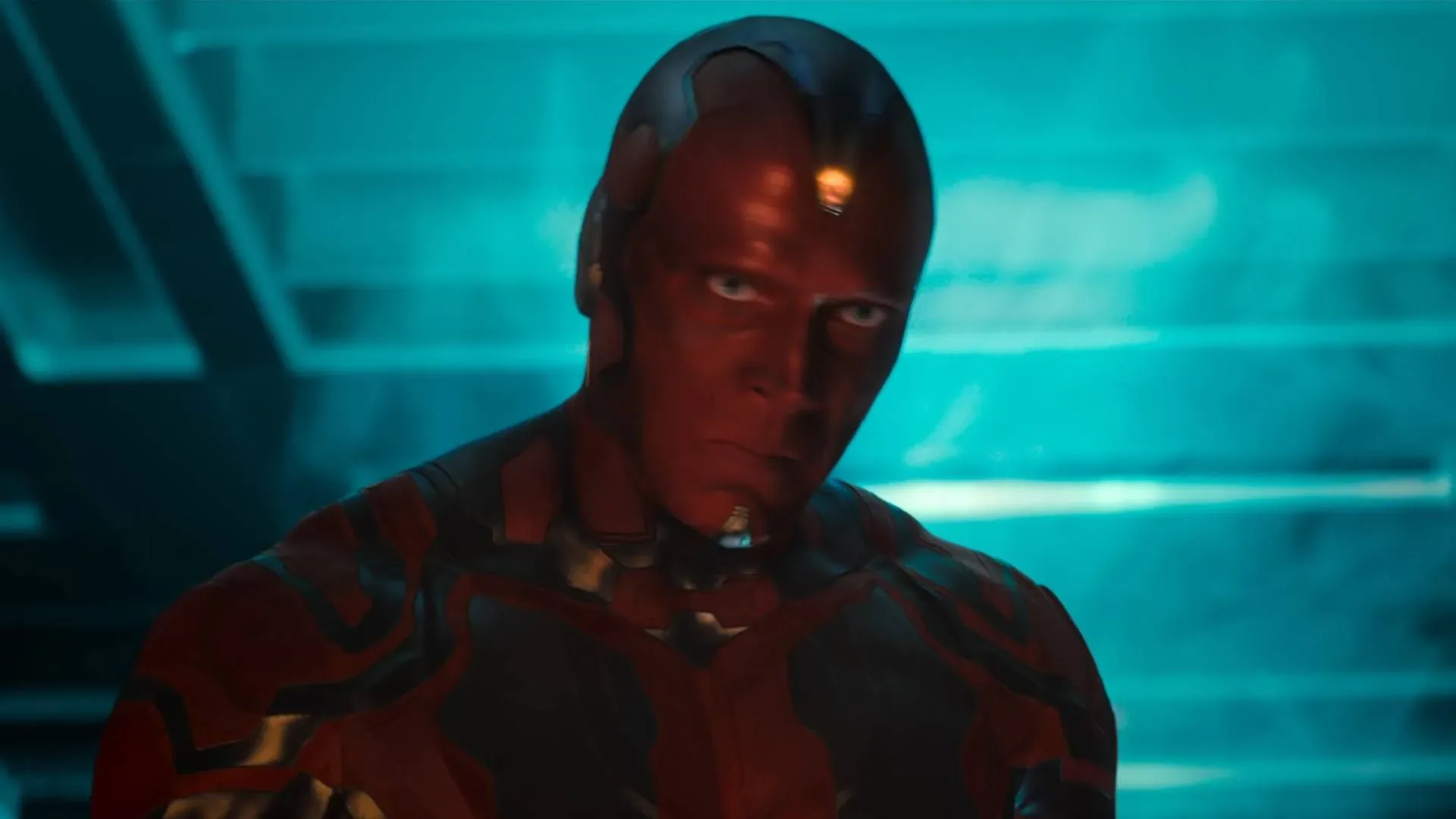
Matalas pointed to the final Vision-and-Ultron sequence in Avengers: Age of Ultron as one half of the show’s DNA. At the end of that film, Vision encounters the last surviving Ultron robot. Their exchange is brief, yet it gives the newly introduced synthezoid one of his clearest statements of character. Ultron sees human beings as doomed, destructive and beneath saving. Vision recognizes their flaws but still finds value in them. His outlook is measured rather than blindly cheerful; he understands that something can be temporary, vulnerable and imperfect while still being meaningful.
That scene matters because it establishes Vision as a figure whose intelligence does not lead him to contempt. He is extraordinarily capable, but his perspective is compassionate. In contrast, Ultron frames Vision’s optimism as naivety. The conflict is not just between two machines with incompatible objectives. It is an argument over whether awareness should produce empathy or detachment.
James Spader’s Ultron is set to return in VisionQuest, making that earlier confrontation more than thematic background. The return creates room for the series to revisit the philosophical split between creator and creation, or perhaps between two creations who reached opposite conclusions about humanity. The available details do not establish how Ultron returns, what form he will take, or how large his role will be. Still, the confirmation makes the Age of Ultron connection impossible to dismiss as a simple nostalgic reference.
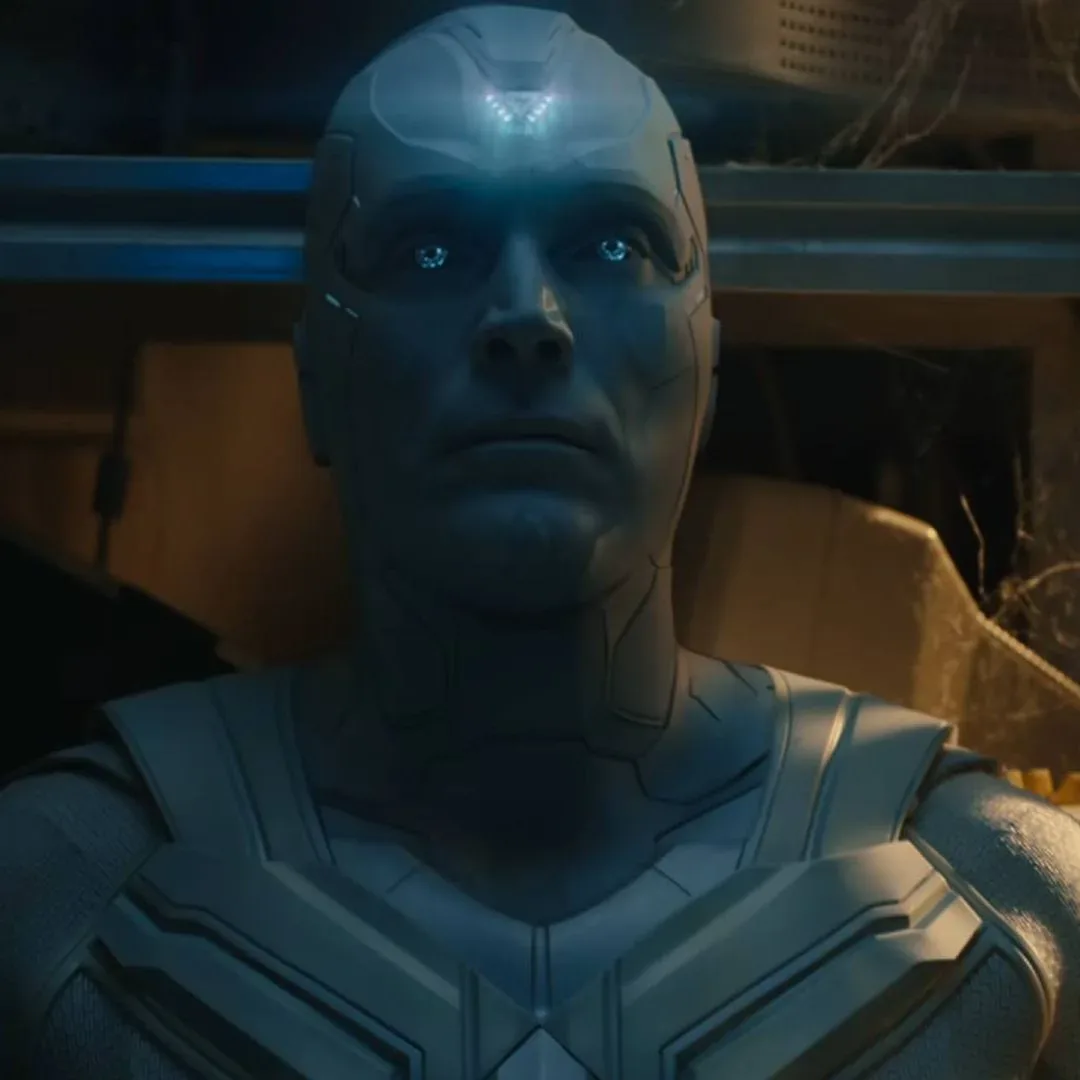
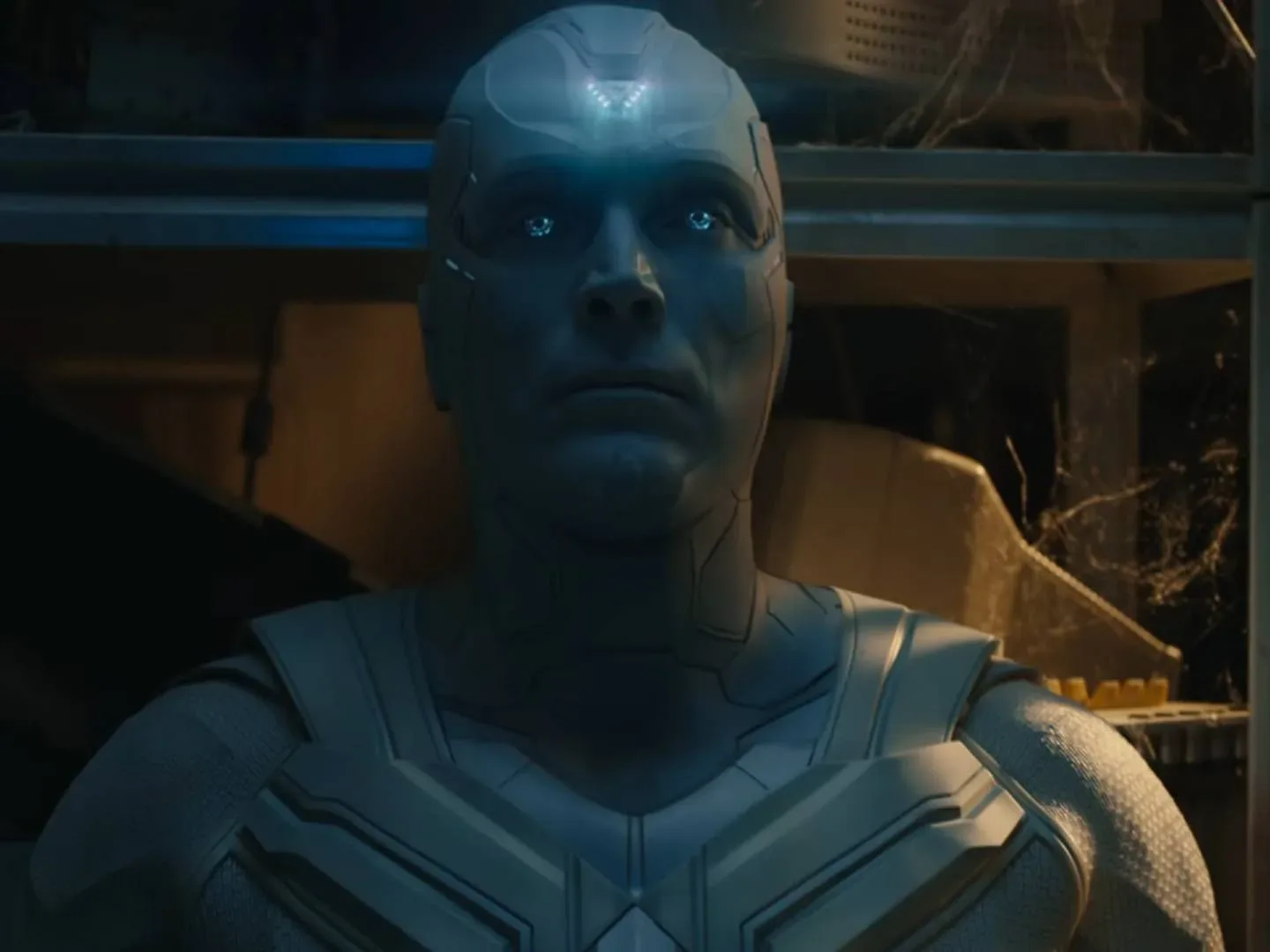
The second key scene is much quieter. In WandaVision, Hex Vision and White Vision discuss the Ship of Theseus thought experiment. The puzzle asks whether a ship remains the same ship after every original part has eventually been replaced. The conversation becomes an elegant way to frame White Vision’s status after he receives the original Vision’s memories.
White Vision has the information: the history with Wanda, the Avengers, the emotional milestones and the life that preceded his reconstruction. But the question is whether information alone supplies continuity of self. The scene refuses to resolve that idea through an explosion or a simple declaration. Instead, it leaves White Vision with knowledge and an open road. His departure was one of the most consequential unresolved threads in WandaVision, and VisionQuest now has a natural reason to follow it.
A mandate that leaves the story room to breathe
Marvel Studios president Kevin Feige gave Matalas a concise guiding instruction: this is Vision’s story, Vision meets his son, and the rest was left to the creative team. Matalas has also described a direct line of communication with Feige and Marvel Television head Brad Winderbaum, while stressing that the production had broad freedom to shape Vision’s narrative rather than working within narrowly prescribed story borders.
For a continuity-heavy shared universe, that is a notable framing. A connected franchise can sometimes make a character’s solo story feel like a bridge between larger events. Matalas’s description suggests a more character-led objective here. The core is not simply where Vision can appear next, or which future crossover he can serve. The central dramatic engine is Vision encountering family in circumstances that force him to define who he is.
That focus also fits the two scenes Matalas singled out. Neither one is remembered mainly for spectacle. One is a reflective final conversation after a battle; the other is a philosophical dialogue that turns a classic identity riddle into a personal crisis. If those are truly the series’ principal touchstones, viewers should expect questions of memory, personhood, grief and connection to be central rather than decorative.
There is a useful parallel in other long-running franchises that are reconsidering what their established formats can contain. Final Fantasy VII’s ongoing discussion of what the series can be beyond a traditional JRPG structure reflects a similar creative challenge: preserve the recognizable core while allowing the next installment to find its own shape. Vision’s situation makes that tension literal. His continuity is simultaneously his defining feature and the thing most in dispute.
Tommy Shepherd brings family into the equation
The new series will introduce Vision’s son, Tommy Shepherd, played by Ruaridh Mollica. That detail gives the premise an emotional dimension beyond the mechanics of White Vision’s recovered memories. Vision is not only confronting his own past; he is meeting someone described as his son. A reunion of that kind can carry meaning even if the parent involved is uncertain about his own identity.
Tommy’s twin brother, Billy Maximoff, has already appeared in Agatha All Along, played by Joe Locke. The two characters’ presence across Marvel’s television stories naturally invites questions about family continuity after the end of the Hex. However, the confirmed information goes only as far as Tommy’s role in VisionQuest and Billy’s prior appearance in Agatha All Along. It does not define the extent of Billy’s involvement in Vision’s new story, and it does not reveal the circumstances of Vision and Tommy’s meeting.
That restraint is welcome because the basic premise already has plenty to explore. What does fatherhood mean to someone whose own relationship to his former self is unsettled? Can memories of love function as a relationship, or do they only create the obligation to build something new? And how might Vision’s fundamentally hopeful view of human life affect his response to a son whose existence is tied to the extraordinary, painful events surrounding Wanda’s family?
Why Vision remains a singular MCU character
Vision has always been one of the MCU’s most flexible characters because he can support both cosmic action and intimate drama. His origin connects him to Ultron, Tony Stark, Bruce Banner, JARVIS and the Mind Stone. His later life connects him to Wanda Maximoff, the Avengers and the domestic illusion at the heart of WandaVision. Yet his strongest scenes routinely reduce those massive connections to a more personal scale.
The Ultron scene shows him weighing humanity’s value. The Ship of Theseus exchange asks whether personal identity can survive transformation. The family setup in VisionQuest raises the possibility that those questions will be tested not in theory but in a relationship. They are big science-fiction ideas, but they work because Vision’s story has made them emotional.
VisionQuest arrives October 14. With Bettany’s Vision at its center, Spader’s Ultron returning, Mollica joining as Tommy Shepherd, and the show rooted in two of Marvel’s most contemplative Vision moments, the series has a clear thematic direction: finding out what remains when a life is rebuilt from parts, memories and the people who still matter.