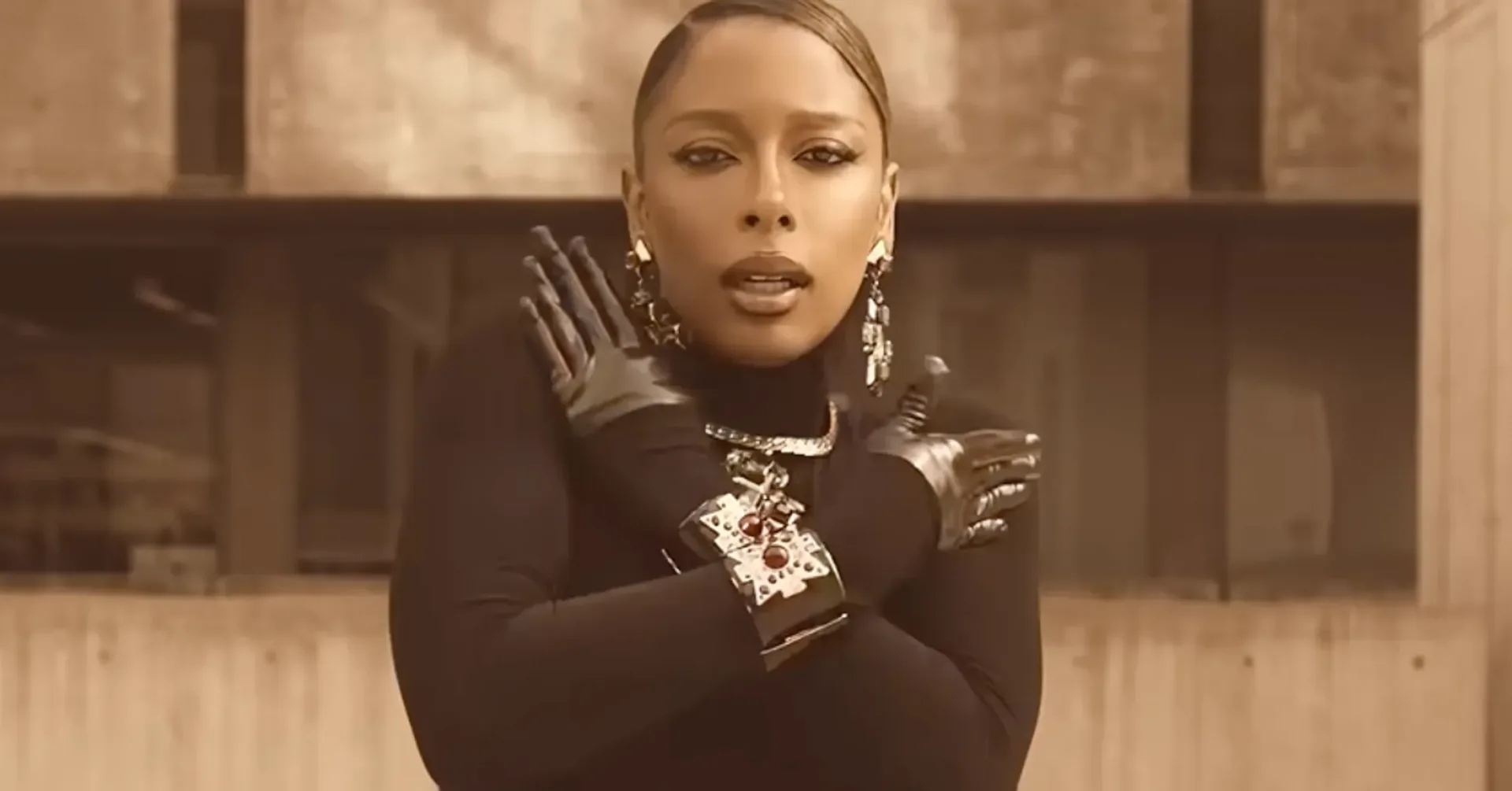
Victoria Monét has described a pivotal early-career lesson in a way that will sound familiar to anybody who has watched a great supporting player suddenly become the name on the marquee: get in the room, make yourself essential, and be ready when the moment asks for more.
Speaking on The Jennifer Hudson Show, Monét recalled that Nas was among the artists who helped her build the confidence to make the move from songwriter to recording artist. Her account centers on a contribution to Nas’ Life Is Good album, followed by an opportunity to perform the song with him on The Arsenio Hall Show.
The important part is not simply that a major artist opened a door. Monét’s story is also about the deliberate route she chose before that door appeared. She had been studying how an artist could be recognized through collaboration and then use that recognition as momentum for an individual career. For her, the practical focus was writing and singing hooks strongly enough that collaborators would want to retain her voice on the finished record.
A route built around the hook
In pop and rap music, a hook is the memorable musical or lyrical passage designed to pull listeners back in. It may be a chorus, a repeated vocal phrase, a melodic refrain or another immediately recognizable centerpiece. It is often a small portion of a track, but it can carry an outsized share of the song’s identity.
That made hooks a smart area in which to become indispensable. A writer can contribute to a song behind the scenes, but a vocalist whose performance remains on a record is also heard directly by the audience. That distinction matters. It turns a credit into an audible calling card: listeners encounter not just the construction of the song, but the person delivering one of its most repeatable moments.
Monét said she had looked at Bruno Mars’ collaboration with B.o.B on “Beautiful Girls” as an example of the broader approach she wanted to follow. Her takeaway was not that another artist’s career could be copied step for step. It was that featured work could make a performer visible, provided the feature is compelling enough to leave an impression.
She described becoming someone industry figures called when they needed hooks. Nas became one of those collaborators. Monét said she went into the studio intent on singing the material as well as she could, and that he kept her on Life Is Good. She regards that placement as her first major breakthrough.
Why the Nas moment carried more weight
A placement on an album is meaningful on its own, but the live performance was the extra signal in Monét’s account. Nas brought her onto The Arsenio Hall Show to perform the song. That put her contribution in a format where a featured vocalist cannot stay invisible: the audience sees the artist, hears the voice in real time and associates both with the performance.
Related coverage includes Victoria Monét Says Nas Helped Give Her the Confidence to Become an Artist.
For an emerging artist, that type of support can do two things at once. Externally, it introduces a performer to viewers who may not know the name behind a hook. Internally, it provides validation from a collaborator whose judgment carries real stature. Monét specifically framed the encouragement she received from artists along the way as important to building her confidence.
“Around the industry, I became like the girl people would call for hooks,” Monét said, explaining how Nas became one of the artists who sought out her work.
That confidence element is worth separating from the more easily measurable milestone of appearing on a high-profile album. A career credit can improve a résumé. Confidence changes what an artist believes they can attempt next. Monét’s recollection suggests that Nas’ backing helped make the shift from a plan into a possibility she could trust.
It is also a reminder that collaboration is not merely transactional. A guest contribution can be one day in a studio; taking that contributor to a televised performance communicates a more direct endorsement. Monét does not present the experience as a solo miracle or deny the role of other supportive artists. Instead, she places Nas within a wider pattern of people seeing potential in her before she had fully stepped into her own artist identity.
The strategy behind being memorable without being the headline
There is a useful creative principle inside Monét’s explanation. Aspiring performers are often told to stand out, but “stand out” can sound abstract until it becomes a specific job someone needs done. Monét’s chosen job was a difficult one: deliver a hook that is polished, distinctive and useful enough that the primary artist wants it on the finished release.
That requires more than writing a catchy line. A hook vocalist has to understand the central artist’s record, find the right tone for it and make a concise musical section feel unavoidable rather than merely decorative. There is little room to hide. If the hook does not connect, it is usually obvious; if it does, it can become the part a listener remembers first.
Monét’s story therefore lands as a case for purposeful collaboration rather than background anonymity. The goal was not simply to accumulate credits. It was to make each contribution strong enough to build recognition and, ultimately, create an opening for her own work.
That theme of creative evolution has surfaced in other recent music conversations, including a discussion of Questlove’s views on vulnerability and reinvention. In Monét’s case, reinvention did not mean abandoning songwriting. It meant using the skills and relationships developed there as a platform for another role.
Validation is not the same as permission
There is an important nuance to Monét’s retelling. Nas’ support did not invent the ambition for her. By the time she worked with him, she had already formed a strategy, studied examples and put herself in position to be called for hooks. The validation mattered because it met preparation.
That is different from treating an endorsement as permission that must arrive before an artist begins. In the sequence Monét described, she did the work first: learning the craft, pursuing collaborations and aiming to deliver at a level that would keep her voice on a record. Encouragement from established artists then strengthened her belief that the larger leap was possible.
It is a grounded description of how career momentum can work. Major opportunities may appear as a feature, a writing session or a live performance rather than a dramatic debut. What looks from the outside like one breakthrough is often built from a chain of smaller choices: specialize, contribute, be memorable and recognize when the supporting role has prepared you to lead.
Beyond the studio
Monét also discussed interests outside her music career. She recently graduated from culinary school and has taken up ballroom dancing, working with a coach named Leah on posture and technique.
Those pursuits do not need to be treated as a career detour to be meaningful. Culinary training and ballroom instruction both center on discipline, repetition and attention to detail, even though they demand different forms of expression from songwriting or singing. Monét’s comments present an artist continuing to learn new crafts while reflecting on the early support that helped her claim space in her primary one.
The central takeaway from her Nas story is not that there is one universal blueprint for breaking through. It is more specific: build a contribution people cannot ignore, then understand the value of the people who recognize it. For Monét, a hook-writing strategy created the opportunity, Nas made room for her voice on Life Is Good, and a live performance helped turn a valuable feature into confidence she could carry forward.