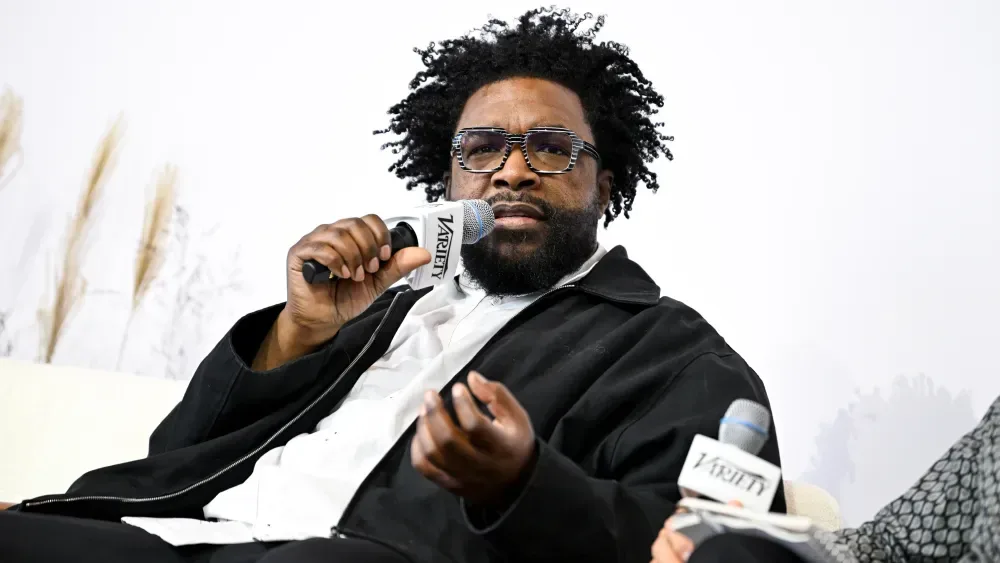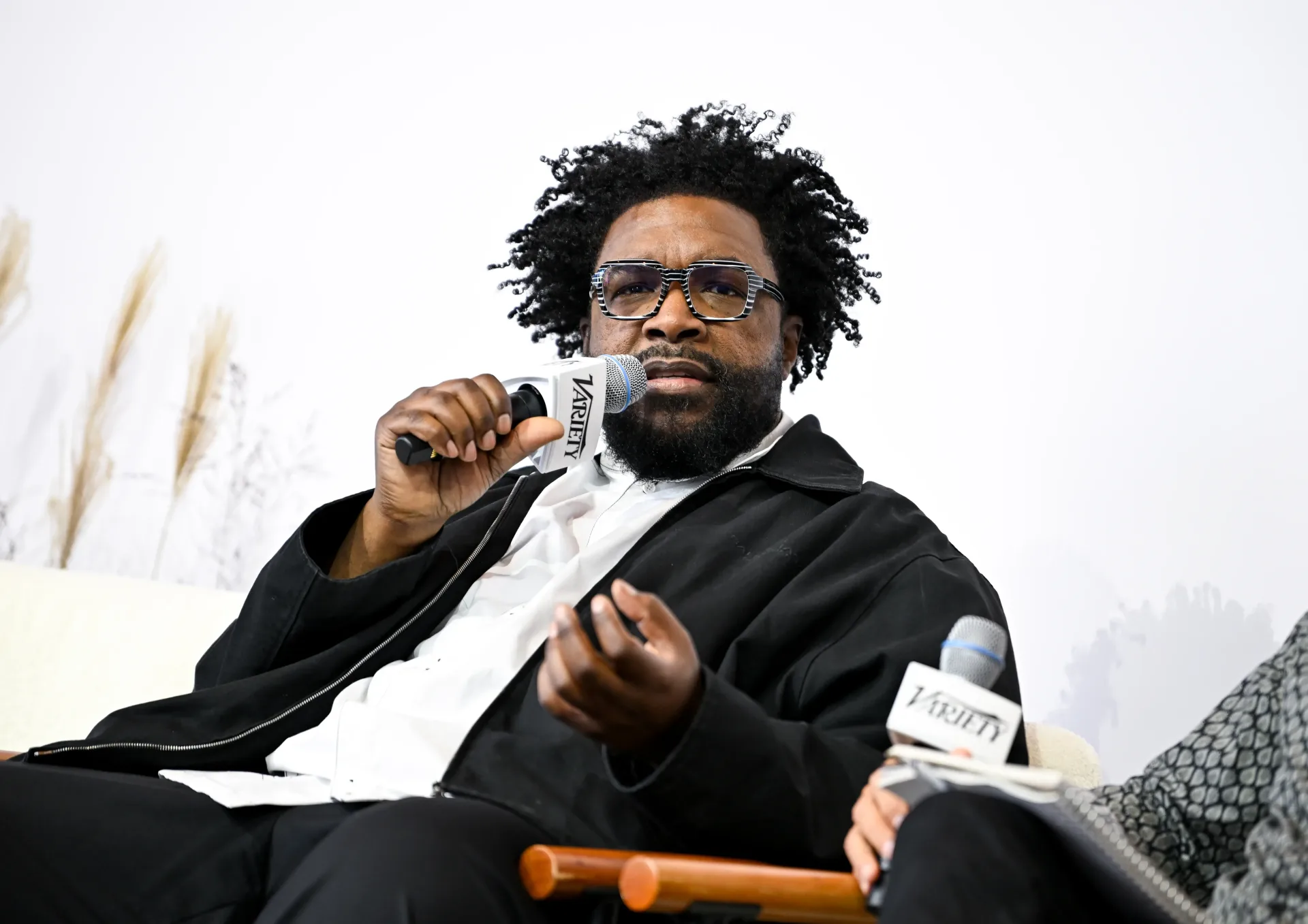
Questlove’s career is difficult to flatten into a single job title. He is the frontman of The Roots, a long-running member of the house band on The Tonight Show Starring Jimmy Fallon, a podcast host, author of eight books, NYU adjunct professor and a producer on the Hamilton cast album. Since 2020, he has added documentary director to that list, completing four films despite initially believing the role belonged to somebody else.
That reluctance is central to the way he now describes his work. More than 30 years into his career, Questlove has framed change not as a detour from music, but as an ongoing act of learning. He has called this current period “Questlove 3.0,” a joking label with a serious point underneath it: an established creative identity can remain unfinished.
His recent remarks tie together several ideas that can be easy to discuss separately but are far harder to put into practice: vulnerability, creative ambition, historical storytelling, joy, friendship and community. In Questlove’s view, they are connected. The work is not only to make something technically strong or culturally important. It is also to stay emotionally available enough to recognize when a new form of expression is asking for your voice.
From resisting documentaries to finding a storytelling practice
Questlove said he did not initially see himself as the person to direct documentaries. Before his first film, he did not think of himself as a storyteller and looked for what he considered a “real storyteller.” The people encouraging him disagreed. Once he accepted that his own perspective could carry a film, directing became a passion rather than an obligation.
That is a meaningful distinction. A documentary is a nonfiction film, but it is not simply a container for facts. It needs a point of view: choices about which experiences to foreground, how a period is framed, where the emotional arc lies and what question the viewer should carry away. Questlove’s musical background gives him an established relationship with artists, cultural memory and performance. His comments suggest that the transition to film was not about abandoning those instincts; it was about applying them in a format where history, sound and emotion can meet differently.
His first documentary, Summer of Soul (…or, When the Revolution Could Not Be Televised), arrived in 2021 and focused on the 1969 Harlem Cultural Festival. Questlove noted that its release followed the initial lockdown and protests after the murder of George Floyd. He did not reduce the film’s response to one factor, but he stressed the importance of timing. People may have come to the film with curiosity, he said, and discovered the importance of celebrating joy.
That emphasis is worth sitting with. Public conversations about historical material often focus on trauma, conflict or omission, all of which can be necessary to address. Questlove’s point does not dismiss any of that. Instead, it makes room for joy as something historically meaningful in its own right. Celebration can document survival, imagination, excellence and togetherness. It can show a community as more than the hardship imposed upon it.
The next project, Sly Lives! (aka The Burden of Black Genius), turned toward a different concern: the tendency Questlove has noticed for Black creatives to self-sabotage after success. His Earth, Wind & Fire film, Earth, Wind & Fire (To Be Celestial vs That’s the Weight of the World), released in June, was built with a more openly aspirational aim. Questlove said he wanted to make a film that would allow people to focus on their dreams.
These projects are not presented as interchangeable music biographies. The available details point to distinct emotional questions: rediscovering joy, examining what success can demand from artists, and considering aspiration through Earth, Wind & Fire and founder Maurice White. That is also how Questlove describes his larger approach: history may draw an audience in, but the film should give viewers a way to reckon with their own present.
Earth, Wind & Fire and a new creative reference point
While making the Earth, Wind & Fire documentary, Questlove read many of the books Maurice White had read during the band’s formative period. The experience influenced his own approach to creating. Rather than treating research as a technical step completed before production, he presents it as something porous: entering the intellectual world around an artist can alter the director’s thinking in the here and now.
The film’s long title pairs celestial possibility with weight, a tension that fits Questlove’s stated reason for making it. Dreams are not separate from difficulty; they can be ways people respond to it. The documentary explores both the band’s career and White’s, placing an individual founder and a collective musical project in the same frame.
Questlove has said that Prince would have been his “North Star” when he first entered the industry. A North Star in this context is a guiding ideal rather than a literal destination: a figure, value or artistic standard used to orient decisions. His present comments, however, describe a creator still absorbing new influences. The lingering “residue” of the Earth, Wind & Fire project has left him feeling like a new artist.
That is a useful counterpoint to the expectation that experience should eventually harden into certainty. Questlove is not describing reinvention as throwing away the earlier versions of himself. “Questlove 3.0” acknowledges continuity while allowing for change. The practical implication for artists and audiences is modest but valuable: longevity does not have to mean repeating a familiar template. It can mean remaining teachable after a career has already earned public recognition.
That lesson has relevance beyond music and film. Programs intended to expand young people’s creative opportunities, including Creative Labs for young adults in the UK, place access and skill-building at the center of creative development. Questlove’s experience speaks to another side of that process: permission to see oneself as capable of pursuing a discipline that initially feels outside one’s lane.
Vulnerability is not the opposite of craft
Questlove’s clearest challenge was directed at a familiar posture of artistic distance. He recalled the “too cool for school” attitude associated with artists including Miles Davis and recognized elements of it in his own work. He described that stance as a way of protecting vulnerability.
By vulnerability, he is not arguing that every private feeling must be made public. In a creative context, it can mean accepting emotional risk: admitting uncertainty, allowing sincerity into the work, being willing to fail, or resisting the impulse to hide behind detachment. It is especially notable that Questlove places this concern in politics as well as creativity. He warned that people must learn what emotions are and how to use vulnerability, rather than allowing emotional avoidance to intensify larger problems.
There is a difference between emotional openness and carelessness. The former can make collaboration and artistic expression more honest; the latter can ignore boundaries or consequences. Questlove’s comments are best understood as a case against reflexive coolness, not an argument against discipline. His own body of work makes that distinction plain. Directing, producing, performing, teaching, writing and curating all require sustained structure. Vulnerability, in this framing, is what stops structure from becoming a shield against feeling.
“I had to do a lot of work to realize that — I know it’s cliché — I gotta be the change I want to be.”
The statement is personal, but it also explains why his move into directing matters. He was opposed to doing it, then did the work needed to understand why he was resisting it. That sequence is more useful than a simplistic message to “follow your dreams.” It recognizes that creative growth can involve skepticism, self-doubt and resistance before it turns into a meaningful practice.
The Roots’ community is part of the work
Questlove’s filmmaking has expanded, but it has not displaced music. The Roots Picnic held its 18th edition in May, with Jay-Z headlining. Questlove stressed that the event’s growth has not become an excuse for automatic branding. The festival is curated, The Roots perform with some of the acts, and the goal is for people to feel a sense of community.
Curation means making deliberate selections and arranging them into a purposeful experience. In a festival setting, it goes beyond booking recognizable names. Questlove’s description suggests an active role in shaping connections between performers and the audience, with the band’s participation part of what separates the event from a simple sequence of appearances.
The same spirit appears in his description of The Roots’ work on The Tonight Show. The band provides live walk-up music for guests. Some celebrities submit entrance-song requests, but Questlove believes the show’s magic comes from his own choice. A walk-on song is a small part of a television episode, yet it can quickly communicate tone, playfulness or a reference tailored to the person entering the stage. It is another compact form of curation: using musical knowledge to create a moment of recognition before a guest speaks.
There is also a practical foundation beneath the late-night role. Questlove said the show gives band members the ability to be present with their families. For an industry that often romanticizes constant movement and availability, that detail matters. Stability is not always portrayed as glamorous, but it can make long-term artistic relationships possible.
The Roots have now been together for roughly 35 years, and Questlove said the members remain best friends—still silly with one another in the way they were in high school. He compared that span with the Beatles’ seven-year run before breaking up, not to diminish another group’s legacy but to underline how unusual and meaningful continued friendship can be. His conclusion was direct: if collaborators are not friends, the rest of it is for naught.
Why the through line matters
It would be easy to read Questlove’s many roles as a list of accomplishments. The more revealing through line is the way he talks about them. The documentaries are not merely a prestige extension of a music career; they are a new storytelling method that asks audiences to look at the present through history. The festival is not merely an annual event; it is an exercise in curation and communal feeling. The late-night job is not merely exposure; it offers an enduring band relationship and family time. Vulnerability is not merely a theme; it is the condition that lets a veteran artist keep becoming a beginner.
Questlove’s creative model is not built around claiming mastery in every area. It is built around attention: to the books that shaped Maurice White, to the emotional needs behind coolness, to the historical moment into which a film arrives, and to the people who have stayed alongside him for decades. That kind of attention does not guarantee that change will feel comfortable. His own early resistance to documentary work makes that clear. But it can make change productive, grounded and human.