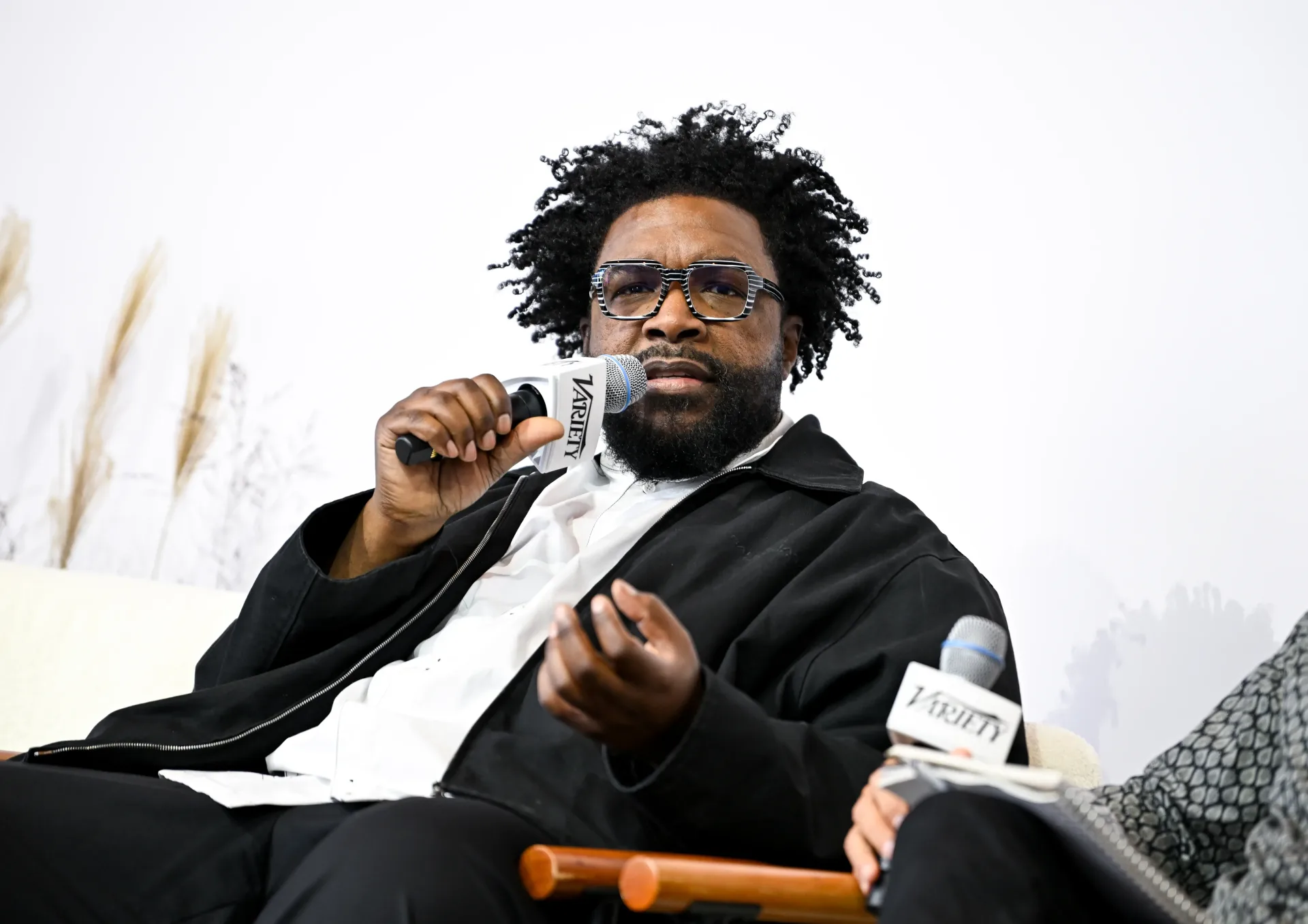

Questlove has spoken about seeking testing for autism and ADHD, returning to childhood memories that he said had long informed his sense of being different from the people around him.
The Roots co-founder raised the subject during the November 4 episode of IMO, in a conversation with Michelle Obama and Craig Robinson. He described the account as a “quasi disclosure” and said he had decided to get tested roughly a year and a half earlier.
Importantly, Questlove discussed pursuing testing; he did not publicly state a diagnosis in the conversation described here. That distinction matters. Testing is an assessment process, while a diagnosis is a clinical conclusion. Neither a celebrity’s recollections nor familiar traits from childhood can, on their own, establish either autism or ADHD.
A personal account, not a label imposed from afar
Questlove said he had often thought of himself as an outcast or the black sheep. In explaining why the subject came up, he revisited stories about a deep childhood interest in spinning objects, particularly records playing on a turntable.
One memory came from his mother: an aunt had watched him stare at a rotating record for around 20 minutes before the music even began. He also remembered a spinning light over his bed that he found calming. With characteristic humor, he suggested that the look of a record label in motion may have influenced some of the music that caught his attention before he had even engaged with the songs themselves.
Those anecdotes are meaningful as Questlove’s own account of his life. They should not be treated as a checklist or a shortcut to diagnosing anybody else. Autism and ADHD are distinct terms, and the provided account does not attempt to explain their clinical criteria, assessment methods or results. The central news is simply that Questlove said he sought testing and chose to discuss the personal history that led him there.
The record-spinning story predates the new conversation
This was not the first time Questlove had publicly talked about records as visual objects as well as musical ones. In a 2013 interview connected to his memoir Mo’ Meta Blues, he recalled relatives wondering why he could spend hours watching records rotate. He also said he used to spin his father’s records on his index finger.
“I liked the way the logo looked in rotation,” he said in that earlier conversation.
Related coverage includes Questlove Discusses Seeking Autism and ADHD Testing.
That interview included a question about autism after discussion of a passage from the memoir. Questlove addressed family concerns and indicated that some of those conversations had involved joking. It did not establish a diagnosis. The point is worth repeating because retrospective public discussion can easily flatten a person’s evolving language about their own experience into a claim they did not make.
Viewed together, the older and newer comments show continuity rather than a sudden attempt to rewrite a life story. Questlove has long identified the spinning-record fascination as part of his childhood. What has changed is that he has now said he pursued autism and ADHD testing and connected that decision to the stories he had previously used to explain feeling outside the norm.
Music was there from the beginning
The image of Questlove studying a record in motion has an unusual resonance because music was not a distant interest in his childhood. His father was Lee Andrews, the singer of Lee Andrews & The Hearts, and Questlove went on the road with him at an early age.
In the 2013 discussion, Questlove said he learned to work wardrobe and stage lights before later filling in on drums at Radio City Music Hall at age 12. Those details describe an upbringing inside the working mechanics of performance: clothes, lighting, instruments, stages and a family music business already in motion around him.
It also helps explain why the record memory should not be reduced to a novelty anecdote. For Questlove, records were part of a larger environment of sound and showmanship. The label, the turntable and the spinning light are sensory details from the same life that eventually produced a musician, bandleader, producer, collector of musical knowledge and filmmaker.
His broader interest in documenting music history remains visible in his 2026 film Earth, Wind & Fire (To Be Celestial vs. That’s the Weight of the World). Questlove produced and directed the HBO documentary, which debuted June 7 and follows Earth, Wind & Fire through late founder Maurice White while considering the spiritual ideas behind the band’s work. That commitment to musical context is also evident in a look back at Motörhead’s Orgasmatron and its lasting production questions.
Why careful wording matters here
Public figures talking about assessment can make room for more nuanced conversations about experiences people may have struggled to describe. But it can also encourage an unhelpful habit: treating a few recognizable behaviors as proof of a medical conclusion. Questlove’s comments support neither speculation about his results nor armchair diagnosis of other people who enjoy repetition, visual motion, music, collecting, or solitude.
The available account supports a narrower and more human reading. Questlove reflected on long-standing memories, including an attraction to the visual rhythm of rotating records and a calming spinning light. He said those memories sat alongside a lifelong feeling of being the outcast or black sheep. About a year and a half before the November 4 episode, he decided to seek autism and ADHD testing.
That is a significant disclosure on its own terms, particularly because it preserves the uncertainty Questlove himself maintained. It does not turn childhood behavior into a diagnosis, and it does not demand that every part of a creative life be explained through one framework. Instead, it presents an artist looking back at the details of his early life and trying to understand them with more information than he had as a child.
The practical takeaway for audiences
There is value in listening closely to the language used in conversations like this. “I sought testing” is not the same as “I was diagnosed.” “This memory helped me understand myself” is not the same as “this one memory proves a condition.” And an individual account, even a resonant one, is not universal guidance.
Questlove’s comments are most compelling when left intact: a personal reflection from someone whose relationship with records began not only with sound, but with the sight of an object spinning. The music came to define a career. The early memories, he now says, also became part of a later effort to understand why he had so often felt different.