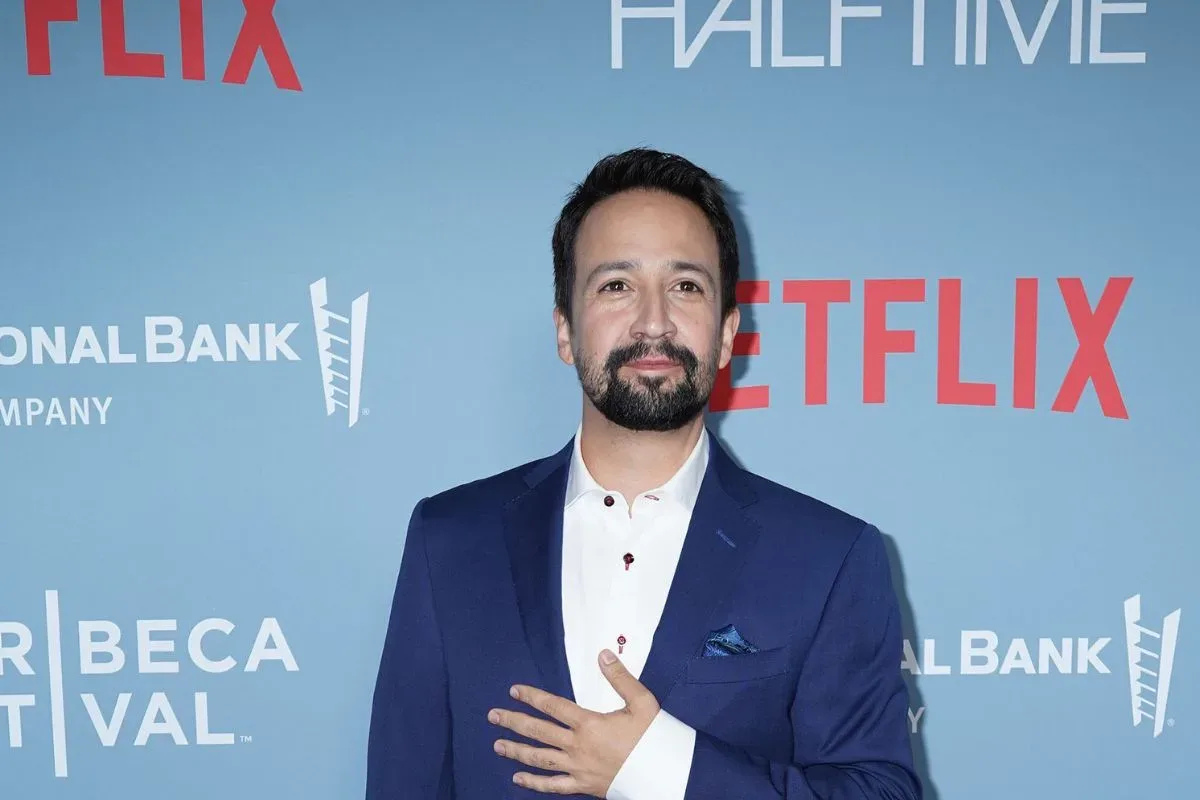
Hamilton has reached a milestone that sounds almost implausible until the scale is laid out: the original Broadway cast recording has now spent 500 weeks at No. 1 on the Cast Albums chart. The mark arrived on the October 17 chart and is described as the first time a title has reached 500 weeks in first place on any currently published Billboard ranking.
That is not merely a long-running Broadway success. It is evidence of a cast recording behaving like a durable album with a life separate from the performance that created it. Across 576 weeks on the Cast Albums chart, Hamilton has led for 500 of them—roughly 87% of its entire chart run. The next-closest cast album cited, Wicked, has 355 weeks at No. 1, which makes the distance between the two totals substantial even before considering the wider chart-record claim.
For a publication named Joking Joystick, there is an obvious way to put it: this is the leaderboard equivalent of taking the top slot so consistently that everybody else starts racing for second. But the more interesting part is why this particular album has sustained that position. The available history points to an approach that treated the recording as its own musical object, not simply as archival proof of what happened on a theater stage.
A cast recording designed to stand on its own
Lin-Manuel Miranda’s musical tells Alexander Hamilton’s story through a blend of rap, R&B and show-tune writing. That hybrid was central to the theatrical work, but the production choices for the album pushed it further toward a listening experience that could function away from Broadway.
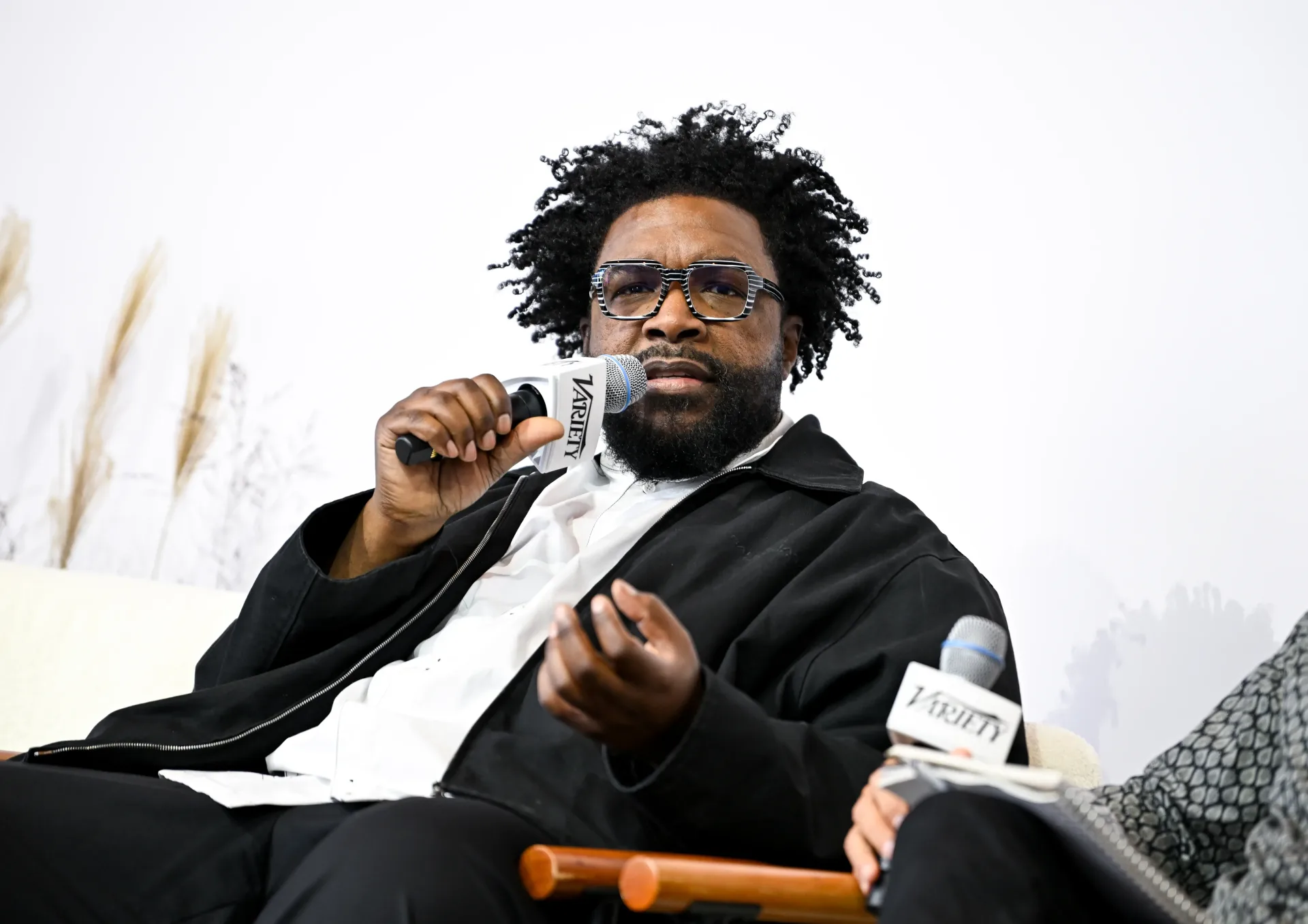
Questlove and Black Thought of The Roots were part of the production team. Their involvement was not limited to prominent names appearing in the credits. Music director Alex Lacamoire has described how they encouraged the team to make decisions that distinguished the recording from the stage version: bringing percussion and scratches forward, distorting a hi-hat, and using delay on a vocal.
“Those guys were able to push us in a direction we might not have gone,” Lacamoire said of The Roots’ contribution.
Those details matter because the goals of a live musical and an album are related but not identical. In a theater, the music supports performers, dialogue, staging and an audience sharing a room. A recording has no visual frame to lean on. Its arrangements and mix have to establish momentum, clarity and character through sound alone. A cast album can preserve songs wonderfully without necessarily inviting repeated front-to-back listening. Hamilton was apparently built with the latter possibility firmly in mind.
What those studio choices mean
Scratches are rhythmic sounds produced by manipulating a record or digitally recreated audio, strongly associated with hip-hop DJ technique. Placing them prominently helps announce a hip-hop vocabulary rather than leaving it as a background reference.
A hi-hat is a pair of cymbals played with a foot pedal and sticks or other implements; its tight, bright pattern is a core part of many drum grooves. Distortion alters the clean signal, adding grit or edge. Used carefully, a distorted hi-hat can make a beat feel more aggressive, textural or immediate than a conventional pit-orchestra balance might suggest.
Delay is an effect that repeats a sound after a brief interval. On a vocal, it can create echoes, depth or rhythmic movement. It is not just decoration: depending on how it is applied, it can help a phrase occupy space in a mix or make its cadence hit differently.
None of this means the recording stopped being a theatrical work. Rather, these choices helped it occupy both worlds. It could carry plot and performance, while also using production language familiar to listeners approaching it as a rap- and R&B-informed album. That distinction is a practical explanation for why its reach need not be limited to people planning a trip to the theater.
Mixing rap sensibility with Broadway scale
Lacamoire also credited mixer Tim Latham, whose past work included A Tribe Called Quest, De La Soul, Erykah Badu and D’Angelo. That background was useful in balancing the score’s rap elements with its theatrical demands. A mix is the process of deciding how voices, instruments and effects relate to one another in the finished recording: which parts sit forward, which sit behind, how much space each occupies, and how a listener’s attention moves through a song.
For Hamilton, that balancing act had unusual stakes. The lyrics must communicate narrative information, the performers’ individual delivery must remain legible, and the songs still need the lift and dynamics expected from a large musical. Lean too far toward stage-document clarity and the record may feel overly restrained as an album. Lean too far toward a conventional rap-record presentation and essential theatrical detail could be obscured. The longevity of the finished release does not prove every individual creative decision was perfect, but its chart performance strongly suggests the overall balance connected with listeners.
There was also an instrumental philosophy behind the recording. Lacamoire wanted live players to recreate sounds frequently made on computers, retaining a band feel within the score. That is a meaningful production choice in a project drawing from genres often closely tied to programmed sounds. The goal was not to reject electronic or studio techniques—the reported use of scratches, distortion and vocal delay makes that clear—but to combine them with the presence of musicians performing the material.
The result, in broad terms, is a record that does not ask listeners to treat theater and hip-hop as sealed categories. It makes a case for the opposite: theatrical storytelling can use rap’s flow, rhythmic focus and studio vocabulary without reducing either tradition to an ornament. That creative identity is more useful in explaining the album’s resilience than the simplistic idea that it succeeded only because the stage show became a phenomenon.
The streaming moment that widened the audience
The cast recording’s trajectory also intersected with a major at-home viewing moment. Disney+ released a filmed stage production in July 2020, assembled from performances captured at the Richard Rodgers Theatre in June 2016. It gave viewers access to the original cast in the show itself, including Miranda as Hamilton, Leslie Odom Jr. as Aaron Burr, and Daveed Diggs as both Lafayette and Thomas Jefferson.
For listeners who had known the album first, the filmed production offered a visual route into the staging and performances. For viewers encountering the musical for the first time, it offered a direct path back to the cast recording. The connection showed up on the Billboard 200, the all-genre album chart: the recording reached No. 2 in July 2020 and has now spent 575 weeks on that chart.
It is worth separating what is known from what is interpretation. The timing establishes that the streaming release coincided with the No. 2 Billboard 200 peak, and the filmed production expanded access to the original cast. It does not require claiming that streaming alone created the album’s success. The record had already established a long presence, and its 500 No. 1 weeks on the Cast Albums chart span most of an 11-year listing history. The more defensible reading is that the filmed release gave an already powerful album another major route to listeners.
That relationship between screen access and music consumption remains relevant to entertainment more broadly. A performance recording can make a show available to people outside a venue, and an album can remain the portable, replayable version once the credits roll. The same audience behavior is visible in other music coverage, including the continuing relationship between recorded music and live-scale events, even though Hamilton operates in a distinctly theatrical format.
Why 500 weeks is more than a trivia answer
Chart milestones can become abstract when they are large enough. Five hundred weeks is easier to understand when paired with the 576-week total: for nearly nine out of every 10 weeks in which the album appeared on the Cast Albums chart, it was No. 1. That is not a brief resurgence, a one-off event or a narrow debut window. It is sustained dominance over the vast majority of its recorded chart life.
There is another important qualifier in the record claim. The comparison is to “currently published” Billboard rankings. That wording defines the scope and should be retained. It is a claim about the charts presently issued, not a blanket statement about every ranking that may have existed in every era. Even with that precise framing, the achievement is extraordinary.
The gap with Wicked is also useful context. A 355-week No. 1 run is itself an enormous number, yet Hamilton has moved 145 weeks beyond it. The comparison does not diminish the latter title; it makes the scale of Hamilton’s lead easier to see.
Most importantly, the milestone recognizes a record, not just a production. The original Broadway cast recording has endured because listeners can return to the narrative, the performances and the densely arranged songs without needing to be in a theater. The production team’s choice to make it sound different from the stage show looks especially consequential in retrospect. It gave the album a distinct identity while keeping the musical’s storytelling intact.
After 500 weeks at No. 1, Hamilton has turned the cast-album chart into a measure of uncommon staying power. The number is headline material. The studio craft behind it is the part that makes the headline make sense.