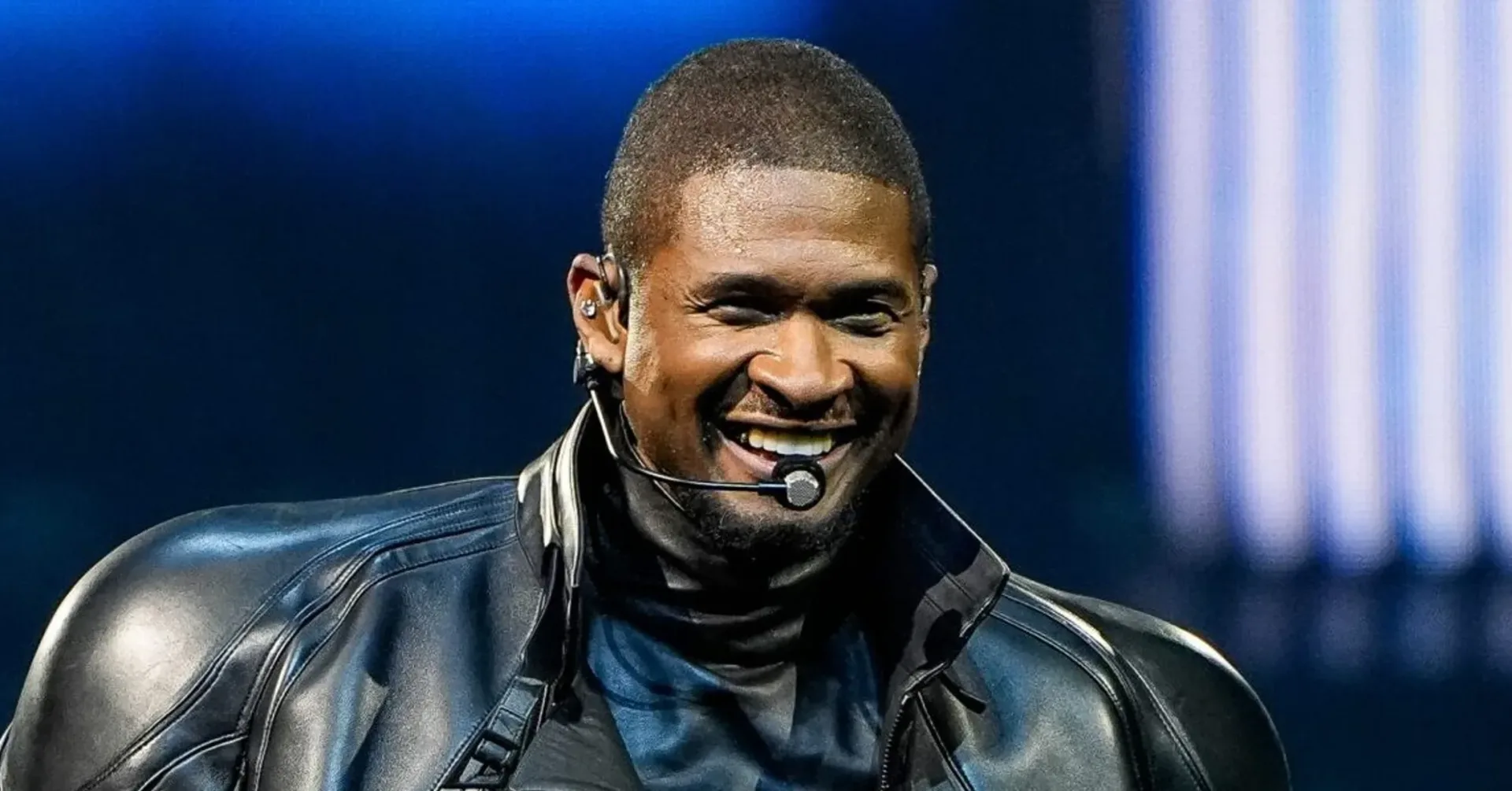
Usher’s 48th birthday celebration took a deliberate step away from arena-scale staging and into a room built for the opposite kind of performance: close-up magic. The singer spent the occasion at Speakeasy Magick in Manhattan, where performers work directly among the audience rather than presenting tricks from a faraway stage.
The guest list made the gathering feel like a major entertainment-world meetup. Jay-Z, Mary J. Blige, Fabolous and Bun B were spotted at the event, alongside Kevin Hart, LeBron James and J.R. Smith. Yet the central attraction was not a concert set, a red-carpet entrance or a celebrity toast. It was an intimate magic presentation in which the guests, including Usher, became the audience.
Video from the evening shows Usher watching the magicians at work. Kevin Hart was also seen reacting to a card trick. That is an appealing reversal for a performer whose own work is so closely tied to timing, movement and the ability to guide an audience’s attention. For one night, Usher was not required to create the reveal. He could simply wait for it.
An intimate room instead of a giant stage
Speakeasy Magick runs from The Overlook Bar in Manhattan and is designed around proximity. Rather than putting an act at the end of a huge room, its performers move through the crowd and work immediately in front of guests. The point is not just to make a trick visible; it is to make the experience feel difficult to explain precisely because it happens so near the viewer.
That distinction matters. A large stage show creates distance by design. The performer has lighting, choreography, sound and a wide visual frame to manage. A close-up presentation strips much of that away. Guests are asked to watch hands, cards and small objects at conversational range, with audience interaction playing a central role. The scale is smaller, but the pressure on attention is arguably sharper: the performer is working inside the audience’s personal space rather than asking them to look toward a distant focal point.
Sleight of hand, the term associated with the event’s style of performance, refers to dexterous manipulation used to produce an effect that appears impossible. In this setting, it is less about massive visual spectacle than immediacy. A card trick can become a shared event because people are close enough to believe they have monitored every relevant detail—until the outcome says otherwise.
For a birthday event, that format also changes the social dynamic. A concert can turn everyone in attendance toward one stage. A roaming close-up act instead produces clusters of reaction around the room. One guest sees the moment happen; another hears the laughter or disbelief and gathers around for the next one. The show becomes part of the party’s conversation rather than a separate block of programming.
A celebrity gathering with the spotlight pointed elsewhere
There was no shortage of famous people in attendance. Jay-Z and Mary J. Blige brought two of music’s most recognizable names into the room, while Fabolous and Bun B added to the rapper-heavy guest list. Kevin Hart’s visible response to a trick offered a reminder that a close-up magic show is engineered for reaction as much as it is for mystery. LeBron James and J.R. Smith rounded out a group that crossed music, comedy and sports.
Related coverage includes Usher Marks 48th Birthday at Manhattan Magic Show With Jay-Z and Mary J. Blige.
The notable part is that the event’s premise allowed those guests to be spectators together. Celebrity celebrations can easily become exercises in watching the celebrity being celebrated. Here, the performers had the task of redirecting attention without making the guest of honor disappear from the occasion. Usher remained the reason everyone was there, but the magicians were given the immediate challenge of surprising a room full of people accustomed to spectacle.
That is where the format fits the evening. Many of the guests have careers built around controlling a crowd’s focus: through a song, a joke, a basketball possession or a live appearance. Magic takes control of focus in a different manner. It invites scrutiny, then delivers an outcome that leaves the viewer reconsidering what they thought they saw. The surprise is the product.
Analysis: The appeal of this setting is not that it tries to compete with the type of staging Usher is known for. It does the reverse. An arena tour depends on scale, repetition, coordination and a performance visible from many angles. The Manhattan magic show relies on small-scale interaction and an illusion that feels individual even when a room full of people is watching. Choosing that environment for a birthday break makes sense precisely because it puts Usher on the receiving end of a highly controlled performance.
A pause during a busy run of live dates
The party arrived during a busy stretch for Usher. He is on The R&B Tour with Chris Brown, a stadium run that has occupied the latter half of the year. The two artists recently announced a break in the dates so that everyone involved could rest before returning to the road.
That context makes the birthday’s smaller scale especially notable. Touring at stadium level means operating within a large, planned system: travel, venue schedules, crews, staging and an audience measured in vast numbers. The event at The Overlook Bar offered a compact counterpoint. It was a night centered on friends, familiar faces and entertainment measured in inches rather than stadium seating sections.
A rest period also does not necessarily mean stepping away from performance altogether. This party kept performance in the picture, just without placing Usher in the role of lead artist. The birthday guest could observe an act designed to make its audience participate—whether by holding a card, responding to a prompt or simply being close enough that the effect becomes hard to dismiss.
There is a useful contrast in the two forms of live entertainment. Stadium music is often about collective energy: a large crowd responding at once to songs, movement and carefully timed moments. Close-up magic is built around concentrated attention: a small group noticing the same detail and then discovering that detail did not lead where expected. Both depend on timing. Both depend on anticipation. But they use proximity and audience expectation in very different ways.
Why a card trick can become the night’s headline
The card trick that drew Kevin Hart’s reaction is a small detail, but it captures why this format travels well in a social gathering. Cards are familiar objects, and their familiarity gives a performance an accessible starting point. Guests do not need background knowledge to understand the basic premise. They know what a card is supposed to do, which makes an unexpected result land immediately.
It is also a form of entertainment that does not need to interrupt the entire party. A performer can engage a few guests, create a burst of reaction, then move elsewhere. That flexibility suits an event where conversation and mingling remain as important as the scheduled entertainment. The magic is not just viewed; it circulates through the room in the form of firsthand reactions and retellings.
The approach has a certain game-night logic, even if magic is not a game in the competitive sense. Participants are presented with incomplete information, asked to make assumptions and then confronted with a reveal that reframes the sequence. That playful overlap between performance and audience involvement is part of why retro game-show aesthetics remain useful in pop culture, including a recent music-video take on game-show expectations. The shared ingredient is not the format itself, but the pleasure of watching a setup turn unexpectedly.
Usher’s birthday ultimately sounds less like a standard celebrity dinner and more like a carefully chosen change of perspective. Surrounded by fellow stars, he spent the evening watching performers specialize in the art of misdirection, reaction and the well-timed reveal. At a point in the year when his own schedule has been centered on stadium dates, that made an intimate Manhattan magic room a fittingly different place to celebrate.