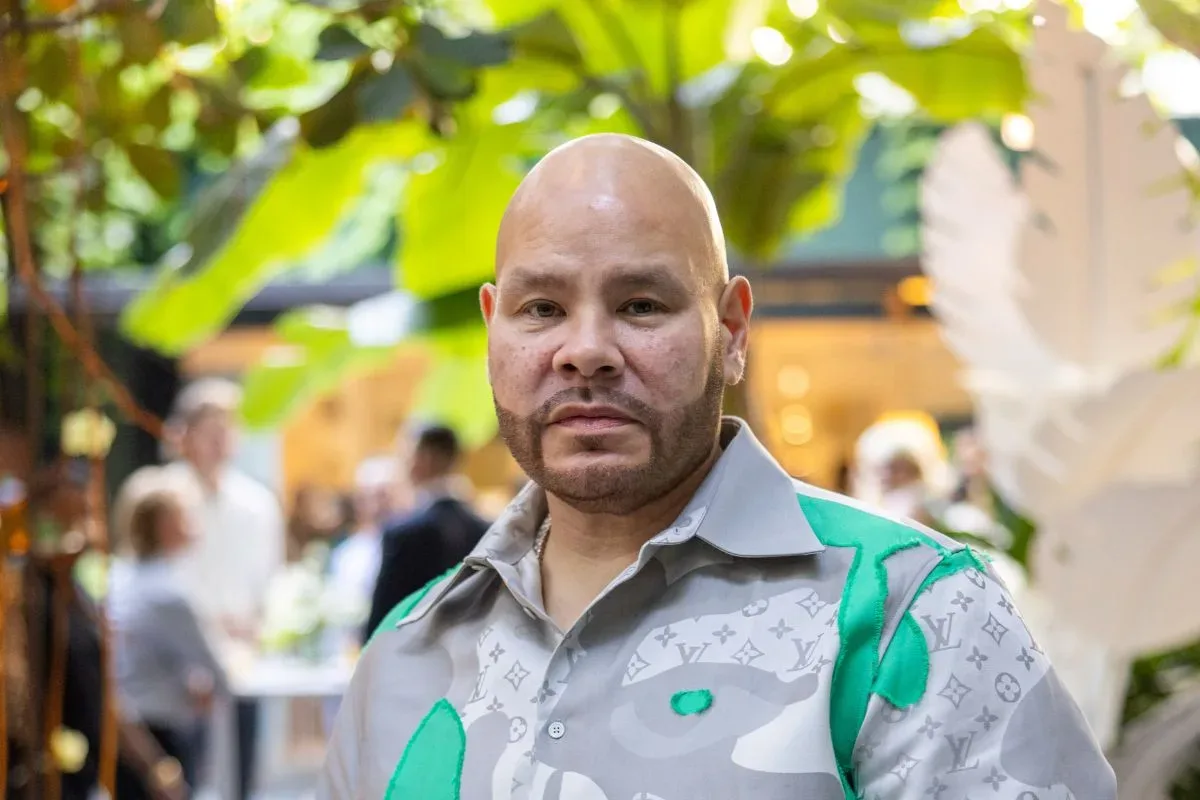
Fat Joe has spent 34 years in rap, but he is not presenting longevity as a finish line. In a discussion with Jadakiss and actor London Brown, the Bronx rapper described himself as a “middle class” rapper when placed beside Hip-Hop’s billionaires. The point was not that a veteran artist with several ventures has accomplished nothing. It was that the industry’s financial ceiling looks radically different when measured against the biggest owner-operators in the field.
“Well, I’ll speak for myself. We middle class rappers,” Joe said.
The remark came after Brown discussed continuing to audition despite his success on Raising Kanan. Joe used that perseverance as a springboard for a larger reflection: careers can be successful and still leave room for another level of ambition. His frame was less envy than recalibration. Seeing extraordinary success, in his telling, supplied a reason to get back to work rather than a reason to resent the person who reached it.
Success looks different when ownership enters the chat
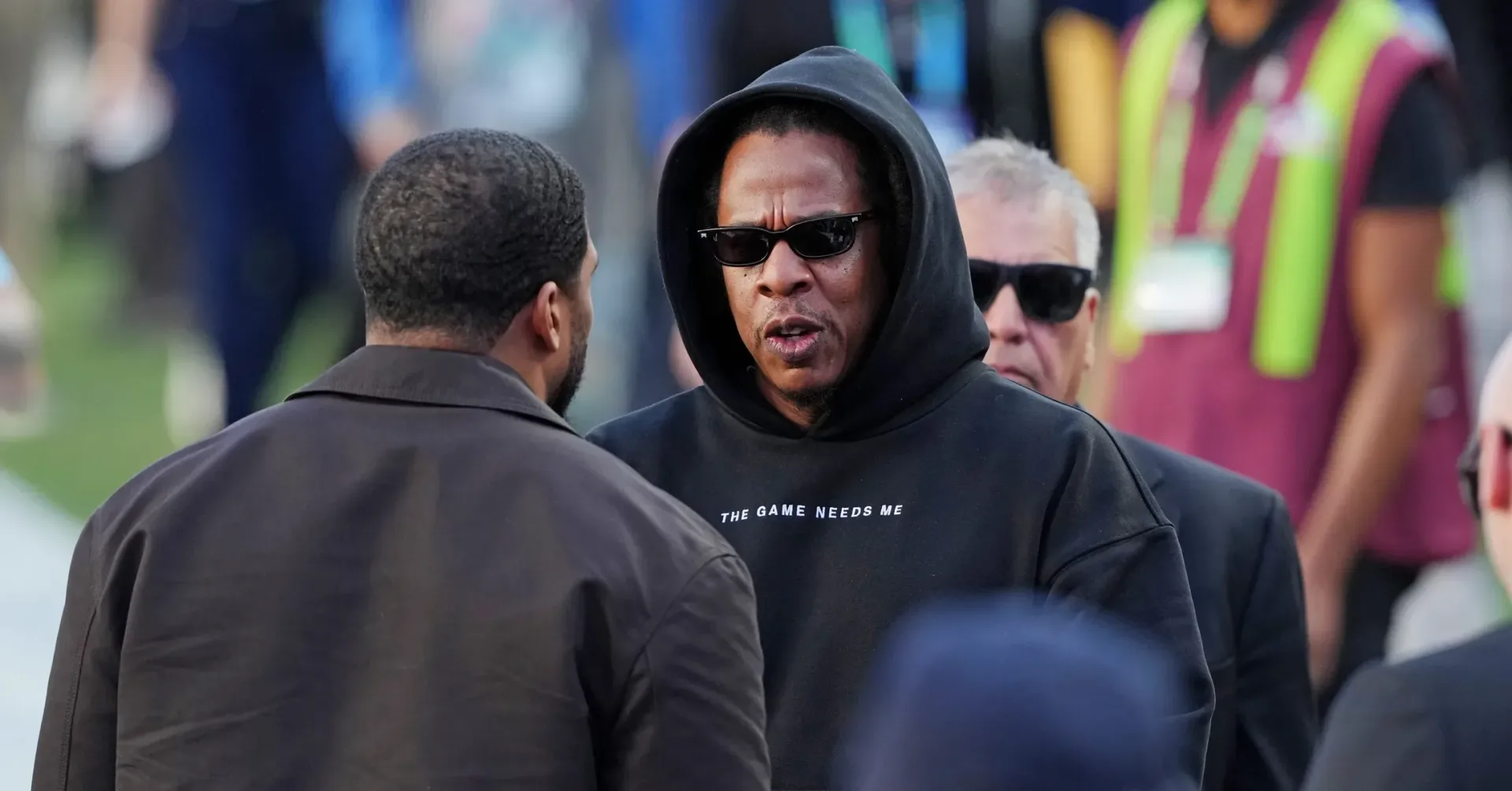
Joe’s comparison centers on JAY-Z, whose wealth represents an unusually expansive version of what a recording artist’s career can become. JAY-Z became Hip-Hop’s first billionaire in 2019. A net-worth estimate dated October 13 placed him at $2.8 billion, a figure that accounts for assets and business stakes rather than treating music income or cash as the whole story.
That distinction is important. Net worth is an estimate of what a person owns minus what they owe. It can include a music catalog, equity in companies, investments, art and other property. It is not the same thing as annual earnings, and it does not mean the entire estimated value is immediately available as cash. For an artist, that difference matters because the commercial scale of a catalog or a company stake can be much larger than the fee attached to one record, one tour date or one appearance.
The business moves cited in JAY-Z’s case illustrate why Joe’s “middle class” language is intentionally comparative. JAY-Z sold half of Armand de Brignac, his champagne brand, to LVMH in 2021. In 2023, he sold most of his stake in D’Usse cognac to Bacardi. Alongside a music catalog, art and investments, those holdings describe a portfolio that extends far beyond the conventional image of rap income.
That does not reduce music to a mere advertisement for other businesses. Rather, it shows how a prominent music career can become a platform for ownership. A hit can create public attention; ownership can turn that attention into a longer-running stake in a product, brand or asset. Joe’s comments recognize the vast distance between being a known, working entertainer and building the kind of asset base associated with billionaire status.
A night that became a personal benchmark
Joe recalled being around JAY-Z and Beyoncé at a premiere and after-party. On the ride home to New Jersey in his Sprinter, he said he came away with one conclusion: “I got some work to do. I got some work to do.”
Related coverage includes Fat Joe Calls Himself ‘Middle Class’ Beside Hip-Hop’s Billionaires.
It is a simple line, but it clarifies the intent of the comparison. Joe was not claiming to have been discouraged by an impossible standard. He was describing a moment in which visible success made his own next steps feel more urgent. In creative industries, where fame and financial security are often treated as interchangeable, his point separates them. Recognition may bring opportunities, but the structure of those opportunities—whether someone is paid once, retains rights, or keeps an ownership stake—can alter their long-term value.
Joe’s perspective also gives the conversation with Brown a shared theme. Brown was speaking about auditioning while already established on a television series. Joe was speaking about continuing to build while already established in rap. Neither example makes a claim that prior accomplishments do not count. Instead, both describe an entertainment business reality in which continued work remains necessary, and where one job, role or successful release is not automatically a permanent destination.
Fat Joe’s work beyond the studio
Joe is not merely using business language from the sidelines. He co-founded Rewind It 10, a hair-and-beard color brand, with Carolyn and Jeff Aronson. The company announced a Stop & Shop rollout by July 2025, adding that retailer to CVS and Sally Beauty.
A retail rollout is not the same thing as an ownership valuation, nor does it establish a company’s revenue. It does, however, show the practical work involved in extending a celebrity-backed product beyond a direct pitch to fans. A brand’s placement in established retail chains can put products in front of shoppers who may not follow the founder’s music or media career. For a grooming product, those repeat-purchase possibilities are meaningfully different from the release cycle of an album.
Rewind It 10 also helps explain why Joe’s comparison should not be read as a dismissal of his own career. He has taken a business route outside recording, in a category that has its own product, distribution and retail demands. His comments instead put that work on a very large spectrum: an artist can have real ventures, established reach and a decades-long career while still viewing billion-dollar portfolios as a separate tier.
Podcasting becomes another expansion lane
Joe and Jadakiss have also broadened their media footprint with Joe and Jada. The program joined Netflix’s video-podcast lineup in January, while iHeartMedia continued to distribute its audio edition. Under the arrangement, new video episodes and selected prior episodes moved exclusively to Netflix.
Video podcasting here means a talk format distributed with a filmed version as well as, or alongside, a conventional audio feed. The two formats can serve different viewing habits: audio can fit commuting or background listening, while video can make a conversation a streaming destination in its own right. Netflix’s involvement gives the show a major video platform; iHeartMedia’s continued audio distribution means listeners still have an audio route into the program.
For Joe and Jadakiss, the arrangement is another example of an artist career operating across multiple formats. It does not provide a public measure of the show’s financial return, and it should not be treated as evidence of billionaire-scale wealth. But it does show a move to build reach outside the standard album-and-performance cycle, with a recurring conversation format capable of bringing in guests and responding to current culture.
The broader lesson in Joe’s comments is not that every rapper should chase the same company deals or that every well-known artist can replicate JAY-Z’s path. The known examples are specific: JAY-Z’s reported assets include particular brand transactions and holdings; Joe has a grooming company and a podcast distribution arrangement. Different assets carry different risks, partners and timelines. What connects them is the push to make a creative career larger than a single source of income.
Why the “middle class” phrasing lands
Calling oneself middle class after 34 years in music is deliberately jarring because it reframes the usual celebrity scoreboard. Joe is measuring status within a narrow peer group at the top of the entertainment economy, not offering a literal description of the experience of middle-class households. His wording works as an expression of scale: billion-dollar ownership changes the comparison.
That framing also resists the lazy assumption that proximity to wealth automatically makes an artist wealthy on the same level. Sharing a genre, an event or a celebrity circle does not mean sharing the same assets. The gap Joe identifies is about the difference between sustained professional success and the extraordinary accumulation associated with a portfolio of major stakes, valuable rights and investments.
For readers following Hip-Hop as both culture and business, Joe’s reflection is a useful reminder to look beyond the flashiest headline number. Ask what a wealth figure is measuring. Is it earnings, cash, revenue, company value, a partial stake or estimated net worth? Who owns the catalog, product line or brand? And is an artist building a one-time payday or a continuing asset? Those questions do not make the work less creative. They help explain the financial machinery around it.
Joe’s answer to that scale was not to downplay JAY-Z’s success or treat it as an insult. It was to convert the comparison into momentum. After the premiere and after-party, he went home thinking about the work still ahead. For a performer who has been active for decades, that is the headline: experience has not erased the appetite to build something bigger.
That same sense of ongoing motion has appeared across rap’s public conversations lately, including the way artists continue to turn visibility and rivalry into entertainment. Joe’s version is less about confrontation than perspective. The measure he has chosen is formidable, and his response is refreshingly direct: get back to work.