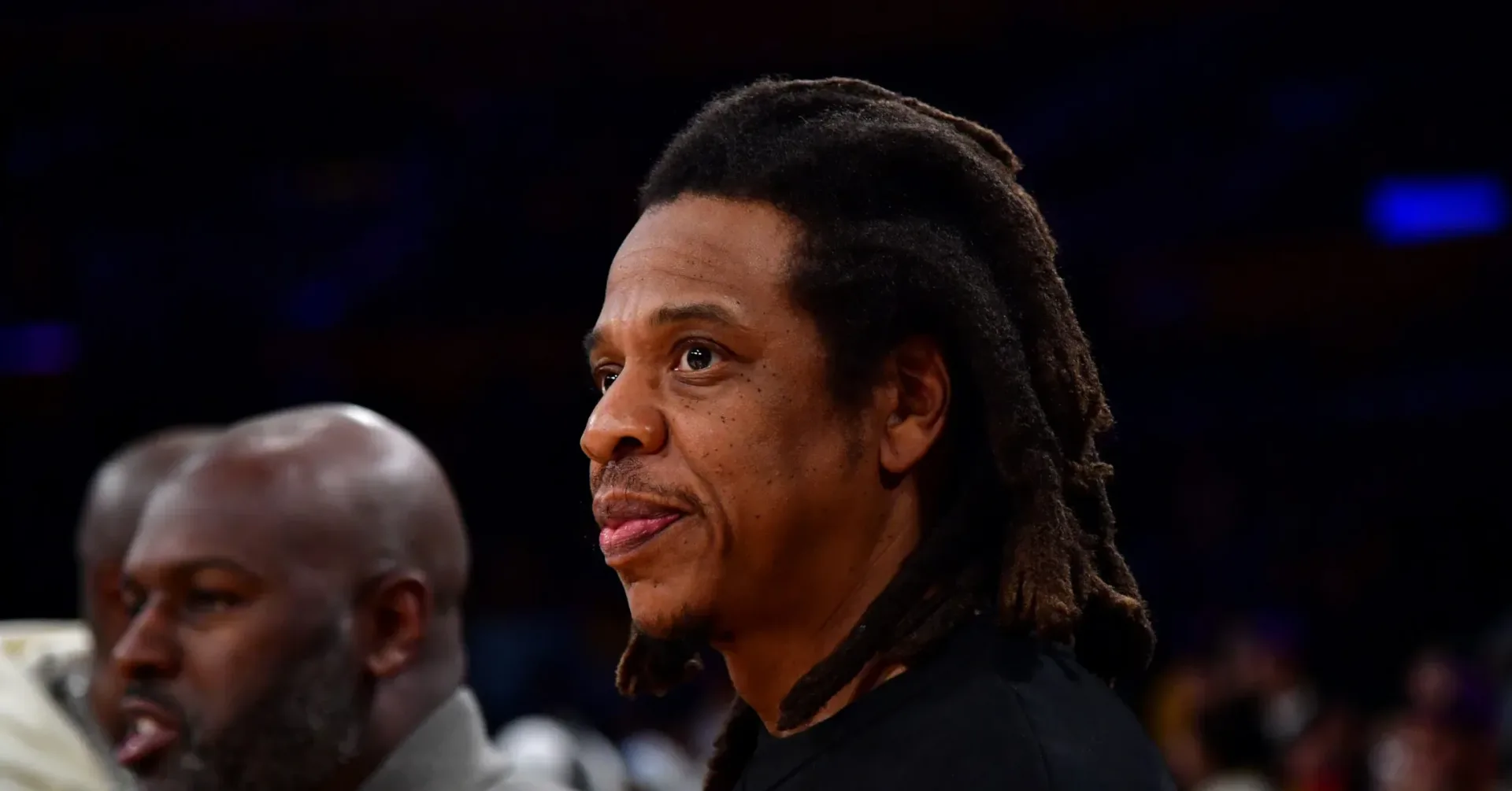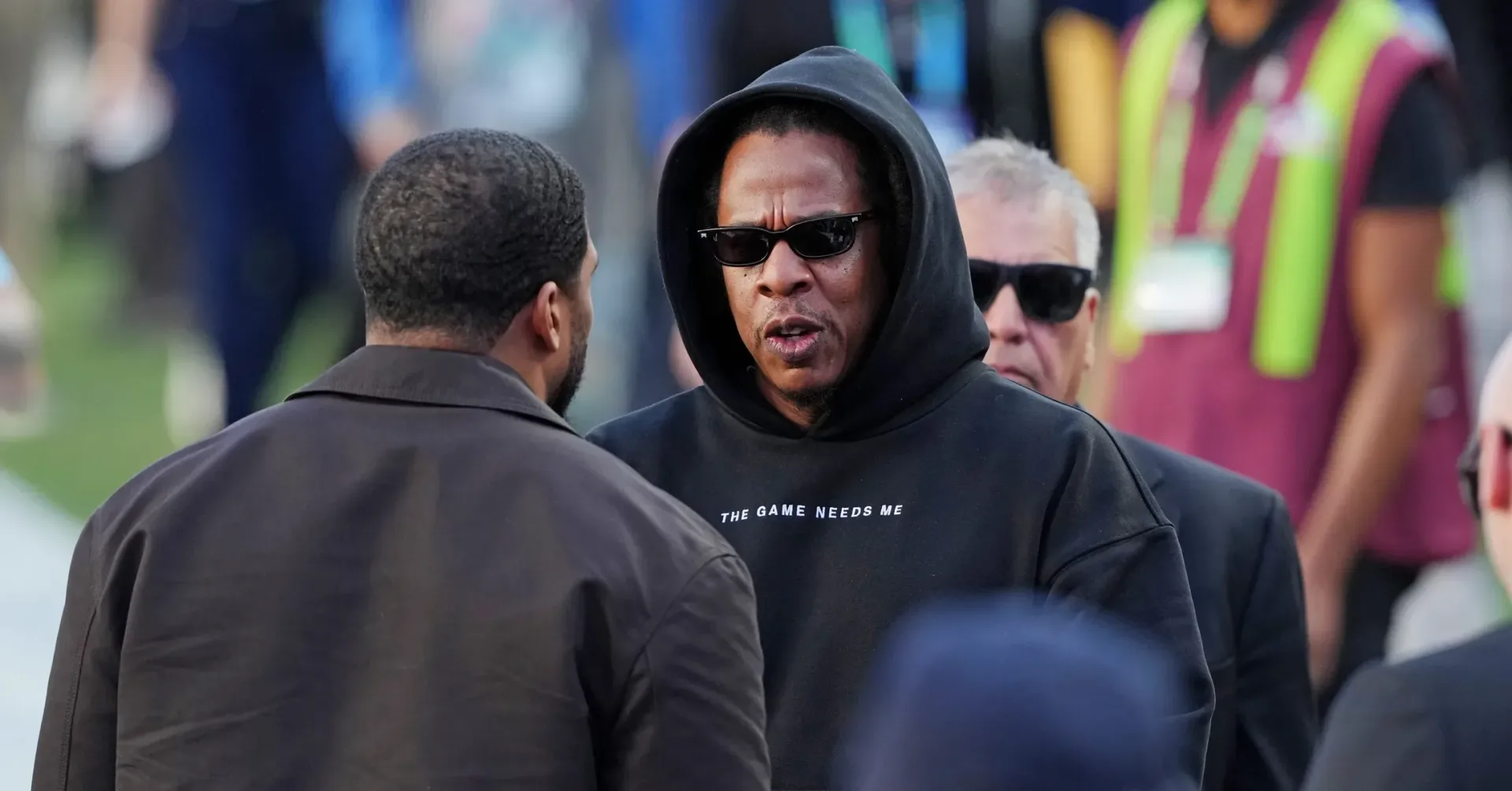
Dame Dash has again addressed his long-running dispute with former business partner JAŸ-Z, this time framing the rupture as a fight over who would be recognized as the business force behind their shared ventures.
In a recent appearance on Quiet Part Out Loud, Dash alleged that JAŸ-Z wanted to cultivate a public identity as a businessman without Dash alongside him. The account is Dash’s recollection of private conversations and negotiations; the supplied material does not include a response from JAŸ-Z, LA Reid or Steve Stoute, nor does it independently substantiate the claims.
That distinction matters. Dash is not describing a newly documented contract or a contemporaneous public statement. He is offering his interpretation of why a partnership failed, and of the roles people played in the period that followed. Still, the comments put a clear theme at the center of his grievance: the difference between doing business, being seen as doing business, and receiving credit for that work.
Dash’s account of the split
Dash said the relationship deteriorated because JAŸ-Z wanted to be known as a businessman and believed Dash’s presence worked against that goal. In Dash’s retelling, the disagreement was not merely personal. It concerned public positioning: who could enter a deal as an executive figure, who would represent the enterprise, and whose name would be attached to its success.
He pointed to a proposed direct arrangement involving LA Reid, identified in the material as a former Artista Records CEO. Dash recalled that Reid wanted to deal directly with him rather than JAŸ-Z, whom Dash characterized as an artist in that situation. Dash said he was told that JAŸ-Z would not proceed if Dash were involved.
Dash presented that episode as evidence that the two men had conflicting ideas about business identity. His allegation is that JAŸ-Z sought a cleaner separation from Dash in order to establish himself as the principal business-facing figure. No deal terms, timeline for the discussed conversation, or documentation of the alleged arrangement were provided.
Why image and credit can become a business dispute
“Image” can sound superficial when placed next to ownership, money and contracts. In entertainment, however, it can shape the practical side of a career. A public-facing reputation as an entrepreneur can influence who takes meetings, who receives media attention, who is presented as the decision-maker and who gets associated with future opportunities.
That does not prove Dash’s account. It does explain why he treats the issue as substantial rather than cosmetic. His criticism is fundamentally about attribution. He alleges that JAŸ-Z wanted the prestige attached to executive leadership while other people handled important parts of the business activity.
Related coverage includes Dame Dash Alleges JAŸ-Z Distanced Himself to Build a Mogul Image.
Dash specifically named Steve Stoute while making that broader point, accusing JAŸ-Z of using people such as Stoute to make business moves while becoming the public face of the business. The supplied material does not detail which decisions Dash means, what Stoute’s role was in any particular transaction, or whether Stoute agrees with the characterization. The claim should therefore be read as Dash’s view of how influence and recognition were distributed, not as an established account of the underlying business operations.
The disagreement also illustrates an enduring tension in entertainment partnerships. A performer can be the most visible person in a company’s public narrative, while managers, executives, advisers and partners may be central to negotiations behind the scenes. Visibility and operational authority are not automatically the same thing. Conversely, public visibility can itself be commercially consequential, particularly when a recognizable name helps open doors or define a brand.
The Reasonable Doubt allegation
Elsewhere in the interview, Dash returned to Reasonable Doubt and alleged that JAŸ-Z asked for Dash’s portion of the project in exchange for Dash not taking an unspecified job. Dash tied the allegation to a claim that he lost $40 million of his own money.
The available account does not identify the job, explain what ownership interest was being discussed, describe the terms of any proposed exchange, or establish how Dash calculated the $40 million figure. Those omissions are significant. A statement about a share of an asset can refer to different rights—such as a stake, control, revenue participation or some other interest—and the supplied material does not clarify which one Dash intended.
For readers, the careful takeaway is narrower than the rhetoric: Dash says a disputed proposal involving his portion of Reasonable Doubt was connected to an employment decision and a major financial loss. The details necessary to evaluate that assertion are not present here.
What Dash’s comments do—and do not—establish
Dash’s remarks provide a direct look at how he currently explains a famously fractured professional relationship. He sees the split as tied to branding, leverage and an alleged attempt to recast JAŸ-Z as an independent business leader. His story also assigns roles to Reid and Stoute that support that interpretation.
But an interview account is not the same as a complete record. There is no reply from the people Dash discusses in the material, no contract excerpts, and no independent detail about the transaction Dash says fell apart. That means the strongest factual formulation remains that Dash alleges these events occurred and attributes a specific motivation to JAŸ-Z.
That level of care is especially important when a dispute involves private calls, personal motives and figures attached to high-value assets. Motive is often the hardest part of a business conflict to prove from the outside. Two partners can describe the same collapse in radically different terms: one may see exclusion and image management; another may see a strategic restructuring, a conflict over control, or a necessary separation. The supplied evidence contains Dash’s version, but not the competing account.
The interview also arrives within a wider pop-culture landscape where the business mechanics behind music frequently become part of the story, not just a footnote to it. For another look at how music can carry forward through later creative and commercial contexts, see how Freddie Jackson’s R&B songs kept finding new lives in hip-hop.
A dispute that remains unresolved
Nothing in the comments suggests a reconciliation is near. Dash’s language indicates that he continues to view the fallout through the lens of betrayal and lost opportunity, while placing particular emphasis on who was permitted to claim the title of businessman.
For now, the interview adds another public statement from Dash rather than a settled account of the partnership’s end. The central allegation is clear: he believes JAŸ-Z distanced himself in pursuit of a mogul image and benefited from business work carried out by others. The available material does not provide enough detail to verify that claim, but it does show that Dash remains determined to contest the public story of who built the business and who received the credit.