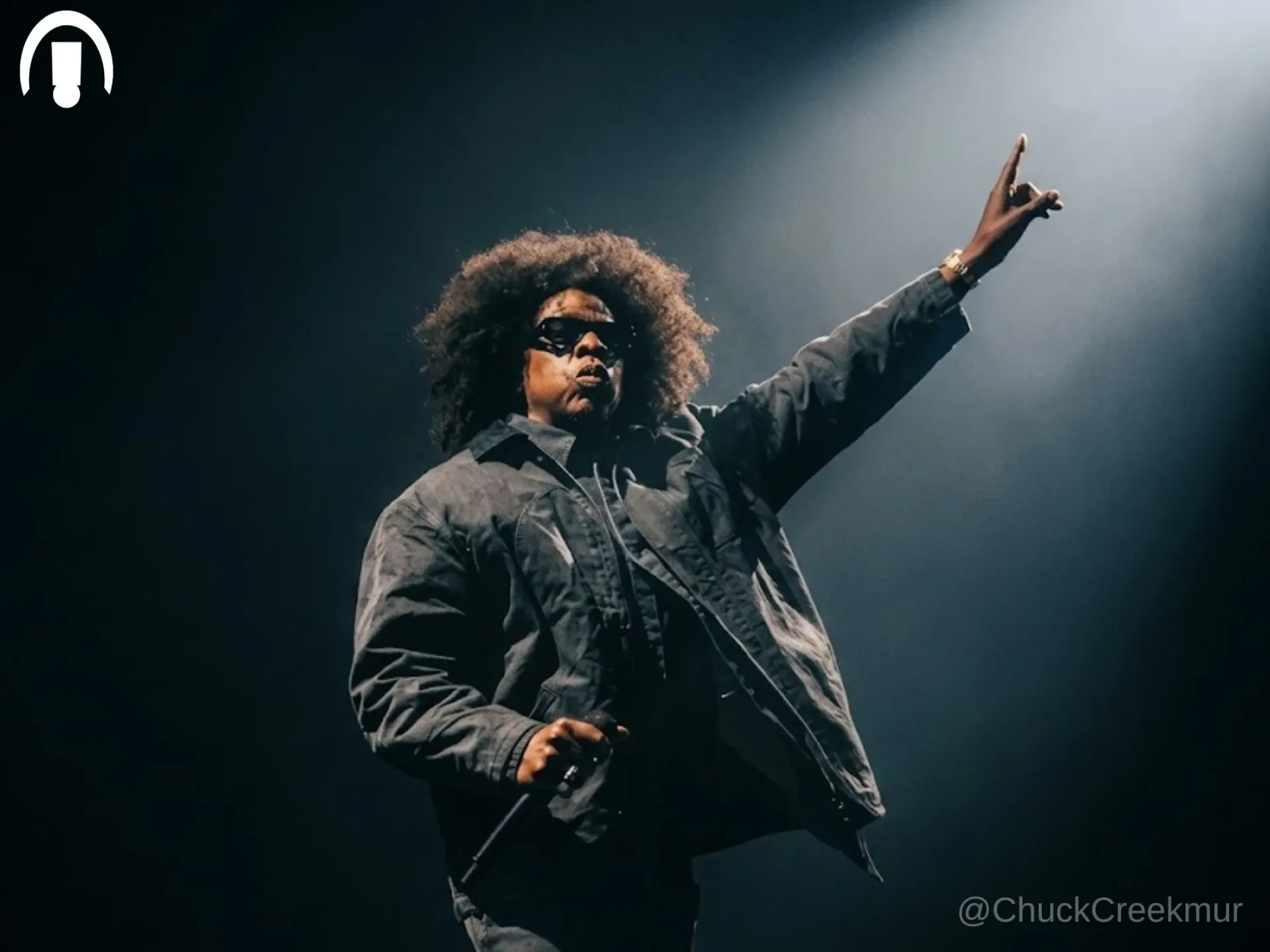
Jay-Z’s three-night JAŸ-Z30 engagement at Yankee Stadium has reportedly produced a new high-water mark for a rapper’s concert run: $42,290,766 in box-office revenue from 136,934 tickets sold. The July 10–12, 2026 dates were staged in New York City and built around two major milestones in his catalog—the 30th anniversary of Reasonable Doubt and the 25th anniversary of The Blueprint.
The reported total is significant not simply because it clears $42 million, but because it came from only three performances. The run averaged $14,096,922 per night, roughly 45,645 attendees per show, and an average ticket price of $308.84. Touring Data has characterized it as the biggest box-office total for a rapper’s concert engagement.
What the numbers do—and do not—say
In touring language, a gross is the money generated by ticket sales before the many costs of staging an event are removed. It is not the same thing as artist profit or personal earnings. Stadium productions can involve substantial spending on venue operations, labor, staging, transport, insurance, promotion, guest logistics and other expenses. The available figures establish the scale of demand and ticket revenue, but they do not disclose the financial split between the artist, promoter, venue and production partners.
The $308.84 figure is likewise an average ticket price, rather than the price paid for every seat. Averages roll together the full ticket mix across a run. That is useful for understanding the overall revenue picture, but it should not be read as evidence that every fan paid the same amount.
Even with those distinctions in mind, the core math is unusually direct. Three performances account for all 136,934 reported tickets and the full $42.29 million reported gross. In other words, this was not a cumulative total built from a long arena itinerary; it was a tightly concentrated stadium event that attracted a very large audience on each date.
An anniversary show with a deep guest roster
The premise joined two points in Jay-Z’s recording history. Reasonable Doubt, his debut album, reached its 30th anniversary in 2026, while The Blueprint reached its 25th. Anniversary concerts can turn an album catalog into a focused live event: the material is not only being performed, but placed within a specific story about an artist’s career and influence.
That framing matters here because the two anniversaries give the event more than one nostalgia hook. Rather than centering a single record, JAŸ-Z30 was presented as a celebration of two landmark albums from different moments in Jay-Z’s discography. The scale of the setting and the multiple milestones made Yankee Stadium an appropriately outsized venue for the concept.
The shows also included appearances by Beyoncé, Nas, Eminem, Rihanna, Alicia Keys and Pharrell Williams, alongside other guests. Such appearances can make a limited concert series feel less interchangeable than a standard tour stop. They can also heighten the sense that the event is a one-off cultural gathering, not merely an opportunity to hear familiar songs in a bigger building.
Related coverage includes Jay-Z’s Yankee Stadium Run Grosses $42.3M, Sets Rap Concert Mark.
That does not mean every guest appearance can be reduced to ticket economics. The reported gross cannot tell us which individual performer, song, moment or production element motivated a purchase. But the roster helps explain why the series was positioned as a major celebration rather than a conventional three-date booking.
Why a three-show record is notable
Concert records are often discussed as if all totals are directly comparable, but the wording is important. This reported achievement concerns a concert engagement: a defined set of performances grouped as one run. The available claim is not that Jay-Z sold the most tickets in every touring category, nor that the series represents the largest gross of any artist or genre. It is specifically described as the largest box-office total for a rapper’s engagement.
Within that definition, three nights at a stadium are enough to make the result stand out. The attendance average alone—about 45,645 people per performance—shows how much the event depended on the scale of the venue. A stadium date converts broad regional and destination demand into one large shared occasion. Doing so for consecutive nights requires that demand to remain strong beyond a single opening-night rush.
The result also underscores a wider practical reality of event-scale music: a legacy catalog can become the centerpiece of an event when it is paired with a meaningful anniversary and presented as a limited run. Here, the reported figures indicate that the material from Reasonable Doubt and The Blueprint was not treated as a retrospective footnote. It was the organizing idea for a major-ticket stadium production.
Los Angeles dates could change the broader JAŸ-Z30 picture
The reported Yankee Stadium numbers are not the full story of the JAŸ-Z30 celebration. The tally does not include performances in London or Paris, and Los Angeles shows were scheduled for October. That means the $42.29 million figure should be understood as a clearly defined New York result, not a completed worldwide total for the anniversary project.
Jay-Z’s longtime engineer and collaborator Young Guru indicated that the Los Angeles run would bring the current round of anniversary shows close to its finish. He also suggested that more anniversaries were on the horizon in the following year. The implication is that the 2026 program is part of an ongoing approach to marking Jay-Z’s catalog milestones, rather than a single isolated weekend at Yankee Stadium.
For now, though, the New York dates provide the cleanest snapshot: three shows, 136,934 tickets, and a gross just over $42.29 million. Any later figures from other cities would add context to the broader celebration, but they would not alter what the Yankee Stadium engagement itself accomplished.
The practical takeaway: catalog events are becoming destination events
The defining takeaway is not merely that a prominent rapper had a successful stadium weekend. It is that an anniversary-centered presentation can operate at the same enormous scale as an event built around new material. The album milestones supplied a clear reason for the gathering; the stadium created the capacity; and the guest list added an element of occasion.
For fans, that format can make the difference between seeing an artist on tour and attending a date that feels historically framed from the outset. The trade-off is visible in the average ticket figure: event-scale concerts can carry a much higher overall ticket value than a smaller or more routine show. An average does not reveal every fan’s experience at the checkout page, but it does show that the three-night run commanded substantial revenue per admission overall.
For the live-music business, the reported record is a reminder that catalog longevity has tangible value when it is activated carefully. A milestone does not automatically create demand, and a stadium is not automatically the correct setting for every anniversary. But Jay-Z’s Yankee Stadium result demonstrates how an artist with a lasting body of work can turn specific album anniversaries into a concentrated, premium live event.
Jay-Z has been revisiting parts of his legacy in other formats as well, including discussion captured in a recent JAŸ-Z retrospective feature. At Yankee Stadium, however, the legacy was measured in the most immediate way possible: a packed three-night run and a reported record-setting box-office gross.