A conversation involving Uncle Murda, Tony Yayo and Trap Lore Ross has put one of rap’s most persistent legal and cultural arguments back under a microscope: what, if anything, should prosecutors be allowed to do with an artist’s lyrics?
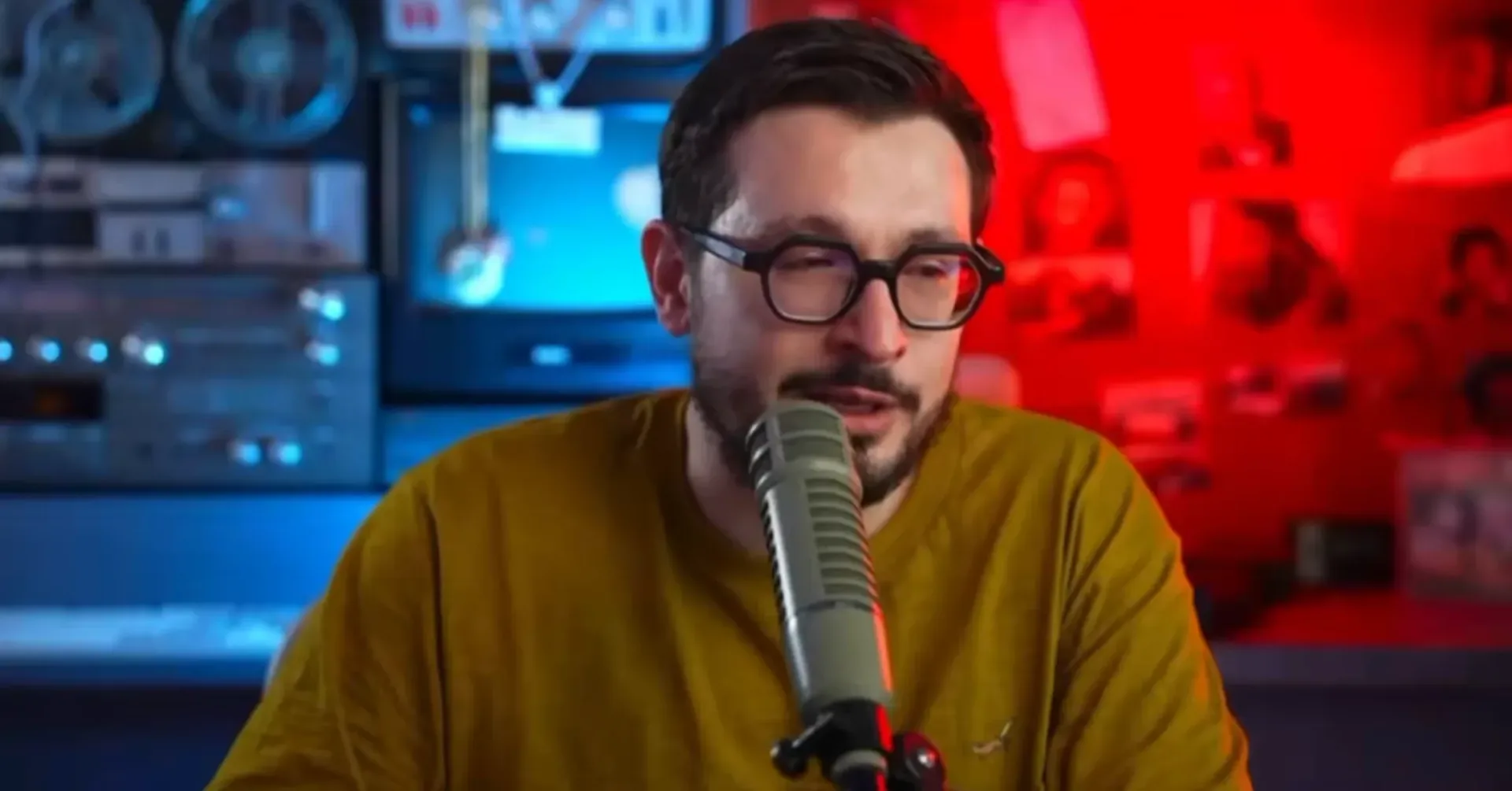
The debate surfaced during an appearance by Trap Lore Ross on The Real Report, hosted by Tony Yayo and Uncle Murda. The immediate context was coverage of Lil Durk’s murder-for-hire trial, a case around which Trap Lore Ross had become a prominent online court-update voice. But the larger disagreement was not really about one artist or one set of lines. It was about the meaning audiences assign to rap, and whether that meaning should change once a courtroom becomes involved.
Trap Lore Ross’s position, as described in the exchange, is more conditional than the broad claim that every lyric ought to be admissible. He argued that lyrics should not independently put a person in prison. His point was that a song could be considered if it appears to contain a direct self-incriminating statement and sits alongside other evidence that supports the same account.
Uncle Murda objected to that framework. His response centered on the idea that music is entertainment, rather than a literal account of its performer’s life. He also said efforts by prosecutors to turn Durk’s lyrics into a weapon did not work and should not have worked. Tony Yayo, initially more sympathetic to the practical reality that courts may use lyrics whether artists approve or not, also raised a related issue: the role of listeners who buy into an artist’s presented story.
The key divide: expression versus corroboration
The dispute is easy to flatten into a simple yes-or-no question—should rap lyrics be used in court?—but the participants were arguing about different thresholds.
Uncle Murda’s argument starts from the nature of the medium. A rap song may use a narrator, exaggeration, imagery, borrowed detail, character work and competitive bravado. The person speaking in a recording is not automatically making a factual statement under oath. In that view, treating lyrics as a confession risks mistaking a performance for a police interview.
Trap Lore Ross’s narrower position begins after a different condition has been met. He did not argue that lyrics alone should establish guilt. Instead, he suggested that a lyric seemingly matching alleged conduct might be relevant when other evidence already builds a case. That is what corroboration means in plain terms: material that supports or confirms another piece of evidence. His argument is that a lyric might be one strand in a larger evidentiary picture rather than the picture itself.
Those positions are not identical, but they do meet at an important point: neither side presented a song as a reliable, stand-alone shortcut to a conviction. The conflict is over whether a court can responsibly draw meaning from the lyrics at all once outside evidence exists.
Why the distinction matters in rap
Rap often rewards vivid specificity. Names, places, threats, violence, money and rivalries can create a sense of urgency or authenticity for the listener. That does not settle whether any given detail is autobiographical. A song can feel documentary without actually functioning as documentation.
That gap is central to Uncle Murda’s pushback. Entertainment does not lose its fictional or stylized possibilities merely because it is convincing. Listeners routinely encounter first-person storytelling in music, film and games without assuming each line is a verified personal admission. The challenge becomes sharper with rap because audiences, critics and media coverage may place a premium on “realness.” When that desire for authenticity moves from consumer culture into a criminal proceeding, the stakes become dramatically different.
Trap Lore Ross’s response points in the opposite direction: if a line is unusually specific and appears to align with independently supported facts, completely ignoring it could seem artificial. This is not an argument that genre should be criminalized; he explicitly said he does not believe rap should be criminalized. It is an argument about context. In his framing, an artist should not assume that potentially self-incriminating lyrics are immune from scrutiny simply because they appear in a song.
That distinction is why the phrase “don’t tell on yourself in the music” matters. It is less a claim that every lyric is literal than a warning that the safest artistic line, from a legal-risk perspective, is not to create material that can be plausibly presented as a detailed admission connected to other allegations.
What the exchange does—and does not—establish
The segment captures opinions expressed by the participants, not a complete legal record of Lil Durk’s case. It should not be read as proof that particular lyrics were admitted, rejected or decisive in court. Uncle Murda’s view was that the prosecution’s effort involving Durk’s lyrics was unsuccessful and should have been unsuccessful; that is his assessment in the conversation.
Likewise, the discussion does not establish that every online court update about the trial was accurate. Trap Lore Ross became a major part of the case’s surrounding media cycle, but there were reported concerns about flaws in some of his coverage. That is worth keeping separate from the lyrics debate itself. A compelling explanation of a court case on video is not the same thing as a verified court document, a ruling or a full transcript.
For viewers following celebrity criminal cases online, that distinction is practical. Court coverage often arrives as clipped video, live commentary, summaries and social posts. Each format can be useful for finding out what people are discussing, but it can also remove legal nuance. A viral framing such as “the song proves it” or “lyrics cannot matter at all” may be much clearer than the underlying argument—and much less accurate.
Consumers are part of the story, too
Tony Yayo’s question about consumers widens the conversation beyond artists and prosecutors. Fans do not merely receive a rap persona; they often help reward it. Listeners can treat a catalog as a source of clues, build theories from lyrics and public appearances, and then share those interpretations as if they are confirmed facts.
That behavior produces an uncomfortable loop. Audiences may demand raw, believable storytelling. Online commentary can then turn the same storytelling into a dossier. If legal allegations enter the picture, a long-standing fan habit—reading every bar as biographical—can take on a much more serious tone.
Still, consumer interest does not turn interpretation into evidence. A listener deciding a line “sounds real” is making a cultural judgment, not establishing its factual accuracy. The exchange between Yayo, Uncle Murda and Trap Lore Ross is useful precisely because it exposes that difference. A track can be marketable because it feels intimate, dangerous or candid. Those qualities do not automatically answer what it means in a legal setting.
That tension is also relevant to the wider entertainment ecosystem around artists. Public narratives can quickly become attached to an artist’s work, career and family life, as seen in other discussions of music and legacy, including NBA YoungBoy’s comments about legacy and his children. In each case, audiences encounter a public figure through a mixture of art, interviews, reporting and online debate—not one perfectly transparent source of truth.
Analysis: a reasonable caution on both sides
There is a credible concern embedded in Uncle Murda’s position: treating artistic language as literal by default could punish the very storytelling conventions that make rap expressive. An aggressive line, a fictional scenario or a stylized persona may be misunderstood by people who do not know the genre, the artist’s catalog or the conventions of competitive lyricism. The risk is not only that a song will be read too literally, but that its emotional power will be mistaken for factual precision.
There is also a coherent concern in Trap Lore Ross’s view. A blanket rule that music can never be considered, regardless of what else is available, could ignore context in cases where an alleged statement appears especially direct and is meaningfully supported elsewhere. His caveat is important: lyrics alone should not be enough. Whether that caveat is adequate is the point of disagreement, because a courtroom’s interpretation of a lyric may still carry enormous influence even when it is formally only one item among many.
The most responsible public takeaway is not that rap lyrics are inherently confessions or inherently irrelevant. It is that interpretation requires care. Who is speaking in the song? Is the song written as autobiography, fiction or a hybrid? Is the alleged connection specific, or is it broad enough to be coincidence? What independent evidence exists? And are viewers hearing an accurate description of what happened in court, or an online personality’s account of it?
Those questions will not make the subject less contentious. They do, however, resist the tempting shortcut at the center of the debate: assuming that an artist’s most dramatic words are automatically a statement of fact. Uncle Murda’s resistance and Trap Lore Ross’s conditional argument ultimately revolve around the same high-stakes issue—how much weight art should carry when the consequences extend far beyond the song.