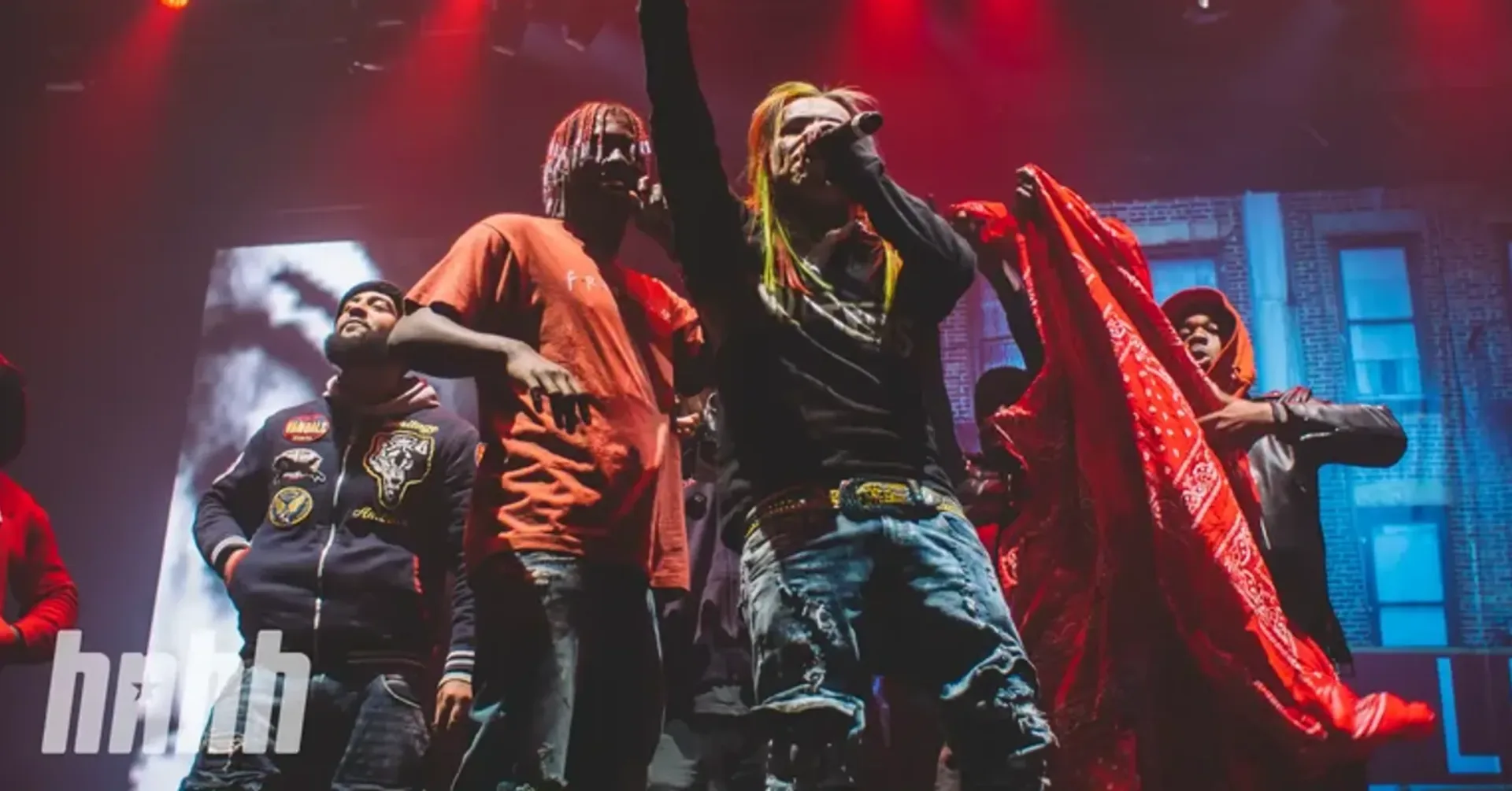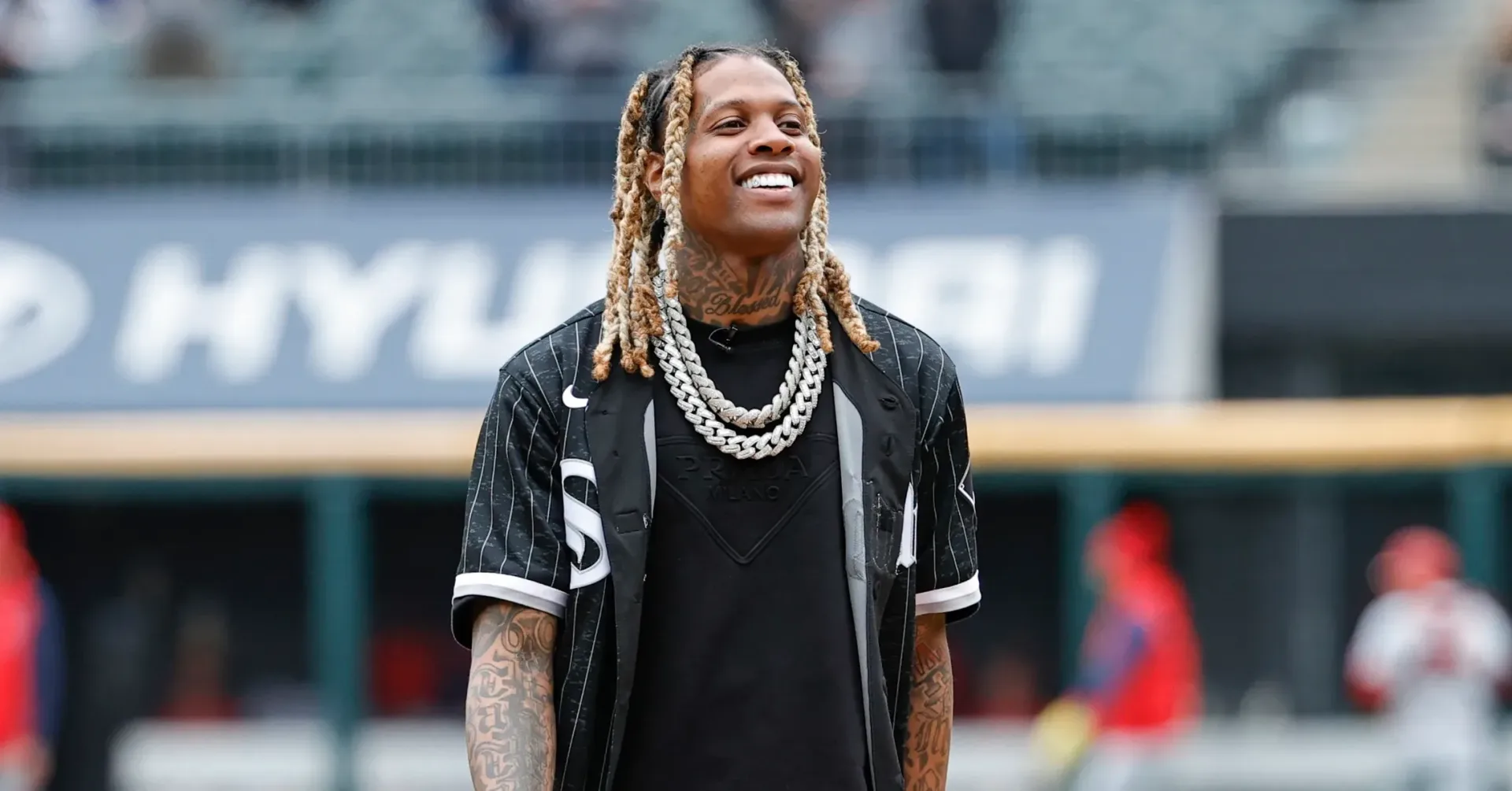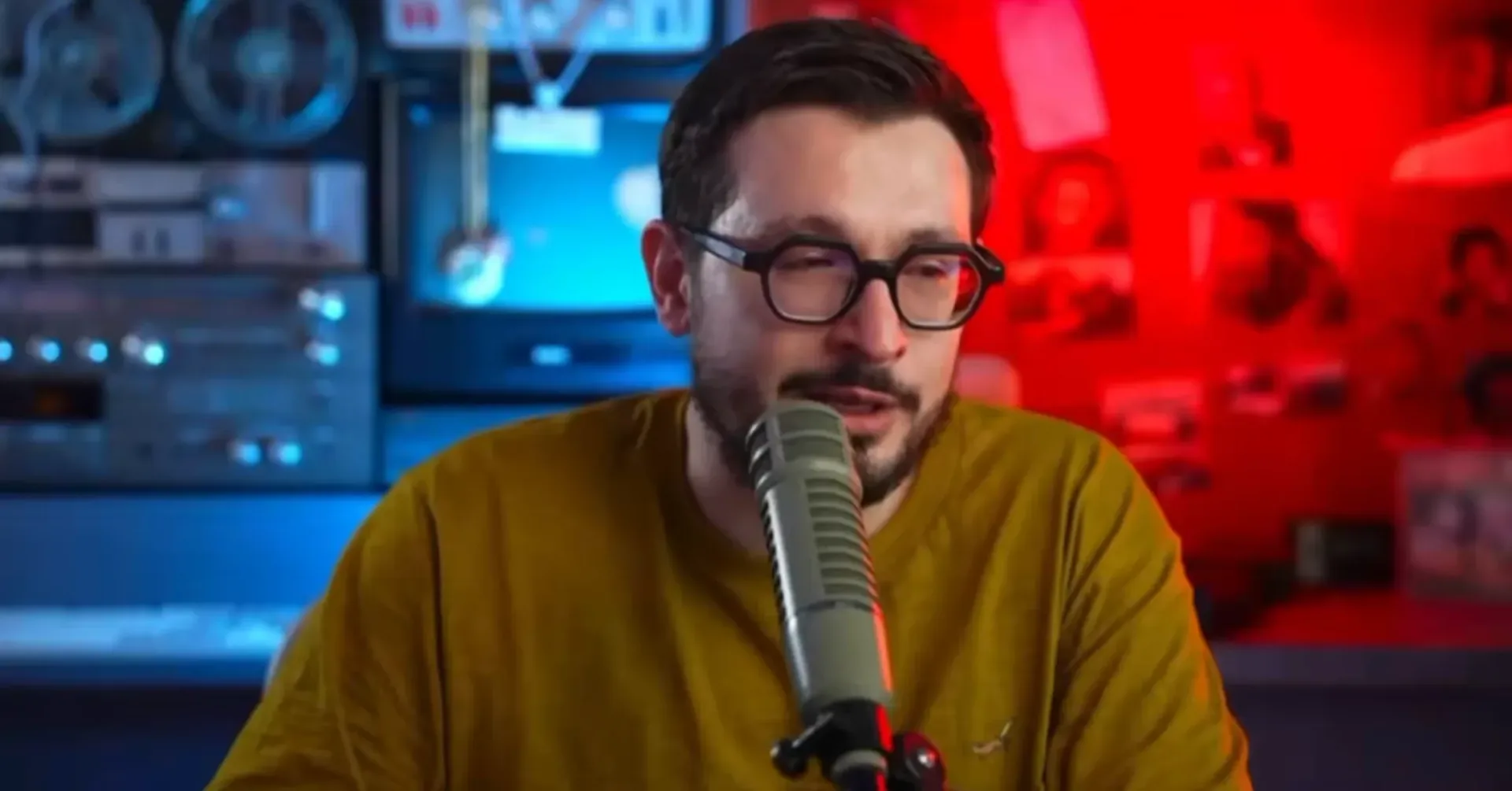
Rap discourse has never met a complicated situation it could not turn into a friendship-alignment chart with red string, blinking arrows and at least one person yelling that a guest verse means everything. That familiar impulse surfaced again after closing arguments in Lil Durk’s murder-for-hire trial, when Trap Lore Ross and DJ Akademiks discussed the case during a livestream and the conversation pivoted toward 21 Savage.
The flashpoint was “War Bout It,” a Lil Durk track featuring 21 Savage. Trap Lore Ross argued that 21 Savage’s participation was disloyal, using the word “snake” while pointing to 21 Savage’s earlier connection with NBA YoungBoy. Akademiks objected immediately. His response was straightforward: 21 Savage can make the music he chooses, and he and Durk have long had a close relationship.
It is a small exchange in the volume of online commentary surrounding a major criminal case, but it captures why these debates expand so quickly. A song becomes a record of allegiances. An old association becomes permanent evidence. A commentator’s interpretation becomes a test of character. Then the trial itself risks becoming background scenery for the louder game: deciding who is loyal to whom.
That is an especially fraught dynamic when a jury is deliberating. At the time of the livestream discussion, deliberations had begun, with no certainty over how quickly a verdict might arrive. The public can follow proceedings, discuss music and disagree sharply about cultural context. But none of those things turns social-media speculation into courtroom evidence.
A feature is not a faction map
“War Bout It” naturally invites conversation because of the names involved and the emotional framing listeners may take from Durk’s lyrics. But a collaboration is still, first, a collaboration. It can reflect friendship, professional respect, creative opportunity, label relationships, timing or simply two artists deciding a record works better together than apart. It does not automatically operate as a public declaration against every person either musician has ever known or worked alongside.
That is the core of Akademiks’ pushback. The idea that 21 Savage and Lil Durk had history changes the calculation substantially. It does not require anyone to abandon their reading of the song’s mood. It does mean that reducing the feature to a single accusation of betrayal leaves out a key piece of context.
Hip-hop’s collaborative ecosystem is also considerably messier than an internet bracket. Artists move between cities, eras, labels, studios, tours, friendships and rivalries. One person may retain ties across groups that fans imagine must be mutually exclusive. A guest spot can be a personal gesture, a musical decision or both. It can also be neither the secret message nor the insult that audiences want it to be.
That lack of tidy answers is not very satisfying for the content machine. Nuance does not produce a clean winner. “These relationships are more complicated than a timeline of clips” is less clickable than a loyalty indictment. Still, it is the more responsible baseline—particularly when the people under discussion are connected to a live legal matter.
Why the trial commentary has become its own spectacle
Trap Lore Ross has drawn significant attention for his coverage of Durk’s case, much of it critical. His discussion of an allegation that Durk informed on OTF Vonni became a particular point of controversy. The reaction did not stay confined to comment sections: some Durk supporters reportedly confronted him outside the courthouse.
That detail is a reminder that courtroom coverage is not a harmless spectator sport simply because it is being streamed, clipped and reposted. High-profile cases encourage a kind of rolling analysis in which every development is treated like a season finale. Creators build interpretations in real time; viewers sort themselves into teams; a person’s physical proximity to a courthouse may be treated as proof of authority, or as an invitation for confrontation.
Neither assumption is useful. Being nearby does not make a commentator part of the case. And disagreement over analysis is not a justification for harassment. A courthouse is where a legal process is taking place, not a convention floor for loyalty tests or a live-action comment section.
The language used around a trial matters, too. Social platforms reward certainty even when certainty is unavailable. People use words such as “telling,” “snitching,” “snake” and “proof” with a confidence that often outpaces what has been established in court. Those labels carry cultural weight, and they can blur the vital distinction between an accusation, a commentary claim, publicly reported information and a finding by a jury.
As deliberations continue, that distinction deserves more care rather than less. Jurors, not stream hosts, fan accounts or reaction channels, are charged with evaluating the case under the court’s instructions and the evidence presented to them.
The legal-defense-fund claim needs careful framing
The livestream disagreement also lands beside an earlier report from Akademiks that 21 Savage was among artists said to be contributing financially to Lil Durk’s legal defense fund. Drake, Kanye West and Lil Baby were also named in that report. The reported contributions have not been independently confirmed within the available information, so they should be understood as claims rather than settled fact.
Even as a reported possibility, the claim explains why the “snake” framing prompted such a forceful response. If 21 Savage is supporting Durk in that way, the supposed contradiction around “War Bout It” becomes much harder to sustain. More broadly, it demonstrates the basic flaw in treating old affiliations as a permanent, all-access guide to an artist’s present choices.
It is also worth resisting the urge to convert reported support into a leaderboard. Legal defense is serious, private and potentially complicated. The public does not need to turn unverified funding chatter into another round of scorekeeping about who cares more, who paid what or who qualifies as family. That instinct does not illuminate the music or the legal process; it merely gives the algorithm additional kindling.
What the 21 Savage debate actually reveals
The more interesting question is not whether listeners can have opinions about “War Bout It.” Of course they can. Music has always invited listeners to interpret relationships, coded references and shifting alliances. The question is whether online commentators can recognize the limits of those interpretations.
Calling someone disloyal over a song feature requires a strong factual foundation, not just a perceived inconsistency in a sprawling web of rap relationships. Akademiks’ rebuttal was a call for that restraint, even if it arrived in the combative style audiences expect from a livestream exchange. A person can have history with NBA YoungBoy and maintain a friendship with Lil Durk. Those propositions are not inherently incompatible.
There is another lesson in the way the exchange traveled. In a media environment built for clips, the hottest sentence often outruns the fuller discussion around it. “21 Savage is a snake” is built to circulate; “the artists’ relationship predates this disputed interpretation” requires more than a few seconds of attention. The second statement may be less combustible, but it is essential context.
That is true well beyond this dispute. Music fans regularly encounter narratives about fallout, hidden messages and camps. Some are grounded in direct public statements; others are assembled from lyrics, photographs, old interviews and assumptions. Treating every connection as a clue may be entertaining, but it can rapidly become misleading when the people involved have not made the claimed conflict public.
For a lighter reminder that music coverage can focus on craft rather than imagined alliance grids, readers can also explore John Legend and Pharrell’s “Muse” and its cinematic ambitions.
Waiting for the process, not the next viral clip
With the jury deliberating in Lil Durk’s case, the responsible posture is patience. There may be a verdict quickly, or deliberations may take longer. A deadlock remained a possibility when deliberations began. Until there is an outcome, confident predictions from streamers and spectators remain predictions.
The Trap Lore Ross and Akademiks exchange will likely keep circulating because it has all the ingredients social media favors: recognizable names, a loyalty accusation, a disputed collaboration and a direct on-stream rebuttal. Yet its most durable takeaway should be simpler. Rap relationships cannot be accurately reduced to one feature, one old association or one viral soundbite.
As the legal case proceeds, it is reasonable to separate the music discussion from claims that imply real-world betrayal or legal significance. “War Bout It” can be debated as a record. 21 Savage’s choices can be discussed as an artist’s choices. But the courtroom deserves a higher standard than the one supplied by the day’s hottest clip.