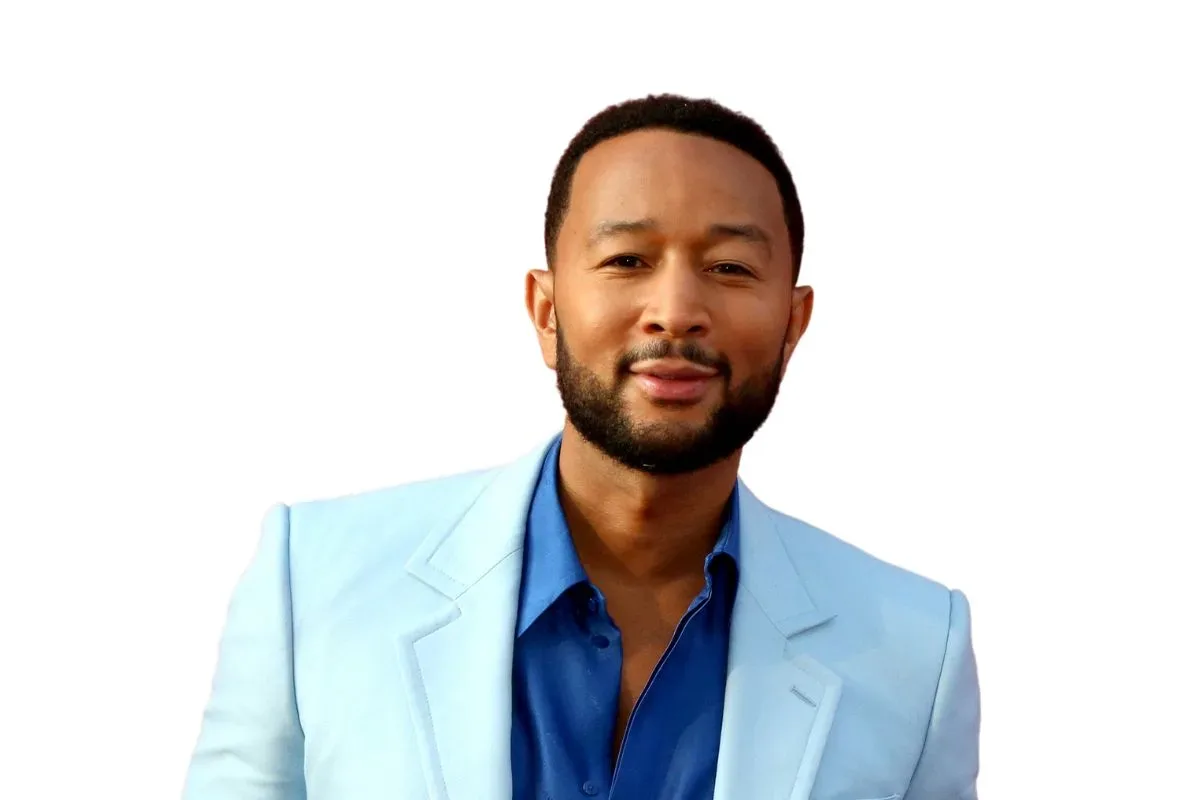
John Legend is preparing to take a deliberate detour from the piano-led ballads most closely associated with his career. His next album, Muse, is due October 23 and pairs him with Pharrell for their first full-length collaboration after more than 20 years of knowing one another. Pharrell produced and co-wrote every track, while Legend has framed the project as an effort to make his familiar voice operate in a markedly different setting.
The early description is ambitious: a cinematic blend drawing from gospel, standards, Doo-Wop, classic soul, Afrobeat and Hip-Hop. Legend has likened its atmosphere to a Black James Bond sensibility, updated with a current rhythmic foundation. That is a useful north star rather than a genre label. It suggests polish, drama, momentum and glamour, but also a record interested in connecting musical eras instead of simply revisiting one of them.
For a singer whose biggest moments have often been intimate, slow-burning and centered around piano, the premise carries a straightforward appeal. Muse is not being presented as an abandonment of Legend’s strengths. It is a chance to put those strengths—precision, warmth and a highly recognizable vocal presence—inside Pharrell’s wider production language.
A collaboration sparked by Clipse
The route to Muse began with Legend’s appearance on Clipse’s comeback album, Let God Sort ‘Em Out, which Pharrell produced. That session apparently helped turn a long-standing relationship into a more expansive plan. Pharrell subsequently called Legend with the idea of constructing an entire project around his voice rather than limiting their work together to a single song or isolated feature.
The complete album came together in Paris in January 2025. Pharrell handled the production and co-writing at his Louis Vuitton studio, connecting the sessions to the fashion house where he is menswear creative director. The location is notable not because a studio address automatically determines music, but because the record’s stated identity already leans toward visual scale and tailored presentation. A Paris setting, a fashion-world creative space and a “cinematic” musical brief make for a distinctly coordinated frame.
That does not mean listeners should assume the album is a soundtrack or a fashion project. The confirmed details point to a music-first collaboration. Still, the process appears to have embraced an aesthetic worldview larger than the usual “guest producer sends beats” arrangement. Pharrell’s involvement stretches across the track list, and Legend’s choice to record material Pharrell wrote in full is especially significant.
Why Legend wanted a new formula
Legend has acknowledged that his catalogue has always included range, even as piano-driven ballads became the material with the greatest public traction. His objective with Muse was to shake up that formula and make something fresh. It is an unusually candid creative motivation: success can make an artist’s signature sound both a strength and a comfortable lane, and this record appears designed to test what happens outside that lane.
“I think my repertoire has always been very diverse, but the piano-driven ballads have gotten the most traction throughout my career,” Legend said. “I wanted to shake up the formula and do something fresh and new.”
That intention matters when looking at the seemingly broad list of influences. Gospel and classic soul have obvious points of contact with Legend’s voice. Standards and Doo-Wop imply a potential focus on vocal arrangement, melody and old-school romantic atmosphere. Afrobeat and Hip-Hop can introduce motion, texture and a more contemporary pulse. Pharrell’s role is likely central to how those ingredients coexist rather than sit in separate genre compartments.
There is also a creative-risk element in Legend recording songs entirely written by Pharrell, something he reportedly does only rarely. Songwriters often treat their own words as inseparable from their delivery; trusting another writer’s complete composition requires the performer to find a personal connection without controlling every part of the page. In this case, that choice signals confidence in Pharrell’s understanding of what can suit Legend without merely repeating the singer’s past.
“Daylight” and an early view of the album’s world
The lead single, “Daylight,” has already received a high-profile performance from Legend on CBS’s America’s Tailgate during the NFL season opener. Its role is larger than a standard album-preview checkbox. As the public’s first major point of contact with Muse, it sets an expectation that this era will not be defined only by the restrained, piano-forward approach many people may anticipate from Legend.
Another track, “Pray For Ya,” has also been used in visual settings before the album’s release. It soundtracked Louis Vuitton’s Fall-Winter 2026 Men’s show and appeared in Pharrell’s Moët Ice Impérial campaign. Those placements fit the record’s upscale, lush and image-conscious framing, while offering a limited indication of its sonic palette. They should not be treated as a substitute for hearing the finished album in sequence, but they reinforce the idea that Muse is built to carry atmosphere beyond a conventional single cycle.
The wider entertainment calendar has plenty of unrelated events competing for attention, including a new Paramount+ chapter for the Jackass crew in late September. Legend’s rollout stands at the opposite end of the pop-culture volume dial: sleek, orchestrated and rooted in a specific musical world rather than stunt-driven chaos. The contrast only underlines how distinct the intended presentation of Muse appears to be.
Pharrell, Clipse and “Bodies On The Floor”
Pharrell is not just the architect behind the console. He appears on multiple songs, making Muse a genuine two-artist creative exchange even though it remains a John Legend album. Clipse also returns for “Bodies On The Floor,” a song said to use the language of gang warfare as a metaphor for a toxic relationship. That description suggests a darker lyrical turn than the album title’s elegance initially implies.
The Clipse involvement gives the project a direct line back to the collaboration that set it in motion. It also makes sense within the stated blend of classic forms and Hip-Hop. A guest appearance from the duo could sharpen the album’s contrast between Legend’s polished vocal center and a harder-edged storytelling perspective. The exact musical shape of the track remains unknown, so it is best to view its title and concept as a clue, not a complete explanation of how it will sound.
More broadly, the assembled personnel and references point toward a record that treats sophistication as something flexible. “Cinematic” can mean strings and grandeur, but it can also mean framing: pacing songs for maximum scene-setting, allowing details to feel tactile, and giving a vocal performance room to inhabit characters or moods. Gospel, Doo-Wop and standards can supply drama and harmony; Afrobeat and Hip-Hop can prevent the production from becoming a period piece. That combination is where Muse could find its most distinctive identity.
The meaning behind Muse
The album title works on two levels. It refers to the muses of Greek mythology, figures tied to artistic inspiration, while also reflecting the idea of ancestors as a wellspring for creativity. That dual meaning matches the record’s broader approach. Its musical vocabulary reaches backward through several traditions, yet its stated mission is not archival reproduction. Legend and Pharrell appear to be using those traditions as active material for a modern project.
Ancestors as inspiration is particularly resonant alongside the genres named for the album. Gospel, soul, Doo-Wop and Hip-Hop are not decorative labels; each carries its own lineage, techniques and cultural history. A project that invokes them all has a lot to balance. The opportunity lies in letting those histories inform the work without reducing them to mood-board shorthand. Legend’s vocal background and Pharrell’s long record of cross-genre production make the pairing well placed to attempt that balance, though the final answer will arrive with the album itself.
Legend’s next stage includes theater
Muse is not Legend’s only major creative project on the horizon. He is also developing a new musical, Imitation of Life, scheduled for The Shed in November. It will mark his first original theatrical score, adding another significant format to a period already defined by experimentation.
The timing makes the album’s “prove myself again” impulse feel broader than a single release campaign. Recording outside his familiar ballad template, accepting fully written songs from Pharrell, working across dense genre references and composing for the stage all point in the same direction: Legend is pursuing new containers for a voice audiences already know well.
There is no need to overstate the shift before October 23. The confirmed preview points are “Daylight,” “Pray For Ya,” the Clipse track “Bodies On The Floor,” and the central Pharrell partnership. But those pieces already outline an album with a clear ambition: not to erase John Legend’s musical identity, but to place it under different lights, against a sharper backbeat, and inside a world built for motion-picture scale.