Aaron Sorkin’s The Social Reckoning has drawn a notably divided but engaged first wave of reactions ahead of its Oct. 9 theatrical opening. The drama is positioned as a companion piece to 2010’s The Social Network, rather than a simple continuation, and it moves the focus from Facebook’s origin story to the consequences of the company’s power.
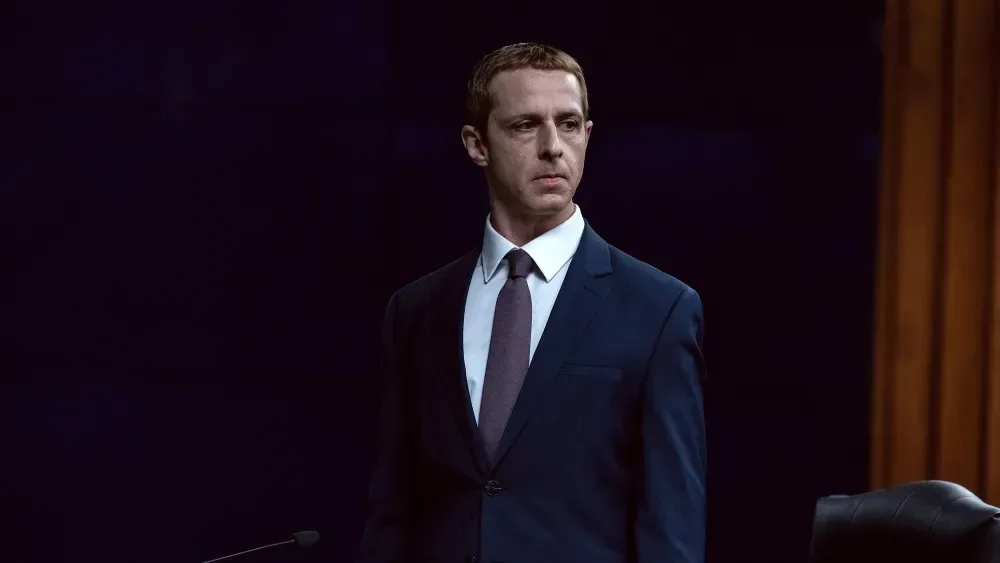
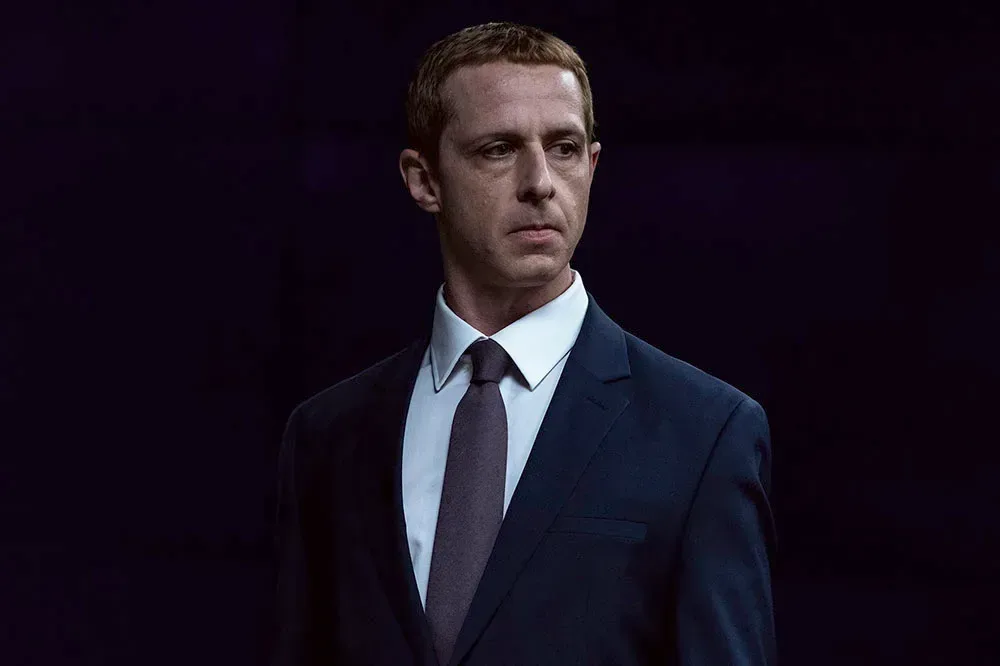
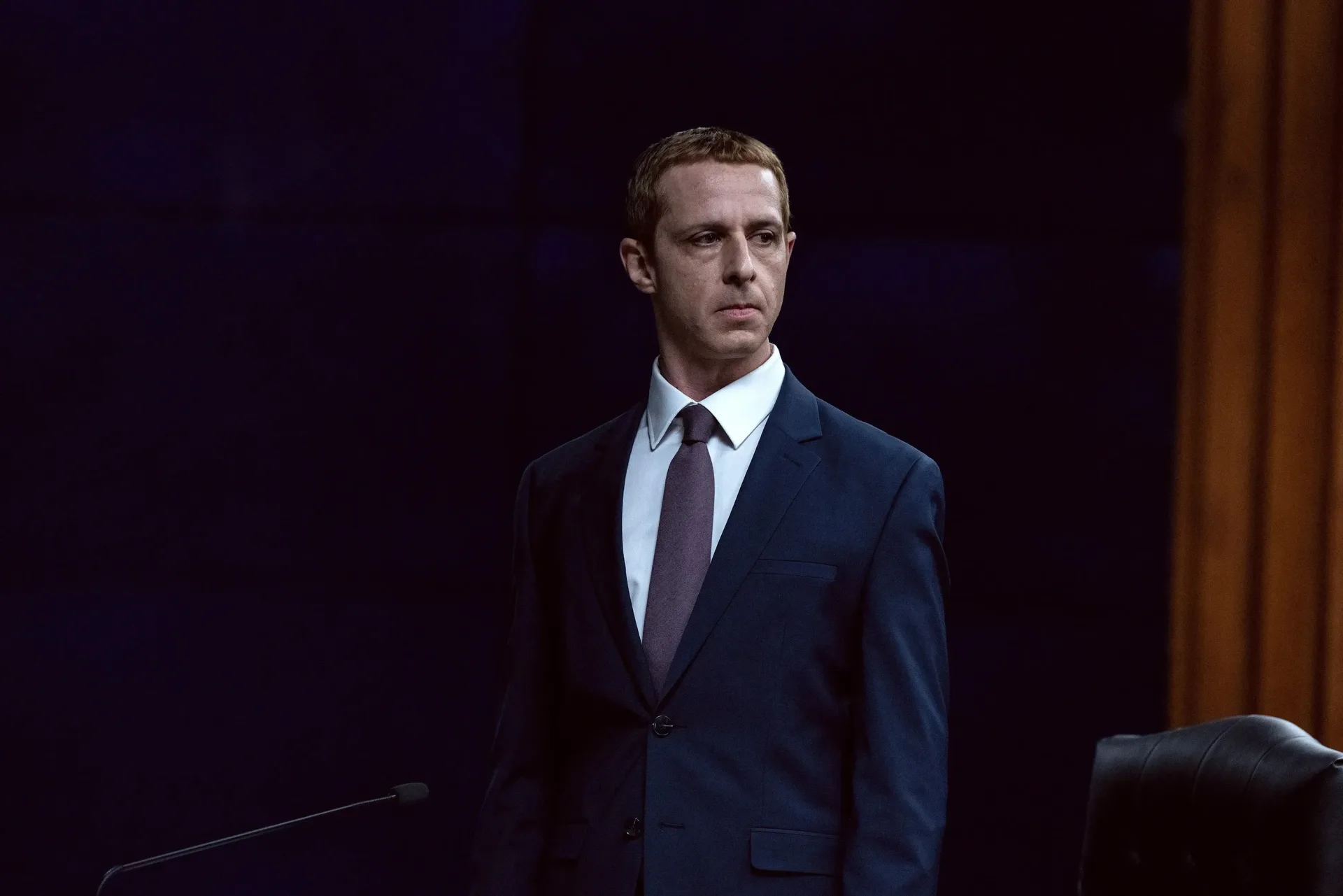
The new film dramatizes the 2021 Facebook leak involving whistleblower Frances Haugen and reporter Jeff Horwitz. Mikey Madison plays Haugen, while Jeremy Allen White plays Horwitz. Jeremy Strong takes on Mark Zuckerberg, a role Jesse Eisenberg played in Sorkin’s earlier film.
That setup has made comparison with The Social Network unavoidable. Early responses generally do not suggest a unanimous successor to that film’s standing. Instead, they describe a forceful, topical investigative drama whose sharpest ideas and performances can coexist with complaints about its rhythm and filmmaking style.
A companion piece with a different engine
The phrase companion piece matters here. It signals a movie connected by subject matter and creative perspective, but not necessarily a direct sequel that resumes the earlier story in a conventional way. The Social Network examined Facebook’s founding-era conflicts. The Social Reckoning reportedly uses the Facebook leak as its dramatic center, shifting the question from who built a platform to what the company knew about its effects and practices.
That change also explains why some of the strongest reactions frame the film as closer in spirit to Sorkin’s journalism-focused work than to the 2010 movie. An investigative drama makes process part of the story: the gathering of evidence, the decisions around disclosure, the friction between sources and reporters, and the stakes of making information public. Its tension often comes less from physical action than from what can be confirmed, communicated and understood.
Several early viewers found that framework compelling. One reaction called the film timely and absorbing, praising the way its investigation reaches a more intense final stretch around Facebook’s internal practices. Another said the story builds gradually before arriving at a climax that creates genuine anger. The shared idea is that the film aims to make audiences confront institutional decisions, not simply observe a biographical portrait of Zuckerberg.
There is also a meaningful distinction in the reaction that argues that information being public is not identical to it being widely understood. That is an interpretation of the film’s relevance, not a new claim about the events it depicts. But it identifies the movie’s apparent dramatic ambition: to turn a complicated body of reporting and leaked material into a story with emotional clarity for viewers who may not have followed every detail at the time.
The reviews are split on execution, not on the scale of the subject
The most measured notices give The Social Reckoning credit for urgency, cast work and dialogue while holding back on its overall construction. One early reaction judged it “good, just not great,” arguing that flat direction and listless pacing reduce some of the potential emotional impact. That reviewer nevertheless found the investigative story worthwhile and said it ultimately lands despite the turbulence.
Related coverage includes The Social Reckoning First Reactions Split on Sorkin’s Facebook Drama.
Pacing is especially important in a movie built around reporting and corporate accountability. It is the management of when the audience receives a fact, how a discovery changes the stakes, and whether the plot’s accumulation of detail produces momentum. A criticism of slow pacing does not necessarily mean a story lacks important material; it can mean the progression from one discovery or confrontation to the next does not create enough dramatic pressure.
The direction critique is separate from the script critique, even when both are attached to Sorkin’s work. Dialogue concerns what characters say and how scenes are structured on the page. Direction concerns the film’s visual and dramatic delivery: performances, staging, rhythm, tone and the movement of scenes. Early reactions suggest that viewers who admire the film’s verbal intensity may still feel its presentation is more restrained or television-like than they expected.
That “looks like TV” observation appears in one enthusiastic response, but it is not offered there as a fatal flaw. The same reaction argues that the material’s importance and the film’s riveting qualities outweigh its aesthetic limitations. This is a useful reminder that early reactions are not a consensus score. They are individual first impressions, often focused on what stayed with a viewer most strongly, whether that is a performance, a political argument or a structural shortcoming.
Jeremy Strong inherits a difficult role
Strong’s casting as Zuckerberg has been one of the most discussed aspects of the project, because Eisenberg’s performance in The Social Network was Oscar-nominated and has become inseparable from many viewers’ memory of that movie. Recasting a well-known figure after such a prominent portrayal gives the new actor two challenges: he must make the character legible within this film, and he must avoid feeling like a simple imitation of the earlier performance.
Early reactions indicate that Strong has made a substantial impression. One critic called him ferocious and said he moves beyond straightforward impersonation. Another described the portrayal as a caricature but still found it believable. Those descriptions are not identical, yet together they point to a performance viewers see as heightened rather than neutral.
Caricature, in criticism, does not always mean a performance has failed. It can mean that a portrayal emphasizes recognizable traits for dramatic effect. Whether that feels persuasive depends on the movie’s tone and the viewer’s tolerance for stylization. In this case, the early commentary suggests Strong’s work is likely to become a central point of discussion, precisely because the role arrives with both real-world associations and a famous prior screen interpretation.
Eisenberg had initially been asked to return. He declined, explaining that he was moving in a different direction and no longer wanted to be associated with the character. Sorkin said he tried for three days to persuade him to participate, describing Eisenberg as battle-tested by the connection audiences had made between the actor and Zuckerberg after the earlier film.
That context gives Strong’s casting an additional practical consequence: audiences are not being asked to see an older version of the same performance. They are being asked to accept a new interpretation in a film with a new focus. Based on the early response, the performance may be one of the movie’s strongest assets, even among critics less convinced by the film as a whole.
Madison and White anchor the reporting story
The film’s reported narrative frame puts Madison’s Haugen and White’s Horwitz at the center of its investigative thread. Madison has earned particular praise in the early reaction round, including for a portrayal of a whistleblower motivated by love rather than spite. That is a characterization of the film’s dramatic presentation, not a complete description of the real person or events.
White and Madison have been called quietly magnetic, while Bill Burr and Betty Gilpin were singled out as performers especially suited to Sorkin’s dialogue. Wunmi Mosaku and Billy Magnussen are also part of the supporting cast.
The emphasis on an internal source and a reporter gives the movie two complementary viewpoints. The whistleblower side can dramatize the decision to disclose information from inside an institution. The journalism side can dramatize verification, communication and the pressures of turning material into reporting. If the film is indeed structured as a slow build, as one reaction suggests, the relationship between those two perspectives is likely fundamental to how it develops suspense.
It also makes the movie more than a story about one executive. The early reactions repeatedly characterize it as an examination of a company and the broader social environment around it. One of the most positive notices called it a scathing indictment of contemporary society, while another said its debate around free speech does not settle for easy answers. Those are critical readings of the film’s themes, not proof that every question receives equal treatment. Still, they explain why the response has so often been framed in terms of anger.
Why the “good, not great” reaction is still significant
Calling a film “good, not great” can sound dismissive when it follows a highly regarded predecessor. In this case, it more accurately captures the high comparison point facing The Social Reckoning. For some critics, The Social Network remains the standard against which Sorkin’s new Facebook-related drama will be measured. One response explicitly says the newer film is not a masterpiece on the level of its predecessor, while still finding it fully engaging.
Other viewers are more bullish. One reaction places the new movie alongside The Social Network and argues that it matters more, citing its account of a company that allegedly understood the consequences of its actions. Such a split is useful for prospective audiences: expectations should be calibrated around a serious, dialogue-driven and issue-focused drama, not around universal agreement that the film surpasses the earlier one.
The early notices also point to a more basic strength: the movie has provoked discussion. Critics who raised reservations about direction and pacing still described being engaged or angered by the material. In an investigative film, that response can be a sign that its central questions are landing even if the mechanics do not work equally well for every viewer.
The broader media landscape remains interested in stories about platforms, online influence and the people behind them. That interest extends beyond this film’s real-world corporate subject; for another example of how digital culture is shaping entertainment conversations, see our coverage of an AI character drawing joke-theft claims as Instagram Reels rack up millions of views.
What is known before the wider review cycle
The Social Reckoning opens in theaters Oct. 9 through Sony Pictures. Its early critical response ranges from positive to mixed, with repeated praise for its cast, its subject’s urgency and its ability to generate outrage. The most common reservations concern pacing, direction and the difficult shadow cast by The Social Network.
That is a more nuanced picture than either “instant classic” or “misfire.” Sorkin’s new film appears to have found an audience among viewers looking for a sharply argued drama about Facebook, the 2021 leak and questions surrounding corporate responsibility. Whether its formal choices carry that argument with enough force will be the central fault line as full reviews arrive.