An AI-generated comedy character called Tiffany Sloan has become a fast-moving example of a problem that is much larger than one Instagram account: a synthetic performer can publish at enormous speed, rack up substantial engagement, and potentially turn attention into revenue while the humans who wrote the material struggle to establish where it came from.
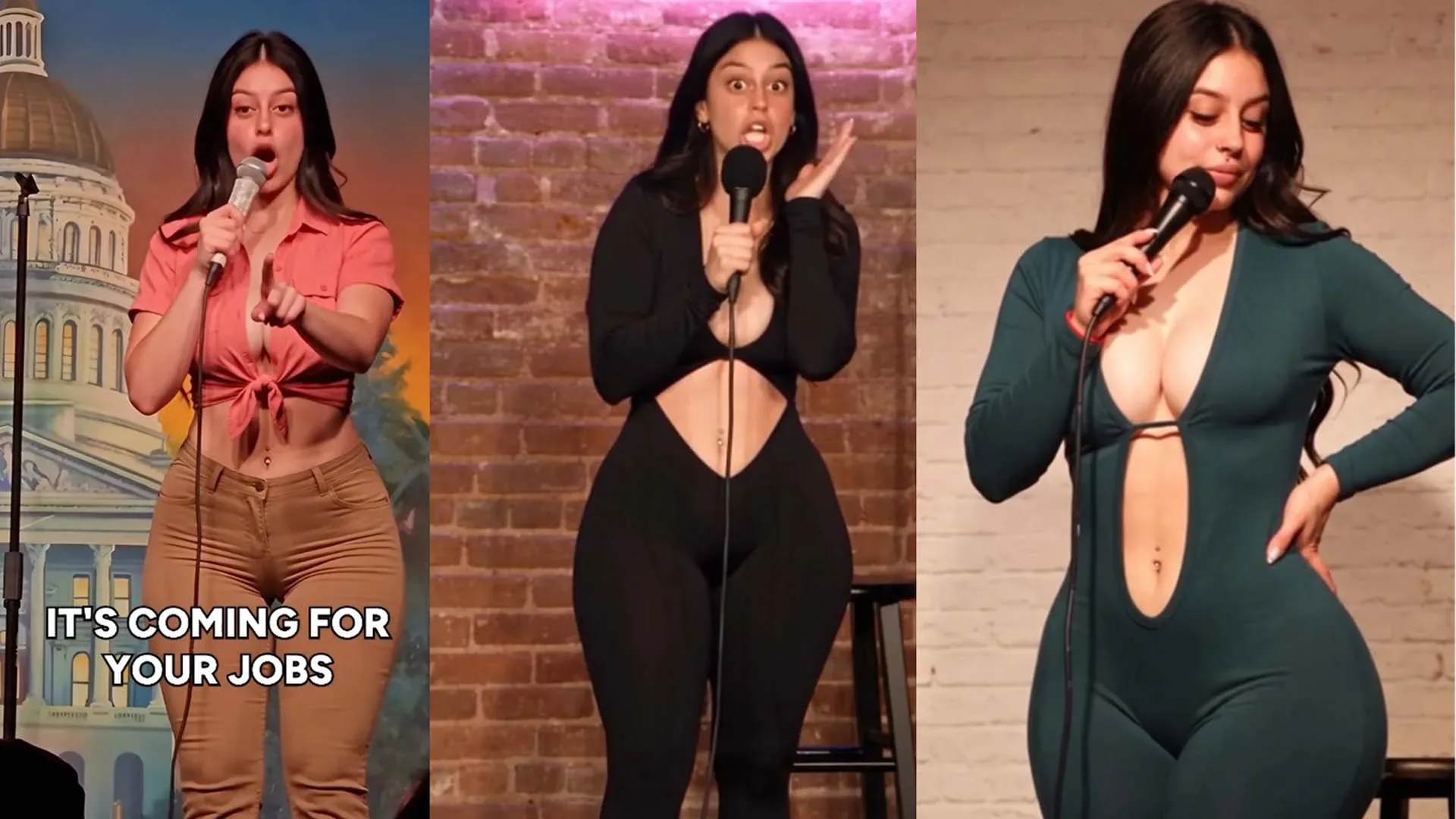
The Sloan account posts short-form Reels featuring an AI-generated woman performing jokes before an artificial-looking audience. One stand-up-style clip surpassed 7 million views in under two weeks. The account began posting on September 11 and, within roughly three weeks, had accumulated more than 375,000 followers and published 75 videos. Those are striking numbers for any new comedy account. They are particularly consequential when allegations emerge that some of the jokes may not belong to the person operating it.
On October 3, comedian George Brett Olson posted a comparison between one of his own performance clips and a Tiffany Sloan video. Olson alleged that the AI account had taken his joke. The comparison also raised a more specific concern than a familiar setup or broadly similar premise: the Sloan character appears to echo Olson’s clothing as well as the material. Olson has further alleged that jokes from other comedians have been used, too.
Those allegations should be described precisely. The account’s creator is unknown, and the available material does not establish who made the videos, how they were made, or whether every joke on the account was copied. But the Olson comparison puts the central issue into plain view: when a polished, anonymous AI persona delivers a joke that closely tracks a comedian’s work, an audience may reward the synthetic account without recognizing the original performer at all.
A comedian-shaped account without a visible comedian
Tiffany Sloan is not presented as a conventional stand-up comic building an audience through clubs, touring, recorded specials, or a personal public identity. The character is an AI-generated figure deployed in a familiar social-video format: a face, a microphone, a crowd, a quick punchline and a feed optimized for swiping. That format matters because it supplies the cues viewers already associate with an authentic comedy clip while requiring little of the normal infrastructure behind one.
In this context, generative AI refers to tools that can produce or alter media such as images, video, voices and text from prompts or other inputs. The concern here is not merely that such tools can create a fictional on-screen person. It is that a fictional person can be used as a container for work created by real people, with the original creator potentially removed from the chain of attention.
Calling Sloan an “AI comedian” can also blur two very different acts: generating the appearance of a comedian and writing a joke. An operator may use AI to create the performer, stage, audience and variations on a clip. None of that answers the essential authorship question about the joke itself. If a line originated in a working comic’s set, the appealing synthetic presentation does not make the underlying material original.
The account’s scale makes that distinction urgent. Seventy-five videos in about three weeks is a pace that would be demanding for a single performer who is writing, rehearsing, recording and editing original short-form comedy. AI tools can reduce the effort required to produce many visual versions of a clip. That efficiency may be useful in some creative workflows, but it also means that an account operator can test a high volume of material and presentation far more quickly than an individual comic can realistically respond.
Related coverage includes AI Instagram Comic Faces Joke-Theft Claims as Tiffany Sloan Reels Surge.
What Olson’s allegation suggests—and what remains unproven
Olson’s posted side-by-side comparison is the core factual basis for the current claim. It is fair to say that he alleges his joke was used by the Tiffany Sloan account and that the visual resemblance in wardrobe intensified the concern. It is not fair to turn that allegation into a definitive finding about every post, every operator behind related accounts, or the internal process used to produce the Reel.
That boundary is important in an environment where viral claims can travel as fast as viral videos. A close comparison can give viewers a clear reason to question a post’s originality. Yet identifying a responsible person, documenting every instance of alleged copying, and determining what remedy applies are separate matters. The anonymous nature of the account makes all of them harder.
Olson also says that other comedians have had jokes taken and that the same person may be repurposing jokes through multiple AI-generated women of different races. That is a serious allegation, but it remains Olson’s claim based on the information available. The reported pattern nevertheless illustrates a practical risk of synthetic character accounts: one joke can be restaged repeatedly with different faces, outfits, supporting performers or famous-person imagery, creating several chances for an algorithm to find a winning version.
The Sloan clips have also placed the character alongside depictions of well-known actors including Kaley Cuoco and Danny DeVito. That adds another layer to the authenticity problem. A viewer encountering a celebrity-adjacent AI comedy clip may be responding to the novelty of a recognizable likeness, the joke, the attractive fictional performer, or all three at once. The platform metric records the watch, not the reason the person watched or whether they understood what was fabricated.
Why engagement changes the stakes
On social platforms, engagement is the collection of measurable viewer actions around a post: views, watches, likes, comments, shares and follows. It is not identical to quality, originality or consent. But it can be economically valuable because strong performance helps an account gain visibility and can support monetization.
That creates an incentive problem. A creator who can rapidly produce AI video may make numerous versions of the same basic idea, changing a costume, character, celebrity cameo or delivery until one gets traction. If the joke at the center of that process was lifted from a comedian, the alleged theft is not confined to one isolated post. It can become an input for a repeatable content system.
Volume is one reason the situation differs from an ordinary allegation that one performer borrowed one line. Social feeds reward a constant supply of clips, and generative tools can make that supply easier to create. An unknown operator can potentially run multiple identities while the people whose material is being used must first notice the posts, preserve evidence, explain the overlap and try to reach an audience that has already moved to the next Reel.
The result is an asymmetry. The original comedian bears the work of writing and performing, while a synthetic account can concentrate on distribution and packaging. Even when viewers eventually learn that a joke was allegedly borrowed, the viral attention may already have strengthened the account that published it.
This is why the story is not simply about whether an AI-rendered face looks convincing. The more consequential question is whether platforms can distinguish between highly productive posting and trustworthy creative authorship. A recommendation system that responds mainly to retention and reactions has no inherent reason to care who wrote a joke unless that information is supplied, verified and meaningfully used in moderation or monetization decisions.
The attribution gap in short-form comedy
Comedy is unusually vulnerable to attribution failures in short video. A joke can be compact, memorable and detachable from the set that gave it context. Once it is clipped, reposted or performed by a different figure, viewers may not know where it began. The AI layer makes the gap wider because it can place the words in the mouth of an invented performer with no searchable career history, no live dates and no obvious connection to a human author.
There is a practical audience consequence, too. A viewer who laughs at a short clip may follow the account, comment on it and return for more without ever seeing the original comic. When that account has hundreds of thousands of followers, the discovery function that once might have introduced people to the writer can instead be redirected to the operator of a fictional personality.
That does not mean every AI-assisted comedy video is necessarily deceptive or derivative. It means the format makes disclosure and attribution more important. If a creator uses a synthetic character to present original material, clear credit can tell an audience who actually wrote it. If a creator is adapting or licensing material, the credit can identify the underlying human work. Without that clarity, viewers are left to infer authorship from a production that is specifically designed to obscure how it was assembled.
The larger online environment already has trouble separating reliable material from content optimized to spread. The same pressure is visible in other AI-related disputes, including concerns around automated activity and attribution online. Joking Joystick recently covered how Wikimedia flagged unauthorized activity it linked to OpenAI agents. The situations are different, but both show why identifying who or what is acting online can be as important as judging the output itself.
What viewers and comedians can take from this case
The immediate lesson for viewers is restraint. A huge view count does not verify that a creator wrote the joke, owns the character, obtained permission for a likeness or represents a real person. It only verifies that the clip was watched. When a comedy account appears suddenly and posts at unusually high volume, audiences can look for credited writers, links to original performers and signs that the account explains its use of AI.
For comedians, Olson’s comparison demonstrates the value of retaining dated recordings of performances and public posts. A direct comparison is easier for audiences to understand than a broad accusation, particularly when a joke’s wording, setup and visual presentation appear to overlap. Documentation cannot by itself solve an anonymous-account problem, but it can establish a record of the comedian’s work and make attribution questions concrete.
For platforms, the unanswered issue is whether their systems treat allegations of copied material in AI content as a distinct problem rather than simply another argument in the comments. A process that only rewards watch time risks helping anonymous operators outpace the people whose work is allegedly being repackaged. The Sloan case does not supply a complete solution, but it exposes the mismatch between the speed of generative content and the slower human work of proving origin.
Tiffany Sloan’s rapid growth shows why the format is attractive: a plausible-looking comedy persona can generate millions of views and hundreds of thousands of followers in weeks. Olson’s allegation shows why the format can be damaging: the same machinery can potentially detach jokes from the people who wrote and performed them. Until authorship is easier to identify and meaningful credit follows the material, the loudest beneficiary of a viral AI comedy clip may be the account most willing to publish first and answer questions later.