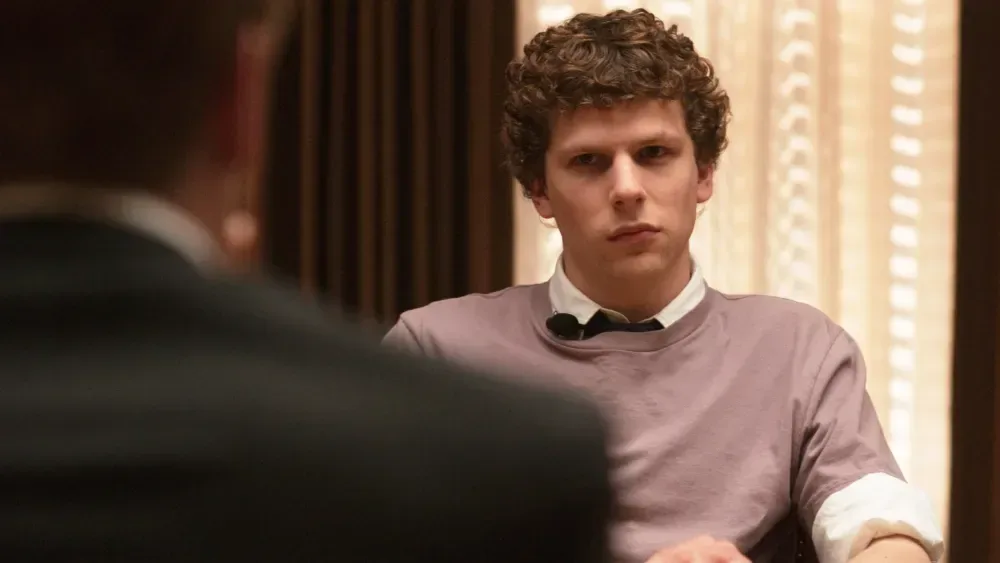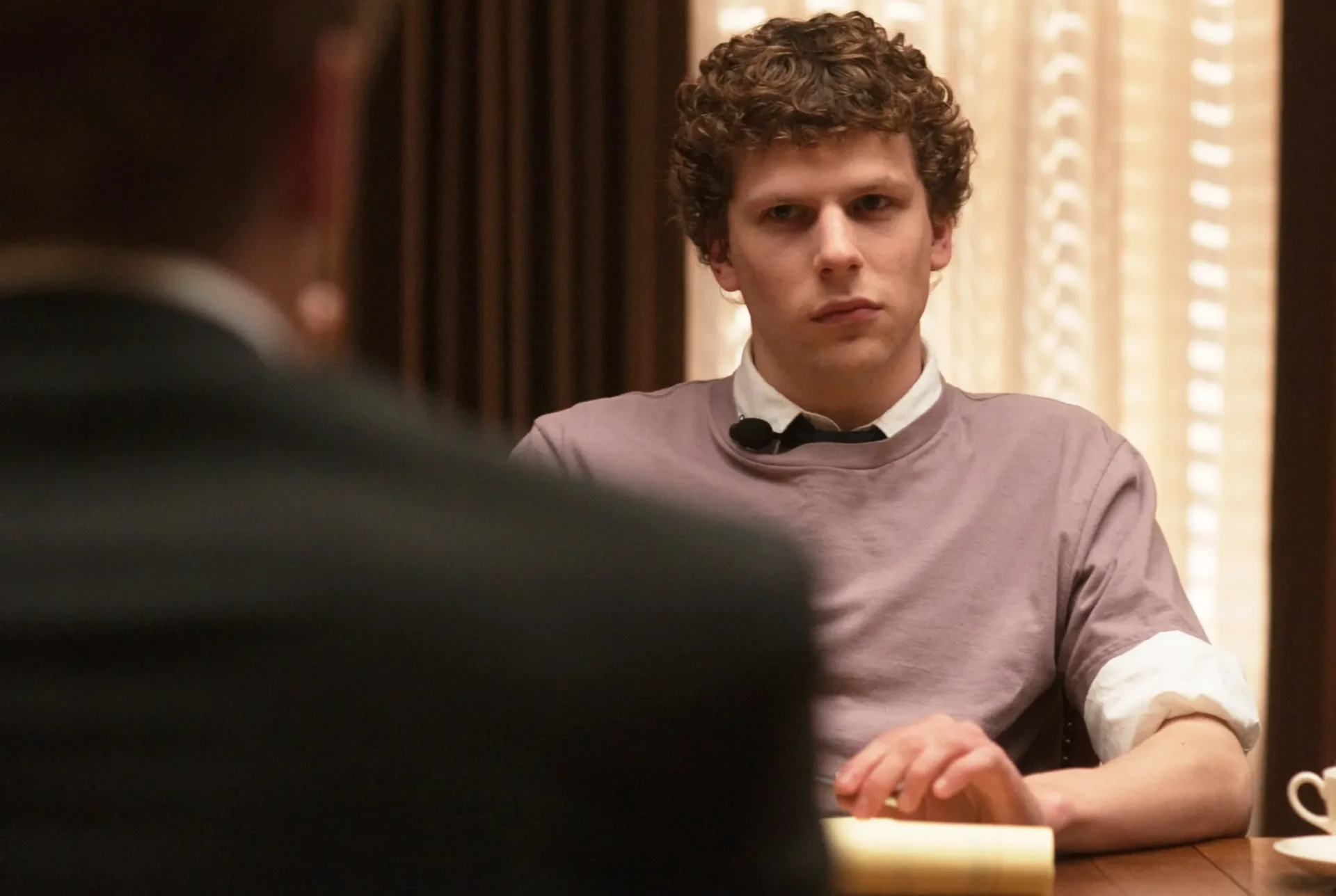
Aaron Sorkin says he was caught off guard when Jesse Eisenberg chose not to reprise Mark Zuckerberg in The Social Reckoning, his 2026 follow-up to The Social Network. Sorkin had written Eisenberg’s return into his expectations from the outset, only to learn that the actor had decided to move away from the role.
The surprise was not simply that a performer passed on a sequel. Eisenberg’s Zuckerberg is central to the identity of 2010’s The Social Network, a film that earned eight Academy Award nominations and won three: adapted screenplay for Sorkin, film editing, and original score. Eisenberg himself received an Oscar nomination for playing the young Facebook founder. That history made his absence from the new movie a particularly conspicuous casting change.
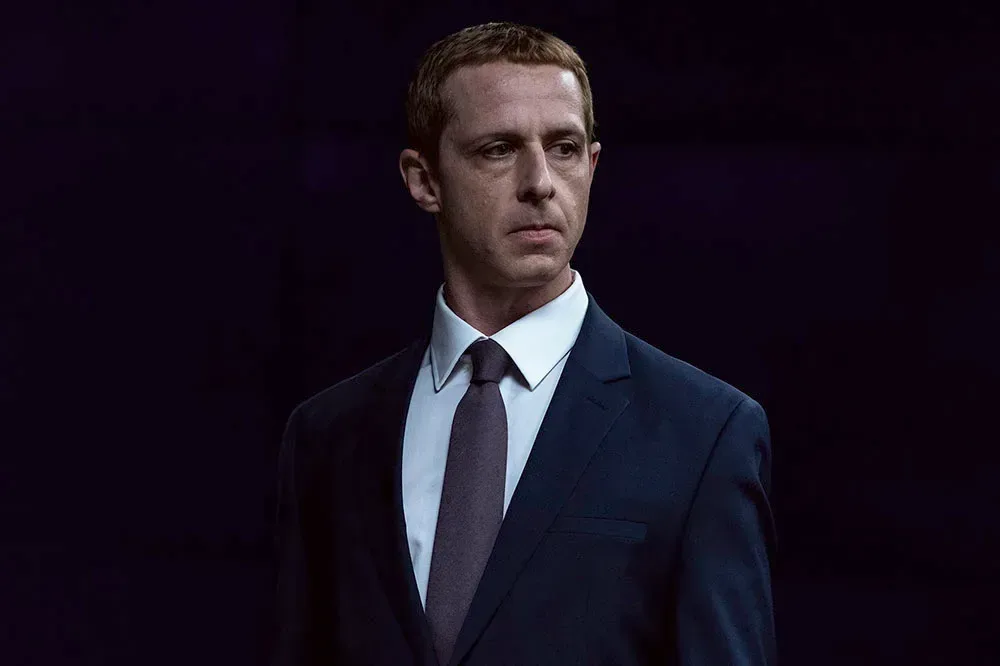
In The Social Reckoning, Jeremy Strong takes over as Zuckerberg. The film also features Mikey Madison, Jeremy Allen White, Billy Magnussen and Bill Burr. It is scheduled for a theatrical release on October 9.
Sorkin had expected Eisenberg to say yes
Sorkin said he was close to finishing the screenplay when he encountered Eisenberg at a party and told him that a script would be coming soon. He had not treated the conversation as a question of whether Eisenberg wanted to participate; he had assumed that the actor would return.
That assumption is revealing in a straightforward way: a sequel or follow-up built around a previously acclaimed performance can look like the simplest possible reunion on paper. The writer knows the character, the actor knows the rhythms of the part, and viewers immediately understand the connection to the earlier film. But a recognizable role is not automatically an appealing one for the person who played it.
Sorkin did not take Eisenberg’s initial reluctance as an instant final answer. He said he prepared an outline for their discussions—the first time he had made one for this purpose. Rather than merely asking again, he organized arguments for why Eisenberg should come back, including the quality of the material and the dramatic moments he would get to perform.
That is an unusual detail because an outline is generally a planning document: a structured way to arrange points before a conversation, essay, screenplay, or presentation. Here, Sorkin used one as a case for revisiting a character he had already written for Eisenberg. He believed the actor had proved he could excel in the role and wanted to show him what the new story offered.
Eisenberg ultimately still declined. Yet Sorkin said the conversations were not fruitless. Eisenberg told him that Sorkin had come closer to changing his mind than he expected. That is not the same as an indication that Eisenberg may return later, and there is no reason to read it as one. It does, however, suggest that the decision came after a serious discussion of the script rather than a casual dismissal of the project.
Related coverage includes Aaron Sorkin Says Jesse Eisenberg Nearly Reconsidered ‘The Social Reckoning’.
Eisenberg draws a line between the film and the character
Eisenberg’s own explanation makes a crucial distinction. He said he is moving in different directions in life and does not want to be associated with the character. At the same time, he emphasized that his reasons for declining were not a judgment on the quality of Sorkin’s new movie.
That distinction matters because audiences often collapse two separate things into one: refusing a project and rejecting the people or creative work behind it. Eisenberg’s comments separate them. His decision concerns his continuing connection to Zuckerberg, not a claim that The Social Reckoning is weak or that Sorkin failed to make a persuasive artistic case.
For an actor, returning to a role can carry more than the practical question of scheduling or compensation. A famous performance can become a powerful public shorthand, especially when it is tied to a real, living figure. Eisenberg’s statement suggests that he does not want to extend that association, even if he respects the film being made.
There is also a basic difference between making an original portrayal and returning years later. In the first film, Eisenberg’s performance existed as part of a self-contained drama that also starred Andrew Garfield and Justin Timberlake. A later film changes the proposition: it asks the performer to renew a public identification with both the fictionalized version of a person and the cultural weight surrounding that person. Eisenberg has chosen not to do that.
Money was not the deciding factor
Sorkin said he knew the studio’s offer to Eisenberg and that financial compensation did not sway him. In fact, Sorkin characterized money as something that could work against the offer for Eisenberg, whom he described as mindful of raising his children without excess wealth.
The reported exchange reinforces Eisenberg’s wider explanation. If the choice had been about extracting a better deal, more discussion could imply an ongoing negotiation. But Sorkin’s comments frame this as a values-driven decision. The actor was not persuaded by the part, its showcase scenes, or the amount offered.
That does not make the recasting a creative verdict on either actor. It establishes a production reality: the role had to be played by someone else. Strong, known for Succession, now steps into a part with an unusually clear point of comparison. Viewers familiar with Eisenberg’s Oscar-nominated performance will naturally recognize the continuity of character while also looking for the distinctions Strong brings to the new film.
Recasting is not necessarily an attempt to reproduce the prior performer. It can be an acknowledgment that the story has moved into another stage, one that requires a new interpretation. Nothing released so far in the supplied details establishes how Strong’s Zuckerberg will differ in performance, characterization, or era from Eisenberg’s version, so those questions remain for the film itself rather than something that can be assumed from the casting alone.
Why the original performance remains such a major reference point
The Social Network remains the unavoidable reference because its awards recognition made both the film and its cast culturally durable. Sorkin’s adapted-screenplay win recognized the writing, while Eisenberg’s nomination affirmed how closely his portrayal was linked to the movie’s impact. A change in the actor playing Zuckerberg is therefore more visible than a routine sequel recast might be.
Still, the facts offered by Sorkin and Eisenberg describe a professional disagreement handled with notable respect. Sorkin was disappointed and tried to persuade him. Eisenberg listened, acknowledged the strength of the argument, and maintained his choice. Eisenberg has also been clear that he wishes no ill toward the finished movie.
That makes the story less about a feud than about creative ownership and personal boundaries. A screenwriter-director may see a returning actor as the natural continuation of a previous work; the actor may see the same return as a commitment he no longer wants to make. Both perspectives can be sincere at once.
For audiences, the immediate practical implication is simple. The Social Reckoning will not feature Eisenberg reprising Zuckerberg, despite the close association created by The Social Network. Strong will play the Facebook founder when the new film reaches theaters October 9. The larger question—how the new performance and the new story will stand alongside an awards-recognized predecessor—cannot be answered until the movie is seen.
For more entertainment-story context elsewhere on the site, see our coverage of the ending of Coven Academy season 1.