Bill Burr’s career has been built on a particular comic mechanism: identify the thought being politely avoided, say it out loud with enough force to puncture the room, then let the tension do the rest. Aaron Sorkin’s The Social Reckoning appears to give that instinct a dramatic setting with much higher stakes.
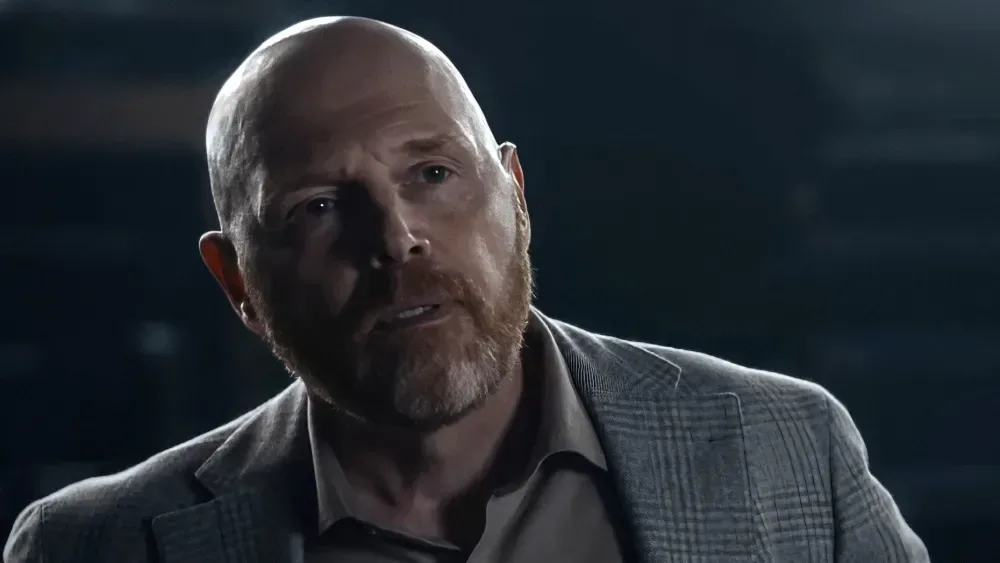
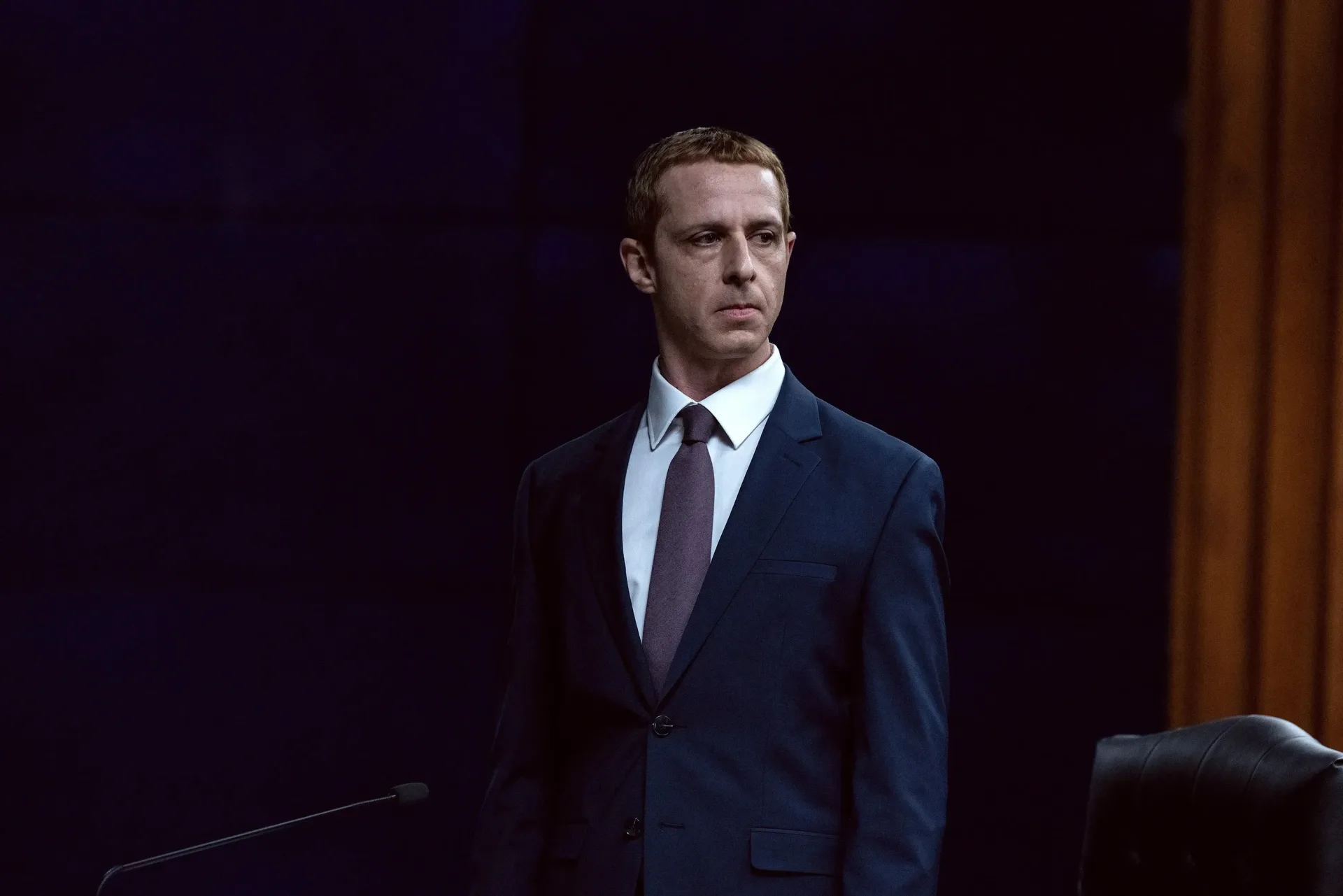
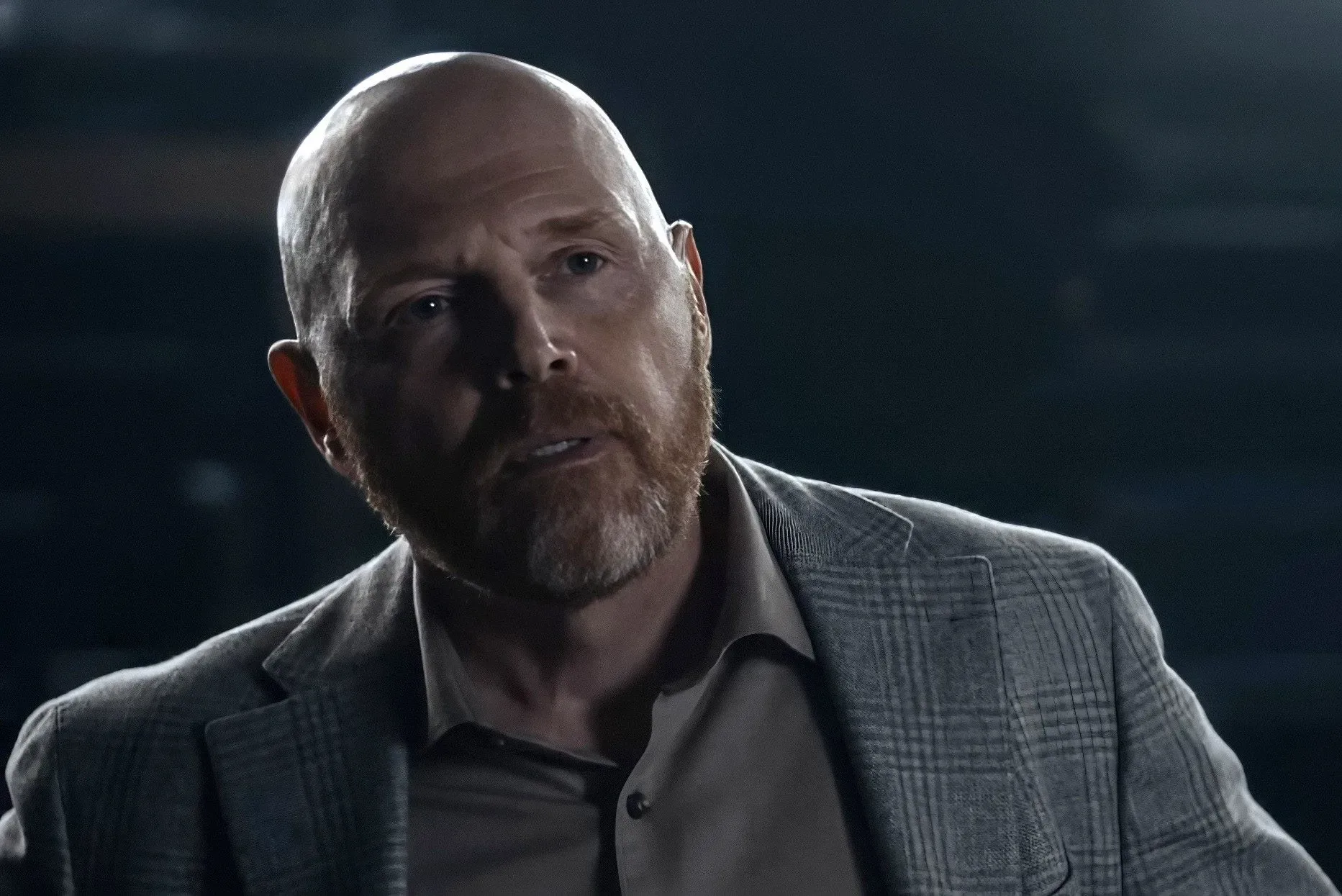
Burr plays Charlie Garrigan, a fictional former Facebook investor who has become a critic of the company. In the film, Garrigan helps Mark Zuckerberg, played by Jeremy Strong, prepare for congressional testimony amid a pandemic-era crisis. The story also follows an investigative journalist whose work threatens to expose the company’s wrongdoing, while Zuckerberg confronts his part in the conditions around the January 6 Capitol insurrection.
That premise places Burr’s character in an unusually volatile role. Garrigan is not presented as a direct portrait of a single real individual, but as a fictionalized figure shaped from people in Zuckerberg’s orbit. That distinction matters. It frees Burr from the duties of imitation—the voice, posture, public-record research and pressure to reproduce a recognizable person—while allowing the character to embody a broader conflict: the insider who knows the institution’s language but no longer accepts its self-protective logic.
For Burr, the character’s job overlaps with what he considers a core stand-up skill. Garrigan is the person who refuses to talk around the obvious point. But Burr draws a firm line between a comic’s provocations onstage and a drama rooted in a corporate crisis. The tension may be familiar, but the subject is not merely a premise to bat around. It concerns real-world harm and the elaborate machinery organizations use to manage public accountability.
A conference room built for euphemism
The most revealing part of Burr’s description is not simply that Charlie argues with Zuckerberg. It is that the argument takes place in a room devoted to preparing the right words rather than confronting what those words may conceal. Burr describes the surrounding advisers as coaching Zuckerberg on how to speak before Congress without necessarily changing the underlying damage.
That is the dramatic function of a crisis-management scene. A crisis room is a setting where institutions attempt to control their response to reputational, legal or political danger. In film, it can easily turn into a procession of jargon. Sorkin’s setup seems designed to make the language itself part of the conflict: What can be admitted? What must be softened? Which terms make consequences sound abstract?
Burr singled out dialogue delivered by Wunmi Mosaku’s character, including a warning against saying “humans.” The line, as Burr describes it, captures a professional impulse to swap direct, emotionally legible language for safer terminology. Such euphemism is more than a verbal quirk. It creates distance between a decision and the people affected by it. A person becomes a user, an outcome becomes a metric, and a harmful choice becomes a communications problem.
The actor compares that vocabulary of distancing to the way powerful structures find terms that avoid naming what is actually happening. His point is not that a polished phrase automatically proves bad intent. It is that language can make an intolerable reality easier to administer. In that sense, Charlie’s interruptions are not just character flavor. They are resistance to the idea that better phrasing is an adequate substitute for responsibility.
There is a useful parallel with debates about online status and public perception elsewhere in pop culture: online validation can become a story of its own, sometimes obscuring the material stakes underneath. The Social Reckoning appears interested in a far more consequential version of that gap—the difference between controlling a narrative and answering for an institution’s conduct.
Why a fictional critic changes the performance
A film about recognizable public figures can create a tricky expectation for audiences. When a performer plays a historical or living person, viewers may judge the work partly on mimicry. They look for the cadence, mannerisms and surface details they already know. Burr says Charlie’s fictional status removed that layer of preparation.
It did not remove complexity. Burr describes the relationship between Charlie and Zuckerberg as containing business ties, friendship and a rupture. Those overlapping bonds give the confrontation more texture than a simple outsider-versus-villain story. Charlie is positioned close enough to understand the culture of the company, and frustrated enough to challenge it at the moment Zuckerberg is most vulnerable.
That construction also gives Burr room to play an adversarial figure without turning him into a commentator standing outside the movie. Charlie must operate inside a room that is preparing Zuckerberg for testimony. He has a seat at the table, a history with the people there and a reason to care what happens. The character can therefore voice hard judgments while still being implicated in the system he is criticizing.
Burr was offered the role after Sorkin saw him on Broadway in David Mamet’s Glengarry Glen Ross, where he played Dave Moss. Burr has said he was surprised that Sorkin personally pitched the part, given the writer-director’s stature. The casting connection makes sense on the evidence available: Burr’s stage role and his comic persona both rely on speed, confrontation and a readiness to expose the power play hiding inside supposedly ordinary conversation.
Jeremy Strong, distance and the value of blocking
Strong plays Zuckerberg, and Burr says their work unfolded over six consecutive days. That run of filming gave the performers a compressed, sustained experience that Burr felt echoed the pressure of the film’s crisis-management environment.
Burr is notably unromantic about the mythology surrounding acting “process.” He had previously met Strong after attending the Broadway production of An Enemy of the People, but says actors naturally vary in how social, quiet or inward-looking they are between takes. Rather than turning that difference into a story about one supposedly correct method, Burr treats it as part of the job.
That is a sensible way to understand the much-discussed idea of Method acting. The term is often used loosely to mean an actor remaining intensely connected to a role between takes. In its broadest popular use, it can suggest anything from private concentration to total character immersion. Burr’s experience makes a simpler point: scene partners do not need identical habits for a scene to work. The practical result matters more than the legend around the process.
For one key element of antagonism, Burr credits blocking. Blocking is the planned physical arrangement and movement of actors within a scene. It can establish status and emotional distance before a line is spoken. Burr was positioned high in the bleachers while Strong was below. That vertical separation made the conflict visually legible and helped create the distance between Charlie and Zuckerberg.
It is an important reminder that acting is not solely an internal exercise. Dialogue, posture, camera placement and the geography of a room all help create meaning. In a story about corporate power, being above, below, isolated or surrounded can do thematic work without a character having to explain it.
Burr’s critique of power without a face
Burr’s comments about the film broaden into a critique of how public anger is allocated. He argues that individuals—performers, athletes or anyone caught in a visible act of selfishness—are often easy to identify and condemn. Corporate structures, by contrast, can feel anonymous even when their choices affect huge numbers of people.
His argument is not that individual behavior should be excused. It is that visibility can distort accountability. A recognizable person can become a public target, while a large institution distributes decision-making across executives, advisers, departments and carefully neutral language. The result is a system that can be hard to picture, much less challenge.
Burr applies the same bluntness to technology companies, arguing that app-driven business power is putting people out of work and concentrating wealth. He characterizes capitalism as valuable but warns that capitalism without regulation is frightening. Those are Burr’s political views, not a technical economic finding offered by the film, but they help explain why the part appealed to him. Charlie appears built to object when a room confuses commercial success with moral clearance.
The actor’s broader point is dramatic as well as political. A “nameless, faceless” corporation is difficult cinema unless a film finds people who can make its contradictions visible. The journalist, the advisers, the founder and the former investor-turned-critic each represent a different relationship to the institution. Charlie’s force comes from refusing the comfort of abstraction.
Acting, vulnerability and an emotion that arrived at the wrong time
Burr also described a separate challenge from the production: becoming unexpectedly emotional while preparing a scene that did not call for tears. He says this has occurred at points in his acting career when a character’s vulnerability connects with emotions he had long kept sealed off.
The distinction Burr makes is valuable. Emotional intensity is not automatically the same as an effective performance. If a scene does not call for crying, then crying may disrupt its purpose rather than deepen it. Burr says he was worried he would arrive on set overwhelmed in a way that made no sense for the moment. He processed the feeling privately and was then able to perform the scene the next day.
His explanation is personal: he connects the reaction to having learned, as a boy, to close off certain feelings. Acting sometimes requires him to access disappointment, vulnerability or pain that ordinary self-protection keeps at a distance. He describes it as opening a long-closed door and finding older emotion rushing out with it.
That account should not be reduced to a universal prescription for acting or mental health. Burr is describing his own experience and his own efforts, including breathwork massages, to reduce what he calls childhood anger. Still, it adds another layer to the casting. The comedian known for explosive, tightly controlled anger is discussing the craft challenge of locating more vulnerable feelings—and of keeping those feelings in proportion to the scene.
He uses a sports metaphor to explain the change: the person who brings Game 7 intensity to a casual pickup game. Burr says he once carried that level of anger as a baseline and now sees anger as one emotion among others, rather than the force driving every encounter. That shift sounds relevant to his work in The Social Reckoning. Charlie may be sharp, combative and willing to derail the room’s polished messaging, but a convincing performance needs more than volume. It needs control, history and a clear reason the character has reached his limit.
That combination—Burr’s instinct for saying what others avoid, Sorkin’s interest in argument under pressure, and Strong’s portrayal of Zuckerberg—puts the film’s crucial conflict in a confined but potentially charged space. The issue is not whether a crisis room can produce the right words. It is whether anyone in that room is willing to say the words that make a genuine response unavoidable.