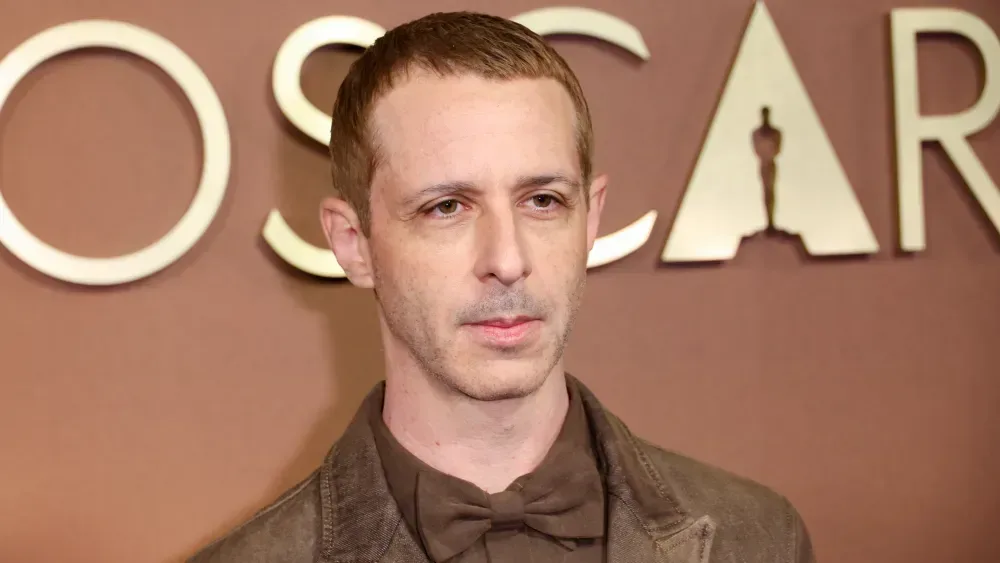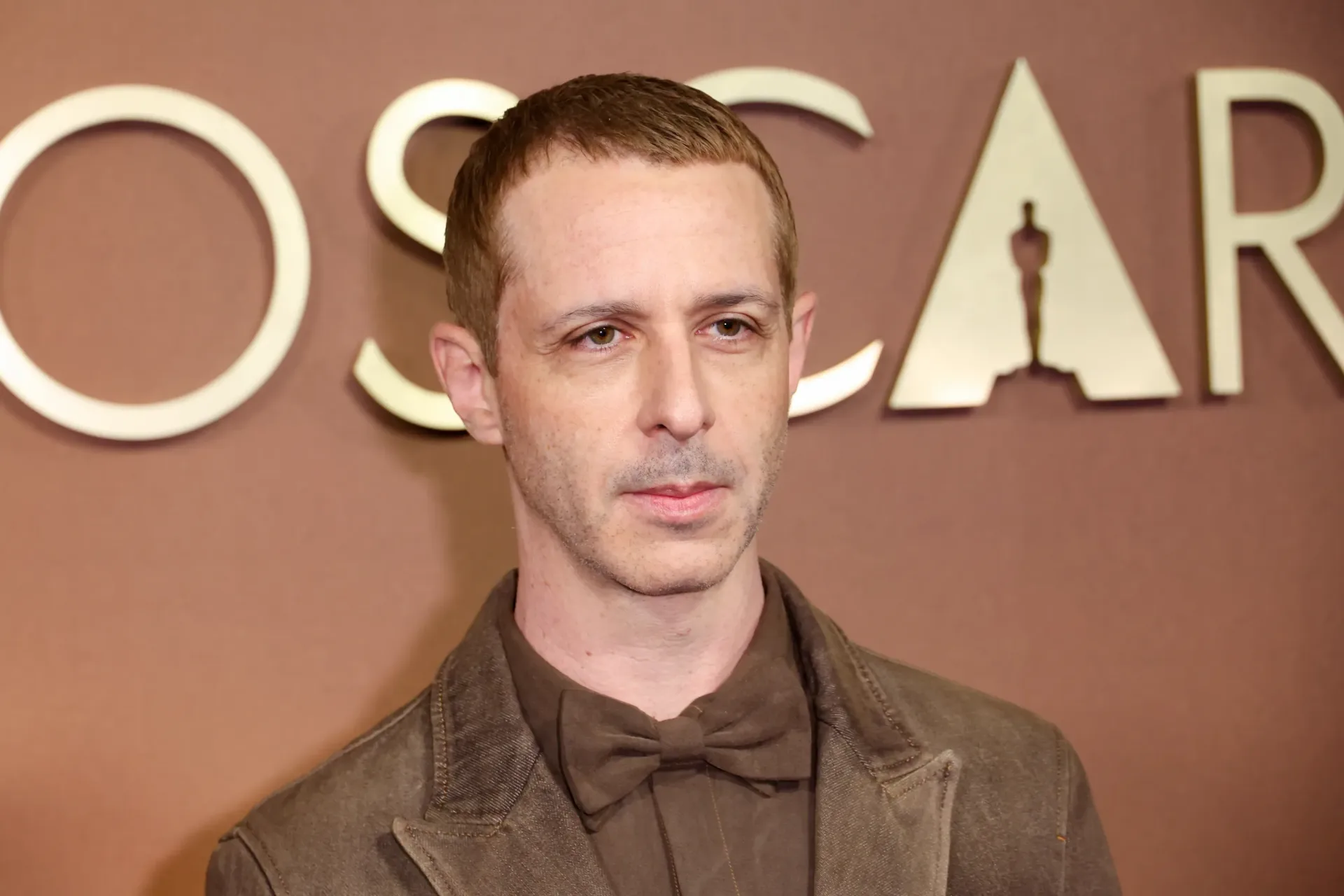
Jeremy Strong has addressed the long-running conversation around his intensely committed approach to acting, saying he does not believe he needs to apologize if it makes the atmosphere around a production uncomfortable for other people.
Speaking on The New Yorker Radio Hour, Strong was asked about whether his process helps directors and fellow cast members, or whether it can instead become distracting. His answer put a clear boundary around the question: he said he cannot really determine the effect on others, and stressed that he does not set out to interfere with anybody else’s experience or preferred way of working.
But he also made the case for taking the work completely seriously. Strong described his responsibility as committing fully to what he is doing in order to serve the material, rather than judging whether fellow performers have adopted the same process.
“Of course, it is never my intention to interfere with anyone else’s experience or anyone else’s way of working. First, do no harm, right? But commit to fucking what you’re doing, and utterly.”
The comments arrive ahead of The Social Reckoning, Aaron Sorkin’s film in which Strong plays tech billionaire Mark Zuckerberg. The film is due October 9 and follows whistleblower Frances Haugen as she works with Wall Street Journal reporter Jeff Horwitz to expose Facebook’s internal workings. Jeremy Allen White, Mikey Madison, Bill Burr, Betty Gilpin and Billy Magnussen also star.
What Strong is—and is not—claiming
Strong’s remarks are not an argument that everyone on a set should work exactly as he does. Asked whether he becomes frustrated with people who may not be equally committed, he said no. His point was narrower: his own job, as he sees it, is to give himself over to the role and the script.
That distinction matters because “method acting” is often used as a catch-all phrase. In everyday discussion, it can mean anything from extensive research and maintaining a character’s emotional focus between takes to a performer adopting character-like behavior around colleagues. The supplied reporting does not map out Strong’s exact technique scene by scene, so it would be inaccurate to reduce it to one fixed set of practices.
What is clear is that Strong views immersion as a creative choice made in service of a project, not as a demand that others rearrange their own process around him. He said his intention is not to cause harm. At the same time, he argued that discomfort does not automatically mean the approach is wrong.
Related coverage includes Jeremy Strong Defends Total Commitment to ‘The Social Reckoning’ Role.
“If some people feel that I’m taking it too seriously, or it changes the molecules in the room in a way that makes something uncomfortable, I guess that’s something that I don’t feel that I need to apologize for,” Strong said.
For Strong, the deciding principle is whether the work supports the story. He said directors he has worked with share that belief, while also suggesting that some negative responses to his process are personal in nature.
The Zuckerberg role has sharpened the discussion
The debate has gained fresh attention because of the subject of The Social Reckoning. Strong is playing one of the most recognizable technology executives in the world in a movie centered on Haugen’s whistleblowing and reporting about Facebook.
Sorkin said in September that Strong treated co-stars the way he imagined Zuckerberg would treat them. That detail naturally raises a harder practical question than “How far should an actor go?” A performance is not created alone: scenes depend on listening, timing, trust and the ability of a cast and crew to do their jobs together.
Strong’s response recognizes that tension without conceding that intensity itself is improper. His stated standard is intent and purpose. He says he is not trying to obstruct other people’s experience, and he believes full commitment serves the material. The lingering disagreement is whether behavior that embodies a character can still affect a workplace in ways that colleagues find difficult, even where the performer believes it has an artistic rationale.
Why “serving the material” is central to the dispute
“Serving the material” is industry shorthand for prioritizing the needs of the script, character and scene over an actor’s comfort, vanity or preference. It can involve research, physical preparation, changes in voice or movement, or an emotional discipline that helps a performer make choices that fit the story.
In Strong’s formulation, total commitment is not the same as insisting on attention. It is a way of avoiding half-measures in a role. His language also makes clear that he does not treat another actor’s different approach as a failure of effort. The question he declines to answer is whether his method produces a better or worse experience for everyone else, because he says that is not for him to judge.
That does not settle the issue for collaborators. An ensemble can contain multiple valid working styles, but it still has to share a set, schedule and scenes. The practical ideal is not a universal acting method. It is a production culture in which performers can pursue preparation without making it impossible for others to do their own work. Strong’s “first, do no harm” comment is the most direct acknowledgement of that responsibility.
The subject also sits alongside a broader interest in what happens off camera and between takes. A recent account of a phone-free production, for example, explored how a set’s rules can influence ensemble connection without requiring performers to use the same acting method. That discussion of a phone-free set and its play-like ensemble dynamic offers a useful contrast: shared conditions can shape a workplace, but not every creative environment needs to be built around one person’s process.
Brian Cox’s criticism was more complicated than a simple dismissal
Strong’s former Succession co-star Brian Cox has been one of the most prominent critics of Strong’s method approach. Cox previously called it “fucking annoying,” language that helped fuel the public perception that Strong’s process was a source of conflict.
Yet Cox also later made an important distinction. He said Strong was wonderful to act with and that he had no objection to his acting itself. Cox’s criticism was instead directed at what he considered a less inclusive manner of working, suggesting Strong could become an even better actor if he moved away from that element.
Those two statements can coexist. One performer may admire another’s results while objecting to aspects of the route taken to reach them. That is more useful than treating the discussion as a binary choice between “great art excuses everything” and “an unconventional process cannot produce great work.” The supplied comments point to a more specific clash: a disagreement about collaboration, accessibility and what fellow actors owe one another during production.
A debate with no single technical solution
There is no evidence here that Strong is asking his castmates to adopt his techniques, and he explicitly denies frustration with others who work differently. Likewise, no single comment from a colleague can establish how every day of a production feels. Film sets involve many people, scenes and circumstances; broad conclusions need more than a headline-friendly anecdote.
Still, Strong’s interview is meaningful because it explains the principle he is defending. He accepts that people may experience his seriousness as uncomfortable. He does not accept that discomfort alone obligates him to dilute a process he believes serves the film. His stated limit is harm or interference, not the possibility that others might find his commitment unusually intense.
For audiences, the most concrete next point of reference will be the finished film rather than speculation about an actor’s preparation. The Social Reckoning will present Strong’s Zuckerberg within a story about Haugen and Horwitz’s efforts to reveal Facebook’s inner workings. Behind-the-scenes debate may continue, but the performance will ultimately be judged in the context of the movie’s writing, direction and ensemble—not in isolation from them.
Strong’s comments do not ask the public to endorse one universal definition of professional behavior on a set. They do, however, state his own position plainly: complete commitment is part of his service to the material, and he does not regard that commitment as something for which he should apologize simply because it can alter the room around him.