Spoilers for all of Coven Academy Season 1 follow.
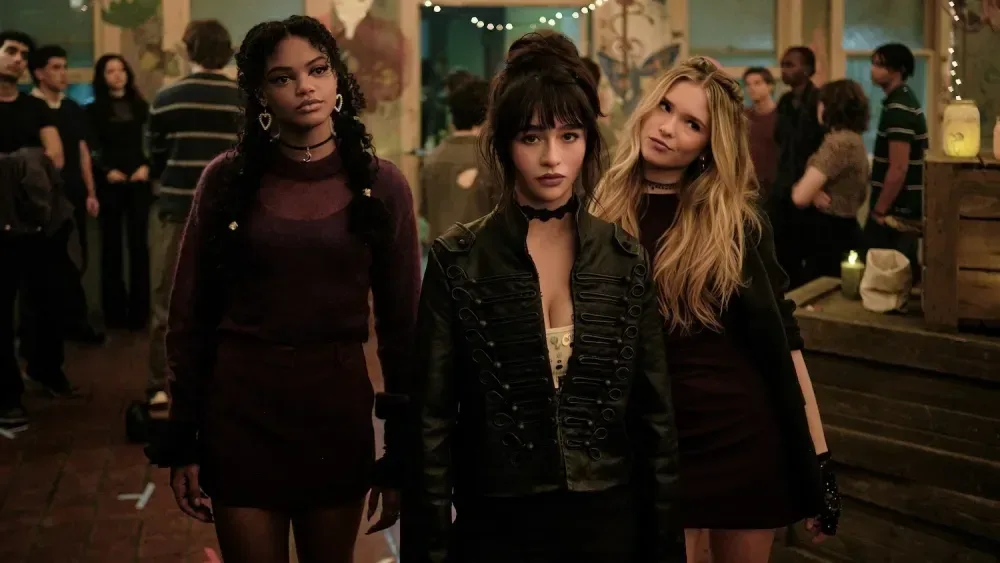
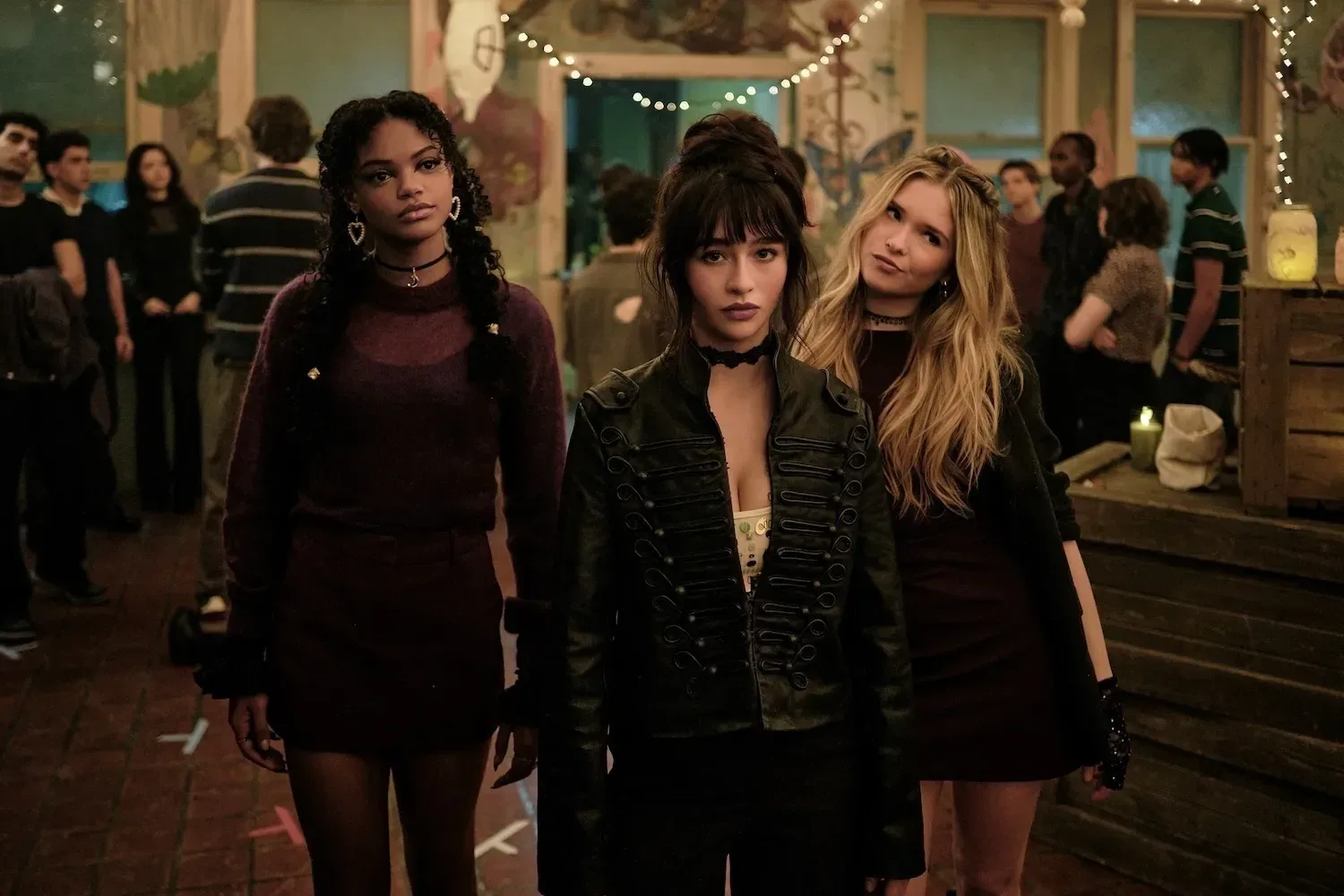
Coven Academy spends its first season looking like a murder mystery wrapped in a supernatural-school drama. Briar arrives at a New Orleans boarding school while grieving Mary, the mother whose killing remains unsolved. She discovers that she is a witch, finds an unlikely support system in Sasha and Tegan, and starts digging for answers in a world full of rules, secrets and people with a reason to keep the past buried.
The finale answers the season’s immediate whodunit, but it deliberately trades one mystery for a much more intimate one. The enemy is not headmaster Miss Graves, despite the evidence pointing Briar in that direction, and it is not Mr. Cole either. The person posing as Cole is William, a shapeshifting warlock with an old grievance, a destructive plan for the magical world and a devastating connection to Jake.
Then comes the closing turn: Miss Graves is Briar’s birth mother. Mary’s ghost urges Graves to preserve that secret because public knowledge could leave Briar unprotected. Graves, however, believes Briar deserves the truth. It is the sort of final-minute reveal that is less a resolution than a fuse being lit.
For more context, explore Drake Is Funding K-Os’ First Album in More Than a Decade, With ‘Guns & Roses’ Leading the New Era.
For a further look at the Season 2 setup, see this breakdown of Briar and Graves’ central secret.
What really happened in the Season 1 finale?
Briar, Sasha and Tegan initially have solid reasons to suspect Graves. She knew Mary, she withholds information, and her authority places her directly in the path of the girls’ unsanctioned investigation. Mr. Cole appears to reinforce the suspicion. The show ultimately reveals that this was misdirection built around an identity swap: the real Cole has been imprisoned in a basement, while William has taken his place.
William is not simply exploiting the school in the present. His plan stretches back to his time as a student alongside Mary, Graves and Tamora. The three women stopped him decades earlier when he tried to contaminate the ley lines. In the series, ley lines are the mystical power source on which witches and warlocks depend. Polluting them would have forced magical people toward dark magic alone.
That distinction matters. Dark magic is not merely a different visual effect or a convenient villain label; it is portrayed as a corrupting force with an addictive pull. William believes the result would help eliminate supernatural groups he views as threats, particularly werewolves, after werewolves killed his family. His pain helps explain his objective, but it does not justify his methods. He is prepared to murder anyone blocking him, including Mary.
The finale sees Briar, Sasha, Tegan and Graves stop William, with Jake assisting. On the surface, the magical world is saved and Mary’s murder has been solved. Yet the victory also leaves the characters with consequences that cannot be dispatched by one climactic spell: Jake has learned the truth about his father, Graves is still hiding Briar’s parentage, and the school’s tensions around vampires, werewolves, witches and warlocks are unresolved.
Why the Graves reveal is bigger than a surprise parentage twist
The Season 1 coda makes the family connection explicit. Graves meets Mary’s ghost in the woods and speaks of telling Briar why she gave her up. Mary insists that no one can know Graves is Briar’s birth mother, arguing that exposure would prevent Graves from protecting her. Graves responds that Briar deserves to know.
The reveal also clarifies an earlier moment in the finale. Briar feels something unusual when Graves takes her hand during the spell against William. That beat now reads as more than heightened magic in a high-stakes battle. It is an instinctive connection between related witches, and the story has established that relatives in close proximity can be unusually powerful and dangerous.
That last point suggests the secret is not only emotional. The danger may be political or magical, or both, but the show has not yet specified who would be threatened by their relationship or precisely why Briar would be less safe if it became public. Those are open questions, not settled Season 2 facts.
What is clear is that the twist reframes both women. Briar has spent the season trying to understand Mary’s death and the magical identity she never knew she had. Learning that Graves is her biological mother would add another layer to that search: which traits, powers and fears does she share with Graves, and how much of her life has been shaped by adults making choices in the name of protection?
For Graves, the revelation challenges the role she has occupied all season. She is the strict headmaster whose guarded behavior looks incriminating. She is also Mary’s former coven sister and, secretly, a woman who surrendered her child. The show’s creator has described the prospective story as one interested in how family secrets, even secrets meant as protection, can grow into more serious problems later. That gives Graves a difficult path ahead. Telling Briar the truth may be right, but it cannot erase the years in which Briar was denied it.
Dark magic is the season’s central metaphor
The show attaches dark magic to power, temptation and loss of control. William represents the most extreme outcome: trauma becomes a worldview, the worldview becomes justification, and that justification becomes violence. Yet the theme is not limited to the main villain. Jake’s relationship to his father and his own developing warlock abilities gives the idea a more personal dimension.
Jake wants the father he has been missing, only to discover that William’s return is bound up with manipulation and a campaign of harm. This puts Jake in a familiar but emotionally thorny nature-versus-nurture dilemma. Does having William as a father mean he is destined to be drawn to the same darkness? The story has not answered that, and it should not be treated as a verdict on Jake. His choice to help stop William is important evidence of agency.
The creative team frames dark magic as a metaphor for compulsive behavior and substance abuse. The comparison is not that supernatural powers literally equal addiction. Rather, it concerns escalation: something that can seem manageable or alluring becomes destructive when it takes over a person’s choices and relationships. The same broad framing is applied to habits such as drinking and doomscrolling.
That metaphor is useful because it keeps the show’s moral landscape from becoming too neat. The question is not simply whether someone has access to power; it is how they use it, who they hurt, and whether they can recognize when a coping mechanism has become controlling. Jake’s future could place that theme in the foreground, especially if the genuine Mr. Cole becomes a mentor rather than another unreliable adult presence.
The show’s magic is meant to come from character
Coven Academy uses its supernatural mechanics to turn the characters’ perceived weaknesses into abilities. Briar is often seen as angry or hot-headed, but the story identifies that intensity as a possible source of strength when she learns to direct it. Tegan’s ADHD connects to her capacity to morph time. Sasha’s empathy allows her to read other people even as she struggles to recognize and navigate her own feelings.
This approach is worth separating from a claim that a diagnosis or personality trait automatically grants a specific gift. The show is working symbolically. Magic functions as a genre tool for dramatizing things that teenagers may be criticized for, misunderstand about themselves, or eventually learn to value. In practical storytelling terms, it also means powers have an emotional logic. A character’s internal conflict helps define how their magic works, rather than magic operating as an all-purpose escape hatch.
The writers also set rules around elements such as warlock teleportation. Those rules matter because genre stories need limits. When abilities have boundaries, choices retain weight: a rescue cannot be assumed, a threat cannot be solved with an undefined spell, and a character must contend with the cost of acting.
Vampires, werewolves and the problem with calling people monsters
William’s ideology is openly anti-monster, but the season complicates who deserves that label. Ollie becomes a vampire through an event forced upon him. He did not choose that transformation, and he is trying to make a decent life within circumstances he did not create. The contrast with Jake is pointed: Jake is a powerful warlock with considerable privilege inside the magical hierarchy, while Ollie is treated with suspicion after becoming something different.
The story uses this conflict to examine othering: the process of defining another group as inherently lesser, dangerous or alien. It does not pretend fear is absent from the characters’ world. A vampire bite and its consequences carry real stakes, particularly after McKenna is bitten. But a safety concern is not the same thing as permission to deny someone’s humanity or moral complexity.
That tension could become increasingly important for Tegan and McKenna, whose feelings are developing while McKenna may be under threat. Ollie also leaves because he fears hurting Briar, despite being drawn to her. Both threads leave room for the show to ask whether relationships can survive supernatural difference without reducing one person to a risk category.
Why sisterhood and isolation shape the show’s conflict
The witches’ friendship is not background decoration. Briar starts out resistant to the idea of being a “girl’s girl,” but Sasha and Tegan become her coven sisters in a meaningful sense: they argue, investigate, take risks and hold each other accountable. Their connection is positioned as a source of survival, not merely a social club.
Warlocks, by contrast, are presented as isolated. The series implies that witches and warlocks once learned together, but that adults separated the genders after William’s earlier actions fractured the community around 1998. This history has not yet been fully explored onscreen, so it remains setup rather than a complete explanation. Still, it gives context to Jake’s vulnerability. He is navigating grief and parental absence without the same collaborative support system that Briar, Sasha and Tegan build.
William exploits that isolation, feeding Jake a view of witches as judgmental and presenting solitary masculine power as the answer. Jake’s eventual decision to resist him does not solve every issue, but it makes the show’s position plain: accountability and emotional connection are strengths, while isolation can make manipulation easier.
What a second season could explore — and what remains unconfirmed
A second season has not been confirmed in the material available, so its storyline remains speculative. The show’s creator has expressed ambitions to keep building the world, but viewers should distinguish those hopes from a formal renewal or a guaranteed plot.
If the series returns, the strongest story engine is clearly Briar and Graves. The season ends with Graves preparing to tell Briar the truth, while Mary’s ghost warns of consequences. That conflict offers more than an answer to a lineage question: it could force Briar to reconsider Mary, Graves, her own magic and the definition of family.
Jake has similarly immediate emotional fallout. William is both the father he longed to know and the person who manipulated him and committed horrific acts. His struggle with dark magic could explore inherited fear without endorsing the idea that children are destined to repeat their parents’ damage. Mr. Cole’s return also creates the possibility of a more stable mentor figure.
Elsewhere, Sasha is grieving her brother’s transformation into a vampire and wrestling with whether reversing it would be possible — or even what he would want. Tegan and McKenna face a relationship complicated by McKenna’s bite. Ollie’s departure leaves Briar with another unresolved connection. None of these are promises, but they are specific character dilemmas the finale purposefully leaves active.
Coven Academy starts with a murder, a new school and a world of spells. By the end of Season 1, its most enduring question is more human: can a secret intended to protect someone ever stay protective once it has taken away their right to know who they are?