Major spoilers for Coven Academy follow.
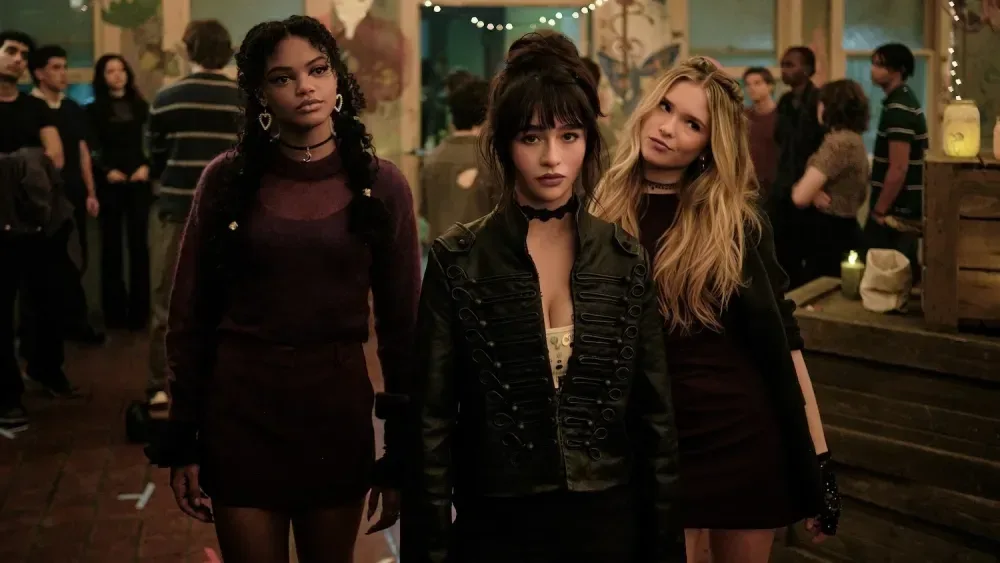
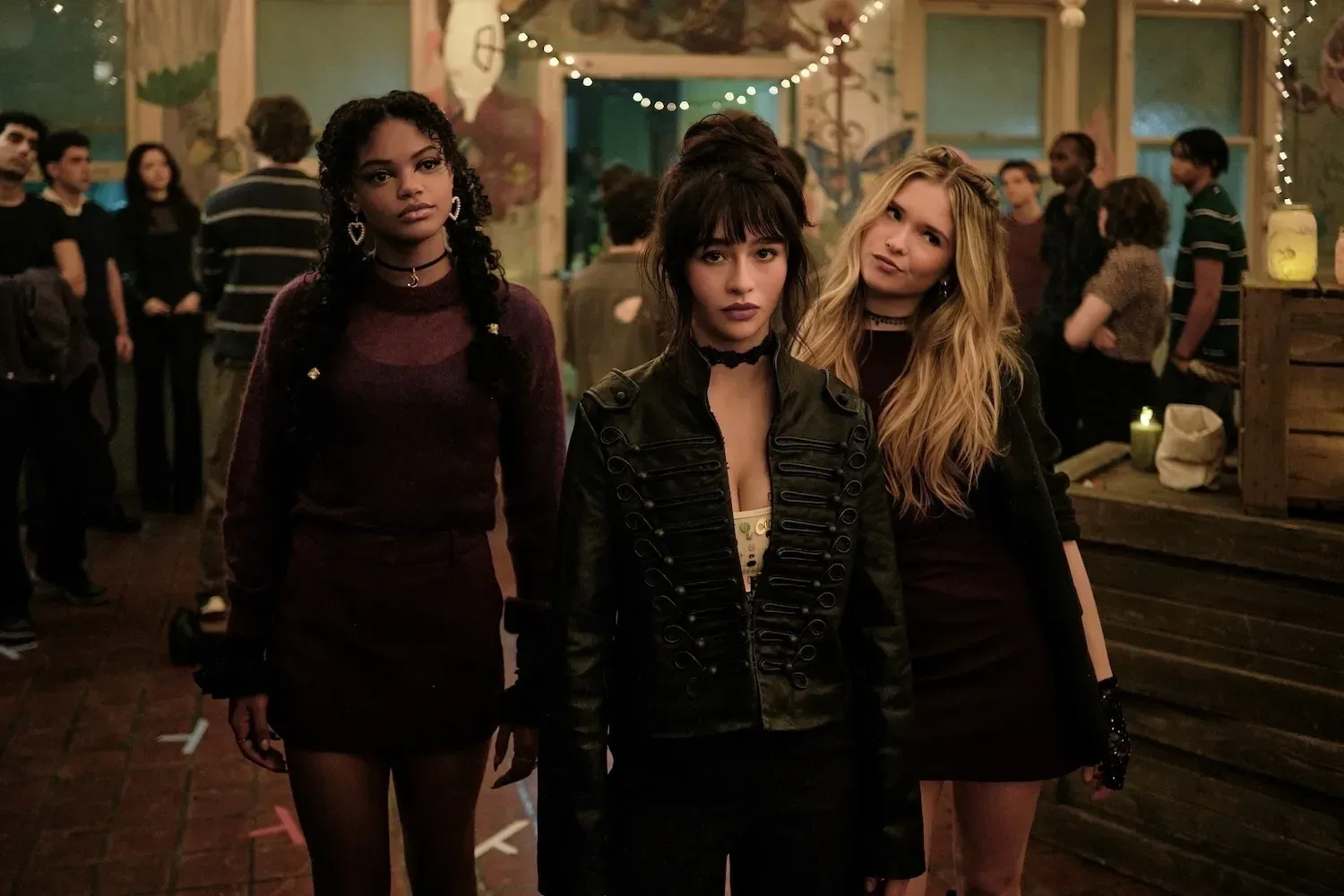
Coven Academy ends its first season by turning Briar’s search for the truth about her mother into a far larger question of identity. The Disney+ young-adult drama begins with Briar, played by Malina Weissman, arriving at a boarding school under the impression that it is for troubled girls. With classmates Sasha and Tegan, she instead discovers she is a witch—and that the school, its history and its magical power structure are closely tied to the mother she believed she had lost.
The finale resolves the immediate threat posed by William, while saving its most consequential emotional disclosure for last: Miss Graves, the academy headmaster, is Briar’s biological mother. The twist recontextualizes an earlier moment in which Graves takes Briar’s hand at the ley lines and Briar feels an inexplicable surge. It also leaves the show with a new set of questions about Mary, Graves, Briar’s father and the decisions that shaped Briar’s life.
That makes the finale less of a clean ending than a shift in the story’s central mystery. William’s scheme is stopped, but Briar’s place in the academy has become even more complicated.
What happens in the Coven Academy finale?
Briar’s season-long investigation begins with the unresolved death of Mary, played by Cecilia Grace Deacon. Briar learns that Graves, portrayed by Tiffani Thiessen, had been close to Mary. The connection reaches back to a previous coven that included Mary, Graves and Tamora.
Their past conflict involved William, a shape-shifting warlock played by Devon Sawa. William had previously attempted to pollute the ley lines, which the series establishes as the source of magical power for witches and warlocks. In other words, the ley lines are not simply a spooky landmark or a spell ingredient; they are the supernatural system the characters depend on. Contaminating them would endanger the entire magical community.
Mary, Graves and Tamora stopped William’s earlier plan. When he returns, he resumes that effort and is revealed to have killed both Mary and Tamora to clear his path. His presence at the academy has been concealed through impersonation: he had posed as a teacher. The story also connects him to Jake, the young warlock played by Malachi Barton, who is William’s son.
In the climactic conflict, Briar, her fellow witches, Graves and Jake stop William and protect the magical world. Yet defeating the season’s antagonist does not answer Briar’s most personal questions. A conversation between Graves and Mary’s ghost confirms that Graves—not Mary—is Briar’s biological mother.
Related coverage includes Coven Academy Finale Reframes Briar’s Past and Sets Up New Magic.
It is a reveal with practical story consequences beyond sheer shock value. Briar has spent the season mourning Mary and trying to understand her death. Now she has to reckon with the fact that the adult running the academy is also the parent she never knew she had. The narrative has moved from “Who killed Mary?” to “Why was Briar separated from Graves, and what does each woman know about the past?”
Why the Graves reveal fits Briar’s story
Weissman said she and Thiessen sensed an unspoken connection in their scenes from the beginning. Although the performers learned the biological-mother reveal a few weeks before filming the finale, Weissman felt there was little need to change her approach. The on-screen dynamic, in her view, was already present.
That perspective matters because the ley-line hand-holding moment functions as a character clue as well as a supernatural one. Briar experiences the rush immediately, before she has the context to understand it. On a plot level, it signals that something unusual links her and Graves. On an emotional level, it gives Briar’s discovery a bodily immediacy: the secret reaches her before the explanation does.
The show’s magic is repeatedly tied to internal experience. Weissman describes Briar’s powers as directly connected to her emotions, and the series frames the coven as a group whose different temperaments and abilities complement one another. That makes Briar’s reaction near the ley lines more than a convenient hint toward a late-season twist. It connects family, emotion and power inside the show’s own rules.
Briar is characterized as intensely emotional, sarcastic and angry, with anger often easier for her to express than vulnerability. She is also independent and accustomed to trusting herself first. The Graves revelation therefore has the potential to challenge both sides of her personality. It gives her a new parental relationship to confront, but it also arrives at a moment when she is learning that accepting support is not the same as surrendering independence.
Chosen family is the counterweight to Briar’s family mystery
The show may be driven by hidden parentage and old magical grudges, but its emotional center is Briar’s relationship with Sasha and Tegan. Weissman identifies chosen family as the heart of the series. That phrase is important here: chosen family means a support system built through mutual commitment rather than biology alone.
For the coven, that commitment is not presented as effortless friendship. The girls bring their own secrets, problems and emotional baggage into the relationship. They disagree, hurt one another and have to restore trust. Their strength comes not from never clashing, but from deciding to keep choosing one another when it is difficult.
That is also why the Graves twist does not diminish Mary’s significance. Mary remains central to Briar’s history and grief. Graves being Briar’s biological mother changes the facts of Briar’s birth, but it does not erase the relationships and losses that made Briar who she is. The series’ focus on chosen bonds gives it room to treat biological connection as meaningful without suggesting that blood alone supplies all the answers.
The contrast is built into the show’s broader design. The young witches are strongest as a coven, while the warlocks are portrayed more as isolated figures. Weissman sees that opposition as a commentary on social conditioning, particularly on competitive versions of masculinity that prioritize proving who is strongest. In Coven Academy, collaboration is not a soft alternative to power; it is a form of power in itself.
Briar, Jake and Ollie: the triangle remains deliberately open
The finale also leaves Briar between two distinct supernatural relationships. Jake, who practices dark magic, shares an almost-kiss with her. Ollie, a newly turned vampire played by Louis Thresher, saves her life and offers a more immediate romantic connection.
Neither option is uncomplicated. Jake’s dark magic is visually associated with veins and brings an additional danger to the show’s supernatural world. Ollie is a vampire, making the stakes around him literal as well as emotional. Briar is attracted to uncertainty rather than deterred by it, however. Her impulsive “why not?” outlook shapes how she responds to discovering she is a witch and to the people she meets at the academy.
Weissman distinguishes the two dynamics clearly. Jake and Briar are a slow burn, built around a shared reckless confidence and unresolved tension. Ollie and Briar move more quickly and more overtly into romance. Briar is excited by the experience of being asked on a date and by the unfamiliarity of having a crush. Jake does not offer the same direct step forward, which helps explain why Ollie’s attention lands differently.
The decision not to have Briar and Jake kiss preserves that contrast. It also avoids prematurely turning the triangle into a solved equation. A near-kiss is a narrative device that acknowledges mutual pull while withholding a decision; it gives the story tension without requiring Briar to define her feelings before she has figured out the rest of her life.
There is a useful parallel between the romance and the parentage twist. In both cases, Briar is given information or emotion that does not instantly become certainty. The magical rush with Graves precedes an explanation. Her attraction to Jake and Ollie does not become a final choice. The season positions Briar as someone who feels first, acts quickly and then confronts the consequences.
What a possible second season would need to explore
No second season is confirmed in the material available, but the first season plainly leaves multiple avenues open. The largest is Briar and Graves. Their biological relationship is now known to the audience, but the revelation raises questions rather than explaining the circumstances of Briar’s upbringing or the reasons the truth remained hidden.
Weissman also pointed to an absent father in Brooklyn as a piece of backstory she had to imagine for herself while building Briar. The series has not supplied an on-screen explanation for what Briar’s father knows, how Briar’s parents met or how he fits into the Graves-Mary history. Those are possibilities, not established future plot points, but they show why the finale can function as the start of a new phase rather than a final answer.
Then there is the magical landscape after William’s defeat. The ley lines survive, and the immediate effort to poison them has been thwarted, but the academy’s past is now more exposed. Graves, Mary and Tamora’s former coven has become essential to understanding the present. Jake’s connection to William creates another unresolved emotional complication, especially given his tentative bond with Briar.
For viewers who have finished the finale, the key takeaway is simple: Coven Academy has resolved its first major villain story while keeping its identity story in motion. Briar now knows she is a witch. She has found a coven that asks her to accept help without giving up herself. And she has learned that the person at the center of her school—and her magical awakening—is also her mother.
That is an appropriately messy place for Briar to be. The character has never been fully comfortable with easy answers, and the finale does not hand her one. It gives her a truth that is powerful, painful and incomplete—the kind of revelation that changes every prior scene while making the next one harder to predict.
For more television analysis around high-stakes power struggles, see our coverage of Prime Video’s Bloodaxe first look.