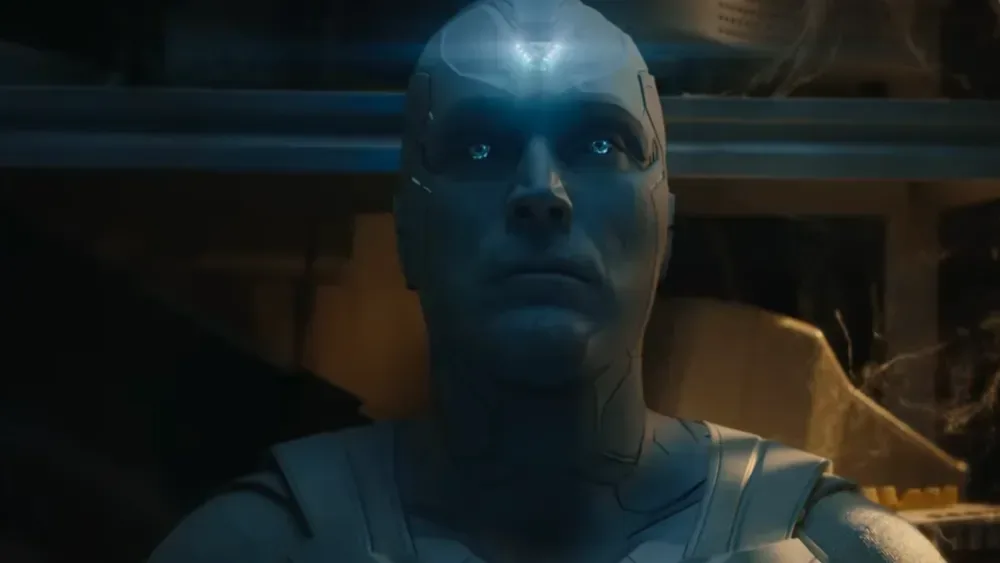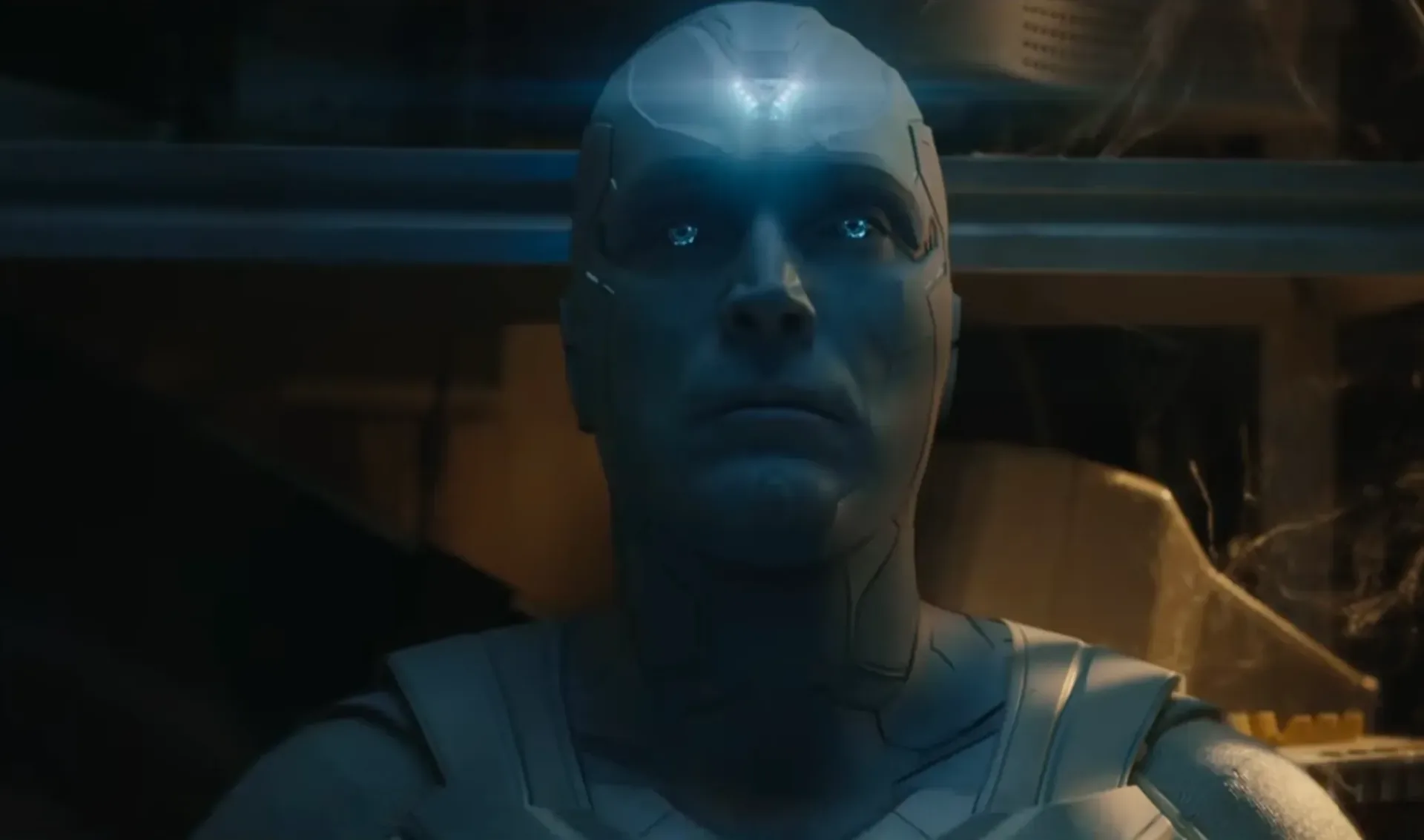
Paul Bettany’s return as Vision came with a particularly vivid reminder that screen acting is often a matter of calibration. While filming VisionQuest, Bettany says he pushed a moment of apparent mental distress so hard that he burst roughly 10 blood vessels in his eye.
The actor described performing a scene in which Vision appeared to have a device on his head affecting his brain. Rather than a stunt or a planned makeup effect, Bettany attributed the injury to the force of his own performance. “I was just wildly overacting,” he said, summing up the mishap with a self-deprecating lesson: “less is more.”
For an actor whose Marvel character is an android built around extraordinary resilience, the incident is an unusually human behind-the-scenes footnote. It also highlights a basic but easy-to-forget truth of performance: the audience may see a character under extreme pressure, but the performer does not necessarily need to physically strain to communicate that pressure.
The shot had to be fixed before viewers saw it
Bettany said the visible redness remained for two weeks. Because it was not appropriate for the intended look of the scene, the production had to remove it from the finished material.
That detail matters because the final image in a screen production is rarely limited to what happened in front of the camera on the day. Here, the unwanted eye discoloration had to be taken out after filming rather than incorporated as part of Vision’s appearance. Bettany’s story is not a claim that the moment was designed as a special effect; it is the opposite. The correction was needed because the physical result of the take was accidental.
It is also a useful distinction for viewers who use “CGI” as shorthand for every kind of post-production alteration. Digital image work can cover a wide range of jobs, from creating something that was never physically present to cleaning up a real-world detail that the story does not call for. In this case, the goal was restoration: returning the shot to the appearance the production wanted before Bettany’s eye injury intruded on it.
Why “less is more” fits Vision especially well
Bettany’s joke carries a serious acting point. In practical terms, “less is more” means reducing obvious external effort while retaining the thought, fear, confusion or pain that motivates a character. The result can read as more believable on camera, where framing, lighting, editing and a close-up can amplify subtle changes in an actor’s face.
That can be especially relevant for Vision. The character’s drama often sits in a tension between enormous power and controlled behavior. A scene involving a device acting on his brain could invite a broad display of suffering, but a smaller reaction may be just as forceful—perhaps more so—when it is viewed in a close shot. Bettany’s anecdote does not reveal how the final scene plays or what the device is, but it does show that one early approach was forceful enough to create a visible physical consequence.
Related coverage includes Paul Bettany Says Eye Injury During ‘VisionQuest’ Came From Overacting.
There is a comic irony in the story, too. Bettany noted that he is myopic and cannot see well without glasses. Myopia, commonly called nearsightedness, is a vision condition in which nearby objects are clearer than distant ones. The performer behind a famously sharp-sighted synthetic hero therefore has his own much more ordinary dependence on corrective lenses.
The anecdote should not be read as a blueprint for “committed” acting. Nothing in Bettany’s account suggests the injury was desirable or artistically necessary. His own takeaway points the other way: an emotional or physically taxing beat is not automatically improved by increasing the visible exertion. Precision is not the same thing as intensity.
VisionQuest brings Bettany back to Marvel
VisionQuest is an eight-episode Disney+ spinoff connected to WandaVision, and it debuted on October 14. Bettany again plays Vision, marking his return to the Marvel Cinematic Universe after appearances in Avengers: Age of Ultron, Captain America: Civil War, Avengers: Infinity War and WandaVision.
His Marvel history stretches further back than Vision’s full on-screen form. Bettany first entered the universe as J.A.R.V.I.S., the artificial-intelligence voice associated with Tony Stark’s armor, in the first Iron Man film. That progression gives the performer an unusual continuity within the franchise: he began as a voice supporting Iron Man’s technology and later became the face of one of Marvel’s central synthetic characters.
For fans tracking the character’s long screen journey, the new series is therefore not merely another appearance by a familiar hero. It places Bettany back in a role that has changed substantially across the MCU, from an AI voice to the android Avenger at the center of stories involving identity, memory and personhood. The reported on-set episode does not explain what narrative direction VisionQuest takes, but the scene Bettany described plainly involved Vision facing some kind of mental disruption.
That makes the actor’s restrained approach especially relevant to the material. Performances about altered consciousness can become visually loud very quickly. The basic challenge is to make an internal event legible without reducing it to a generic grimace or strain. Bettany’s account suggests he found one version of that boundary by overshooting it—quite literally.
Ultron’s return and the wider cast
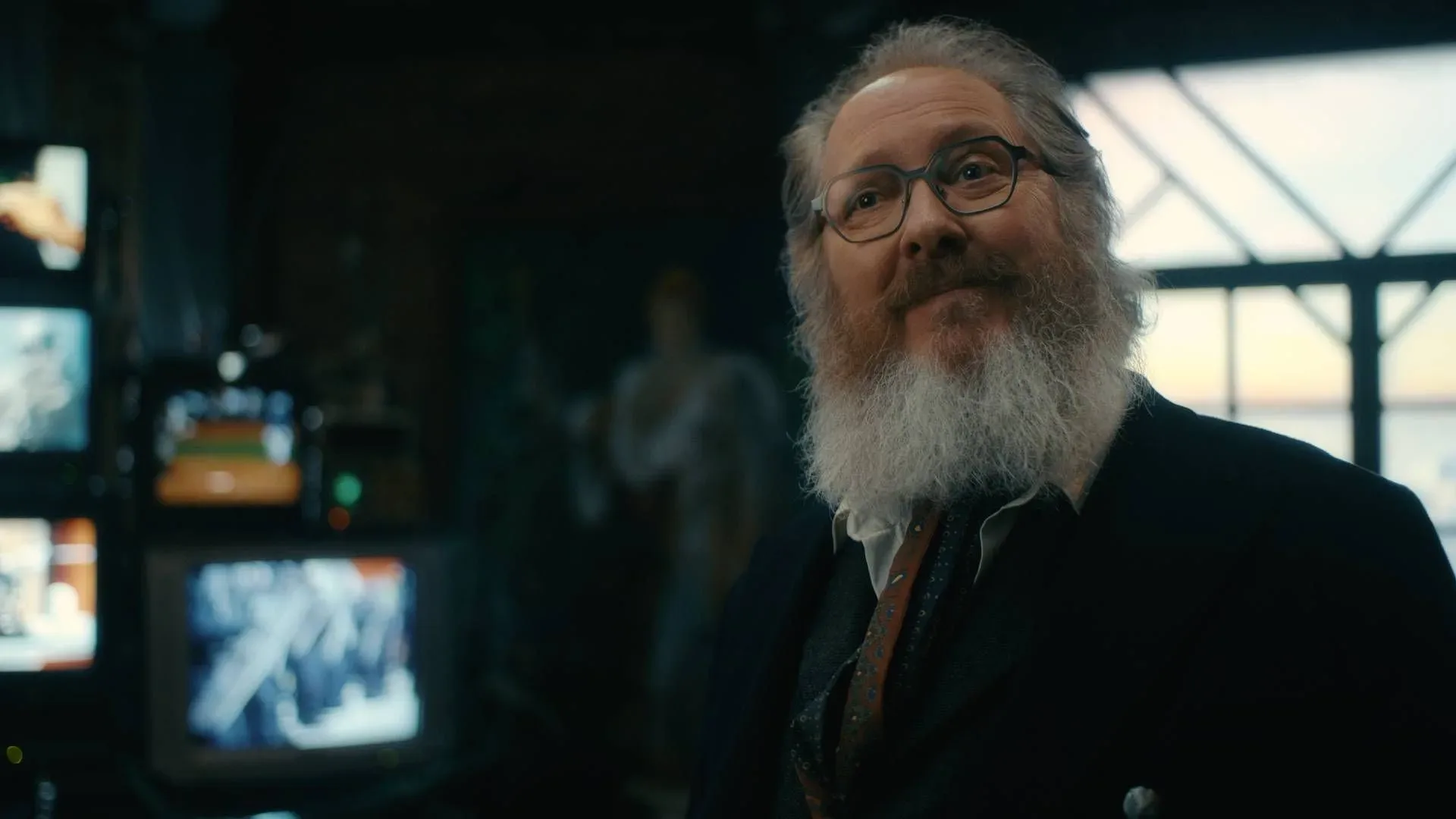
James Spader is also part of VisionQuest, reprising Ultron, the role he played in Avengers: Age of Ultron. The connection is immediately meaningful at the character level: Ultron and Vision are closely tied within Marvel’s on-screen mythology, so Spader’s involvement brings back a voice and presence linked to Vision’s earliest MCU story.
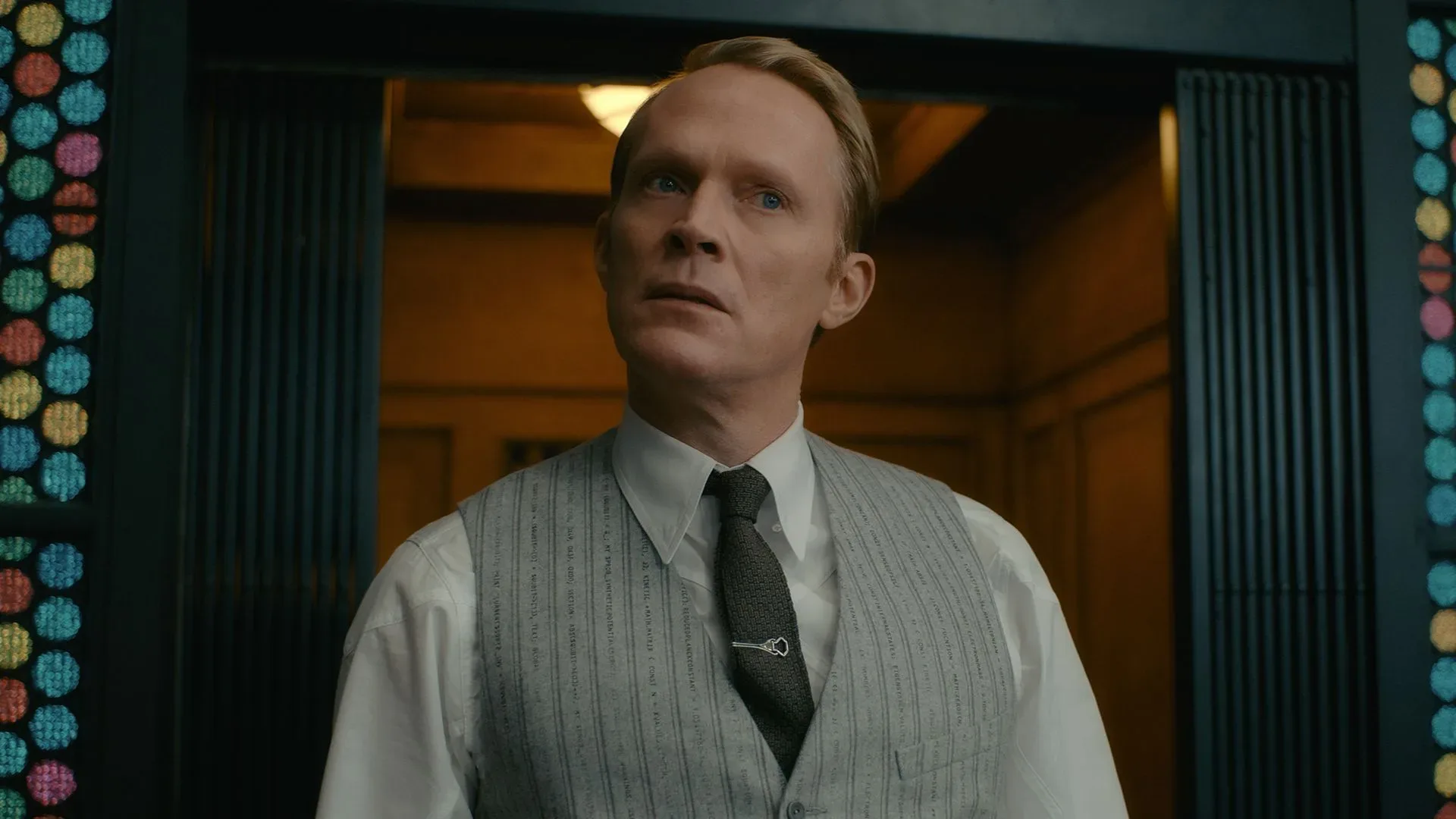
The series additionally features Henry Lewis, Jonathan Sayer, James D’Arcy, Orla Brady, Emily Hampshire and Ruaridh Mollica. Beyond the confirmed returning names and the series’ WandaVision connection, the available details do not establish the characters or plot functions for every cast member. That uncertainty is worth preserving rather than filling with assumptions based on prior Marvel stories.
Marvel’s screen universe has always left room for characters to move between films and television series, but continuity does not erase the need for an individual production to define its own tone. Bettany’s story offers a small glimpse of that process: even an established actor returning to an established role is still making choices scene by scene, testing how far an expression or physical reaction should go.
A memorable production story, not a spoiler
As production anecdotes go, this one is memorable because it is so direct. Bettany did not describe an elaborate action mishap or a dangerous stunt. He described trying too hard to sell a reaction, seeing a startling result in his own eye, and then watching the production correct it for the finished episode.
It also supplies an unusually clean example of why audiences should be cautious about treating the final frame as a complete record of what happened on set. The scene viewers encounter is the chosen version, shaped not just by the performance but by editorial and visual cleanup work. The visible injury became part of the production process, not part of Vision’s story.
For Bettany, it appears to have ended as a painful but funny reminder about control. For VisionQuest, it is a behind-the-scenes curiosity that underscores the continued care being applied to a character who has been part of the MCU since the J.A.R.V.I.S. era. And for anyone interested in Marvel’s broader character history, the return of Vision and Ultron adds another point of connection to the franchise’s earlier films—alongside Marvel stories such as Ghost Rider: Kushala’s time-spanning story arriving in a different medium.