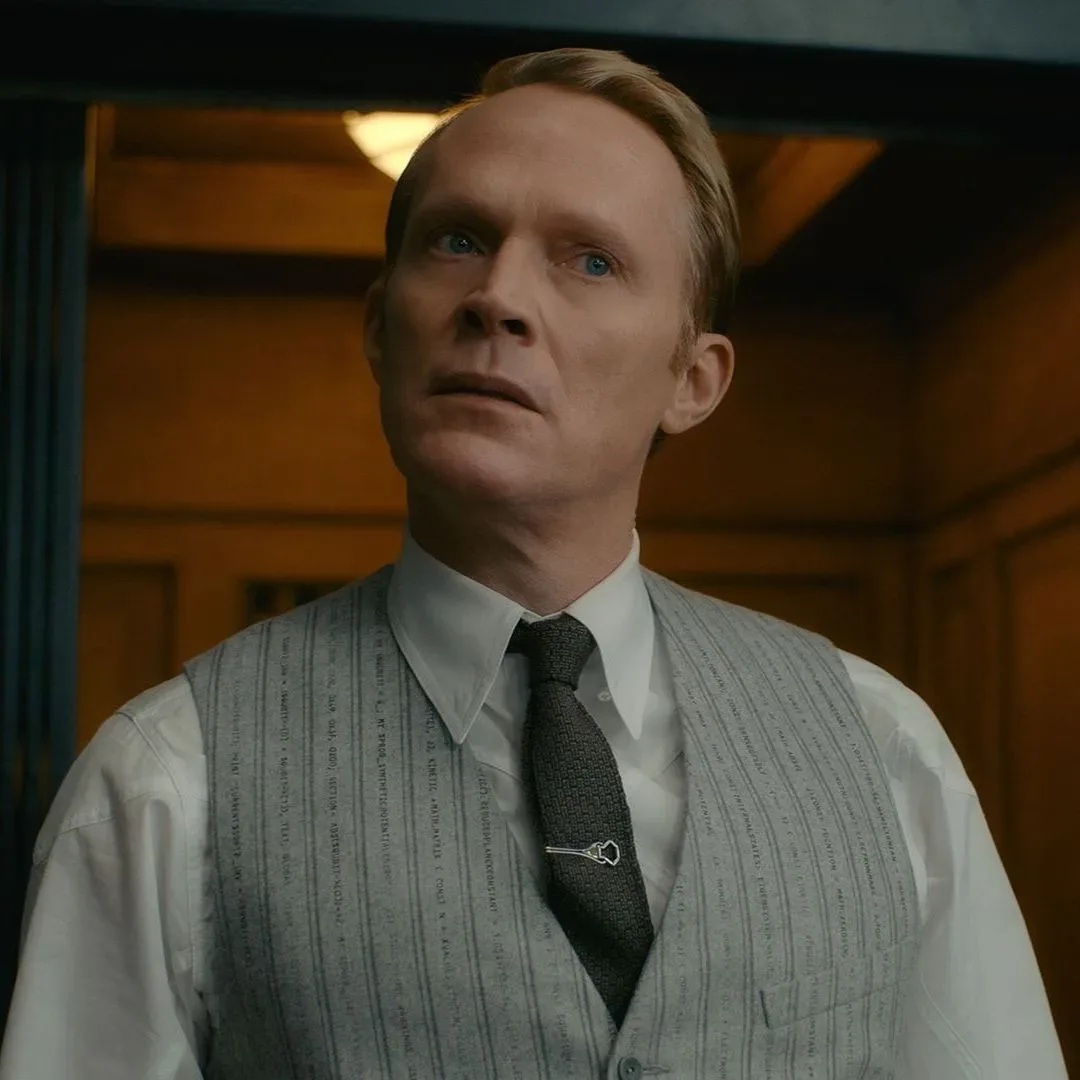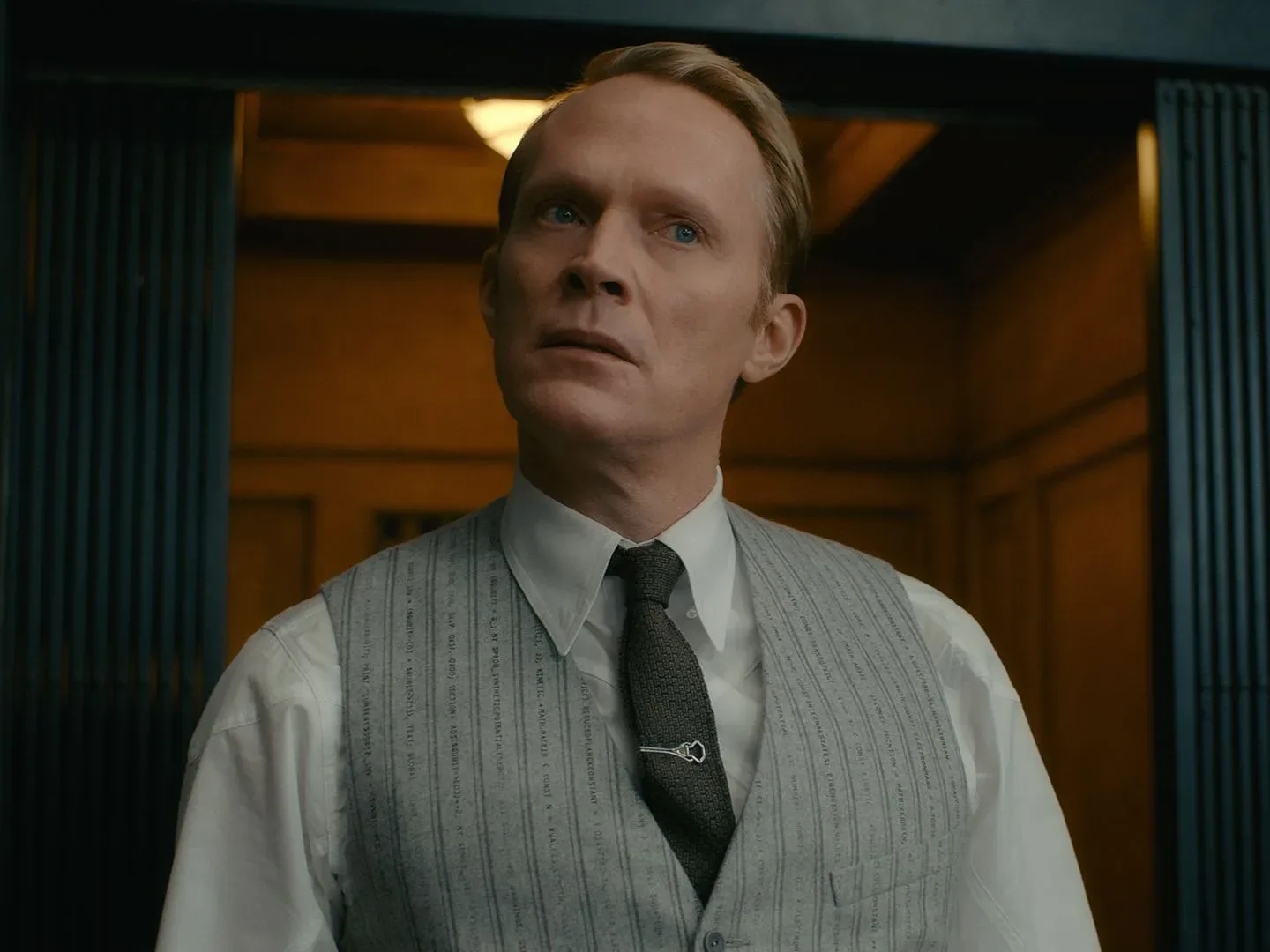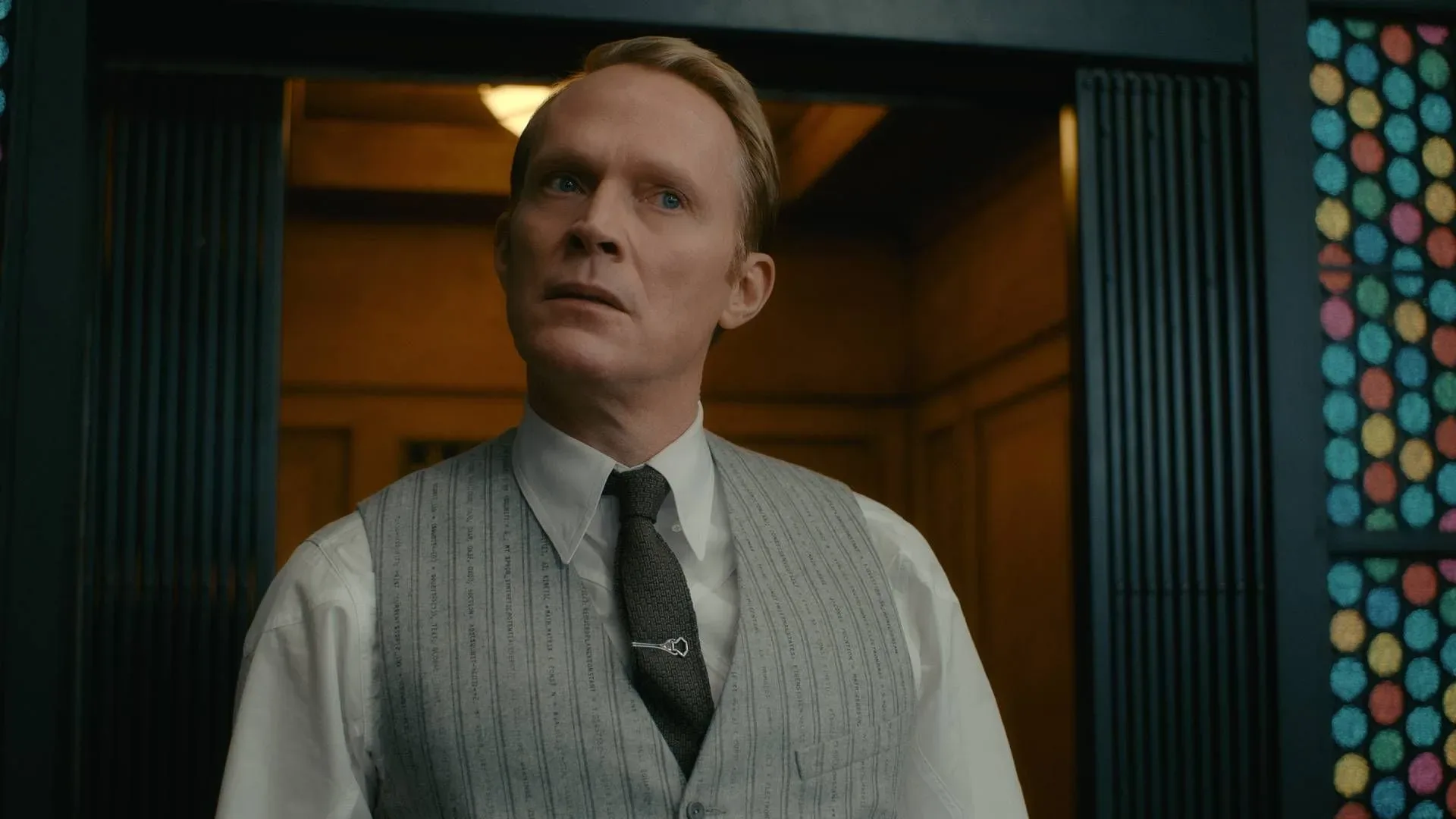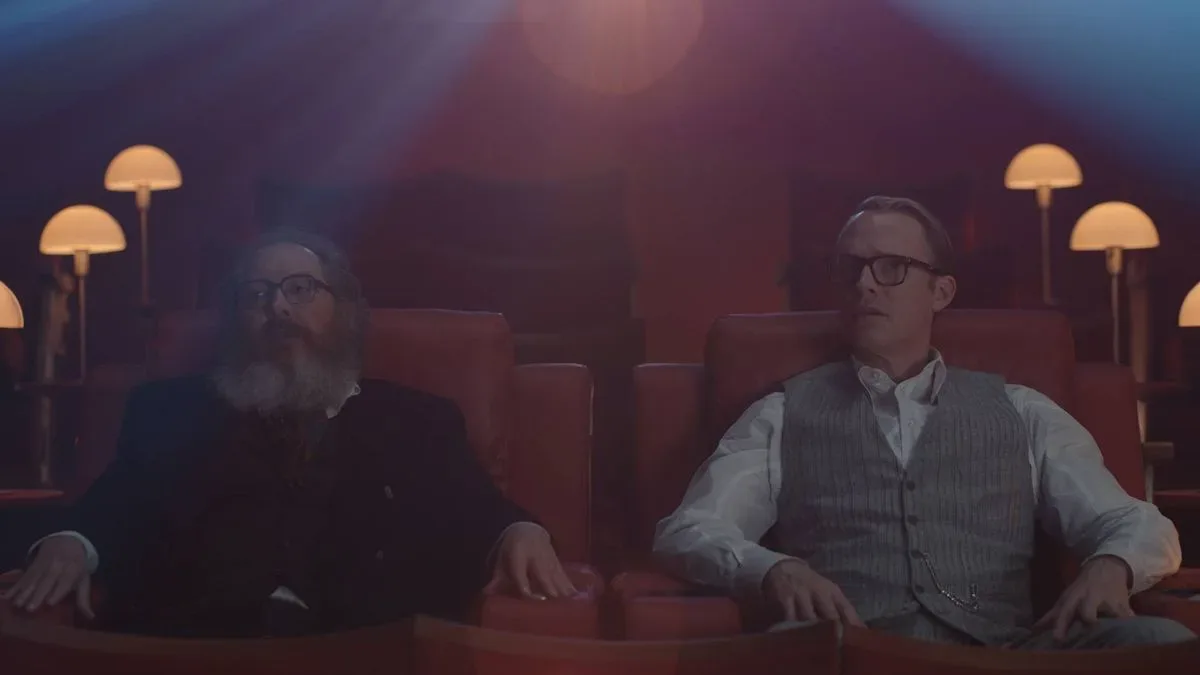
VisionQuest may complete the trilogy that began with WandaVision, but its central question is not what happens next for Wanda Maximoff. It is what happens when White Vision is left carrying memories of a life, relationship and family that he cannot straightforwardly claim as his own.
Paul Bettany has described Wanda’s role in the new Disney+ series in deliberately spectral terms: she is absent in person, yet impossible for Vision to escape. That distinction appears to be the dramatic engine for the show’s opening episodes. Wanda’s death in Doctor Strange in the Multiverse of Madness establishes the physical absence, while White Vision’s inherited memories give that absence emotional and narrative weight.
It is a premise built around a particularly strange kind of superhero identity crisis. White Vision is not simply grieving a partner in the conventional sense. He is confronting memories connected to Wanda and the life seen in WandaVision, while having to decide what those memories mean to the being who now possesses them. The series is positioning that uncertainty—not a return for Wanda—as its launching point.
White Vision gets the foreground
Showrunner Terry Matalas has made clear that the decision to center Vision was foundational rather than a late workaround to Wanda’s nonappearance. With Wanda established as dead following the events of Doctor Strange in the Multiverse of Madness, the story turns to the blank space left by White Vision’s emergence in WandaVision.
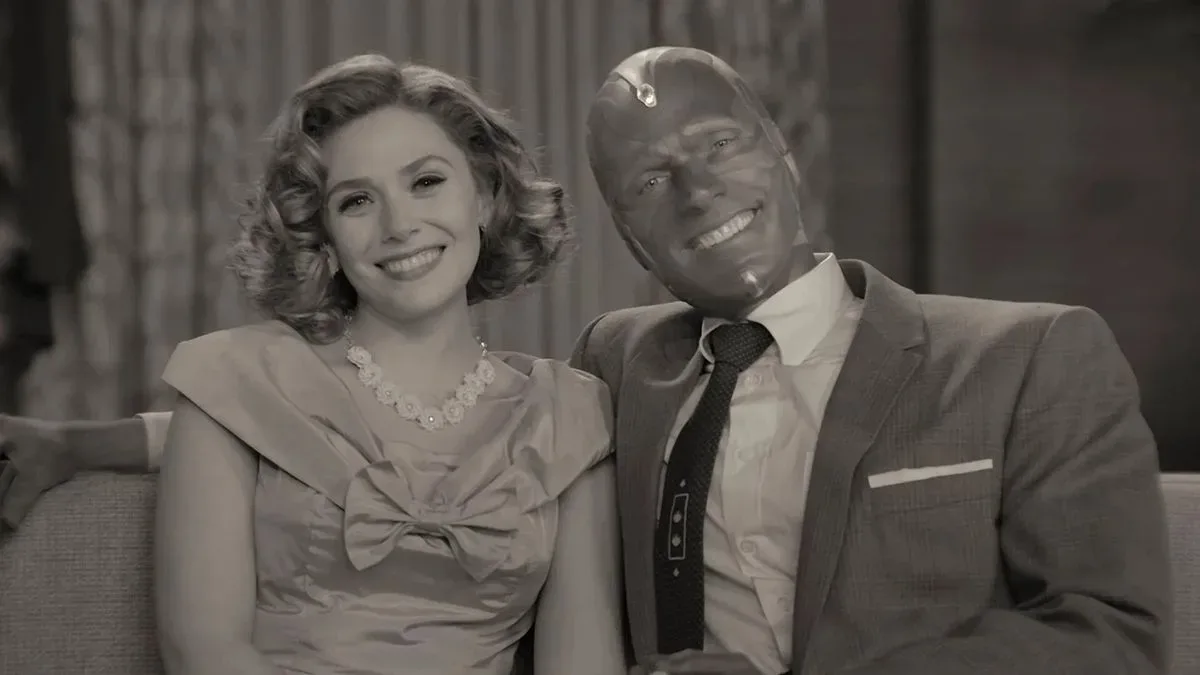
That earlier series ended by leaving White Vision with a loaded set of circumstances: he had access to another Vision’s memories, but the personal consequences of those memories remained unresolved. VisionQuest takes up that unresolved thread. The key questions are intimate ones: who is Vision without Wanda, and who is he if he remembers a relationship that he may not experience in the same way as the Vision who lived it?
The distinction matters because “memory” is not automatically the same thing as “identity.” A memory can provide information: faces, events, affection, loss and a history. Identity is the ongoing sense that those experiences belong to oneself and shape present choices. VisionQuest appears interested in the gap between those two ideas. White Vision can revisit the past, but the show’s tension lies in whether recollection can become belonging.
That gives the series a clear reason to focus on its title character rather than treating him as a route back to Wanda. Wanda is central to the questions he must answer, but the answers are meant to be his. The story’s perspective is therefore not one of replacing her place in the trilogy; it is of tracing the effect of her absence on someone reconstructed around memories of her.
Wanda is absent, but not removed
For viewers watching the first episodes, Wanda remains a substantial presence in Vision’s internal world. Vision repeatedly returns to events and memories from WandaVision. The show also includes an Easter egg indicating that Wanda is literally part of Vision’s code.
In technical language, code is the set of instructions or data that allows a software system to function. Within a story about an artificial being, placing Wanda within Vision’s code turns a metaphor into something more concrete: she is not merely someone he misses; she is bound into the structure through which he operates. The detail also strengthens the show’s identity theme. If an individual’s underlying system contains traces of another person, separating memory, programming and personal feeling becomes even more complicated.
That is why Bettany’s description of Wanda as a “ghost” is more useful than treating her as a simple offscreen reference. A ghost in drama is usually a presence that changes the choices of the living despite not being physically available to them. Wanda’s influence can surface through recollection, emotional loss and the literal evidence embedded in Vision’s code. She can be both unavailable and deeply active in the narrative.
“I feel like she is a ghost” that Vision is chasing and is haunted by, Bettany said of the character’s absence.
Bettany also noted that acting without Elizabeth Olsen felt unusual at first, given that Wanda has been integral to Vision’s story. Yet that separation serves the material. Vision’s inability to connect directly to the loss is part of what makes the loss dramatically potent. There is no easy conversation that can settle what he remembers or tell him which version of himself he ought to be.
For audiences, this framing is also a useful expectation-setter. Wanda’s importance should not be mistaken for a promise of a physical return. The available episodes instead use her absence as the pressure that pushes Vision toward self-definition.
Tommy makes the question of family more immediate
Episode 2 adds another difficult dimension when Vision encounters Tommy Shepherd. Tommy has memories of Wanda and Vision as his mother and father. That makes the show’s exploration of memory and identity broader than a romantic story of loss; it becomes a family story, too.
Tommy’s memories give Vision a living connection to the family dynamics associated with Wanda. But they also raise an inherent complication. If Tommy remembers Vision as a father, what responsibility does White Vision have toward him? The series does not need to treat the answer as automatic for the relationship to carry emotional force. On the contrary, the uncertainty is the point: a remembered family bond may be sincere and meaningful while still requiring the people involved to work out what it means now.
This is where VisionQuest can draw its strongest drama from its science-fiction premise. Superhero stories often deal in legacies, inherited names and altered histories. Here, the inheritance is intensely personal. Vision has received memories; Tommy holds his own recollections of parental figures; and neither circumstance automatically supplies a stable present-day relationship.
The father-and-son theme does not stop with Tommy. Ultron, Vision’s creator, repeatedly brings Vision back to his origins. That places two family lines beside each other: the bond Vision may have had with Tommy, and the creator-child relationship that links Vision to Ultron. The setup is poised to make Vision examine not only whom he loves or remembers, but also what he was made from and whether origin determines destiny.
Why Ultron’s role changes the stakes
Ultron’s reminders about Vision’s origins add a different kind of haunting. Wanda represents a lost future and an intimate past; Ultron represents creation, purpose and the question of whether Vision can define himself apart from the entity that made him. Together, those forces place Vision between inherited origins and inherited memories.
That contrast gives the series a coherent thematic shape. One pressure asks, “What are you because you were created this way?” Another asks, “What are you because you remember this life?” White Vision’s search for selfhood can sit between both questions rather than resolving to either one.
The use of Ultron also makes the familial language around Tommy more resonant. Vision is not only figuring out whether he can be a father figure; he is also confronted by the example of a creator who can claim a kind of parentage over him. The series’ family dynamics are therefore not limited to biology or conventional domestic roles. They include creation, memory, responsibility and the ability to choose something different from one’s origins.
What to watch for as the season continues
VisionQuest is an eight-part series airing weekly on Disney+. Its release pattern is described as unusual, so viewers following each installment should check the schedule rather than assume a standard weekly drop structure. For the broader Marvel television context, see Marvel Television’s shift as Daredevil and VisionQuest close a Disney+ chapter.
Based on the opening setup, the important details to track are less about a direct Wanda appearance and more about how the show distinguishes several overlapping ideas: Vision’s memories of Wanda, Wanda’s apparent presence in his code, Tommy’s memories of his parents, and Ultron’s claims on Vision’s origin. Each is a different form of connection. Each may pull Vision toward a different answer about who he is.
The show’s core conflict is therefore not solved by proving that Vision remembers Wanda. He clearly does. The larger issue is what a person does with memories that are real, powerful and defining, but not uncomplicatedly his own. By keeping Wanda at the center of that question while denying Vision a direct connection to her, VisionQuest turns absence into the series’ most consequential presence.