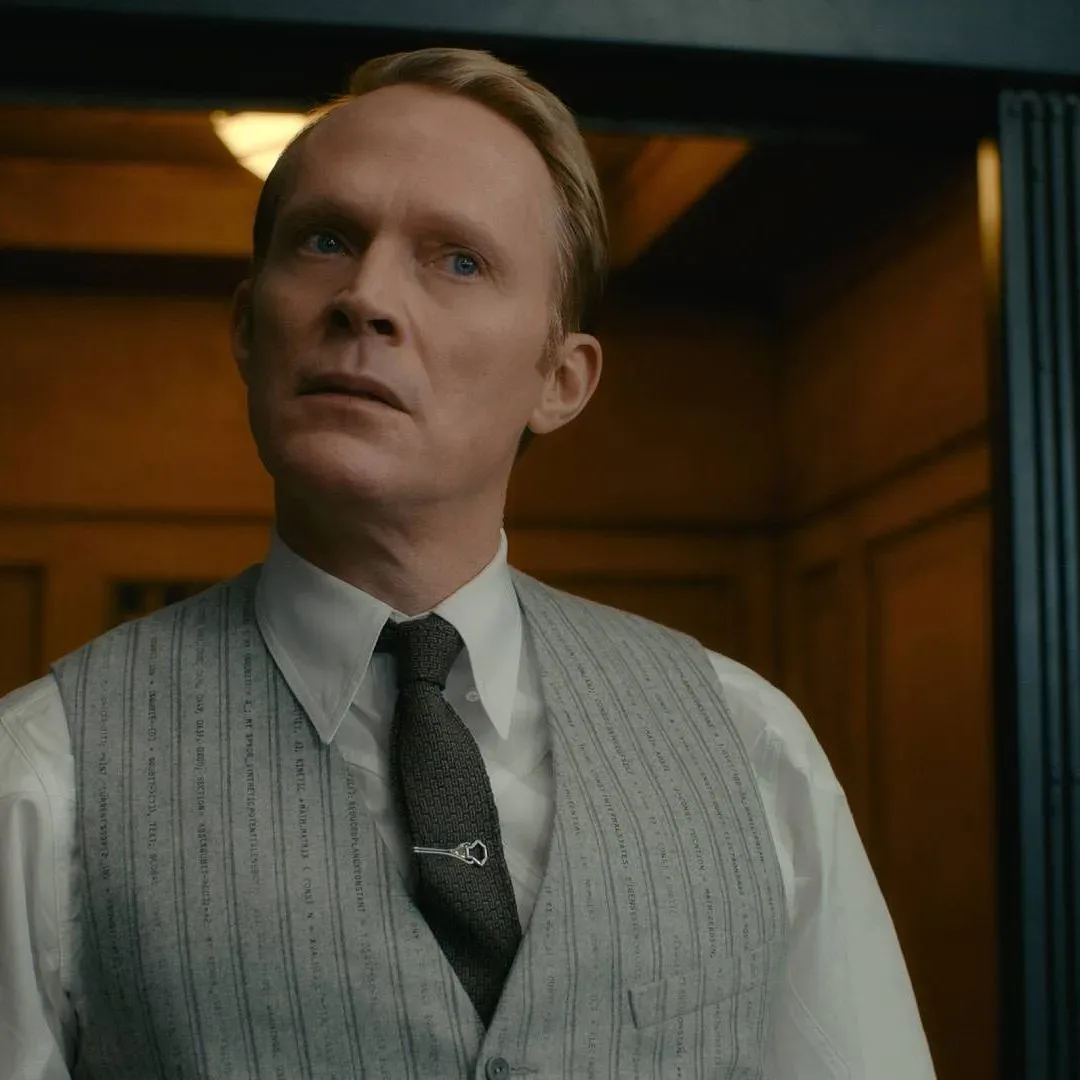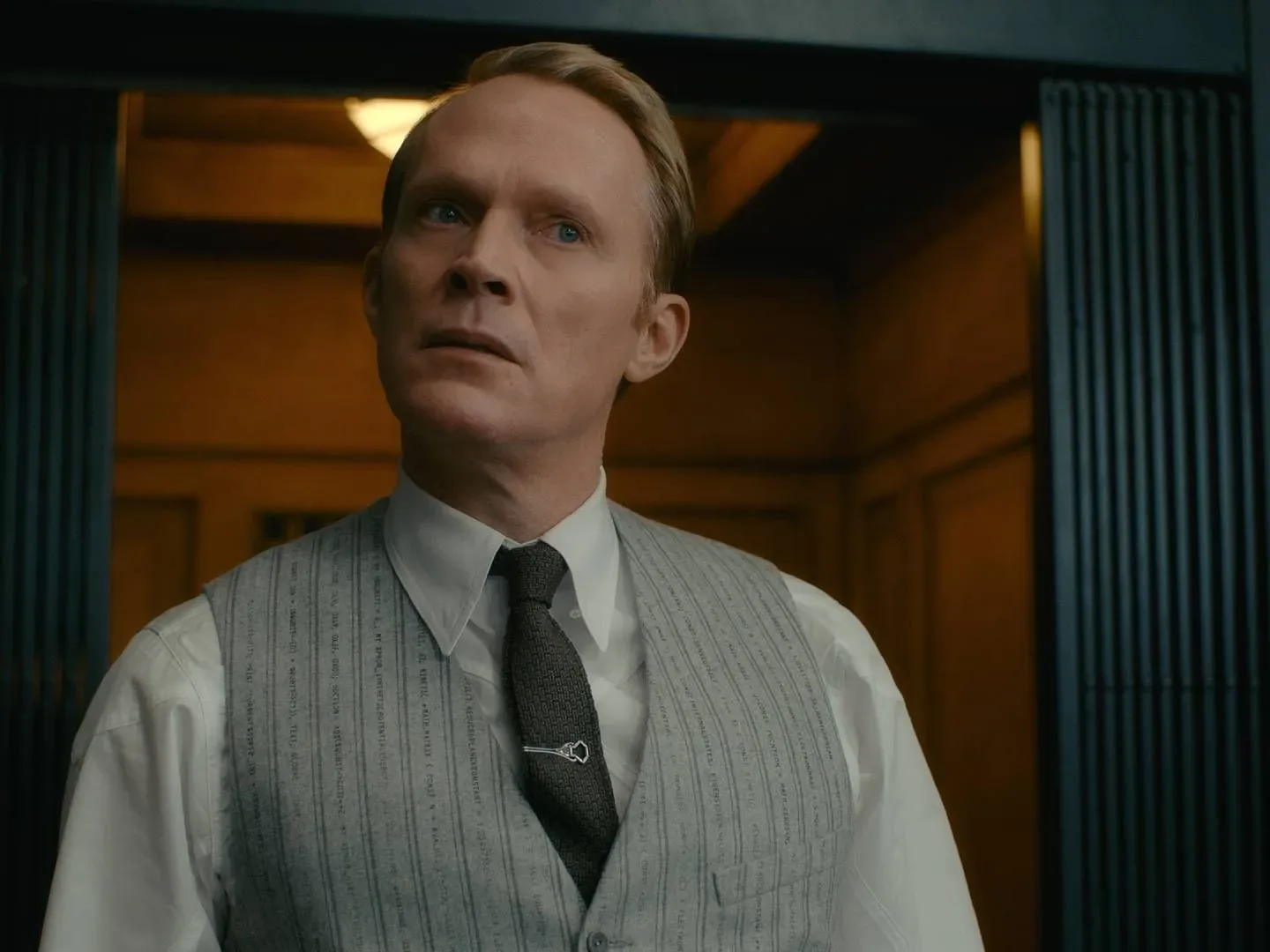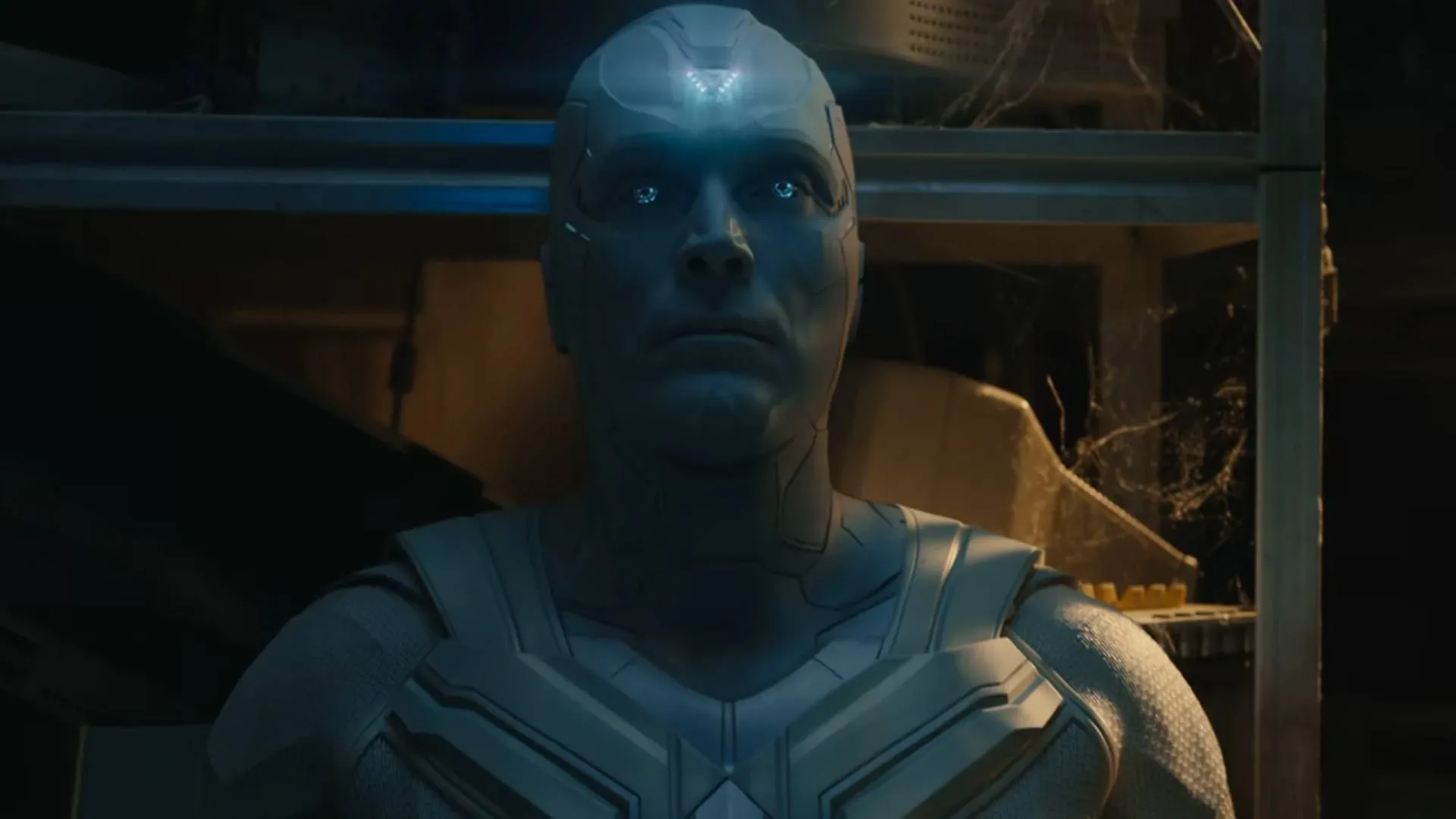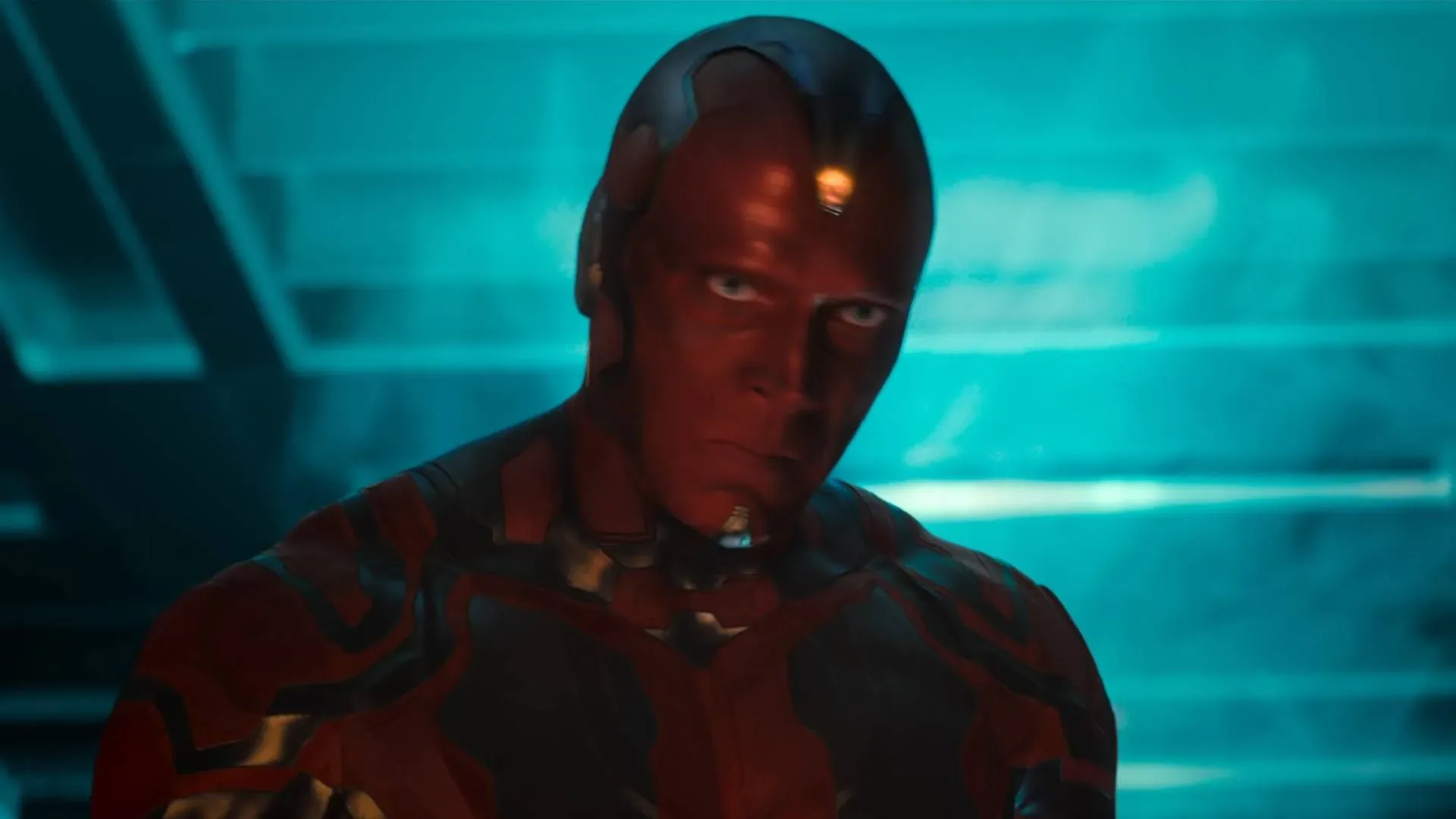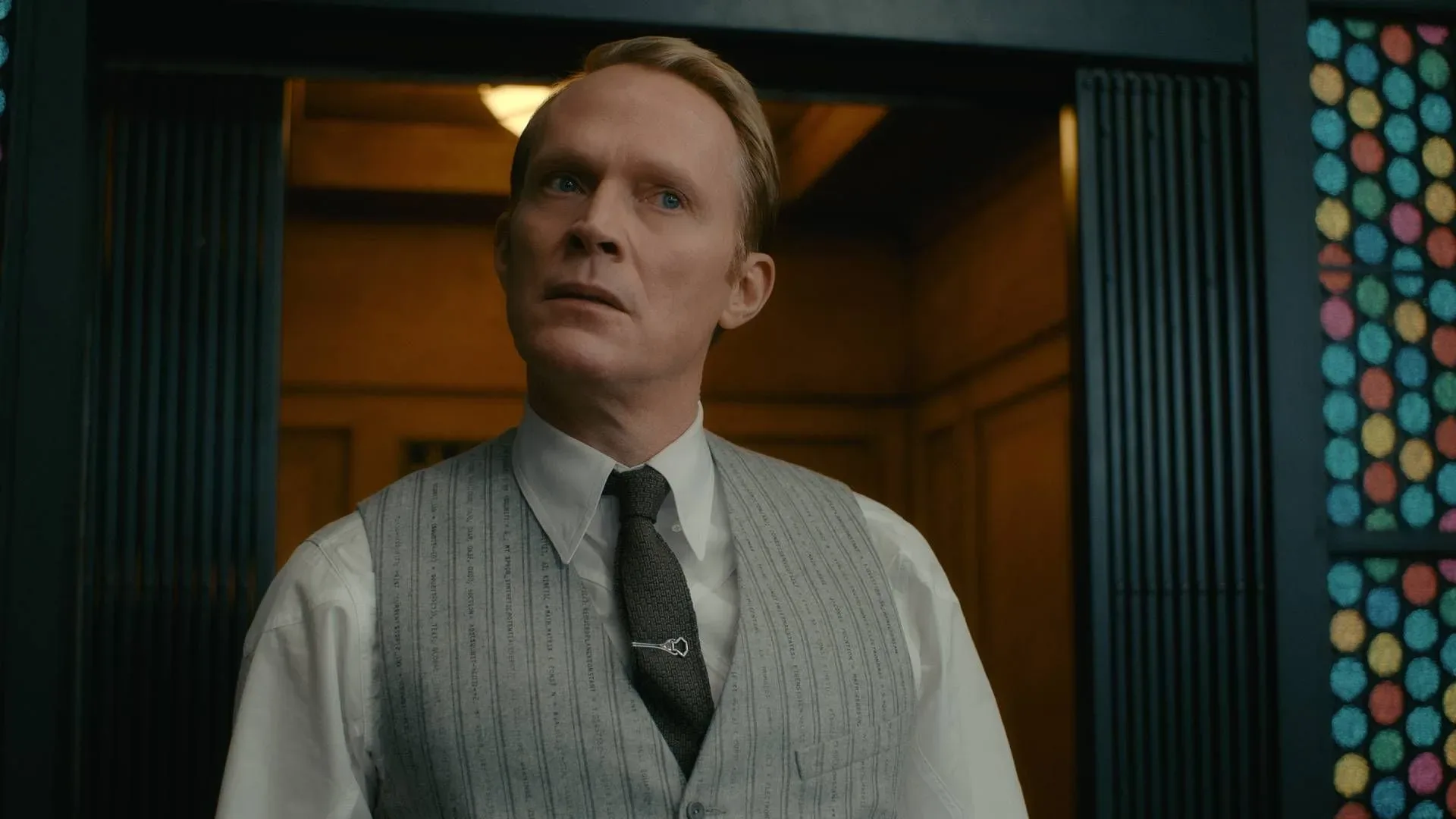
Three new VisionQuest posters have given Marvel viewers exactly the sort of puzzle they tend to take personally: a building with more floors than currently named occupants. The artwork spotlights Vision, Ultron and Tommy on distinct levels, and fans have begun to wonder whether the empty or unrepresented floors are not merely design space, but a deliberate hint at characters still to be revealed.
The theory proposes a particularly tidy trio: Wanda Maximoff, Billy Maximoff and Agatha Harkness. It is an appealing reading because each character carries obvious connective tissue to the characters already represented. But it remains a reading of promotional art rather than confirmation. No additional cast announcements are established by the posters themselves, and Marvel imagery has a long history of encouraging viewers to inspect composition as closely as dialogue.
VisionQuest arrives on Disney+ on October 14, bringing Paul Bettany back as Vision. The initial poster set also points toward major roles for James Spader’s Ultron and Ruaridh Mollica’s Tommy. That alone establishes a story concerned with family, legacy and artificial intelligence—territory where the distinction between a visual clue and a fan-assembled wish list can get very blurry, very quickly.
What viewers are seeing in the three-poster layout
Each poster places a featured character on a different floor of what appears to be the same multi-level residence. Vision occupies one level, Ultron another, and Tommy another. The shared architectural setup is the foundation of the Easter-egg theory: if three presented floors belong to those characters, perhaps three others are being held back for a subsequent poster wave.
An Easter egg, in entertainment marketing, is a concealed reference or visual detail placed for audiences to discover. It is not automatically a promise of a plot development. Sometimes it functions as a reward for attentive viewers; sometimes it establishes a theme or relationship; and sometimes a symmetrical design really is just a symmetrical design. That uncertainty is central here.
What makes the idea more than a random list of familiar names is the proposed one-to-one structure. Wanda would naturally complement Vision’s floor. Billy, Tommy’s brother, would extend the Maximoff family thread. Agatha has a clear connection to Wanda and Billy through prior Marvel television storytelling. The theory therefore reads the posters as a six-character arrangement rather than three isolated character sheets.
Still, the available evidence only supports the existence of the three released posters and their respective featured characters. It does not establish that the building has six narratively meaningful levels, that a second three-poster collection is planned, or that Elizabeth Olsen, Joe Locke and Kathryn Hahn will appear. Those are separate claims, and treating them separately is the best way to enjoy the speculation without mistaking it for a reveal.
Why Wanda, Billy and Agatha are the leading guesses
Wanda Maximoff
Wanda is the most immediately intuitive name in the discussion because Vision and Wanda’s relationship is foundational to their Marvel stories. A Vision-focused series that also includes Tommy inevitably invites questions about the wider Maximoff family. A poster arrangement pairing the two across a shared location would be an efficient visual tease—if that is what the designers intend.
But “intuitive” is not the same as “announced.” The poster theory should be understood as a thematic inference. Vision, Tommy and Wanda form a compelling family unit, making Wanda a popular candidate for a withheld character slot. The art does not independently verify it.
Billy Maximoff
Billy is another logical candidate because Tommy is already in the material. Joe Locke is associated with Billy Maximoff, and the two characters’ sibling relationship makes an eventual connection easy for fans to anticipate. If the series is positioning Tommy as someone Vision must reconnect with—or perhaps rescue, based on the watery imagery associated with the poster—Billy’s possible role becomes a natural point of curiosity.
There is a practical storytelling reason viewers may be looking for him, too. A story about locating or saving one family member can gain emotional and investigative momentum from another relative who shares the same history. That is analysis of the setup, not a claim about what VisionQuest will do. The only confirmed point in the supplied material is that Tommy is among the poster subjects.
Agatha Harkness
Agatha is the more mischievous piece of the proposed trio. Kathryn Hahn’s character is closely associated with Wanda’s corner of Marvel television, and her inclusion would connect the show to that thread while adding a less straightforward family relationship. From a poster-puzzle perspective, she completes the three-name pattern cleanly: one person tied most strongly to Vision, one to Tommy, and one to the wider magical history around the family.
That neatness is exactly why the theory has caught on—and why it deserves caution. Fans are exceptionally good at finding patterns that feel dramatically satisfying. Promotional campaigns can capitalize on that instinct without making a literal promise. Until a character is named in official material, Agatha’s presence is possible speculation rather than a confirmed feature.
There is another explanation for the unused space
The building concept could also be setting up an entirely different set of residents: artificial-intelligence figures connected to Vision’s world. The potential names being discussed include the original JARVIS, played by James D’Arcy; F.R.I.D.A.Y., played by Orla Brady; and E.D.I.T.H., played by Emily Hampshire.
This alternative is worth taking seriously because the initial trio already combines Vision, his creator/enemy Ultron, and Tommy. A home shared by multiple artificial intelligences would give the poster concept a strong internal logic. In other words, the art could be teasing a household or network defined by AI identity rather than reserving slots for Wanda, Billy and Agatha.
Artificial intelligence in this context refers to the fictional digital entities and systems represented by characters such as Ultron, JARVIS, F.R.I.D.A.Y. and E.D.I.T.H. Vision’s own identity has always made questions of consciousness, programming and personal continuity especially relevant around him. A residence-based poster campaign could use floors and rooms to turn those abstract questions into an immediately legible visual metaphor: who belongs in the house, who controls it, and who is trying to escape the role assigned to them.
That does not rule out the Wanda/Billy/Agatha interpretation. It simply shows why one clue can support multiple theories. The strongest poster speculation usually has two qualities: it accounts for what is visible, and it does not ignore equally plausible alternatives. At the moment, both camps can explain the building motif without requiring a confirmed additional appearance.
Vision stories have trained audiences to search for hidden meanings
The intensity of the response is hardly surprising. Marvel audiences have spent years parsing Vision-adjacent stories for clues, most memorably during the extended debate over whether Mephisto would appear in WandaVision. That prediction did not come true there. Mephisto later appeared at the end of Ironheart, underscoring a useful lesson for clue hunters: a character may be relevant to the broader universe without being the answer to every immediate mystery.
That history does not make current fan analysis pointless. Looking closely at posters is part of the fun of serial storytelling, especially when a campaign uses deliberate visual continuity. It does, however, argue for a sensible hierarchy of confidence. Named poster subjects are firm information. A recurring building design is a meaningful visual choice. The identities of hypothetical unseen tenants are theories.
There is also a difference between a tease and an announcement. A tease is designed to create anticipation, often by withholding context. An announcement identifies something directly enough that audiences can treat it as established. The three VisionQuest posters seem built to generate the first response. They have not yet supplied the second for Wanda, Billy, Agatha, JARVIS, F.R.I.D.A.Y. or E.D.I.T.H.
What the posters do tell us about VisionQuest
Even without solving the floor plan, the images put several ideas front and center. Vision is back. Ultron is present as a significant force. Tommy is important enough to share the campaign’s opening spotlight. The material suggests that Vision will need to reconnect with Tommy, with the image also raising the possibility of a rescue from drowning.
Those elements point toward a series preoccupied with strained bonds and unfinished history. Ultron’s involvement gives Vision’s personal story an unavoidable link to his origins, while Tommy brings the family dimension to the foreground. Whether additional characters emerge from the tower, elevator or any other part of the campaign, the central dramatic pressure appears to be on Vision confronting relationships that cannot be resolved by simply restarting a system.
For now, the most accurate reading is also the most entertaining: the posters may be a genuine breadcrumb trail, or they may be an elegant invitation to speculate. Either way, viewers have a clear set of names to watch for when VisionQuest reaches Disney+ on October 14. For more genre-screen coverage while waiting for the next Marvel clue, see our update on the ongoing development of I Am Legend 2.