Marvel Television’s New York Comic Con presentation delivered a set of announcements that read less like a routine slate update and more like a change in operating system. Daredevil: Born Again is set to end with its next season; VisionQuest has been positioned as the final instalment of the WandaVision trilogy; and Zodiac, an espionage series built around comparatively obscure comic-book antagonists, is now the significant newly confirmed live-action project.
Together, those developments point away from the early Disney+ approach in which a growing number of live-action shows were designed to live close to the Marvel Cinematic Universe’s film continuity. The stated ambition now is for recurring television with its own identity: longer character-driven stories, released on a more regular annual rhythm, and less likely to make viewers feel they need a sprawling MCU checklist before pressing play.
That does not mean the shared universe vanishes. It does mean Marvel Television appears to be rethinking how tightly its series should be tied to it—and how much prior knowledge an audience should feel it needs.
Daredevil: Born Again is approaching its finish line
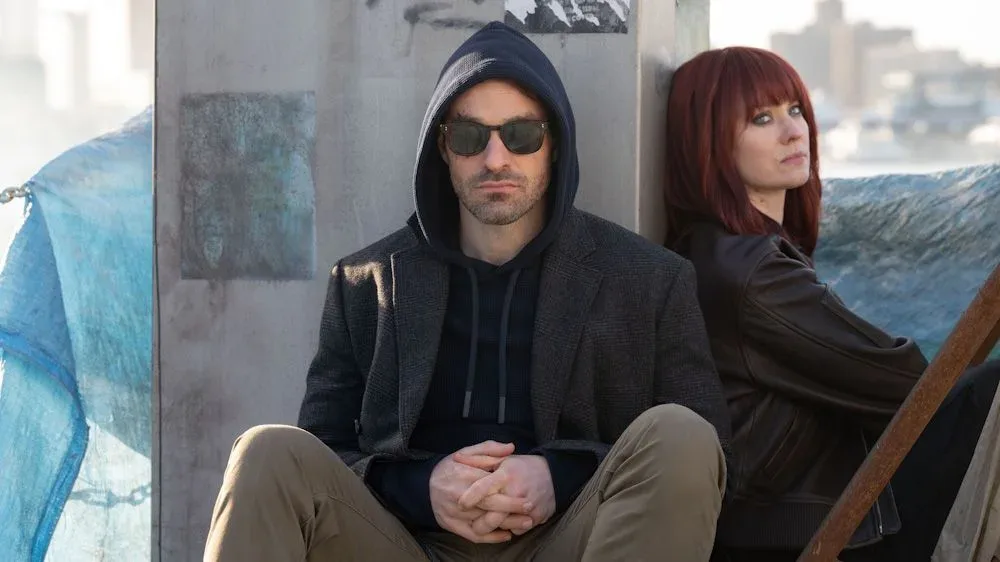
Charlie Cox confirmed at the convention panel that the coming season of Daredevil: Born Again will be its last. Cox appeared alongside Krysten Ritter, associated with Jessica Jones, and Finn Jones, returning as Iron Fist. The response in the room was reportedly unhappy, which is understandable for viewers who read the return of Defenders-era characters as the beginning of a longer runway rather than a closing act.
Cox suggested the cast had some sense that the end was approaching. He also invoked the #SaveDaredevil campaign in discussing what comes next, a callback to the fan movement associated with the character’s previous television life. It is a notable note to strike: it acknowledges the strength of Daredevil’s audience while confirming that audience enthusiasm alone does not automatically translate into an open-ended streaming run.
The available details leave key creative questions unanswered. Reports had previously indicated that showrunner Dario Scardapane exited during post-production, while online speculation has claimed the ending was altered to provide a more definitive conclusion. Those claims about reshoots remain unconfirmed, so they should not be treated as an established explanation for the decision. What is clear is the outcome: the next season is being framed as a conclusion rather than another bridge to an indefinite future.
For fans, that distinction matters. A final season can still offer payoffs for Matt Murdock and the returning characters, but it changes the expectation around every reintroduction. Instead of assuming each appearance is an investment in years of spin-offs and crossover plotting, viewers may need to approach it as part of a self-contained closing chapter.
VisionQuest ends a trilogy—and may signal a wider reset
VisionQuest occupies a different place in Marvel’s television history. Its cast has described it as the final part of the WandaVision trilogy, making it a capstone to a strand of stories rather than simply another limited series. Yet its wider significance may be larger than that label suggests.
Related coverage includes Marvel Television’s New Strategy Takes Shape With Zodiac and Major Endings.
Marvel spent roughly five years releasing live-action Disney+ series that often sat near the films in tone, continuity or character development. That model had a clear attraction at launch: streaming subscribers could experience stories that felt closely connected to the theatrical side of the franchise. Series involving Captain America-related characters and Hawkeye helped establish the sense that Marvel’s movie world had extended into the home.
But connection can become perceived obligation. Brad Winderbaum, Marvel Television’s head, has said the company learned that the shared universe could feel like homework to some viewers, even when an individual programme was intended to work on its own. Moon Knight is a useful example of the issue: a viewer could theoretically start there without prior MCU study, but years of interconnected films and series had taught many people to assume that every release carried essential prerequisites.
That is not merely a marketing problem. It affects how a new show is approached. If potential viewers believe they must catch up on multiple films, seasons and post-credit developments before trying a series, an unfamiliar title has a higher barrier to entry. It can also place pressure on the programme itself to spend time servicing continuity rather than developing its own setting, characters and dramatic stakes.
Marvel’s current direction, as described by Winderbaum, is to pursue annual shows that can function as deeper character studies and as television in their own right. “Annual cadence” here means a more dependable recurring schedule, rather than a one-off limited run with no assumed continuation. “Character study” means a narrative primarily interested in sustained development of its people—their choices, relationships and conflicts—rather than treating them mainly as pieces on a board for the next crossover event.
That approach does not inherently reject continuity. Rather, it places the show’s immediate story first. Ideally, a newcomer can follow the plot without studying a franchise timeline, while longtime MCU viewers can still recognise additional connections if they choose to look for them.
Zodiac is the clearest test of the new approach
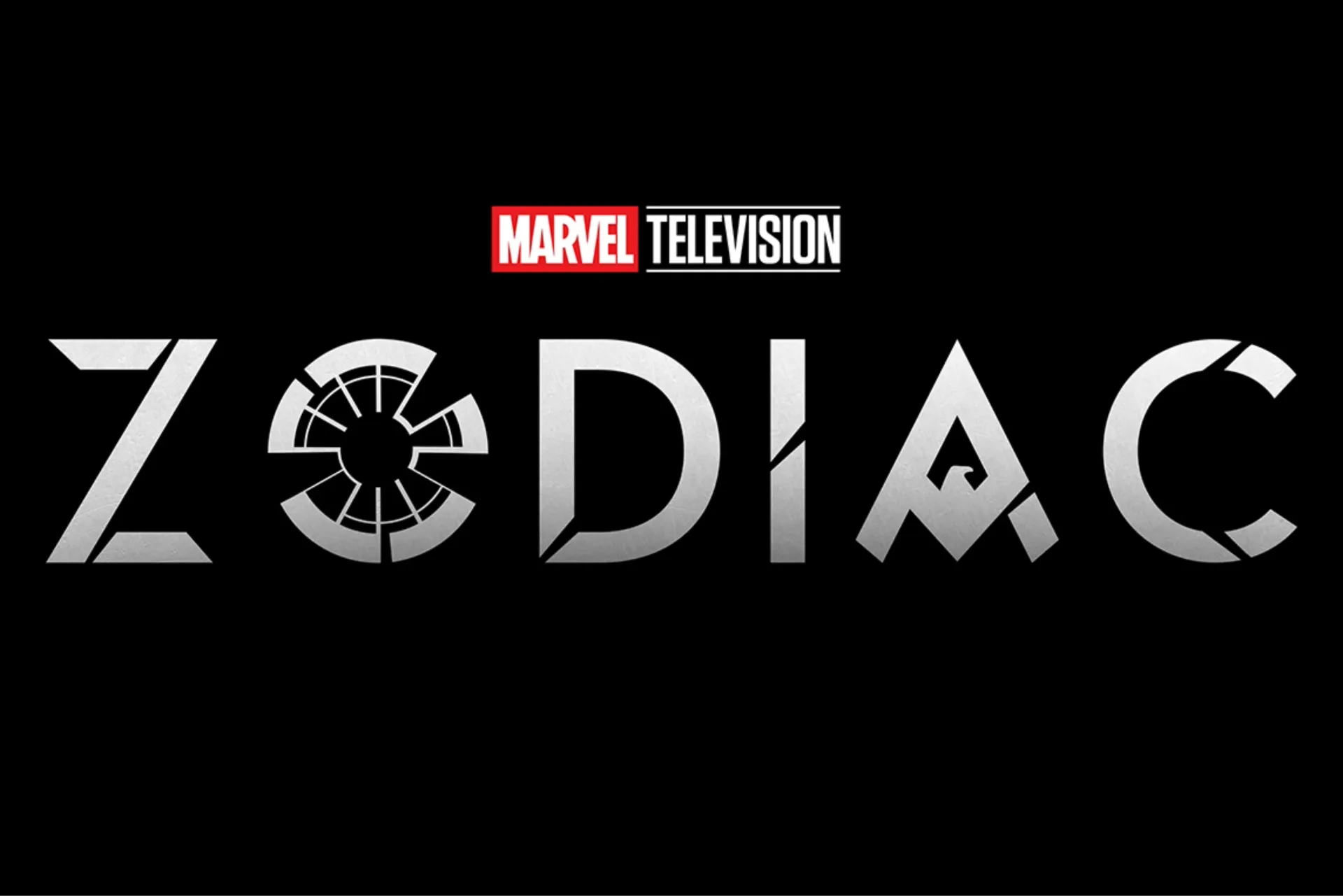
The newly confirmed Zodiac is the strongest early indication of what this recalibration could look like. In Marvel comics, Zodiac is a criminal organisation whose members take identities linked to astrological signs. The television project has been described as a globe-spanning international espionage drama concerned with secrets, deception, betrayal and loyalty.
Espionage is an especially useful genre for a stand-alone Marvel series. Its core engine does not require a world-ending threat or a guest appearance from a major film hero. A mission, a compromised alliance, a concealed identity or conflicting loyalties can drive episodes while allowing a cast to develop over time. That provides room for the kind of season-to-season character focus Marvel Television says it wants.
It is also important that Zodiac is not being sold primarily on a household-name superhero. Recent years included shows led by Moon Knight, Ms. Marvel and She-Hulk in a relatively short span. Choosing a villain organisation that is far less familiar to casual viewers suggests a willingness to let premise and execution carry more of the burden than immediate character recognition.
The practical upside is accessibility. A series with little apparent dependence on film events can invite viewers in at episode one. It may also give its writers more latitude to establish a fresh tone. The practical risk, naturally, is that fewer built-in recognisable hooks place more importance on the cast, scripts and clarity of the concept. Marvel has not supplied details such as a release date, cast or episode count here, so the project’s eventual scale remains unknown.
The Zodiac branding has prompted attention because its logo appears to evoke S.H.I.E.L.D., Marvel’s fictional counterterrorism organisation. That visual resemblance is interesting, but it is not confirmation of a connection to Agents of S.H.I.E.L.D.. The earlier series ran for seven seasons and built a committed following. Still, turning Zodiac into a direct continuation that required knowledge of that programme would work against the stated desire to reduce perceived homework. Unless Marvel provides a firm link, it is more useful to view the logo as a possible thematic cue than as proof of franchise mechanics.
For a broader roundup of the convention’s major announcements, including the Zodiac confirmation, see NYCC 2026’s biggest reveals.
Animation is not following the same reset
The live-action shift should not be mistaken for a Marvel-wide retreat from television. Animation emerged from the panel with a much steadier-looking pipeline: Your Friendly Neighbourhood Spider-Man season 2, X-Men ’97 season 3 and three years of Marvel Zombies were all teased.
These animated projects are described as having no bearing on the wider MCU, which makes their relationship to audiences fundamentally different. They can use Marvel characters and concepts without asking viewers to keep pace with live-action continuity. That separation makes them naturally easier to position as discrete experiences, whether they are alternate takes, stylised genre stories or continuations within their own animated lanes.
It also clarifies why animation and live action may be receiving different treatment. The issue raised by Marvel Television is not simply the number of shows. It is the accumulated expectation that every live-action release is another required chapter in one enormous narrative. Animated series, as presented here, have less of that burden. Their apparent distance from the MCU gives them permission to be more self-contained from the start.
What viewers should and should not infer
The announcements support a few reasonable conclusions. Marvel Television is winding down at least some projects conceived before its 2024 rebranding. It is prioritising a live-action model that promises ongoing, character-focused stories with less dependence on MCU homework. And Zodiac is the named project most directly associated with that new direction.
They do not establish that every future Marvel show will be wholly disconnected from the films, that every returning character is finished after Daredevil: Born Again, or that the S.H.I.E.L.D.-like imagery guarantees a revival of previous television continuity. Those are possibilities fans may debate, not confirmed outcomes.
For now, the most concrete timetable item is that Daredevil: Born Again season 3 is expected in March 2027, with that season now designated the end of the series. VisionQuest is streaming on Disney+. Beyond that, Marvel has supplied a direction more than a full calendar: fewer obvious live-action bridges to the movies, a renewed interest in stories that can breathe on their own, and an espionage show about a shadowy Zodiac organisation positioned to demonstrate whether that plan works.