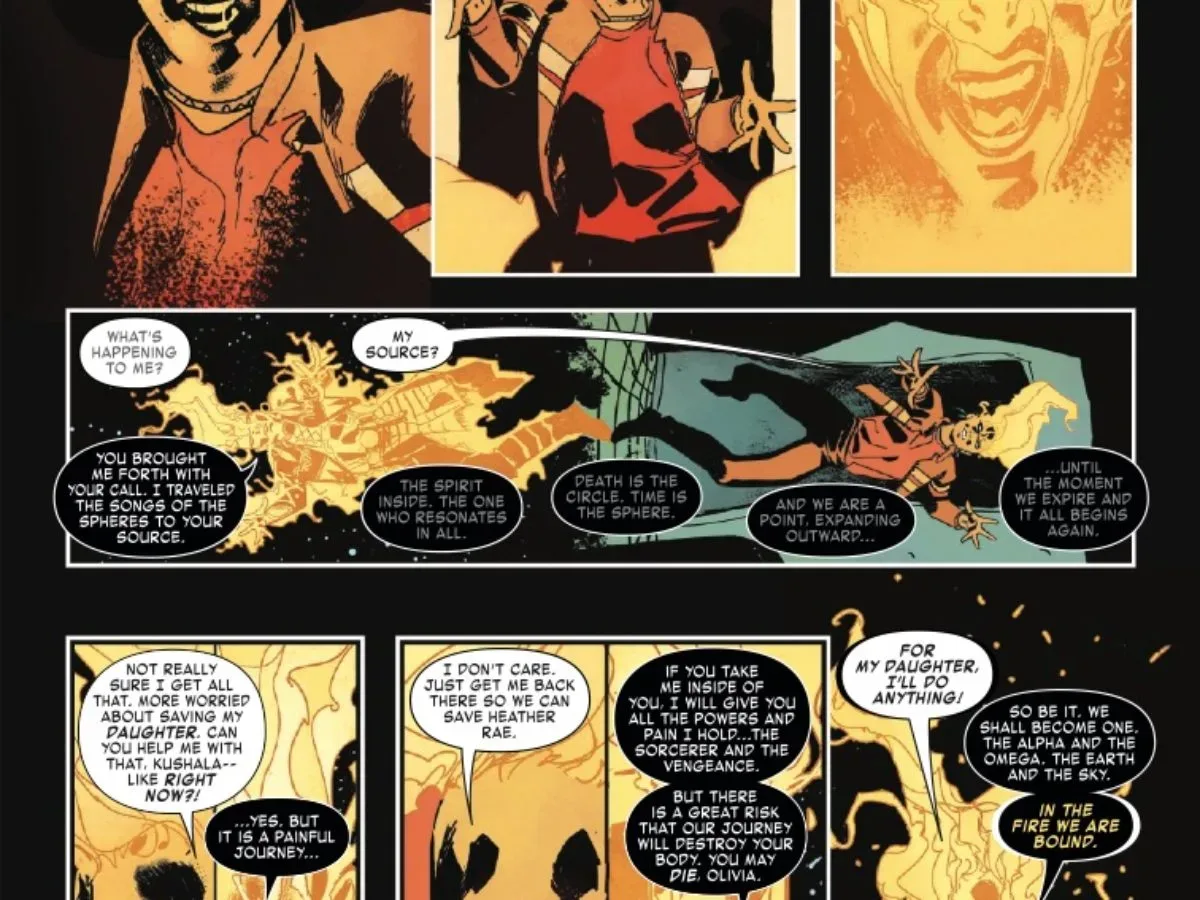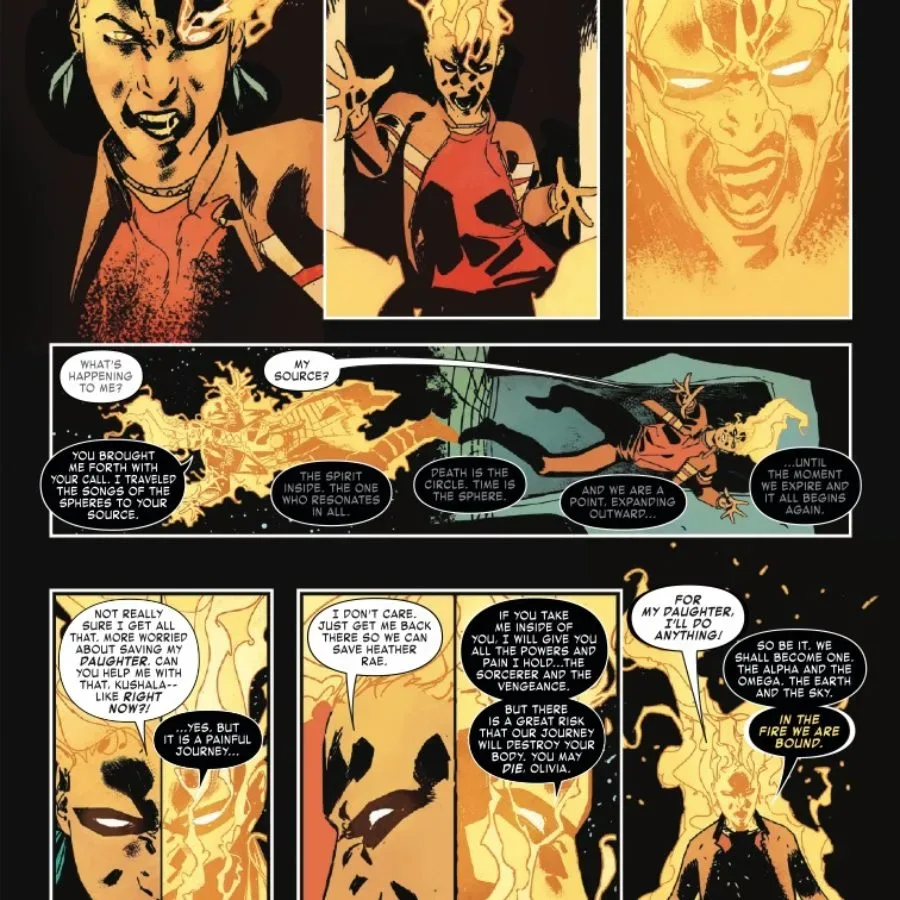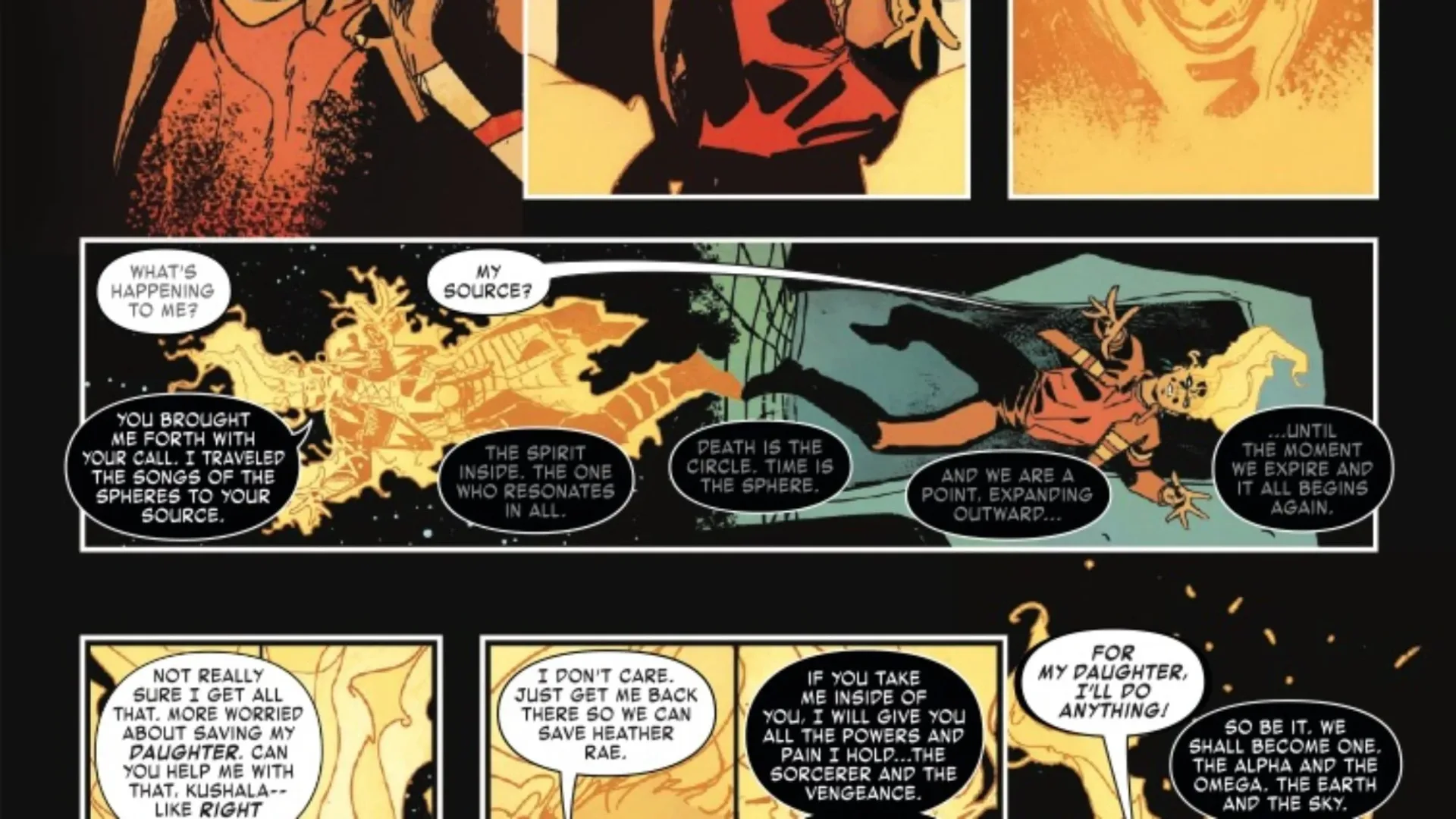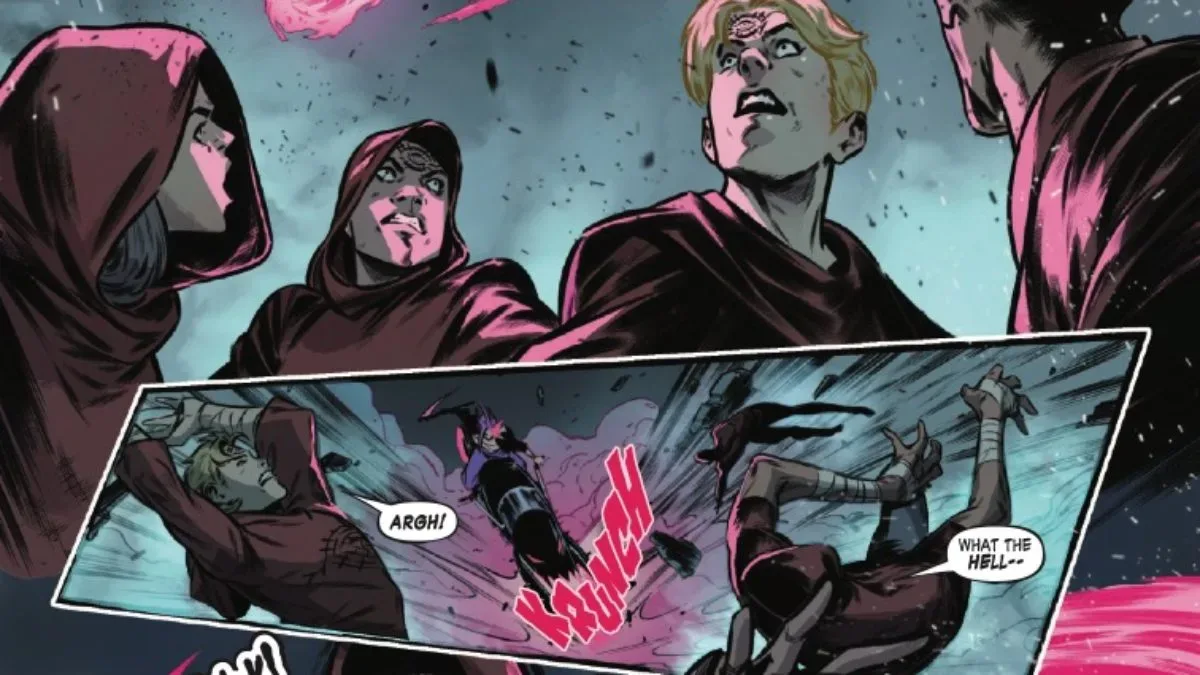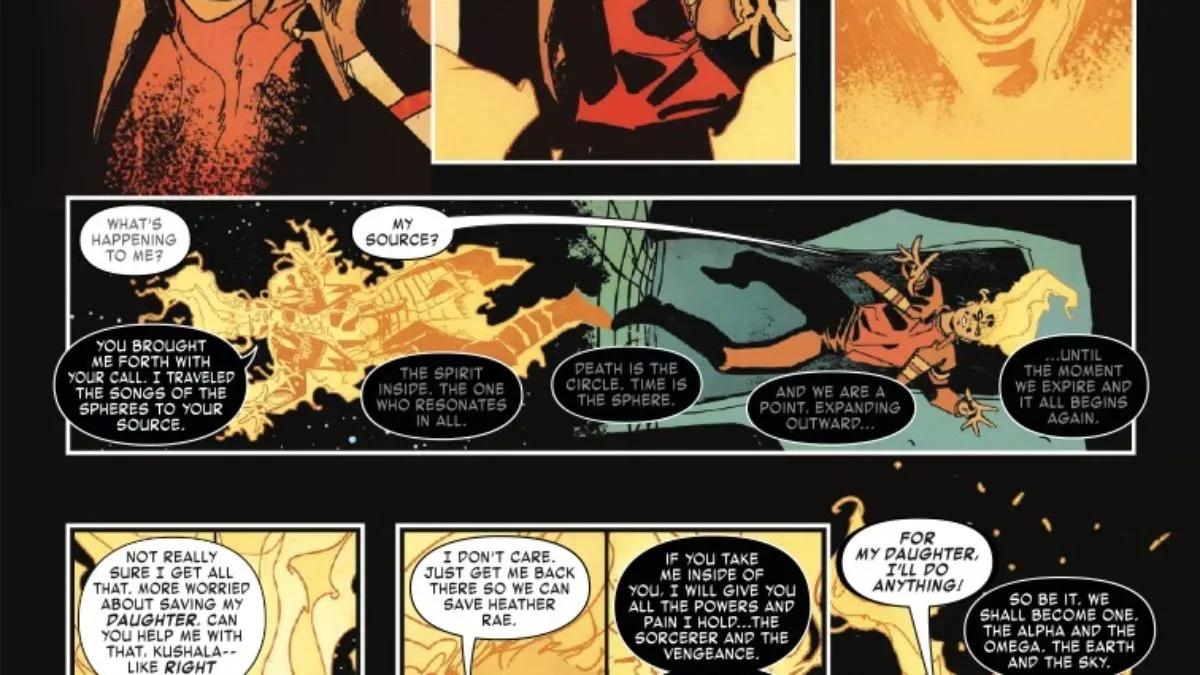
Ghost Rider: Kushala #1 is set to bring Kushala’s standalone story into print on November 4, 2026. The supersized Marvel one-shot collects episodes of the Ghost Rider: Kushala Infinity Comic and places the Spirit Rider at the center of an adventure spanning the past, present and future of the Marvel Universe.
The stated stakes are personal as well as supernatural: someone is targeting Kushala’s ancestral line. That premise gives the issue a clear throughline beyond a conventional Ghost Rider battle. Rather than protecting only a city, an era or a fellow hero, Kushala is confronting a danger tied to family continuity across time itself.
The release is positioned in recognition of Native American Heritage Month. Taboo and B. Earl are credited as writers, with interior art by Guillermo Sanna and Vanesa R. Del Rey. Kyle Charles provides the cover. The physical comic is listed at 88 pages, rated T+, and priced at $7.99.
Who is Kushala, the Spirit Rider?
Kushala occupies an unusually distinctive corner of Marvel’s supernatural mythology. She is identified here as the Sorcerer Supreme of the 1800s as well as a Ghost Rider, using the title Spirit Rider. The description also makes a defining claim about her relationship with the force inside her: she is the only Ghost Rider to have successfully tamed her Spirit of Vengeance.
That wording matters. A Spirit of Vengeance is the supernatural entity associated with the Ghost Rider identity. In this story’s framing, Kushala is not merely enduring or unleashing that entity; she has brought it under control. The distinction points to a character whose power has an element of discipline and agency, not simply a monstrous curse that periodically takes over.
Her Sorcerer Supreme role adds another layer. The title signals a connection to Marvel’s mystical side, while the 1800s setting establishes Kushala as a figure with a historical place in the universe. Combining that background with a Ghost Rider identity gives the one-shot room to treat magic, vengeance and time as connected parts of one conflict.
For readers approaching the character for the first time, the premise itself provides the necessary entry point: Kushala is a powerful supernatural protector whose family line has come under attack. The one-shot’s format and its collection of previously serialized material suggest a compact way to encounter the Spirit Rider’s story in print.
An ancestral threat across three eras
The book’s central idea is deliberately broad in scope. The danger does not stay in Kushala’s own 19th-century setting. It reaches into the past, present and future, asking her to face the consequences of a threat that can cross eras.
Time-spanning superhero stories can easily become abstract, but the ancestral-line element gives the premise a human anchor. “Ancestral line” refers to a chain of familial descent: the people who came before Kushala and those who follow after her. A threat against that line can potentially make each time period relevant, since altering or endangering one generation has implications for others.
The supplied story description does not identify the antagonist or explain the method behind the attack, so readers should not assume more specifics than have been revealed. What is clear is that Kushala’s response will take her beyond a single period of Marvel history. The advertised “past, present and future” structure establishes an adventure built around multiple temporal viewpoints rather than a strictly period-set Western or an entirely contemporary Ghost Rider tale.
That scope also fits the Spirit Rider’s dual status. As a Ghost Rider, Kushala is tied to vengeance and hellish supernatural power. As the Sorcerer Supreme of the 1800s, she is tied to mysticism and an earlier age of Marvel’s world. An attack that crosses time gives both aspects a reason to matter.
From Infinity Comic to an 88-page one-shot
Ghost Rider: Kushala #1 collects episodes from the Ghost Rider: Kushala Infinity Comic. An Infinity Comic is a comic format built for digital reading, typically using a vertical presentation that readers move through on a screen. This issue turns that material into a single print package.
For print-focused readers, that is the practical headline. Instead of following the digital episodes individually, the story is available in an 88-page one-shot. The format also places Kushala’s narrative in the familiar comic-shop style of a self-contained special, even though the material originally appeared as serialized digital chapters.
The “supersized” label is supported by that 88-page count, substantially longer than a standard single comic issue. It should not be read as a promise of a new, separate 88-page story beyond the collected Infinity Comic material; the solicitation specifically says the one-shot collects those episodes. The value of the release is therefore in assembling the existing serial story as a physical edition with a cover by Charles.
That distinction is useful for collectors and readers deciding which format best suits them. Anyone who has already read the Infinity Comic may primarily be considering the print object, cover and convenience of a complete issue. Anyone who has not read it has an apparent starting point for Kushala’s time-spanning conflict without needing to locate individual digital installments.
The creative team
Taboo and B. Earl are credited on the script, while Guillermo Sanna and Vanesa R. Del Rey are credited on art. The pairing of two writers and two artists reflects the project’s episodic origin and its expansive setup, though no division of storytelling or art duties has been specified.
Marvel’s description emphasizes a “wild ride” through multiple eras, an appropriate shorthand for a book whose protagonist is simultaneously linked to historical magic, Ghost Rider mythology and an assault on her family history. Sanna and Del Rey’s contribution will carry the visual challenge of differentiating those settings and presenting Kushala’s supernatural abilities as the story moves across time.
Charles’s cover work serves as the issue’s front-facing image for the collected edition. No variant cover details are specified in the available listing, so prospective buyers should treat the named Charles cover as the confirmed cover credit rather than assume a broader variant program.
What the issue means for Ghost Rider readers
The Ghost Rider name often brings expectations of supernatural action, infernal imagery and characters living with a volatile force of vengeance. Kushala’s premise retains that vocabulary but changes its center of gravity. Her defining trait is mastery over her Spirit of Vengeance, while her conflict is rooted in ancestry rather than simply an immediate supernatural outbreak.
That gives the one-shot a potentially different emphasis from stories where the key question is whether the Ghost Rider can resist or survive the entity within. Here, the provided setup establishes that Kushala has already accomplished the rare feat of taming the Spirit. The dramatic question is instead what that controlled power can accomplish when time itself and her lineage are in jeopardy.
The Native American Heritage Month framing is also integral to how the issue is being presented. The comic connects its supernatural conflict to Kushala’s ancestry, not just to a generic multiverse or time-travel hook. The available details do not provide a fuller account of the story’s cultural approach, so the most accurate expectation is a Kushala-centered Marvel supernatural adventure whose release is explicitly tied to the observance.
Readers interested in other genre stories crossing between large fictional universes and more intimate character stakes may also want to see how television projects can remain in development limbo in this update on hopes for a Dragonlance return to TV. Kushala’s comic, by contrast, has a specific listed on-sale date and a clearly defined collected format.
Release details
- Title: Ghost Rider: Kushala #1
- On sale: November 4, 2026
- Publisher: Marvel
- Writers: Taboo and B. Earl
- Artists: Guillermo Sanna and Vanesa R. Del Rey
- Cover: Kyle Charles
- Format: Supersized one-shot collecting Ghost Rider: Kushala Infinity Comic episodes
- Length: 88 pages
- Price: $7.99
- Rating: T+
With an 88-page print collection, a defined supernatural premise and a protagonist whose history sits at the meeting point of Marvel magic and Ghost Rider lore, Ghost Rider: Kushala #1 is shaping up as a focused spotlight for the Spirit Rider. Its biggest appeal may be the way it makes Kushala’s defining qualities—the controlled Spirit of Vengeance, the 1800s Sorcerer Supreme identity and the importance of ancestry—part of the same time-crossing story.