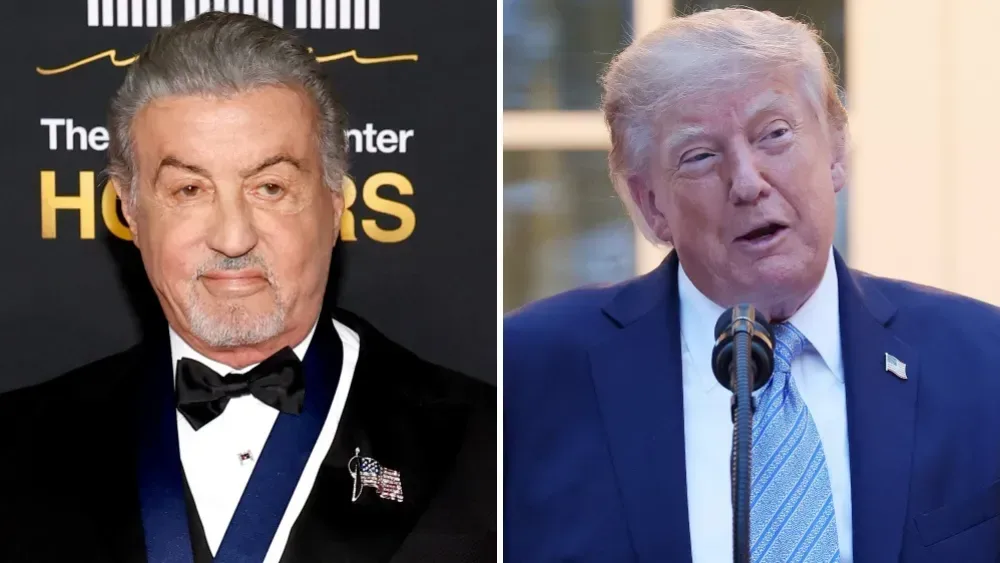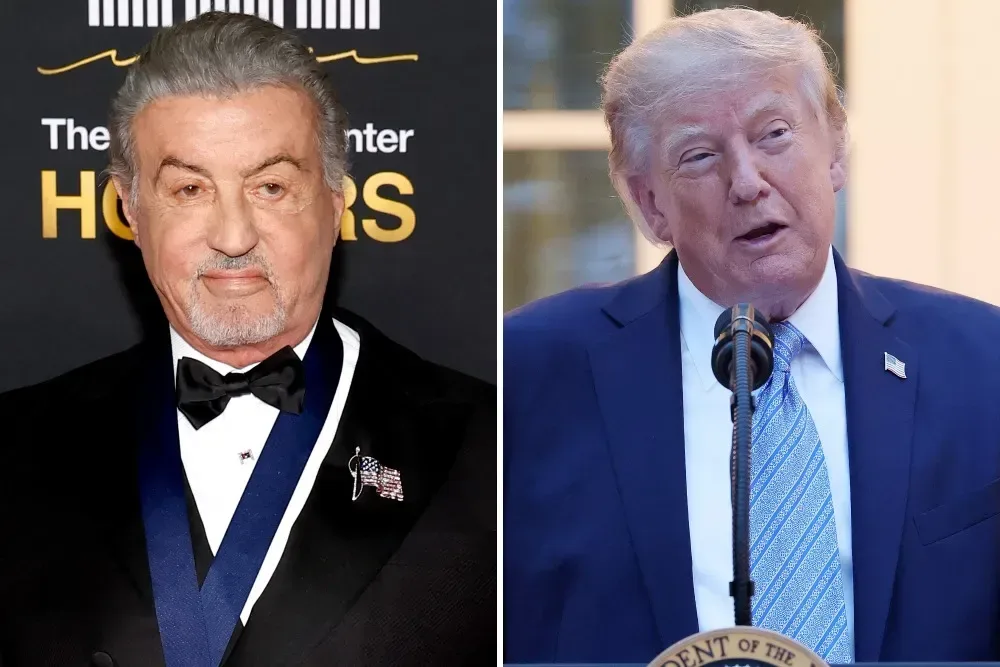
Sylvester Stallone has said he did not actively seek, or explicitly agree to, the title of “special ambassador” to Hollywood that Donald Trump announced for him in January 2025.
In a recent interview, the Rocky actor described seeing a television report naming him alongside Mel Gibson and Jon Voight. His response, he said, was surprise: he had not been approached in advance in a way that made the assignment feel workable. Stallone’s central argument was not that Hollywood needs no change, but that an outside envoy cannot simply direct an industry built around separate corporate studios and their own priorities.
“Well, it just happened,” Stallone said of the designation. He added that, had he been asked at the outset, his answer would have been that the plan was not possible.
A title announced before Stallone says he agreed
Trump publicly named Stallone, Gibson and Voight as special ambassadors to Hollywood in a January 2025 post on Truth Social. The post described the three actors as special envoys who would serve as his “eyes and ears” while offering suggestions intended to help bring entertainment business back to Hollywood from foreign countries.
The announcement framed the three performers as part of a broader ambition to make Hollywood bigger and stronger. But Stallone’s subsequent comments draw an important line between being publicly named to a role and accepting a defined job with clear authority, responsibilities or a practical operating structure.
Based on Stallone’s account, he did not view the designation as a conventional appointment negotiated ahead of time. He said he learned the names were being attached to the plan as it was reported on television, then told Trump that it would not work.
That distinction matters because “special ambassador” can sound like a formal position while the available details establish little about what the title entails day to day. Trump’s post stated an intended purpose—advising him on Hollywood—but did not lay out specific powers, a studio-facing mandate, a timetable or a formal policy program. Stallone’s comments should therefore be read as a rejection of the proposed function as he understood it, rather than proof of a detailed role that was later abandoned.
Why Stallone believes the concept is impractical
Stallone likened Hollywood to a set of feudal states, each with its own kingdom. The metaphor is colorful, but his practical point is straightforward: major studios are separate organizations, and an ambassadorial title does not automatically create the leverage to tell them how to run their businesses.
Related coverage includes Stallone Says He Did Not Sign Up for Trump’s Hollywood Ambassador Role.
He specifically pointed to the difficulty of entering a system involving six studios and giving them instructions. He also characterized the three named actors—Stallone, Gibson and Voight—as people who tend to do their own thing. In other words, neither the industry nor the ambassadors themselves should be assumed to function as a single coordinated bloc.
Stallone further described Hollywood as corporate and suggested corporate decision-makers would not welcome financial advice from him. That is a notably narrow criticism. He was not claiming that the film business is static; in fact, he said it works and will evolve. His skepticism instead concerned who gets to make decisions and whether celebrity status converts into authority over corporate finance and strategy.
What “special envoy” means in this context
An envoy is generally someone tasked with representing another person or institution in communications or diplomacy. In the January 2025 announcement, the label was used to convey an advisory connection to Trump rather than to define a publicly detailed executive position within the film industry.
That context helps explain Stallone’s objection. A title may create attention, but attention alone does not settle what an envoy can recommend, who must listen, or how separate studios would be expected to act. Stallone’s description of the appointment suggests he saw a mismatch between the breadth of the stated goal and the lack of a realistic mechanism for carrying it out.
Stallone’s criticism is not a break with Trump
Although Stallone expressed clear reservations about the Hollywood assignment, his comments do not amount to a personal or political rupture with Trump. In the same interview, Stallone spoke warmly about him and recalled introducing him at a Mar-a-Lago party as a “mythical character.” Stallone said he was in awe of what Trump had accomplished.
That combination is the key to reading the story accurately. Stallone can be supportive of Trump while still believing that the ambassador concept is structurally unworkable. Treating his concern over the title as evidence that he has repudiated Trump would go further than the available comments support. Conversely, treating his praise as evidence that he welcomed or planned the role would also ignore what he plainly said about how he learned of it.
The episode also illustrates a frequent tension when famous performers are linked to civic or political initiatives. The public association is immediate and highly visible; the actual job description, agreement and practical chain of influence may be much less clear. Here, the ambiguity is especially visible because Stallone says the news reached him before any explicit sign-up on his part.
What is known—and what remains unclear
The confirmed points are limited but meaningful: Trump announced Stallone, Gibson and Voight as special ambassadors in January 2025; the announcement presented them as advisers for efforts involving Hollywood; and Stallone now says he would have considered the plan impossible if asked beforehand.
What cannot be determined from Stallone’s comments and the original announcement is equally important. There is no stated evidence of a formal set of duties, an agreement among the three actors, meetings with studios, a defined budget, or a specific proposal that Stallone was asked to implement. There is also no basis here to claim that the title produced a particular policy outcome.
For entertainment audiences, that keeps the news squarely in the realm of a public-facing role and its limits, not a confirmed overhaul of studio operations. Hollywood’s major corporate players remain the parties making their own decisions, exactly the arrangement Stallone says made the job untenable.
Stallone’s observation may also resonate beyond this one appointment. Celebrity influence can be significant in culture, publicity and advocacy, but it is not the same thing as control over institutions. His comments emphasize that distinction without requiring a grander interpretation of the ambassador label than the known facts allow.
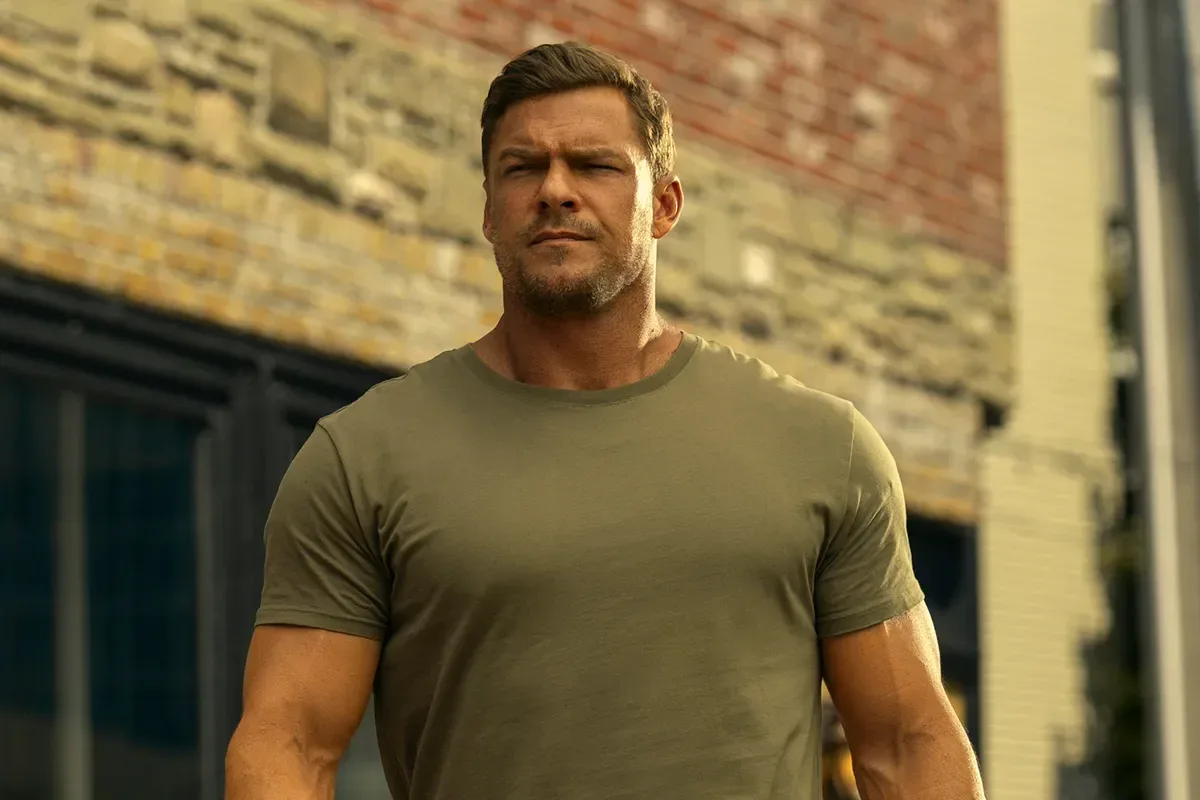
For another recent example of how political timing and entertainment reporting can become intertwined around a major action franchise, see Alan Ritchson’s comments on the timing of a Reacher adaptation.
The practical takeaway
Stallone’s account reframes the January 2025 announcement less as a clearly accepted assignment and more as a title that arrived publicly before he believed it had been meaningfully defined or agreed. His stated reason is pragmatic: studios are independent corporate centers of power, and he did not think an actor—even one with his profile—could use an ambassador designation to tell them how to handle their business.
His remarks leave no doubt about the nature of his objection. Stallone says he offered thanks, said goodbye and explained that the idea would not work. At the same time, his favorable words about Trump make clear that the objection was to the feasibility of this particular Hollywood role, not necessarily to the person who announced it.